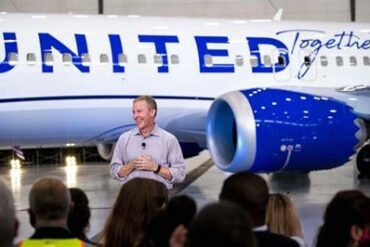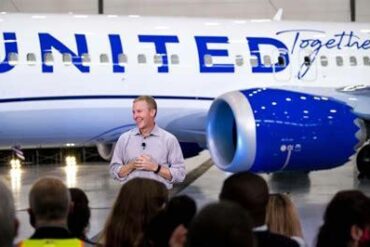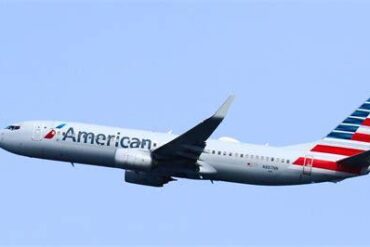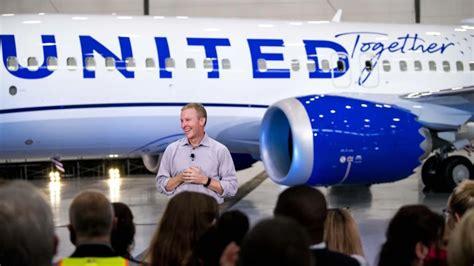
The aviation industry is no stranger to consolidation, but the latest proposal from Scott Kirby, CEO of United Airlines, has ignited one of the most provocative debates in modern air travel. According to recent reports, Kirby floated the idea of merging United with American Airlines during a high-level discussion with Donald Trump. The implications are enormous: a single aviation giant commanding roughly 30% of the U.S. domestic market, potentially reshaping the competitive landscape for decades.
This proposal is not merely about scale—it is about survival, dominance, and global competitiveness in an increasingly volatile aviation environment. With fuel prices fluctuating, operational costs rising, and international competition intensifying, Kirby’s pitch underscores a strategic pivot toward consolidation as a defensive—and offensive—maneuver.
The Strategic Logic Behind a United–American Merger
At its core, the merger concept reflects a belief that bigger is stronger. By combining the operational networks, fleets, and loyalty ecosystems of two legacy carriers, the resulting airline would achieve unprecedented economies of scale. This would allow for greater route optimization, improved bargaining power with suppliers, and enhanced resilience against economic shocks.
Kirby’s argument aligns with broader industry trends. Airlines worldwide have pursued mergers to streamline costs and increase profitability, particularly during periods of economic uncertainty. A combined United-American entity would not only dominate domestic skies but also position itself as a formidable competitor against global airline alliances and state-backed carriers.
However, this is not merely a financial equation. The proposal also reflects Kirby’s unique personal history—having previously served as president of American Airlines before transitioning to United. That dynamic adds an intriguing layer of strategic rivalry and insider perspective to the merger narrative.
Market Reaction: Immediate Shockwaves Across Wall Street
Even without formal confirmation or regulatory filings, the mere suggestion of a merger triggered instant market volatility. Shares of American Airlines surged by approximately 5%, while United Airlines saw a more modest uptick.
This reaction mirrors the broader phenomenon of market sensitivity to executive signaling, particularly when tied to influential figures like Donald Trump. Investors interpreted Kirby’s proposal as a potential catalyst for industry-wide consolidation, sparking speculation about future mergers among other major carriers such as Delta Air Lines and Southwest Airlines.
The financial markets, in essence, responded not to a concrete deal—but to the possibility of transformative change.
Antitrust Barriers: The Mountain That May Never Be Climbed
Despite its strategic appeal, the proposed merger faces near-insurmountable regulatory challenges. U.S. antitrust laws are explicitly designed to prevent excessive market concentration, particularly in industries that directly impact consumers.
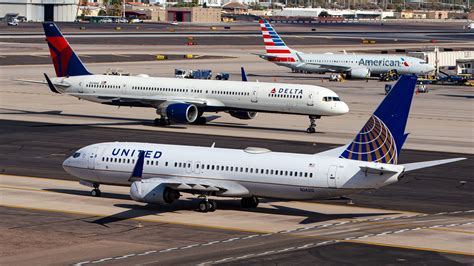
A combined United-American airline would hold dominant positions in critical hubs such as Chicago, Los Angeles, and New York, raising immediate red flags for regulators. The Department of Justice and the Department of Transportation would subject the deal to intense scrutiny, examining its potential impact on fares, competition, and consumer choice.
Legal experts argue that such a merger would likely be blocked due to the significant reduction in competition. Eliminating one of the “Big Four” carriers would fundamentally alter the industry’s competitive equilibrium, granting the merged entity substantial pricing power.
Consumer Impact: Higher Fares, Fewer Choices
History offers a clear warning. Previous airline mergers—including United-Continental and American-US Airways—resulted in fare increases of 5% to 10% on overlapping routes. A United-American merger could amplify this effect on a much larger scale.
For passengers, this translates into:
- Higher ticket prices on key domestic routes
- Reduced service frequency in smaller markets
- Increased ancillary fees, including baggage and seat selection
Moreover, fewer competitors create an environment where remaining airlines can more easily align pricing strategies, even without explicit coordination.

Operational Risks: When Bigger Becomes More Fragile
Merging two aviation giants is not a seamless process—it is a logistical and technological minefield. Integrating fleets, harmonizing pilot contracts, and unifying reservation systems often lead to temporary operational chaos.
Passengers could face:
- Widespread delays and cancellations
- Confusion over booking systems
- Disruptions in frequent flyer programs
The integration of loyalty programs presents another challenge. With millions of elite members combined into a single system, competition for upgrades and rewards would intensify dramatically, diluting the value of loyalty status.
Systemic Risk: A Giant Too Big to Fail
Perhaps the most critical concern is systemic risk. A merged United-American airline controlling nearly one-third of domestic air traffic would become a single point of failure within the U.S. transportation infrastructure.
In a worst-case scenario—such as a financial crisis, cyberattack, or labor strike—the disruption could paralyze national travel networks. The economic ripple effects would be immediate and severe, potentially forcing government intervention or taxpayer-funded bailouts.
This raises a fundamental question: Does efficiency justify vulnerability?
Political Undertones and the Trump Factor
The involvement of Donald Trump adds a distinct political dimension to the proposal. Known for his affinity for large-scale deals, Trump represents a potential ally for pro-consolidation advocates.
Kirby’s pitch reportedly emphasized the need for a stronger American airline capable of competing with foreign carriers, echoing broader themes of economic nationalism and trade protectionism. This framing positions the merger not just as a business decision—but as a strategic national initiative.
However, even a business-friendly administration would struggle to justify a merger of this magnitude without facing significant public and political backlash.
The Future of Airline Consolidation: Vision vs Reality
While the United-American merger remains speculative, it has already achieved one critical outcome: forcing the industry to confront its future. As airlines grapple with rising costs and global competition, consolidation will continue to surface as a potential solution.
Yet, the barriers—legal, operational, and ethical—are formidable. The proposal highlights a tension at the heart of modern aviation: the desire for efficiency and scale versus the necessity of competition and consumer protection.
In the end, Kirby’s vision may never materialize in its current form. But its impact is undeniable. It has sparked a conversation that will shape the trajectory of the airline industry—one where the stakes are nothing less than the future of global air travel.