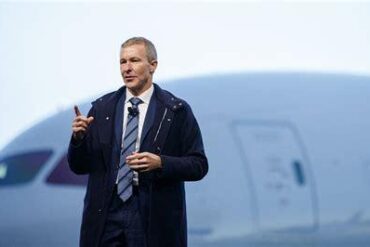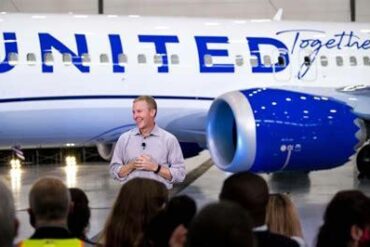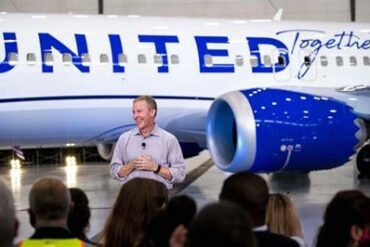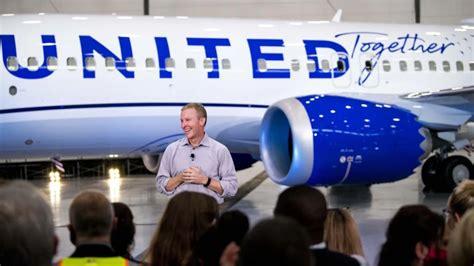
United Airlines CEO Scott Kirby has never shied away from a bold statement, but his latest remarks may be the most incendiary yet. In a candid and cutting interview on the Airlines Confidential podcast, Kirby laid out a vision for the U.S. airline industry that not only casts United and Delta as the only surviving premium players, but also paints American Airlines as a doomed competitor spiraling into irrelevance.
Kirby, known for his fierce ambition and confidence, declared with striking certainty: “There will be two large, revenue diverse, full service, brand loyal airlines.” When pressed to clarify if he truly meant just two — not three — Kirby affirmed without hesitation: “There’s two today, and there will only be two.” In his view, the rest of the field — and most notably American — is left scavenging for the scraps of spill traffic, stuck competing solely on price.
A Strategic Beatdown: Kirby’s Vision vs. American’s Decline
Kirby didn’t just speak in vague generalities. He went straight for the jugular, criticizing American’s position in Chicago, where United has been eating into its market share with surgical precision. “I wouldn’t want to play American’s hand,” he said flatly, underscoring his belief that American is making losing bets and has no long-term strategic positioning.
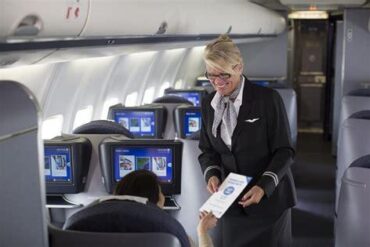
Kirby’s confidence is built on results. Under his leadership, United Airlines has seen a resurgence in financial performance, an aggressive international expansion, and massive investments in fleet and customer experience. Meanwhile, American continues to bleed money — including a loss in Q3 2025, typically a strong season — with no clear turnaround strategy in sight.
Delta, the Respected Rival — American, the Weak Link
Interestingly, Kirby reserved praise for Delta Air Lines, often painting it as a worthy adversary. He even went so far as to say that United has overtaken Delta by most metrics — a bold claim, but indicative of how he positions United not only as a challenger but a leader.
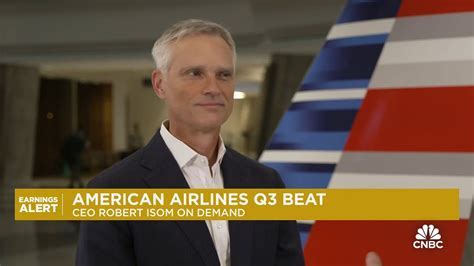
In contrast, American’s leadership under CEO Robert Isom comes off as rudderless. Unlike Kirby, who thrives in the spotlight and uses it to galvanize both employees and public perception, Isom has neither the visionary strategist persona nor the motivational power of a football coach. As podcast host Scott McCartney aptly said: “Once you lose labor, it’s over.” That loss of internal confidence is palpable at American.
A Narrative War: Confidence vs. Complacency
Kirby’s greatest asset may not just be his strategy, but his narrative control. He has a knack for shaping public and investor perception, proclaiming United as “the best airline in the history of aviation” — a statement grandiose, but delivered with such confidence that it reframes the conversation.
And while some may dismiss his claims as hubris, the sobering reality is this: American Airlines isn’t fighting back. Despite its vast strengths — such as global partnerships in London, Sydney, and Tokyo; strongholds in Charlotte, Dallas, and Miami; and a key Latin America footprint — American has failed to leverage these into a cohesive strategy. Instead, it’s languishing in incrementalism, offering small customer service tweaks while its larger narrative remains unclear and uninspiring.
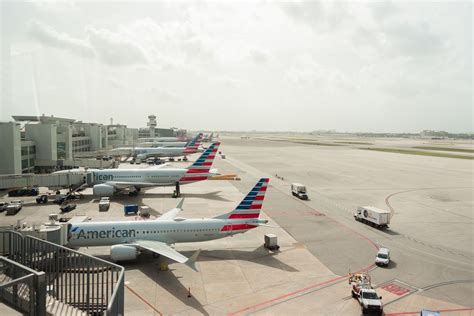
Table Stakes Aren’t Enough in a Game of Giants
American’s current mantra — “focus on the customer” — rings hollow without a bolder playbook. In Kirby’s view, and increasingly in the eyes of the industry, American is not building brand loyalty, nor driving revenue diversity, nor inspiring employees. It’s simply surviving.
Kirby’s prediction that only two full-service giants will remain — United and Delta — is not a prophecy carved in stone. But unless American shakes off its inertia and reclaims its seat at the strategic table, it may find itself written out of the script entirely.
Final Boarding Call for American
Scott Kirby is right — not because he has to be, but because American is letting him be. The challenge is not just external competition, but an internal lack of fire. If American is to rewrite its story, it needs leadership that commands loyalty, strategy that inspires confidence, and boldness that rivals Kirby’s own.
Until then, the skies belong to Delta and United. And Kirby, perched high in the cockpit of his ascending airline, is already charting the course beyond the horizon.