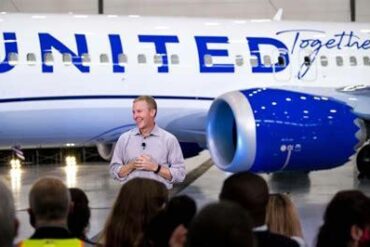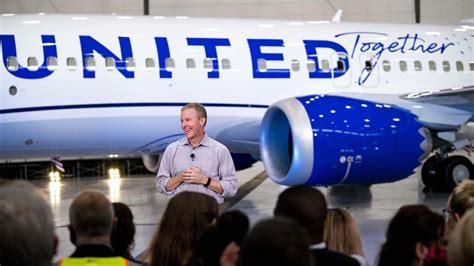
United Airlines CEO Scott Kirby reportedly approached Delta Air Lines CEO Ed Bastian about a potential megamerger that could have created one of the most powerful airlines in global aviation, according to a new report. The discussions, which took place last year, represent another example of Kirby’s willingness to explore industry-shaping transactions as United seeks to strengthen its position among the world’s largest carriers.
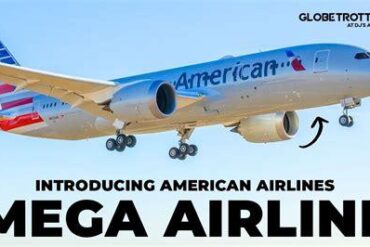
The reported outreach to Delta followed earlier speculation that Kirby had considered combining United with American Airlines, another proposal that attracted significant attention from industry observers and policymakers. Although neither deal moved beyond preliminary discussions, the developments reveal United’s aggressive strategic ambitions and the airline industry’s ongoing focus on scale, profitability, and competitive positioning.

United Airlines’ Search for a Transformational Deal
According to people familiar with the discussions, Kirby personally contacted Delta’s leadership to explore whether the two airlines could create a combined company with unmatched financial strength and network reach. Delta reportedly reviewed the proposal and conducted initial evaluations before deciding against moving forward with deeper negotiations.
A United-Delta combination would have brought together two of the most successful airlines in the United States. Both carriers have built strong international networks, premium customer strategies, and highly profitable operations. Together, they would have controlled an extraordinary share of the US airline market, creating a company far larger than any existing American carrier.
The attraction for United was not simply about increasing size. Delta has long been considered a model for operational performance, customer loyalty, and premium revenue generation. Its focus on attracting higher-value travelers through improved cabins, airport lounges, and reliable service has become a benchmark across the industry.
Why Delta Became an Appealing Merger Target
United has spent recent years adopting many strategies that helped Delta become one of aviation’s strongest financial performers. The airline has invested heavily in premium cabins, expanded its international network, upgraded airport experiences, and improved onboard services to compete for more lucrative passengers.
A merger with Delta would have instantly combined two complementary strengths. United brings a powerful global network, particularly across Asia and major international markets, while Delta has built a reputation for operational consistency and strong domestic performance. The result could have been an airline with enormous influence over both business and leisure travel.
The financial scale of such a transaction would have been unprecedented. Reports indicated that Delta’s market value was around $56 billion, while United’s valuation was approximately $38 billion at the time. A combined company approaching a $100 billion valuation would have represented one of the largest airline combinations in history.
Regulatory Barriers Made the Deal Extremely Difficult
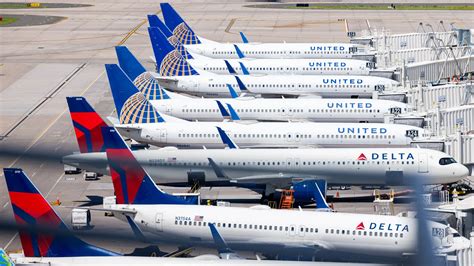
Despite the potential financial advantages, a United-Delta merger would have faced enormous regulatory challenges. The US airline industry has already experienced major consolidation over the past two decades, leaving American Airlines, Delta Air Lines, United Airlines, and Southwest Airlines as dominant players in domestic aviation.
Competition regulators would likely have examined the transaction closely because combining United and Delta could significantly reduce competition on many domestic and international routes. The Department of Justice, state attorneys general, and other authorities would have faced pressure to determine whether the merger would harm consumers through higher fares, fewer choices, or reduced service.
The political environment also played a role in speculation surrounding major airline mergers. Some executives believed a second Trump administration could potentially be more open to large corporate combinations. However, the size and market impact of a United-Delta deal would still have created substantial uncertainty.
United’s Broader Consolidation Strategy
Kirby’s reported approach to Delta is part of a broader effort to reshape United’s future. The airline executive has shown interest in bold strategic moves that could redefine the company’s competitive position. His earlier discussions involving American Airlines demonstrated a similar willingness to consider massive industry combinations.
However, those proposals have faced criticism from lawmakers and industry experts who argue that additional consolidation could weaken competition. American Airlines CEO Robert Isom previously described a possible United-American combination as anticompetitive, highlighting the concerns surrounding further concentration in the airline market.
For now, United and Delta remain fierce competitors. Both airlines continue to expand networks, improve passenger experiences, and compete for premium travelers without any immediate path toward a merger.
The Future of Airline Megamergers Remains Uncertain
The revelation that Kirby explored a Delta deal highlights how airline executives continue to evaluate opportunities for growth in a highly competitive industry. Larger scale can provide advantages through stronger purchasing power, expanded networks, and improved profitability.
However, the history of airline consolidation also shows that size alone does not guarantee success. Integration challenges, regulatory restrictions, and customer concerns can make major mergers extremely complex.
A United-Delta combination may never become reality, but the discussions demonstrate the continuing pressure facing major airlines to find new ways to compete. As global aviation evolves, carriers will likely continue searching for strategic opportunities that can strengthen their position in an increasingly competitive market.