Delta Air Lines has made another adjustment to its SkyMiles loyalty program, and this time even the airline’s highest-spending elite members have seen one of their most attractive perks reduced. The latest changes do not eliminate Choice Benefits or fundamentally restructure Medallion status, but they do alter the value equation for Platinum Medallion and Diamond Medallion members, particularly those who rely on Delta’s American Express cards to offset the cost of participating in the airline’s premium ecosystem.
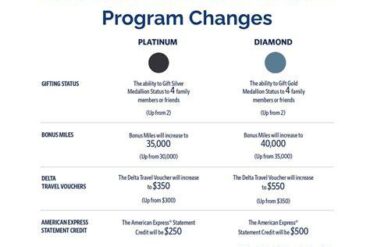
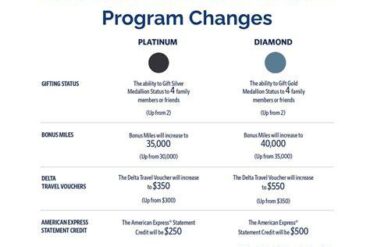
The change took effect on February 1, 2026, when Delta revised the value of four Choice Benefits. The most noticeable reduction affects the American Express statement credit, which had been one of the most straightforward and useful choices available to eligible elite members. Platinum Medallion members previously received a $400 statement credit option, while Diamond Medallion members could select a $700 credit. Those amounts have now been reduced to $250 for Platinum and $500 for Diamond.
The reduction is particularly significant because Choice Benefits are supposed to represent an additional reward for reaching Delta’s upper elite tiers. Unlike basic SkyMiles earning, which is available to virtually everyone, Choice Benefits give top-tier members the ability to decide how they want to extract additional value from their relationship with Delta. Cutting the value of one of the most flexible options therefore changes more than a single dollar amount. It changes the trade-off members face when deciding how to use benefits they earned through substantial spending and loyalty.
Delta SkyMiles Cuts the Value of Its Amex Statement Credit
The Amex statement credit was unusually easy for many SkyMiles members to understand. Instead of converting a benefit into miles, upgrades, travel restrictions, or a specialized partner reward, members could receive a direct credit against eligible American Express spending. For Diamond Medallion members in particular, the previous $700 value made the benefit especially attractive.
The new $500 Diamond Medallion credit represents a $200 reduction. For Platinum Medallion members, the reduction is $150, taking the benefit from $400 to $250. Those cuts may appear modest when compared with the overall spending required to achieve elite status, but the practical value of a statement credit is straightforward: a dollar of credit can generally be used to offset a dollar of eligible expense. That makes the reduction easier to feel than a change involving an award chart or redemption valuation.
The change also matters because Delta’s loyalty strategy is closely connected to American Express. Delta has built an enormous ecosystem around its co-branded Amex cards, while American Express benefits from the spending generated by customers who want to accumulate SkyMiles and improve their relationship with the airline. The two companies therefore have strong incentives to keep customers engaged with both the airline and the card portfolio.
For Diamond Medallion members, the previous $700 statement credit could also be viewed as a particularly compelling component of the annual value proposition. The reference material notes that the credit was popular and that the Diamond benefit could effectively offset the cost of a yearly Sky Club membership. Reducing it to $500 weakens that direct offset while leaving members to decide whether another Choice Benefit provides better value.
Delta Is Increasing Other Choice Benefits at the Same Time
Delta has not simply removed value from its Choice Benefits. The airline has simultaneously increased the value of three other options, creating a more complicated picture for Platinum and Diamond Medallion members.
The bonus miles Choice Benefit has increased to 35,000 miles for Platinum Medallion members and 40,000 miles for Diamond Medallion members. Delta has also expanded its status-gifting option. Platinum members can now gift Silver Medallion status to four friends or relatives instead of two, while Diamond members can gift Gold Medallion status to four people.
The travel voucher option has also become more valuable. Platinum Medallion members can now select $350 in travel vouchers, while Diamond Medallion members can select $550. These increases give members more alternatives when deciding how to use their Choice Benefits, even though they do not directly replace the simplicity of the Amex credit.
That distinction is important. A 40,000-mile award may have significant value to a traveler who can redeem SkyMiles efficiently, but its practical value depends on how and when those miles are used. A travel voucher is tied to future Delta travel. A gifted status benefit is valuable primarily when the recipient actually flies Delta and can take advantage of the privileges. The Amex credit, by contrast, was attractive partly because of its relative simplicity.
Delta’s strategy therefore appears to be shifting the mix of incentives rather than merely reducing the total number of rewards available.
How Delta SkyMiles Choice Benefits Work for Platinum and Diamond Members
Choice Benefits are among the most customizable elements of Delta’s Medallion program. Platinum Medallion members can select one Choice Benefit each year, while Diamond Medallion members can select three. That difference gives Diamond members considerably more flexibility, but it also means the value of individual options becomes increasingly important at the top of the program.
Platinum members can choose from options including bonus miles, status gifts, travel vouchers, an American Express statement credit, Starbucks Rewards Stars, a Sustainable Aviation Fuel contribution, Regional Upgrade Certificates, Delta Vacations savings, a Medallion Qualification Dollar accelerator, and a Wheels Up credit.
Diamond members receive the same broad menu, but several benefits have higher values or additional options. Their Wheels Up credit rises to $2,000, their MQD accelerator increases to $2,000 MQDs, and their Delta Vacations savings rise to $500. They can also select a larger collection of upgrade certificates, including Global Upgrade Certificates and Regional Upgrade Certificates.
Perhaps most notably, Diamond members can use Choice Benefits to obtain Sky Club membership. An individual membership requires two Choice Benefits, while an Executive membership requires three. This creates an interesting opportunity cost because a Diamond member who chooses lounge membership may have little or no flexibility left for other Choice Benefits.
The revised structure makes those trade-offs even more important. A Diamond member has three selections, but the most attractive options are not necessarily additive. Choosing Sky Club Executive membership consumes the member’s entire annual allocation, while selecting several individual benefits allows the member to build a customized package.
Why the Changes Matter More at the Top of Delta SkyMiles
The reduction in the Amex statement credit is particularly notable because Diamond Medallion is the highest publicly available Medallion tier. Reaching that level generally means a member has demonstrated substantial engagement with Delta and its broader loyalty ecosystem.
That makes Diamond Medallion benefits more than marketing extras. They are part of the economic calculation that determines whether continuing to concentrate travel and spending with Delta makes sense. When one benefit becomes less valuable, members may reconsider how they use their three Choice Benefits or how much importance they place on the overall Medallion program.
At the same time, the higher values for status gifts, miles, and travel vouchers provide Delta with a way to redirect members toward benefits that may encourage additional engagement. A member who chooses bonus miles may later use those miles for Delta travel. A member who selects a travel voucher must generally continue using Delta to realize the benefit. A member who gifts status can potentially bring another traveler deeper into the SkyMiles ecosystem.
This is where the latest changes fit into a much larger transformation of airline loyalty programs.
SkyMiles Reflects the Shift Toward Revenue-Based Loyalty
The major U.S. airline loyalty programs have increasingly moved away from rewarding passengers primarily according to distance flown. Delta SkyMiles, American Airlines AAdvantage, and United MileagePlus all use revenue-oriented systems in which spending plays a major role in determining rewards and elite qualification.
That evolution reflects the financial importance of loyalty programs to airlines. Frequent flyer programs were originally created largely to encourage passengers to remain loyal to a particular carrier. Today, they have developed into sophisticated businesses that generate substantial revenue through partnerships, particularly credit-card relationships.
Delta’s partnership with American Express is central to that model. American Express purchases SkyMiles from Delta and distributes them through its card products, giving Delta a major source of revenue that is separate from selling airline tickets. The loyalty program can therefore become extremely valuable to the airline even when the individual value of a mile or benefit is relatively modest.
The reference material describes SkyMiles as the world’s largest and most profitable loyalty program, with an estimated value of $31.7 billion. It also notes that Delta generates more revenue from SkyMiles than from ticket sales. Those figures help explain why Delta continues to refine the program so aggressively: the loyalty operation is not merely an accessory to the airline’s flying business.
Delta Is Not Alone in Pushing Credit Card Engagement
The same trend can be seen across competing U.S. airline programs. American Airlines has built its AAdvantage program around Loyalty Point Rewards, while United Airlines has increasingly connected MileagePlus benefits with co-branded credit-card ownership.
United’s changes in 2026 illustrate the direction of the industry. MileagePlus members with qualifying credit cards can earn more miles per dollar than members without cards at comparable status levels. The difference becomes particularly substantial at the highest elite tiers, making card ownership an increasingly important component of the program’s value structure.
The underlying business logic is relatively straightforward. Credit-card spending generates revenue for the airline through the sale of miles to its banking partner. Encouraging more customers to use co-branded cards can therefore increase the economic value of the loyalty program even when airlines simultaneously reduce the value of certain traditional perks.
Delta’s latest SkyMiles changes fit within that broader pattern. The airline is not abandoning elite rewards. Instead, it is adjusting the mix of benefits while maintaining a system that encourages continued spending within the Delta and American Express ecosystem.
What Delta SkyMiles Members Should Consider
For Platinum and Diamond Medallion members, the latest changes make the selection of Choice Benefits more important than before. The reduced Amex statement credit means members who previously selected it automatically may now find that another option better matches their travel patterns.
A frequent Delta traveler who can make strong use of Global or Regional Upgrade Certificates may place more value on those certificates than on a smaller statement credit. Someone who regularly books Delta vacations may find the increased travel savings more useful, while a member with family or friends who fly Delta could benefit from the expanded status-gifting option.
The higher mileage awards also deserve consideration, particularly for members who understand how to maximize SkyMiles redemptions. However, miles should not automatically be treated as equivalent to cash. Their eventual value depends on the redemption, availability, route, cabin, and timing.
The most important change is therefore not simply that one benefit is worth less. It is that Delta has changed the balance among its benefits, requiring members to think more carefully about which rewards fit their individual travel and spending habits.
The Bigger Question for Delta’s Most Loyal Customers
Delta’s latest SkyMiles changes highlight an increasingly familiar reality in airline loyalty: elite status can remain valuable even as individual benefits are repeatedly adjusted. Airlines have strong incentives to preserve the appeal of their programs while continuously modifying the economics behind them.
For Delta, reducing the Diamond Medallion Amex statement credit while increasing several alternatives allows the airline to preserve the appearance of choice while changing the relative attractiveness of different rewards. The program still offers substantial customization, but the value of that customization depends heavily on how members use their benefits.
For top-tier members, that distinction matters. Diamond Medallion status has not disappeared, and Choice Benefits remain a major part of the program, but the latest changes show that even the most valuable perks are not necessarily permanent. Delta is continuing to shape SkyMiles around revenue, credit-card engagement, and member spending, and that means the best strategy for extracting value from the program can change from one year to the next.
The February 2026 changes are therefore less about a single $200 reduction than about the direction of Delta’s loyalty program. The airline is preserving a broad menu of elite rewards while recalibrating which rewards receive the greatest emphasis. For members at the top of the SkyMiles hierarchy, keeping track of those shifts is becoming just as important as earning the status itself.