Premium economy is often described as a simple middle ground between economy and business class. In reality, adding the cabin can reshape an aircraft’s entire seating economics. Airlines give up some seats, but the number of economy seats sacrificed is often much smaller than passengers might assume—and the additional revenue can more than compensate for the lost capacity.
How Premium Economy Changes an Aircraft’s Seating Layout
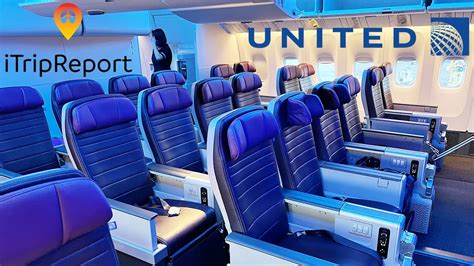
The easiest way to understand the economics is to look at what happens inside a real widebody aircraft. When United Airlines introduced its Boeing 777-300ERs in 2016, the aircraft originally carried 366 seats: 60 Polaris seats, 102 Economy Plus seats, and 204 standard economy seats.
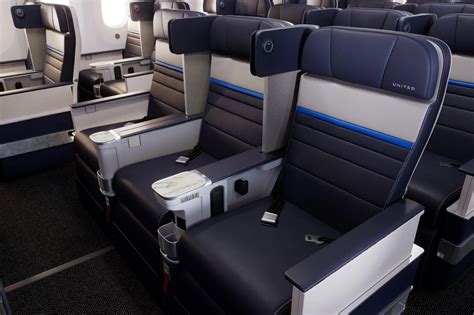
That configuration later changed when United expanded its Premium Plus product across its long-haul fleet. On the 777-300ER, the airline removed four rows of Economy Plus and installed three rows of Premium Plus instead. The resulting configuration had 350 seats, consisting of 60 Polaris seats, 24 Premium Plus seats, 62 Economy Plus seats, and 204 standard economy seats.
At first glance, that looks like a substantial capacity sacrifice. Sixteen seats disappeared even though only three rows of Premium Plus were installed. But the important point is that the calculation cannot be made simply by counting rows. Seat pitch, seat width, seats per row, and ticket revenue all determine whether an airline gains or loses economically.
Standard long-haul economy seating generally uses around 30 to 32 inches of pitch, while premium economy commonly receives approximately 38 to 42 inches. That extra space means each premium economy row consumes more cabin length. Yet it does not mean that every additional premium economy row automatically removes another full row of economy seats.
The difference becomes particularly interesting when an airline converts an existing premium-economy-style product such as Economy Plus rather than standard economy. United’s 777-300ER provides an unusually clear example because three rows of Premium Plus replaced four rows of Economy Plus. The resulting cabin was smaller in seat count, but the revenue potential per seat was considerably higher.
The Real Tradeoff Is More Than Legroom
Premium economy requires more than additional legroom. The seats themselves are normally wider, and the cabin often has fewer seats across the aircraft. This creates another important capacity penalty that cannot be seen simply by looking at row spacing.
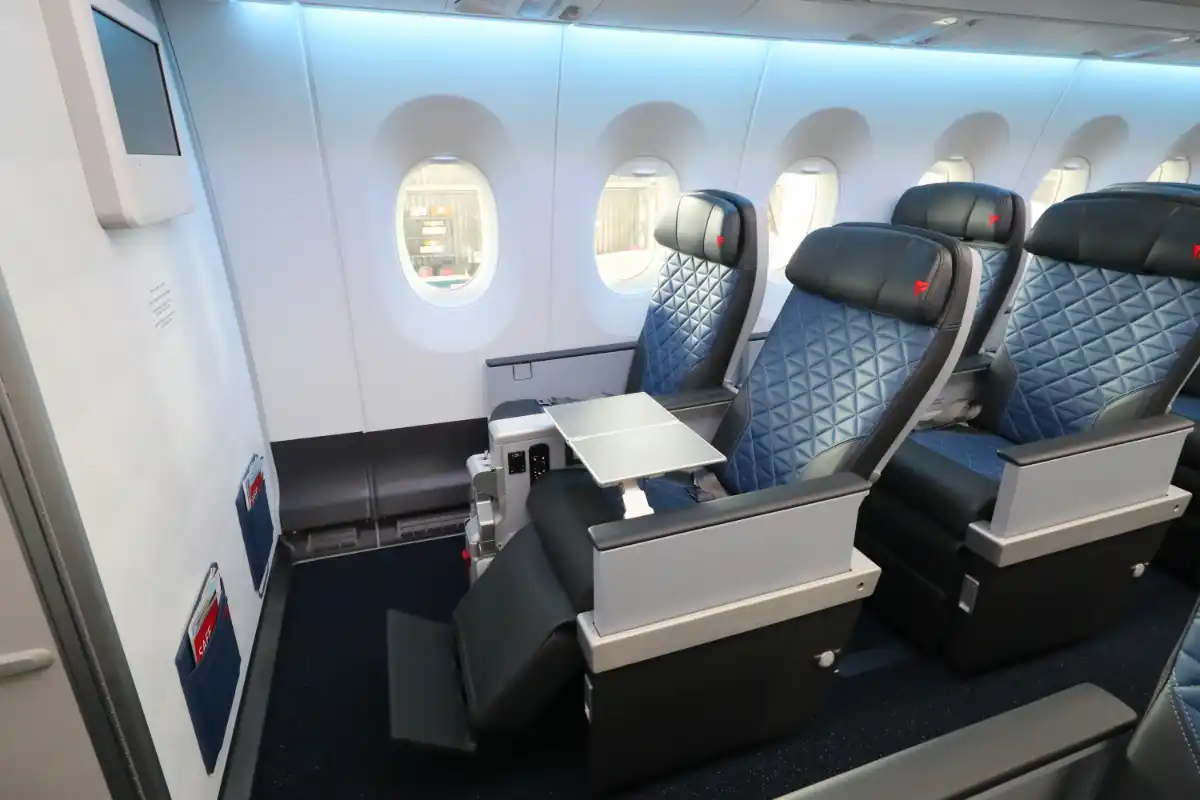
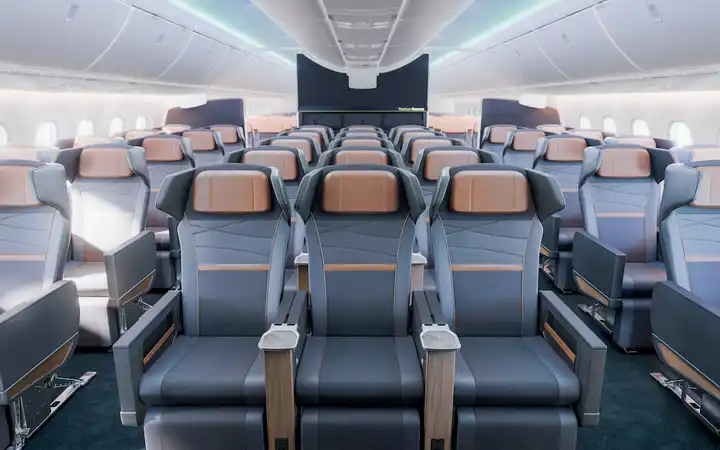
On some aircraft, premium economy removes one seat from each row compared with standard economy. Boeing 767s, for example, are commonly configured with six premium economy seats across compared with seven economy seats. Airbus A330s can move from seven-abreast premium economy to eight-abreast economy, while the Airbus A350 commonly uses eight premium economy seats compared with nine in economy.
The difference becomes even more dramatic on some of the industry’s newer widebody layouts. A Boeing 787 is commonly configured with seven premium economy seats across compared with nine economy seats. A Boeing 777 can use eight premium economy seats instead of ten economy seats.
That means an airline installing premium economy is sacrificing capacity in two dimensions: the cabin requires more space from front to back, and every row can hold fewer passengers from side to side.
The Airbus A380 presents another variation. Depending on where the premium economy cabin is installed, an airline may lose one seat per row on the upper deck or two seats per row on the main deck. Aircraft architecture therefore has a major influence on the economics of premium seating.
This is why saying that one premium economy row “costs” one economy row is too simplistic. A carrier might lose more or fewer seats depending on the aircraft, cabin position, seat design and existing configuration.
United’s 777-300ER Shows the Capacity Cost
United’s 777-300ER illustrates the tradeoff particularly well. The airline replaced 40 Economy Plus seats with 24 Premium Plus seats, representing a loss of 16 seats, or roughly 40% of the capacity in that section.
From a purely seat-count perspective, that looks unfavorable. An airline could theoretically sell 40 Economy Plus seats instead of 24 Premium Plus seats. But airlines do not maximize revenue by filling every available seat with the cheapest possible product.
The objective is to maximize the value generated by the aircraft’s limited cabin space. If 24 Premium Plus passengers collectively generate substantially more revenue than 40 Economy Plus passengers, reducing capacity can make financial sense.
This is the fundamental principle behind premium cabin expansion. An aircraft seat is not simply a unit of capacity; it is a piece of revenue-producing real estate.
United’s Economy Plus product offers approximately 34 inches of pitch, while its Premium Plus cabin uses approximately 38 inches. Standard economy is around 31 inches. The physical differences are meaningful, but the pricing differences can be even more important.
Premium economy therefore occupies a strange position in an aircraft’s economics. It requires substantially more space than economy, but it does not require anything close to the space consumed by a modern lie-flat business-class seat.
Why Premium Economy Can Outperform Economy
The central attraction of premium economy is its ability to command a much higher fare without consuming anything close to the amount of space required by business class.
On many long-haul routes, premium economy fares can reach roughly twice the price of economy, although actual pricing varies enormously by market, date, demand, competition and booking conditions. Importantly, the airline usually does not lose half of its capacity when adding the cabin.
That creates an attractive revenue equation.
Suppose an airline could sell a particular section entirely as economy. It might fit significantly more passengers, but each passenger would generate a lower fare. Converting part of that space into premium economy reduces the number of available seats while raising the average revenue per passenger.
The calculation becomes even more attractive when demand for premium economy is strong. If an airline consistently sells its premium seats at high fares, the cabin can generate more revenue per square foot than the economy cabin it replaced.
There is another indirect effect. Removing some economy capacity can reduce the supply of cheaper seats. When demand remains strong, the remaining economy seats can potentially achieve higher yields because the airline has fewer low-priced seats available.
This means premium economy does not necessarily earn money only from passengers sitting in Premium Plus. Its presence can also change the pricing environment for the rest of the aircraft.
Premium Economy Versus Business Class
The economics become even more revealing when premium economy is compared with business class.
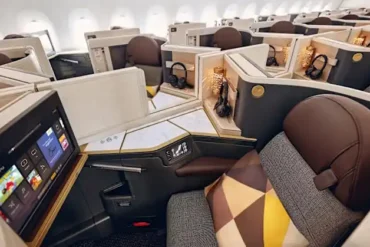
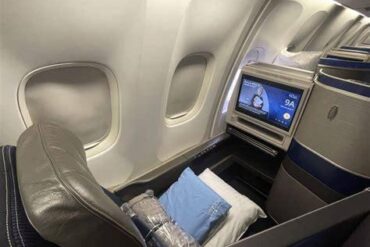
United’s original 2016 Polaris configuration used the Safran Optima seat, which was unusually space-efficient for a direct-aisle-access business-class product. Two rows could occupy a combined 76 inches of pitch, averaging just 38 inches per row.
In theory, the space occupied by four rows of Economy Plus could therefore accommodate approximately three rows of Polaris. But there is a crucial problem: business-class seats are much wider and fewer fit across each row.
United’s 2016 Polaris layout provided four seats per row. Premium Plus could provide eight seats across the same general cabin width. That difference dramatically changes the amount of revenue-generating capacity an airline can place into a given area.
In the space previously occupied by 40 Economy Plus seats, United could theoretically have installed only 12 Polaris seats using this particularly space-efficient business-class configuration. That would represent roughly 70% fewer seats.
The economics of premium economy therefore sit between two very different products. Economy maximizes passenger density, while business class maximizes revenue per passenger but consumes enormous amounts of cabin space. Premium economy attempts to occupy the middle ground.
Why Airlines Are Adding More Premium Seats
The growth of premium economy has also changed the way airlines think about their widebody cabins. When the product first became widespread, carriers had limited historical data about how passengers would respond to it.
Airlines faced a basic question: would premium economy passengers mostly be former business-class customers trading down, or would they be economy passengers willing to spend more?
The evidence from airline cabin strategies increasingly points toward substantial demand from leisure travelers and economy passengers seeking additional comfort on long-haul journeys.
This matters because leisure travelers represent a huge potential market. A passenger may not be willing to pay business-class prices for a vacation, but a significantly higher economy fare can become reasonable when the flight lasts 10, 12 or even 15 hours.
Premium economy therefore fills an important pricing gap. It offers more personal space, better seats and often improved service without requiring the customer to pay the full price of a lie-flat business-class product.
How American, Delta and United Are Reworking Widebodies
The changing cabin strategies of major US airlines demonstrate how quickly premium seating has become part of fleet planning.
American Airlines has been increasing premium capacity on aircraft such as the Boeing 787-9 and Boeing 777-300ER. Some newer 787-9 configurations feature 51 Flagship Suites and 32 premium economy seats, compared with an earlier layout containing 30 Flagship Business seats and 21 premium economy seats.
United has also moved toward larger premium cabins. Its newer Boeing 787-9 aircraft have been delivered with 64 Polaris suites and 35 Premium Plus seats, compared with older 787-9 configurations featuring 48 Polaris seats and 21 Premium Plus seats.
Delta Air Lines has taken another approach with its Airbus A350 fleet. Its newer configurations include 40 Delta One suites and 40 Premium Select seats, demonstrating how airlines are reallocating valuable cabin space toward higher-revenue products.
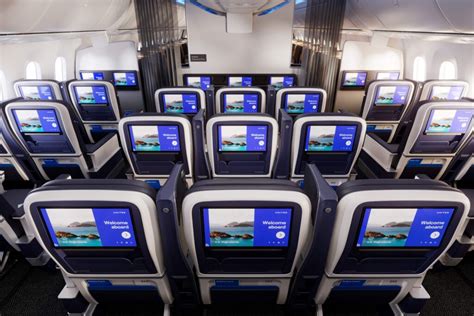
These changes show that the premium economy question is no longer simply about adding a few comfortable seats. Airlines are redesigning entire aircraft around the idea that premium passengers can generate significantly more revenue from each square foot of cabin space.
The Global Shift Toward Premium Economy
The trend is not limited to American carriers. Qantas expanded premium economy capacity during its Airbus A380 refurbishment program, eventually reaching 60 premium economy seats on its refurbished superjumbos.
Air France has also increased premium capacity in newer four-class Boeing 777-300ER configurations, adding both business-class and premium economy seats compared with earlier arrangements.
The broader pattern is important. Airlines are not merely adding premium economy because passengers like more legroom. They are doing so because the cabin provides a way to monetize space that would otherwise produce lower yields.
At the same time, carriers must remain careful. Premium economy seats can become expensive pieces of cabin real estate if airlines install too many of them without enough demand. The challenge is finding the point where higher fares outweigh the loss of passenger capacity.
Does One Premium Economy Row Really Cost Rows of Economy?
The answer is not necessarily.
Adding a premium economy cabin does require an airline to surrender some economy capacity. The amount depends on the aircraft’s width, seating arrangement, seat pitch, cabin location and the configuration being replaced.
United’s 777-300ER shows why the popular assumption can be misleading. Three rows of Premium Plus replaced four rows of Economy Plus, reducing the section from 40 seats to 24. But the airline did not simply lose “one row” of seats. It lost 16 seats because premium economy uses both additional front-to-back space and wider seats.
Yet the financial calculation is much more favorable than the raw seat count suggests. Premium economy can command substantially higher fares while consuming considerably less space than business class. That makes it an increasingly valuable part of the widebody cabin.
The modern airline therefore has to ask a different question. It is not how many seats can fit inside the aircraft? It is how much revenue can each section of limited cabin space generate?
That distinction explains why airlines continue adding premium economy even when doing so reduces total seat capacity. A row of economy seats may be physically worth more in terms of passenger volume, but a smaller number of premium economy seats can be worth more financially. On long-haul aircraft, that difference can determine how the entire cabin is designed.