Runways are among the most easily overlooked pieces of airport infrastructure, yet their dimensions can determine which aircraft an airport can handle, how much payload an airline can carry, and whether a route is commercially viable at all. While most major international airports operate runways between roughly 2,500 and 4,000 meters long, a small group stretches far beyond that range. Their extraordinary dimensions are rarely accidental.
The world’s longest commercial runways were built for very different reasons. Some compensate for high-altitude conditions, where thin air reduces lift and engine performance. Others were constructed for enormous cargo aircraft, military requirements, aircraft certification programs, or unusual geopolitical circumstances. In several cases, a runway that once served a highly specialized purpose has survived long after the original reason for its construction disappeared.
The airports featured here therefore tell a much broader story than a list of runway measurements. They reveal how geography, aircraft design, military history, international politics, and commercial aviation have repeatedly pushed engineers toward longer and longer strips of pavement. From Tibetan high-altitude operations to Soviet heavy-lift testing and South African long-haul strategy, these runways demonstrate that length can be a solution to remarkably different aviation problems.
Erbil International Airport, Iraq — 15,748 Feet
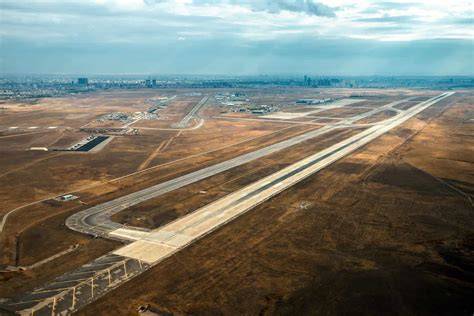
Erbil International Airport has a runway measuring approximately 4,800 meters, or 15,748 feet, placing it among the longest operational commercial runways in the world. The airport’s modern civilian identity is relatively recent, but the site has a much older military history. It began as an Iraqi military airfield in the early 1970s during the Ba’athist era and remained associated with military activity until the establishment of the United Nations no-fly zone over northern Iraq in 1991.
The transformation into a civilian airport followed the political and economic changes that came after the 2003 invasion of Iraq and the increasing autonomy of the Kurdistan Regional Government. The first commercial flight arrived in December 2003, while the present airport complex was completed in 2010 following a project costing approximately $550 million. British engineering firm Scott Wilson Group designed the facility, while Turkish contractor Makyol-Cengiz handled construction.
The runway’s unusual length was intentional. The Kurdistan Regional Government wanted Erbil to develop into a major regional gateway capable of handling essentially every type of large commercial aircraft. At 4,800 by 75 meters, the runway provided substantial performance margins for heavy widebody aircraft while supporting the airport’s ambitions to connect Europe, the Middle East, and Asia.
Before the temporary airspace disruption associated with the Iran conflict in early 2026, Erbil was served by 18 airlines flying to 31 destinations. International connections included major regional and European gateways such as Istanbul, Frankfurt, Dubai, Doha, and Amman. Following a ceasefire, Iraq’s four commercial airports reopened simultaneously on April 8, 2026, with airlines gradually restoring services. Erbil handled slightly more than 2.1 million passengers in 2024, making it the busiest airport in the Kurdistan Region and the third busiest in Iraq.
Madrid-Torrejón Airport, Spain — 15,807 Feet
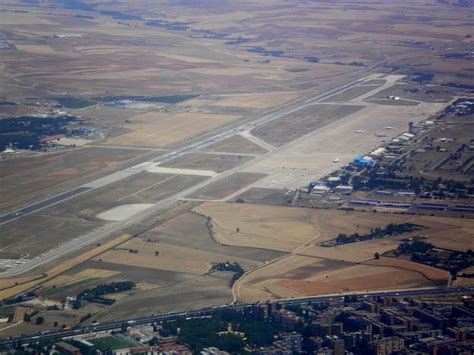
Madrid-Torrejón’s 4,818-meter runway, equivalent to approximately 15,807 feet, is a direct legacy of the Cold War. Its construction followed the Pact of Madrid signed between Spain and the United States in September 1953, when the two countries expanded military cooperation. A concrete runway replaced the site’s earlier grass strip, creating infrastructure capable of supporting the largest strategic bomber aircraft operated by the U.S. Strategic Air Command.
The base officially opened on June 1, 1957, and became an important American military installation in Spain. Its runway was exceptionally long for its era and was regarded as the longest runway in Europe until Ulyanovsk Vostochny opened in the Soviet Union in 1983.
Its length later gave the airfield another extraordinary role. During the Space Shuttle program, Torrejón was designated as an emergency landing location for NASA’s shuttles in the event of an abort during transatlantic operations. The airport’s location and exceptionally long existing runway meant that it could support the requirement without major runway modifications.
American military operations ended in the early 1990s, after which the Spanish Air Force assumed full control. Civilian charter and executive operations were permitted for a period, and the airport occasionally helped relieve pressure on Madrid-Barajas. That role ended permanently in February 2013.
Today, Torrejón is primarily a Spanish military and executive aviation facility. It hosts the Spanish Air Force’s 12th Combat Wing, F-18 fighters, VIP transport units, and aircraft associated with Spain’s senior political leadership. The runway therefore remains a remarkable example of Cold War infrastructure continuing to support aviation missions decades after its original strategic purpose changed.
Hamad International Airport, Qatar — 15,912 Feet
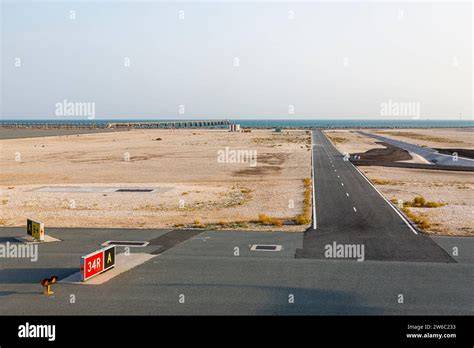
Hamad International Airport opened on April 30, 2014, replacing Doha International Airport after Qatar’s rapidly expanding international aviation network outgrew the older facility. The new airport was planned from 2003, with construction beginning in 2005 on a site partly created through land reclamation approximately five kilometers east of the former airport.
Its primary runway measures 4,850 meters, or 15,912 feet, making it one of the longest commercial runways in operation and the longest in Western Asia. The runway was deliberately designed around the requirements of the largest aircraft in the commercial fleet, including the Airbus A380 and Boeing 747-8.
Qatar’s climate makes runway performance particularly important. Summer temperatures can exceed 45 degrees Celsius, and high temperatures reduce air density. Combined with the airport’s relatively low elevation, extreme heat can increase takeoff distances, particularly for heavy aircraft carrying large fuel loads and substantial payloads on long-haul routes.
Hamad’s second runway measures 4,250 meters and sits roughly two kilometers from the primary runway, giving the airport substantial operational flexibility. The terminal has also expanded significantly. Phase B was completed in March 2025, raising annual passenger capacity to more than 70 million.
The airport’s extraordinary runway length is therefore closely connected to Qatar Airways’ long-haul business model. With a network spanning more than 170 destinations, Hamad needs infrastructure capable of supporting heavy widebody aircraft across demanding operating conditions. The runway is not simply long for prestige; it provides a substantial operational margin for an airport built around global connecting traffic.
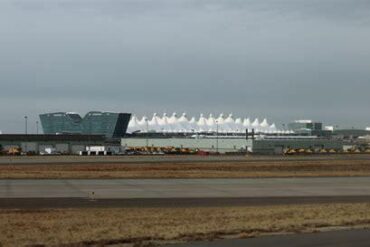
Denver International Airport, United States — 16,000 Feet
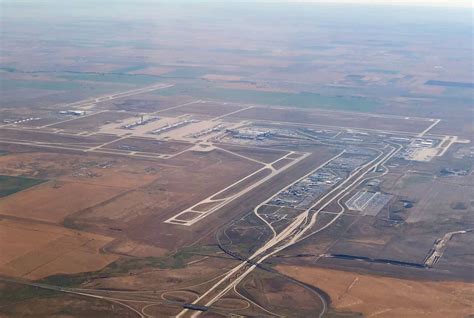
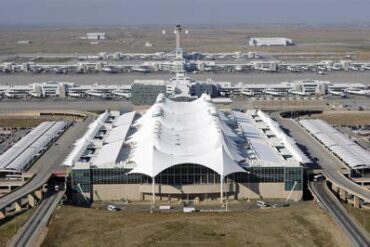
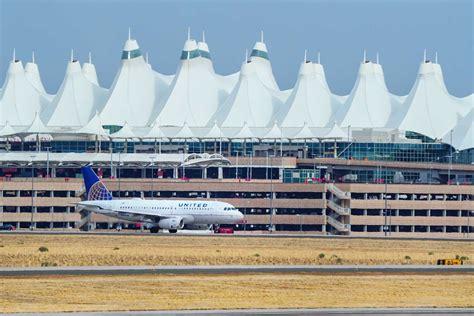
Denver International Airport has the longest public-use runway in North America, with Runway 16R/34L measuring exactly 16,000 feet, or about 4,877 meters. Its extraordinary length is closely related to Denver’s elevation. The airport sits approximately 5,434 feet above sea level, where the thinner atmosphere affects both aircraft lift and engine performance.
Denver International opened on February 28, 1995, replacing Stapleton International Airport. Stapleton had become increasingly constrained by its available land and closely spaced runways, contributing to delays across the national air traffic system. The replacement airport was constructed on an enormous 33,531-acre site northeast of Denver.
The airport initially opened with five 12,000-foot runways. The 16,000-foot runway was added in September 2003 and was built with a very specific performance challenge in mind. At high altitude, aircraft must generate sufficient lift in less-dense air, while engines also produce less thrust. Hot weather makes both effects more pronounced.
For heavy widebody aircraft, the combination of high elevation, high temperature, and maximum takeoff weight can significantly increase required runway distance. Denver’s longest runway provides additional margin for aircraft such as the Airbus A380 and Boeing 747-8, particularly under demanding summer conditions.
The runway also illustrates why raw runway length cannot be considered independently from geography. A 16,000-foot runway at sea level and a 16,000-foot runway at Denver do not solve exactly the same problem. In Colorado, every additional meter can provide valuable performance flexibility when atmospheric conditions work against aircraft.
Upington Airport, South Africa — 16,076 Feet
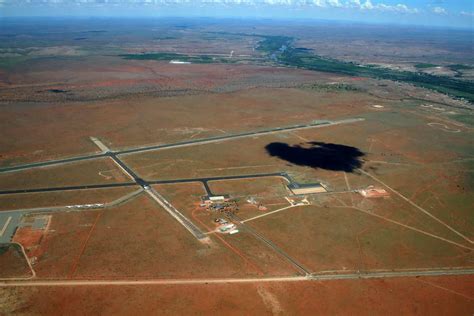
Upington Airport has a 4,900-meter runway measuring approximately 16,076 feet, and its origins are tied directly to the geopolitical circumstances of apartheid-era South Africa. When political changes in Angola caused South African Airways to lose landing rights in Luanda during the 1970s, the airline needed another way to operate long-distance flights toward Europe without relying on intermediate stops elsewhere on the continent.
Upington offered a crucial advantage over Johannesburg. At approximately 835 meters above sea level, it sits considerably lower than Johannesburg, which is around 1,753 meters above sea level. That difference meant better aircraft performance, particularly for a fully loaded Boeing 747 attempting a long nonstop flight.
Construction of Runway 17/35 reportedly took only six months, from January to July 1976. The resulting runway was long enough to support fully loaded 747 operations on routes toward London and Zürich. South African Airways subsequently operated twice-weekly 747 services through Upington during the late 1970s and into the early 1980s.
The airport also became useful for aviation research. In 1976, Concorde conducted hot-and-high flight testing at Upington, taking advantage of the runway and the challenging environmental conditions.
Today, Upington is much quieter. Airlink provides domestic services to Cape Town and Johannesburg, while annual passenger numbers are generally around 55,000 to 60,000. Seasonal cargo operations are particularly important, with grape exports from the Northern Cape traveling directly to Europe between November and January. Automobile manufacturers also use the airport for hot-weather vehicle testing.
Its runway therefore survives as a piece of infrastructure created for an unusual historical problem but adapted to entirely different commercial and industrial uses.
Embraer Unidade Gavião Peixoto Airport, Brazil — 16,295 Feet
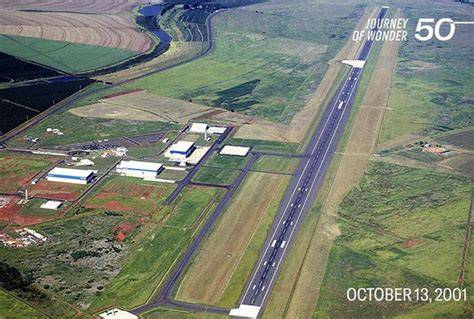
Gavião Peixoto Airport in São Paulo state has a 4,967-meter runway, equivalent to approximately 16,295 feet. Unlike the other airports on this list, it is not a conventional scheduled passenger airport. The facility is privately owned and operated by Embraer, and its runway exists primarily because of aircraft manufacturing and certification requirements.
Embraer opened the aerodrome in October 2001 after evaluating almost 300 potential locations. The site became an important center for final assembly, flight testing, and aircraft certification. Its Runway 02/20 measures 4,967 by 45 meters, making it one of the longest public-use runways in the Americas.
Aircraft certification requires far more than simply demonstrating that an aircraft can take off and land. Manufacturers must perform repeated high-speed rejected takeoffs, braking evaluations, directional-control tests, and maximum-energy stopping exercises. These tests can generate enormous heat in brakes and tires, making a long, controlled runway extremely valuable.
Gavião Peixoto also supports production of the KC-390 military transport aircraft and Super Tucano, while Embraer manufactures wings for the E190 and E195 family there. Since 2023, the site has also played a role in the assembly and testing of Saab Gripen E fighters in partnership with the Brazilian Air Force.
Interestingly, the full runway length is not available for every landing direction. A displaced threshold reduces usable landing distance to approximately 2,975 meters for northward approaches. Much of the remaining pavement is consequently more valuable for departures, high-speed testing, and specialized aircraft-development work than routine arrivals.
Ulyanovsk Vostochny Airport, Russia — 16,404 Feet
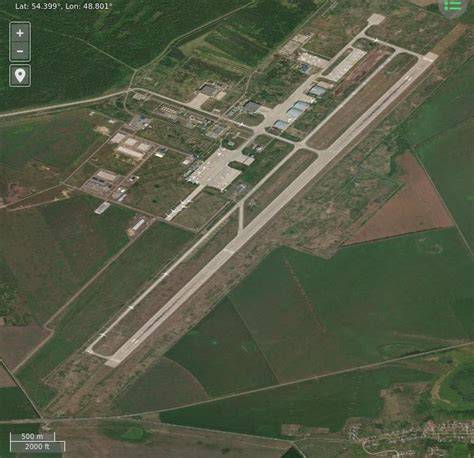
Ulyanovsk Vostochny shares the 16,404-foot, or 5,000-meter, runway-length figure that places it at the top of this group. Unlike high-altitude airports, however, Ulyanovsk has no atmospheric reason for such an enormous runway. It sits only about 77 meters above sea level.
The explanation lies in heavy aircraft and Soviet aerospace engineering. The airport was established in 1983 as a test facility associated with the nearby Aviastar-SP aircraft plant, which manufactures the enormous Antonov An-124 transport aircraft. The runway was built to support such aircraft at maximum weight, providing the performance margin required for testing and heavy cargo operations.
A direct taxiway connects the runway with the aircraft factory, creating an unusually close relationship between manufacturing and flight operations. The airport also had a role connected to the Soviet Buran space shuttle program, serving as an alternative landing facility.
Today, Ulyanovsk Vostochny remains closely associated with heavy-lift aviation and Volga-Dnepr Airlines. The carrier’s An-124 fleet has historically used the airport as a major base for transporting exceptionally large cargo that cannot be accommodated by conventional freighters.
International operations have been heavily affected by sanctions introduced after 2022, but the airport’s infrastructure remains strategically significant. Its enormous runway is essentially a physical expression of the Soviet and Russian emphasis on specialized heavy transport capability.
Shigatse Peace Airport, China — 16,404 Feet
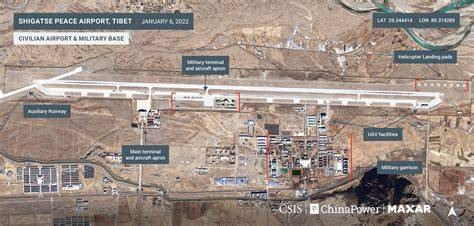
Shigatse Peace Airport reaches the same 5,000-meter, or 16,404-foot, length as Ulyanovsk Vostochny, but almost every reason behind the runway is different. The airport sits in Tibet at approximately 3,782 meters above sea level, placing it among the world’s highest commercial airports.
At that elevation, atmospheric density is dramatically lower than at sea level. Aircraft engines produce less effective thrust, wings generate less lift at a given true airspeed, and aircraft therefore need to accelerate to higher ground speeds before reaching rotation speed. These factors can make takeoff distances substantially longer.
For an airport serving a mountainous region where road and rail transportation can be difficult, maintaining reliable air connectivity is especially important. A 5,000-meter runway provides the performance margin necessary to operate commercial aircraft in an environment where altitude imposes severe aerodynamic penalties.
China Eastern Airlines, Tibet Airlines, and West Air operate scheduled services from Shigatse, while the airport also serves as a gateway for travelers heading toward the Everest region. A second runway measuring approximately 3,000 meters was completed in 2017 alongside expanded infrastructure.
The airport’s runway demonstrates perhaps most clearly why extreme length can be a necessity rather than an extravagance. At nearly four kilometers above sea level, Shigatse faces physical constraints that airports near sea level simply do not encounter.
Why the Longest Runways Are So Different
The airports with the world’s longest commercial runways do not form a single category in terms of purpose. Denver and Shigatse require extraordinary runway length because altitude reduces aircraft performance. Hamad International combines long-haul widebody requirements with extreme summer temperatures. Upington was created to solve a specific geopolitical and operational problem, while Ulyanovsk Vostochny was designed around enormous heavy-lift aircraft.
Gavião Peixoto takes another approach entirely. Its runway is essentially an industrial testing instrument, providing the space required to repeatedly push aircraft, brakes, tires, and control systems through demanding certification procedures. Madrid-Torrejón shows how infrastructure built for strategic bombers can later support completely different aviation requirements.
The common factor is that none of these runways became extraordinarily long simply because longer was automatically better. Their dimensions reflect the aircraft, environment, geography, history, or industrial mission surrounding each airport.
That is what makes the world’s longest runways particularly interesting. A 5,000-meter strip of concrete and asphalt may look simple from an aircraft window, but its dimensions can represent decades of military planning, billions of dollars in infrastructure, difficult atmospheric conditions, international politics, or the engineering requirements of aircraft weighing hundreds of tons.
In commercial aviation, runway length is ultimately about performance margins. The longest operational runways provide those margins where ordinary airport infrastructure cannot. Whether the challenge comes from thin Tibetan air, Denver’s altitude, Qatar’s summer heat, a fully loaded 747, an Antonov An-124, or an aircraft undergoing certification testing, these extraordinary airports demonstrate how the ground beneath an aircraft can be just as important as the aircraft itself.