Some of the world’s longest commercial airport runways have a history that reaches far beyond conventional passenger aviation. During the Space Shuttle era, NASA and other space agencies needed emergency landing sites capable of receiving an unpowered orbiter descending from orbit at extraordinary speed. A shuttle could not simply circle for another approach if conditions deteriorated. Once committed to landing, it had essentially one opportunity to get the touchdown, rollout, and braking sequence right.
That requirement created an unusual relationship between spaceflight and commercial airports. Several civilian or joint-use facilities already possessed the enormous runways, favorable geography, and clear approaches needed for shuttle emergency operations. Others became relevant because their runways were built for heavy cargo aircraft, high-altitude operations, extreme temperatures, or specialized aerospace testing. Their original purposes varied, but the result was the same: extraordinarily long strips of pavement capable of accommodating one of aviation’s most demanding landing profiles.
7. Lajes Field: 12,109 Feet Across the Azores
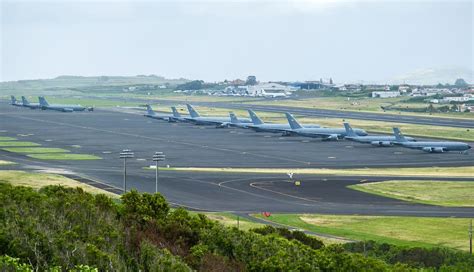
Lajes Field on Terceira Island in the Azores occupies a remarkable position in transatlantic aviation. Its 12,109-foot (3,691-meter) runway provided the kind of long, unobstructed landing surface required for the Space Shuttle’s Transoceanic Abort Landing (TAL) system.
The location was strategically important because an early shuttle launch placed the orbiter over vast stretches of ocean. If a serious problem occurred during ascent, reaching a conventional American landing facility could be impossible. A site in the mid-Atlantic therefore provided an essential safety option. Lajes could give a returning orbiter somewhere to land when the alternative might have been an ocean ditching.
The runway’s length was particularly valuable because a shuttle did not land like an ordinary airliner. The orbiter returned to Earth as an essentially unpowered glider, arriving with substantial kinetic energy and no conventional engine thrust available to extend a flight or execute a go-around. A long runway consequently offered a much greater margin for energy management and braking.
Today, Lajes remains a joint-use aviation facility with military and civilian functions. Commercial aircraft using the runway are therefore operating on infrastructure that once formed part of an international safety network for astronauts.
6. Zaragoza Airport: A Spanish Shuttle Emergency Gateway
Zaragoza Airport also possesses a 12,109-foot (3,691-meter) runway and became one of the European locations associated with NASA’s Transoceanic Abort Landing network. Its location in northeastern Spain placed it in a useful position beneath certain shuttle launch trajectories, while its extensive runway already satisfied the demanding physical requirements.
One of Zaragoza’s most interesting characteristics is that its suitability did not depend on building an entirely new aerospace runway. The existing infrastructure provided the required dimensions and approach characteristics, allowing the airport to become part of the broader emergency recovery system without transforming itself into a dedicated spacecraft facility.
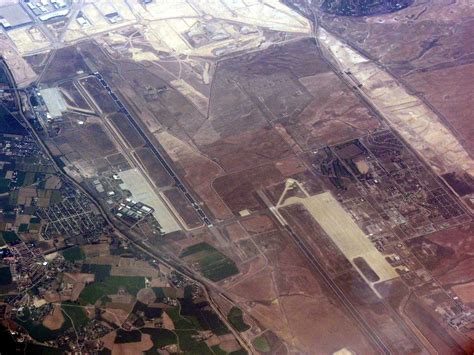
The surrounding geography was another advantage. An orbiter returning from space required a predictable, unobstructed approach into a runway long enough to absorb the consequences of a high-speed touchdown. Zaragoza offered both the pavement and the operational environment needed for such a contingency.
The airport now combines civilian aviation and Spanish military operations, handling passenger and cargo traffic. For today’s travelers, the runway is simply part of the airport. Historically, however, the same pavement represented a potential lifeline for a spacecraft carrying astronauts across the Atlantic.
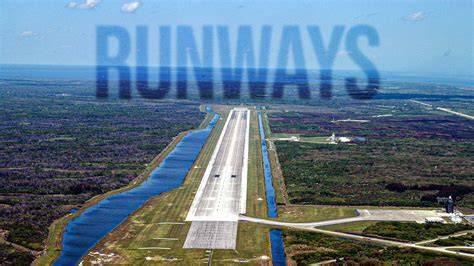
5. Kennedy Space Center Shuttle Landing Facility: 15,000 Feet of Shuttle History
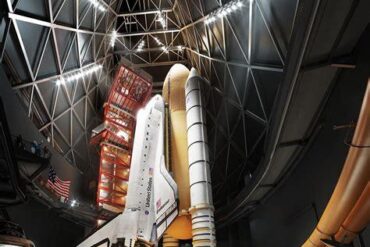
The most obvious entry on this list is the Shuttle Landing Facility at Kennedy Space Center, although its story differs from that of the commercial airports. Measuring approximately 15,000 feet (4,572 meters), the runway was specifically associated with the Space Shuttle program and became one of the most recognizable landing surfaces in aerospace history.
Unlike an ordinary airport runway, the Shuttle Landing Facility was designed around the needs of the orbiter. Its extraordinary length provided room for the shuttle to complete its high-energy approach and rollout, while its isolated location within the Kennedy Space Center offered controlled airspace and a highly secure operational environment.
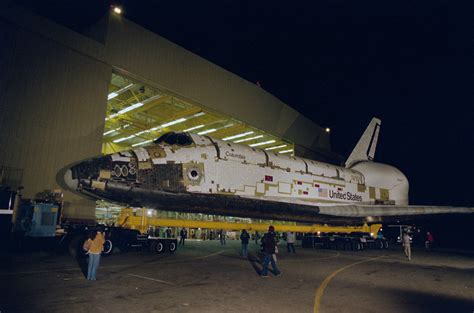
For decades, shuttle missions ended here, with orbiters arriving after completing missions in low Earth orbit. The runway therefore became more than infrastructure; it was the final stage of one of the most complex transportation systems ever developed.
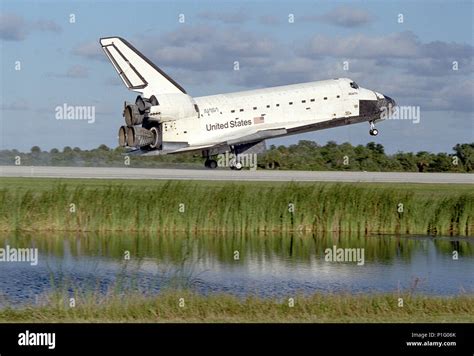
After the retirement of the shuttle fleet, the facility did not simply become a historical monument. Through arrangements involving Space Florida, the enormous runway has remained available for commercial and aerospace activity. Its length, isolation, and established aerospace infrastructure make it attractive for specialized aircraft operations and emerging horizontal spaceflight activities.
The transformation is particularly significant because it demonstrates how infrastructure created for government space exploration can find another life in the commercial space industry.
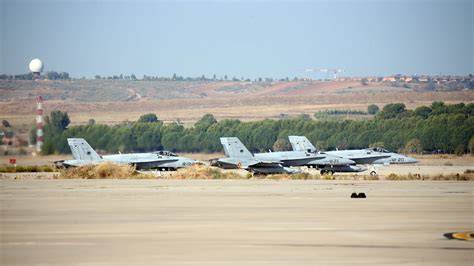
4. Torrejón Air Base: Spain’s 15,803-Foot Aerospace Runway
Near Madrid, Torrejón Air Base has an even longer runway than Kennedy’s Shuttle Landing Facility, stretching approximately 15,803 feet (4,817 meters). Its position and weather characteristics made it another valuable emergency option during the shuttle era.
The runway’s length provided considerable space for an orbiter arriving at high speed. Unlike a conventional airliner, the shuttle had no powered go-around capability once it was committed to the landing sequence. Every additional meter of usable runway therefore represented an important operational margin.
Torrejón’s relationship with civilian aviation has also evolved over time. The facility briefly supported civilian charter and executive operations as Madrid-Torrejón Airport, but its primary role ultimately returned to military activity.
Today, the runway remains associated with Spanish military aviation and heavy aircraft operations. Its enormous dimensions serve as a physical reminder that airport infrastructure can be designed around requirements far beyond ordinary airline traffic.
3. Denver International Airport: 16,000 Feet Built for Thin Air
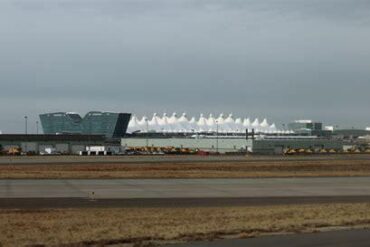
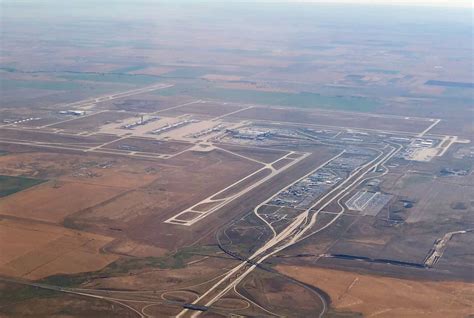
Denver International Airport provides one of the most fascinating examples because its 16,000-foot (4,877-meter) Runway 16R/34L was not built specifically for the Space Shuttle. Its enormous dimensions were primarily a response to Denver’s high elevation and the resulting performance challenges faced by commercial aircraft.
At roughly a mile above sea level, Denver’s atmosphere is significantly thinner than at many major airports. On hot summer days, that thin air can reduce aircraft performance, particularly during takeoff. Heavy airliners need more runway to accelerate and generate sufficient lift, making extended pavement particularly valuable.
The resulting runway was nevertheless long enough to accommodate a theoretical emergency shuttle landing. NASA’s orbiter had a minimum runway requirement of roughly 9,800 feet (2,987 meters) under appropriate conditions, placing Denver comfortably above that threshold.
This distinction matters. Denver was not a formal TAL site in the same sense as Lajes or Zaragoza. Instead, its suitability demonstrates how commercial aviation engineering can accidentally produce infrastructure capable of supporting spacecraft operations.
The airport’s runway is also longer than Kennedy’s Shuttle Landing Facility, making it one of the largest commercial-airport runways in the United States.
2. Upington Airport: A 16,076-Foot Desert Runway
In the Northern Cape of South Africa, Upington Airport possesses a 16,076-foot (4,900-meter) runway that once formed part of NASA’s worldwide emergency recovery planning.
The airport’s remote desert location was particularly useful. Space Shuttle operations required emergency landing options distributed across different parts of the globe because launch trajectories varied. A recovery site in southern Africa could provide coverage unavailable from facilities concentrated in Europe or North America.
Upington also has an environmental characteristic that helps explain its enormous runway: extreme heat and low atmospheric density. As temperatures rise, air becomes less dense, reducing aircraft performance. Heavy aircraft consequently require longer distances to accelerate for takeoff.
For an unpowered shuttle, the runway’s length offered a different but equally important advantage. The orbiter needed sufficient pavement to convert its enormous kinetic energy into a controlled landing and stop without running beyond the available surface.
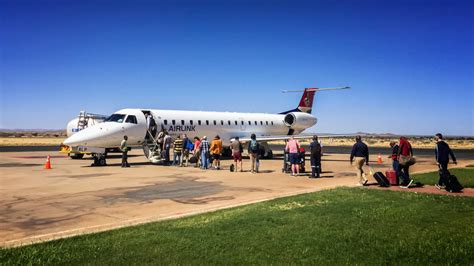
The airport’s vast runway consequently reflects two very different aviation requirements. It supports conventional heavy aircraft in a challenging environment while also representing a former emergency option for one of the world’s most sophisticated spacecraft.
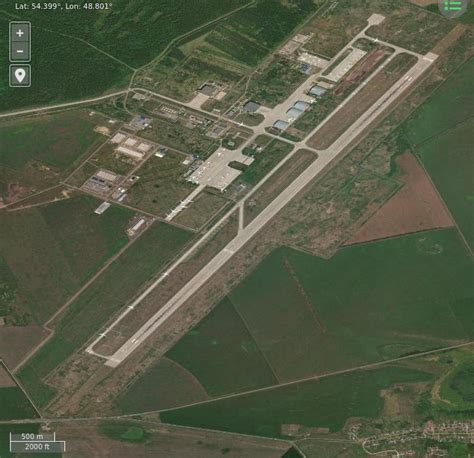
1. Ulyanovsk Vostochny Airport: 16,404 Feet for Giant Aircraft and Buran
At 16,404 feet (5,000 meters), Ulyanovsk Vostochny Airport has the longest runway among the seven facilities discussed here. Its origins are closely connected with Soviet heavy-aircraft manufacturing rather than American shuttle operations.
The airport was established in 1983 as a specialized flight-test facility serving the nearby Aviastar manufacturing complex. The site needed enough pavement to support enormous aircraft, including the Antonov An-124, one of the world’s largest heavy transport aircraft.
A runway measuring five kilometers gave these aircraft the space necessary for demanding test and operational work. The Soviet space program subsequently identified the facility as an alternate landing location for the Buran space shuttle, giving the runway a direct connection to the USSR’s answer to America’s Space Shuttle program.
The connection is especially intriguing because Buran, like the American orbiter, was designed to complete its atmospheric return as a glider. A sufficiently long runway was therefore a critical component of the recovery system.
Today, Ulyanovsk Vostochny remains associated with heavy cargo aviation. Its enormous runway supports the movement of oversized loads and large transport aircraft, preserving much of the operational logic that shaped the facility decades ago.
Why Space Shuttle Runways Had to Be So Long
The common thread among these airports is not simply runway length. It is the extraordinary challenge of landing a winged spacecraft without engines.
A commercial airliner normally has engines available throughout the approach and can execute a go-around if the runway becomes unsuitable. The Space Shuttle had no such option. Once its landing approach began, the orbiter had to complete the sequence using aerodynamic control, energy management, landing gear, and wheel braking.
Its approach speed was also substantially higher than that of many conventional aircraft. The shuttle’s trajectory had to be carefully managed because excess energy could result in a runway overrun, while insufficient energy could leave the orbiter short of the runway.
That made long, clear runways strategically valuable. NASA’s emergency network therefore looked for facilities that combined runway length, geographic coverage, suitable weather, clear approaches, and operational accessibility.
The result is visible today in airports scattered from the Azores and Spain to Colorado, South Africa, and Russia. Their runways may now serve airliners, cargo giants, military transports, or aerospace companies, but their dimensions preserve a remarkable chapter of aviation history.
The Space Shuttle program ended in 2011, yet its engineering legacy remains embedded in these enormous expanses of pavement. Every modern aircraft that lands on one of them is, in a small way, using infrastructure shaped by the extraordinary demands of returning from space.