The length of an airport runway is never arbitrary. It is a direct response to physics, geography, and ambition—where thin air, extreme heat, heavy aircraft, and geopolitical constraints converge into strips of asphalt stretching nearly five kilometers. These runways are not simply long; they are purpose-built solutions to some of aviation’s most demanding challenges.
Across continents, the world’s longest commercial runways reveal a fascinating intersection of altitude, climate, military history, and aircraft engineering. From the high plateau of Tibet to the scorching deserts of Qatar, each runway tells a story of necessity—where standard aviation infrastructure simply wasn’t enough.
Why Runway Length Matters in Modern Aviation
Aircraft do not lift off magically—they require speed, and speed requires distance. At sea level under ideal conditions, a heavily loaded widebody jet may need several thousand meters to safely depart. But introduce high elevation, extreme temperatures, or maximum payload operations, and that requirement increases dramatically.
At higher altitudes, air density drops, reducing both engine thrust and wing lift. Similarly, hotter temperatures thin the air even further, forcing aircraft to accelerate longer before achieving takeoff speed. This phenomenon, known as “density altitude,” is the invisible force shaping many of the runways on this list.
Erbil International Airport – Iraq’s Strategic Aviation Gateway
Erbil International Airport’s 4,800-meter runway reflects a bold vision: transforming a former military airbase into a major regional hub connecting Europe and Asia. Built on the foundations of a 1970s Iraqi military installation, the airport evolved rapidly after 2003 as the Kurdistan Region sought economic independence and global connectivity.
The runway was intentionally designed to handle every aircraft type in operation, from narrowbody regional jets to long-haul widebody giants. This flexibility allowed airlines to operate direct routes linking Erbil with key cities such as Istanbul, Frankfurt, and Dubai.
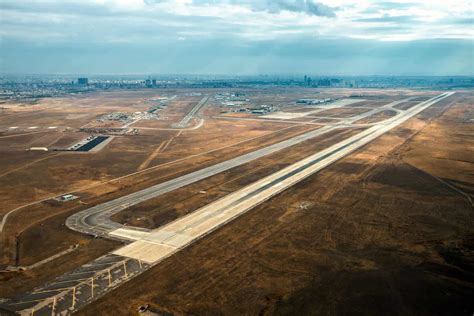
Despite geopolitical disruptions, including temporary airspace closures in 2026, the airport remains a critical aviation node in northern Iraq, handling millions of passengers and serving as a symbol of regional resilience.
Madrid-Torrejón Airport – A Cold War Relic Turned Strategic Asset
Madrid-Torrejón’s 4,818-meter runway is a direct product of Cold War strategy. Constructed under the 1953 Pact of Madrid between Spain and the United States, it was built to accommodate Strategic Air Command bombers, some of the largest military aircraft of their time.

What makes this runway particularly unique is its unexpected role in the space age. During the Space Shuttle era, Torrejón was designated as an emergency landing site for NASA missions, thanks to its immense length and optimal transatlantic positioning.
Today, the airport operates primarily as a Spanish Air Force base, hosting fighter squadrons and VIP transport units. Its runway, however, remains a silent witness to decades of military and aerospace history.
Hamad International Airport – Designing for Heat and Scale
In Doha, Hamad International Airport redefines what a modern aviation hub can achieve. Its 4,850-meter primary runway is the longest in Western Asia, engineered specifically to counteract extreme desert heat, where temperatures regularly exceed 45°C.
Hot air reduces engine performance and lift, forcing aircraft—especially fully loaded long-haul jets—to require longer takeoff distances. This is why Hamad’s runway is not just long but strategically oversized, ensuring safe operations even under the harshest conditions.

The airport’s dual-runway system, combined with massive terminal expansions, supports a global network of over 170 destinations. It stands as a cornerstone of global aviation connectivity, linking continents through one of the most advanced hubs ever built.
Denver International Airport – Conquering High-Altitude Challenges
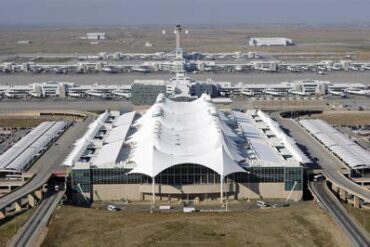
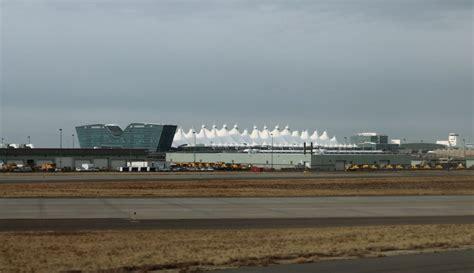
Denver International Airport sits at 5,434 feet above sea level, where the air is significantly thinner than at coastal airports. To compensate, the airport constructed a 16,000-foot (4,877-meter) runway, the longest public-use runway in North America.
At this elevation, aircraft require substantially higher ground speeds to generate lift. Add summer heat into the equation, and performance margins become razor-thin. The extended runway allows even the heaviest aircraft, including the Airbus A380 and Boeing 747-8, to depart safely at maximum payload.
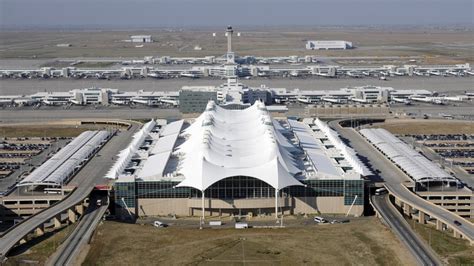
Denver’s vast layout and runway design also minimize delays and congestion, making it one of the most efficient large airports in the United States. Here, runway length is not a luxury—it is a necessity dictated by altitude physics.
Upington Airport – A Runway Born from Isolation
Upington Airport in South Africa possesses one of the most unusual origin stories in aviation. Its 4,900-meter runway was constructed in just six months during the 1970s to overcome apartheid-era sanctions that restricted international routing options.
South African Airways needed a way to operate long-haul flights to Europe without relying on intermediate stops. The solution was simple but extreme: build a runway long enough for a fully loaded Boeing 747 to take off nonstop to London or Zürich.
The airport’s lower elevation compared to Johannesburg provided a critical performance advantage, making it the ideal location for this ambitious project.
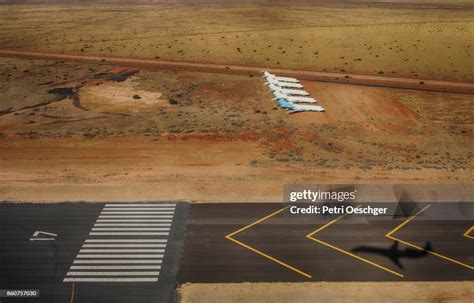
Today, Upington handles modest passenger traffic but plays a significant role in cargo exports and specialized operations, including agricultural shipments and automotive testing. Its runway remains the longest in the Southern Hemisphere, a legacy of necessity turned into enduring infrastructure.
Embraer Gavião Peixoto – Where Aircraft Are Pushed to Their Limits
Unlike traditional airports, Gavião Peixoto in Brazil exists primarily for aircraft manufacturing and testing. Its 4,967-meter runway is not designed for passenger convenience but for engineering precision and certification rigor.
Here, aircraft undergo extreme testing scenarios, including high-speed rejected takeoffs, maximum braking tests, and stability trials. These procedures demand enormous distances to safely simulate real-world emergency conditions.
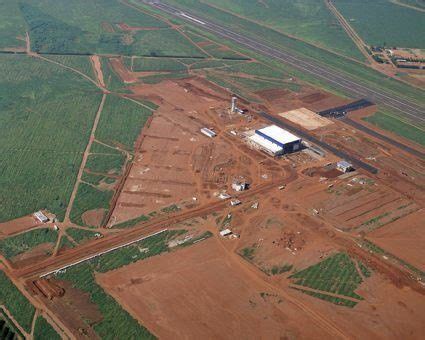
The runway’s length allows repeated testing cycles without interference, making it one of the most important facilities in global aerospace development. It is a place where aircraft are not just flown—they are pushed to their absolute limits.
Ulyanovsk Vostochny and Shigatse Peace Airport – Two Extremes, One Record
At the top of the list are two airports sharing the same astonishing runway length of 5,000 meters (16,404 feet)—yet built for entirely different reasons.
Shigatse Peace Airport – Battling Thin Air in Tibet
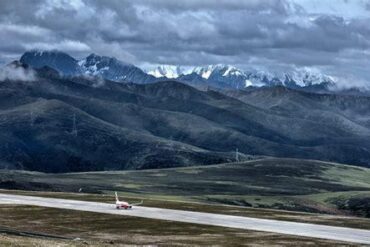
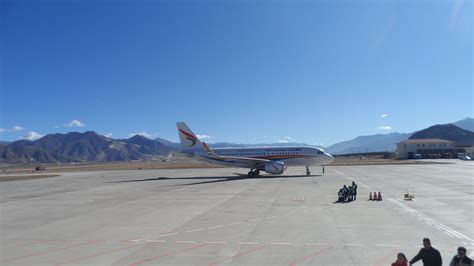
Located at an elevation of 3,782 meters, Shigatse operates in an environment where air density is roughly half that at sea level. In such conditions, aircraft require dramatically longer distances to achieve takeoff speed.
Without its 5,000-meter runway, commercial aviation in this remote region would be nearly impossible. The airport serves as a vital gateway, connecting Tibet to the rest of China and supporting both civilian and strategic operations.
Ulyanovsk Vostochny Airport – Built for Giants
In stark contrast, Ulyanovsk sits near sea level, where altitude is irrelevant. Its runway was built to accommodate the Antonov An-124, one of the largest cargo aircraft ever produced.
The airport also played a role in the Soviet space program, serving as an alternate landing site for the Buran space shuttle. Its massive runway width and length reflect the need to handle extreme aircraft weight and size, rather than environmental constraints.
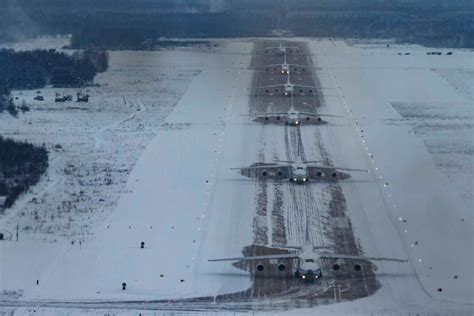
Together, these two airports illustrate how identical runway lengths can emerge from completely different engineering challenges—one shaped by altitude, the other by sheer aircraft scale.
The Engineering Philosophy Behind Extreme Runways
What unites these airports is not just their length, but the precision engineering and strategic thinking behind them. Each runway represents a tailored solution:
- Altitude-driven design: Denver and Shigatse compensate for thin air
- Climate-driven expansion: Doha addresses extreme heat
- Geopolitical necessity: Upington and Erbil reflect historical constraints
- Military and aerospace influence: Torrejón and Ulyanovsk highlight defense priorities
- Industrial testing demands: Gavião Peixoto serves aviation innovation
These are not excesses—they are exact calculations translated into concrete and asphalt.
Runways as Strategic Infrastructure in a Changing World
As aviation evolves, the demand for longer runways is unlikely to disappear. New aircraft may be more efficient, but payload expectations, climate variability, and operational flexibility continue to push infrastructure requirements.
Airports aiming to become global hubs must anticipate not just current aircraft, but future designs, environmental conditions, and geopolitical realities. In this context, runway length becomes a form of strategic insurance, ensuring adaptability in an uncertain world.
Conclusion: Where Physics Meets Ambition
The world’s longest commercial runways are more than engineering feats—they are manifestations of human determination to overcome natural and political limits. Whether carved into high-altitude plateaus or stretched across desert plains, these runways enable aviation to function where it otherwise could not.
They remind us that flight is not just about aircraft, but about the infrastructure that makes flight possible. And at the extreme edges of that infrastructure, runway length becomes the decisive factor between limitation and possibility.