Commercial aviation in the United States is often associated with massive passenger hubs, crowded terminals, and constant aircraft movement. Yet behind the scenes, one of the most critical—and frequently overlooked—components of aviation infrastructure is runway length. While travelers may focus on amenities inside terminals, pilots and engineers care deeply about the expanse of concrete beneath the wheels, where every extra foot can translate into improved safety, flexibility, and performance.
Runway length is not simply a matter of prestige or scale. Instead, it reflects a complex intersection of geography, climate, aircraft capability, and operational demands. Airports at higher elevations require longer runways due to thinner air, while those in hot climates must compensate for reduced engine performance. Meanwhile, major international gateways need extended pavement to accommodate fully loaded widebody aircraft embarking on long-haul journeys.
Across the United States, a handful of airports stand out for their exceptionally long runways. These are not always the busiest airports, nor the most famous—but they are among the most technically significant. From high-altitude hubs in the Rocky Mountains to desert airfields and global gateways on the East Coast, these runways reveal the hidden engineering brilliance that keeps aviation running smoothly.
Why Runway Length Matters in Modern Aviation
Before diving into the rankings, it is essential to understand why runway length plays such a pivotal role. Aircraft performance is heavily influenced by environmental conditions. At higher elevations, the air becomes less dense, which reduces both engine thrust and wing lift. Similarly, high temperatures—especially in desert regions—can significantly degrade performance, forcing aircraft to require longer distances to take off safely.
For long-haul flights, the challenge becomes even more pronounced. Aircraft departing on intercontinental routes often carry maximum fuel loads, increasing their weight and requiring more runway for acceleration. Without sufficient runway length, airlines may be forced to reduce payload, limiting cargo or passenger capacity—an outcome no operator wants.
This is why the longest runways are often found in places where operational constraints demand them, rather than where passenger numbers are highest. The following five runways perfectly illustrate this principle.
5. Colorado Springs Airport (COS) – 13,500 Feet of High-Altitude Precision
Colorado Springs Airport may not dominate headlines in passenger traffic rankings, but its infrastructure tells a different story. Its primary runway, Runway 17L/35R, stretches an impressive 13,500 feet, making it one of the longest commercial runways in the country.
Situated at an elevation of approximately 6,187 feet above sea level, Colorado Springs faces significant performance challenges. At this altitude, aircraft engines produce less thrust, and wings generate less lift, especially during warm weather conditions. The extended runway length is not a luxury—it is a necessity.
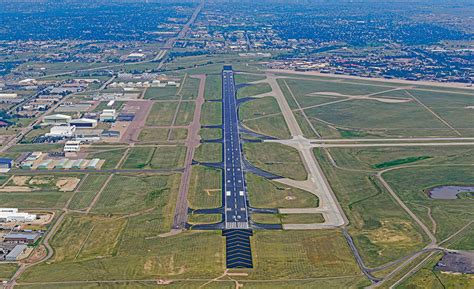
What makes this airport particularly interesting is its joint military and civilian role. As a shared-use facility, it must accommodate a wide range of aircraft, from commercial jets to military transports. This dual-purpose functionality demands a runway capable of handling heavier loads and more complex operations than a typical regional airport.
Despite its smaller passenger volume, Colorado Springs serves as a critical diversion airport in the region. When weather or congestion affects nearby hubs, its long runway and robust infrastructure allow it to step in seamlessly. In this sense, it embodies a recurring theme: runway length is often about strategic capability, not just daily traffic.
4. Albuquerque International Sunport (ABQ) – A Desert Giant with Hidden Strength
Albuquerque International Sunport often surprises aviation enthusiasts when it appears on lists like this. Its Runway 08/26, measuring 13,793 feet, surpasses the longest runways at several major U.S. hubs, including Dallas/Fort Worth and Miami.
The explanation lies in geography and function. Located at an elevation of about 5,355 feet, Albuquerque faces similar high-altitude challenges as Colorado airports. However, it adds another layer of complexity through its shared operations with Kirtland Air Force Base.

This dual-use arrangement significantly influences infrastructure design. The runway must support not only commercial flights but also military operations and cargo movements, which often involve heavier aircraft requiring longer takeoff distances.
The desert climate further amplifies the need for runway length. High temperatures can dramatically reduce aircraft performance, making longer runways essential during summer months. As a result, Albuquerque’s primary runway becomes a critical asset for safe and efficient operations year-round.
Interestingly, Albuquerque is not a major airline hub. Yet its runway demonstrates that operational necessity can outweigh passenger demand. It stands as a reminder that some of the most impressive aviation infrastructure exists outside the spotlight of mega-hubs.
3. John F. Kennedy International Airport (JFK) – Built for Global Reach
Unlike the previous entries, John F. Kennedy International Airport in New York earns its place on this list for entirely different reasons. Its longest runway, measuring 14,511 feet, is not driven by altitude or extreme temperatures but by its role as a global aviation powerhouse.
JFK serves as one of the primary international gateways to the United States, handling an enormous volume of long-haul flights to Europe, Asia, the Middle East, and beyond. These routes require aircraft to depart at maximum weight, fully fueled for journeys spanning thousands of miles.
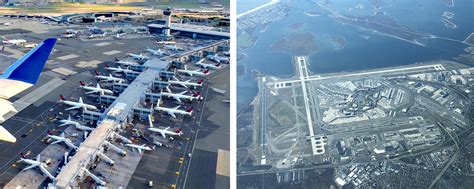
The runway’s length ensures that even the heaviest widebody aircraft—such as the Boeing 777 or Airbus A350—can take off safely without compromising payload. In this context, every additional foot of pavement contributes to operational efficiency and airline profitability.
Unlike high-altitude airports, JFK operates at near sea level. This means its long runway is a direct response to traffic demands and aircraft size, rather than environmental constraints. It is a clear example of how infrastructure adapts to the needs of global connectivity.
The runway’s 200-foot width and grooved concrete surface further enhance safety, particularly in wet or high-traffic conditions. At JFK, the runway is not just long—it is meticulously engineered to support one of the busiest and most complex airspaces in the world.
2. Harry Reid International Airport (LAS) – Desert Heat Meets Engineering Excellence
Las Vegas might be synonymous with entertainment, but its airport tells a story of serious aviation engineering. Harry Reid International Airport’s Runway 8L/26R stretches 14,835 feet, making it the second-longest commercial runway in North America.
At first glance, Las Vegas does not seem like a place that would require such a massive runway. However, the intense desert heat of Southern Nevada creates conditions similar to high-altitude airports. As temperatures rise, air density drops, and aircraft performance declines.
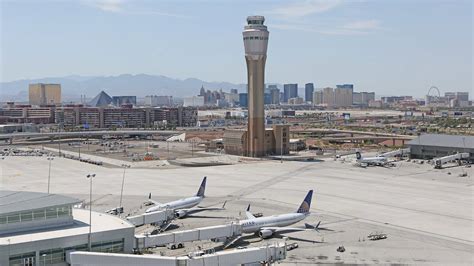
This phenomenon, often referred to as the “hot-and-high effect,” means aircraft need more runway to achieve safe takeoff speeds. During peak summer months, when temperatures can soar above 40°C (104°F), the extended runway becomes indispensable.
What makes Las Vegas particularly fascinating is the contrast between its leisure-focused image and its highly capable infrastructure. While many travelers associate the airport with short domestic flights, it is fully equipped to handle long-haul and high-performance operations.
The airport’s layout, featuring multiple parallel runways, further enhances efficiency. Runway 8L/26R serves as the backbone of this system, enabling airlines to operate reliably even under extreme environmental conditions.
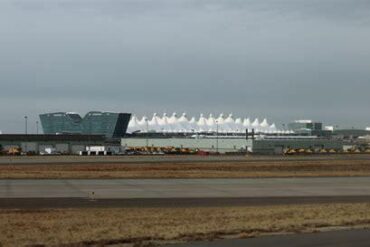
1. Denver International Airport (DEN) – The Longest Runway in North America
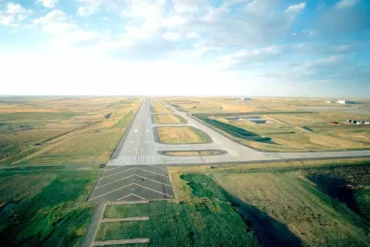
At the top of the list stands Denver International Airport, home to the longest commercial runway in the United States—and indeed, all of North America. Runway 16R/34L measures a staggering 16,000 feet, or just over three miles in length.
Denver’s elevation, exceeding 5,400 feet above sea level, plays a decisive role in this achievement. The combination of high altitude and warm summer temperatures creates one of the most challenging operating environments for aircraft in the country.
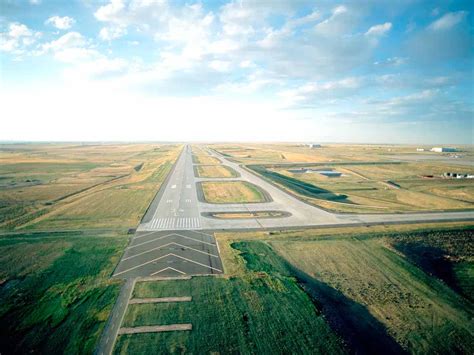
In such conditions, aircraft require significantly more runway to generate sufficient lift and acceleration. For long-haul flights departing with full fuel loads, the margin becomes even tighter. The 16,000-foot runway provides the necessary space to ensure safe and efficient departures under all conditions.
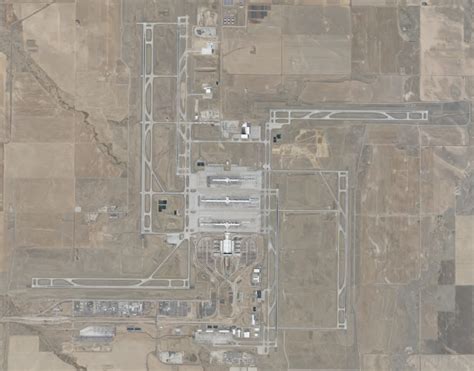
Denver’s airfield design amplifies its effectiveness. With six non-intersecting runways, the airport boasts one of the most efficient layouts in the United States. This allows simultaneous operations, reducing delays and maximizing throughput.
Runway 16R/34L is the crown jewel of this system. It is not merely long—it is strategically vital, enabling Denver to function as a major hub for domestic and international travel. Airlines benefit from greater flexibility, while passengers experience fewer disruptions, even during peak travel periods.
Engineering Patterns Behind America’s Longest Runways
A closer look at these five runways reveals several consistent themes. First, all of them feature grooved concrete surfaces, which improve traction and reduce the risk of hydroplaning during wet conditions. This is particularly important for long runways, where aircraft reach higher speeds.
Second, geography plays a dominant role. High-altitude airports like Denver and Colorado Springs require longer runways due to reduced air density, while desert airports like Las Vegas must contend with extreme heat. In contrast, sea-level airports like JFK rely on length to support heavy, long-haul operations.
Finally, many of these airports serve dual or specialized roles, whether as military partnerships, international gateways, or strategic diversion points. This reinforces the idea that runway length is a reflection of operational complexity, not just passenger numbers.
The Strategic Importance of Runway Length in U.S. Aviation
Runway length is one of the clearest indicators of an airport’s capability and resilience. It determines how efficiently airlines can operate, how safely aircraft can perform under challenging conditions, and how flexibly airports can respond to unexpected disruptions.
The five runways highlighted here represent the pinnacle of American aviation engineering. Each one is tailored to its environment, whether that means overcoming altitude, heat, or the demands of global travel. Together, they form a network of high-performance infrastructure that supports the world’s largest aviation market.
In the end, the longest runways are not just about size—they are about precision, foresight, and adaptability. They ensure that aircraft can operate safely and efficiently, regardless of where they are or where they are going. And while passengers may never notice them, these immense stretches of concrete quietly make modern air travel possible every single day.