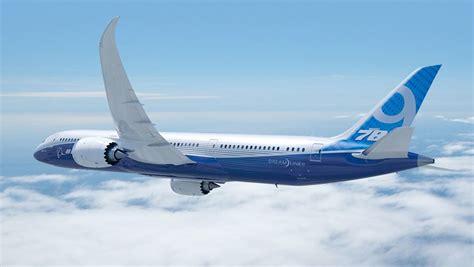
The Boeing 787 Dreamliner has redefined long-haul air travel with its advanced fuel efficiency, exceptional range, and enhanced passenger comfort. In the context of transpacific operations, this widebody twinjet has become a vital tool for linking the United States with far-flung destinations, particularly in the Southern Hemisphere. As of mid-2025, the five longest nonstop Boeing 787 flights from the United States reach distances beyond 8,200 miles and can last up to a staggering 18 hours in the air. These ultra-long-haul flights are all operated using the Boeing 787-9, a variant celebrated for its optimal balance between capacity and range.
Despite the multitude of American carriers, only three airlines—United Airlines, Qantas, and Air New Zealand—operate these demanding routes, stretching across the vast Pacific Ocean to destinations in Australia and New Zealand. The following is a comprehensive look into these record-breaking Dreamliner journeys.
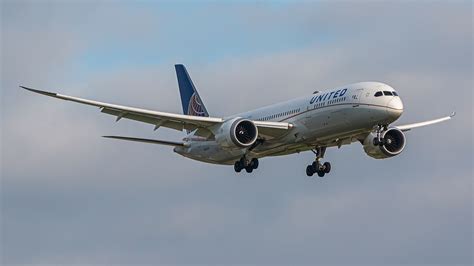
United Airlines: San Francisco (SFO) to Sydney (SYD) – 8,440 Miles
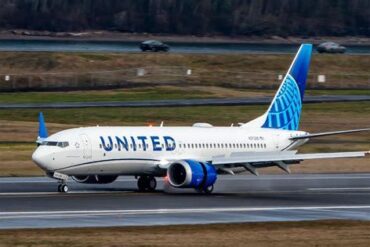
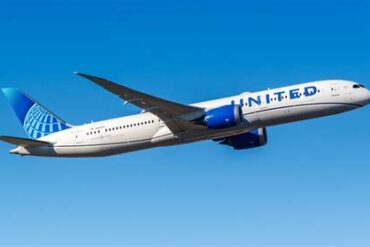
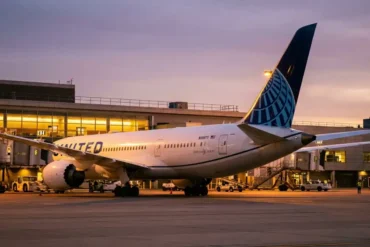
United Airlines is the only U.S.-based carrier to operate a Dreamliner flight that qualifies for this ultra-long-haul category. Its SFO–SYD route covers approximately 8,440 miles, with a scheduled westbound duration of 13 hours and 30 minutes, and an eastbound journey stretching to 14 hours and 55 minutes. This is the most frequently flown ultra-long-haul Dreamliner route from the United States, running twice daily in both directions.
United’s 787 fleet is one of the largest globally, comprising 78 aircraft: 12 of the 787-8 variant, 45 787-9s, and 21 787-10s. Their Dreamliners are exclusively powered by the General Electric GEnX turbofan engines, which have gained a reputation for superior reliability and fuel economy compared to Rolls-Royce’s Trent 1000.
This flight plays a strategic role in United’s Pacific network, linking one of the West Coast’s largest tech and finance hubs with Australia’s iconic harbor city. Despite the long duration, demand remains robust due to business travel, tourism, and strong economic ties between the two nations.
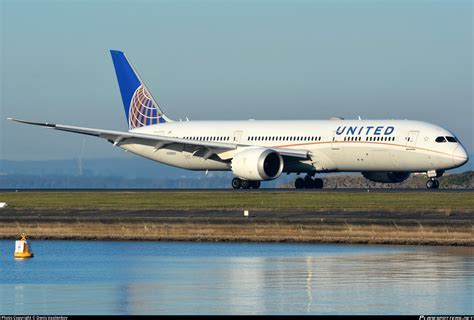
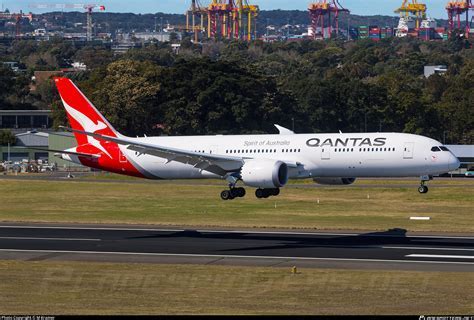
Qantas: Dallas/Fort Worth (DFW) to Sydney (SYD) – 8,569 Miles
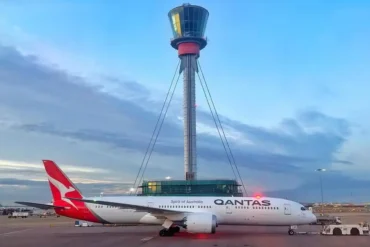
Qantas’ Dallas to Sydney flight ranks among the longest Dreamliner operations from the United States, covering 8,569 miles. The outbound leg from DFW clocks in at an exhausting 17 hours and 15 minutes, while the return flight is marginally shorter at 15 hours and 20 minutes.
This route is a hallmark of Qantas’ global ambitions. Dallas/Fort Worth—one of the busiest airports in the U.S.—provides excellent one-stop access to the American heartland. On the Australian side, Sydney serves as the nation’s international gateway. Qantas operates this flight daily with its fleet of 14 Boeing 787-9s, configured for 236 passengers. Notably, these aircraft also serve on exotic charters like Antarctic sightseeing flights, reinforcing Qantas’ claim as the only airline to fly to all seven continents.
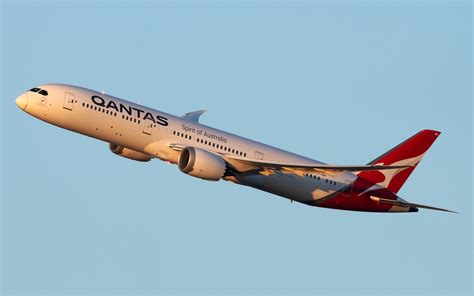
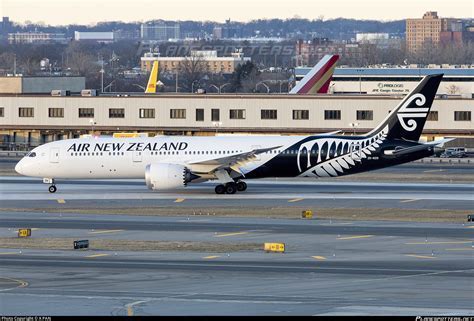
Air New Zealand: New York-JFK to Auckland (AKL) – 8,813 Miles
Air New Zealand operates what is currently the longest nonstop Boeing 787 flight from the United States by both distance and duration. The flight between New York-JFK and Auckland (AKL) spans 8,813 miles, with the outbound journey taking up to 18 hours, and the return a still-lengthy 16 hours and 15 minutes.
Air New Zealand’s entire Dreamliner fleet comprises the 787-9 variant, powered by Rolls-Royce Trent 1000 engines. While these engines have faced mechanical issues in the past, Air New Zealand has maintained them effectively enough to continue operating these marathon flights.
This transpacific route connects the bustling northeastern U.S. metropolis with New Zealand’s largest city, serving a niche but loyal customer base of tourists, business travelers, and diaspora populations. Flights are operated three times per week, accommodating 275 passengers per flight. The time zone change adds an element of surrealism—passengers may land in Auckland just as the day they left began in New York.
Qantas: Auckland (AKL) to New York-JFK – 8,813 Miles
Qantas also operates a fifth-freedom route between Auckland and New York-JFK, matching Air New Zealand’s route mile-for-mile. With Qantas’ current 787-9 fleet lacking the range to operate nonstop from Sydney to New York, Auckland serves as a key intermediate hub.
The eastbound flight from AKL to JFK takes 15 hours and 55 minutes, while the return westbound journey is scheduled at 17 hours and 35 minutes. After landing in Auckland, passengers headed to Sydney continue on a separate segment after a brief layover of 1 hour and 50 minutes.
These transpacific services are placeholders until Qantas receives its Airbus A350-1000s, which are expected to begin direct Project Sunrise flights between Sydney and New York in coming years. For now, the 787-9, with its 236-seat layout, holds the line for the Australian flag carrier.
Qantas: Dallas/Fort Worth (DFW) to Melbourne (MEL) – 8,973 Miles
Taking the crown for the longest Dreamliner route by distance is Qantas’ service from Dallas/Fort Worth to Melbourne, clocking in at an astounding 8,973 miles. Eastbound to Australia, the flight duration is 17 hours and 35 minutes; returning to Dallas trims that down to 15 hours and 55 minutes.
Despite operating just four times per week, this route serves a growing market of business and leisure travelers. Melbourne, as Australia’s cultural capital, boasts strong demand for American connections, particularly in arts, tech, and education sectors. The city’s Tullamarine Airport is also undergoing expansions to handle anticipated future growth.
Qantas is one of several carriers anchoring U.S.–Australia connectivity, with United and Delta expanding their Melbourne presence as well. As new aircraft like the A350-1000 come online, the dynamics of ultra-long-haul flight will continue evolving.
The Dreamliner’s Role in Ultra-Long-Haul Aviation
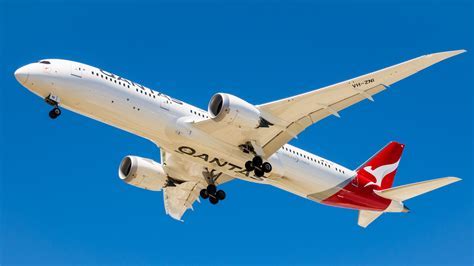
The Boeing 787-9 Dreamliner has proven to be the ideal aircraft for routes exceeding 8,000 miles. Its lightweight composite design, advanced aerodynamics, and cutting-edge engine options deliver a range of up to 7,565 nautical miles while maintaining fuel efficiency that makes such flights economically viable.
Key specifications of the Boeing 787-9 include:
- Typical seating: 296 passengers in two-class layout
- Range: 7,565 nautical miles
- Engines: General Electric GEnX-1B or Rolls-Royce Trent 1000
- Orders to date: Over 948 units worldwide
Its impact on aviation has been profound, opening nonstop city pairs that were previously impractical with older, less efficient aircraft. Moreover, its fuel economy allows airlines to operate thinner routes—flights with lower passenger volumes—without requiring massive four-engine jets like the Boeing 747 or Airbus A380.
What the Future Holds
While the Boeing 787-9 currently dominates ultra-long-haul operations, particularly from the United States to Oceania, competition is heating up. The Airbus A350-1000 promises even longer range and higher passenger capacity. Carriers like Qantas and United are already eyeing these aircraft for future expansions.
However, the Dreamliner has set the gold standard. With unmatched versatility and comfort, it’s not just about flying longer—it’s about flying smarter. For passengers willing to endure flights nearing 18 hours, these aircraft offer a smoother, quieter, and more breathable cabin experience.
As we move deeper into the 2020s, expect airlines to continue pushing the limits of what’s possible in commercial aviation. With the Boeing 787-9 at the helm, the age of true global connectivity is not just arriving—it’s already here.