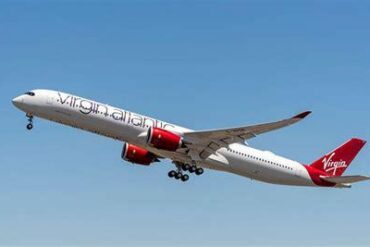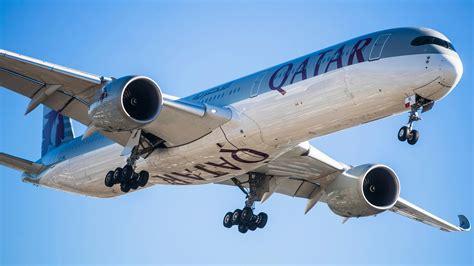
The Airbus A350-1000, the largest variant of Airbus’s A350 family, has become a workhorse of ultra-long-haul operations across the globe. Its cutting-edge efficiency, superior passenger comfort, and extended range capability have made it a favorite among premium international carriers serving the United States. As of July to September 2025, the 10 longest A350-1000 flights to and from the US highlight the aircraft’s endurance, with routes stretching up to an astonishing 17 hours and 5 minutes of block time.
These ultra-long journeys reflect the deepening reach of global air travel, connecting critical economic and cultural centers through the power of modern aviation. Here is a detailed examination of these monumental flights, how they are operated, and what makes each one unique.
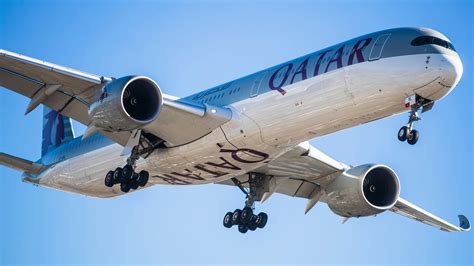
Qatar Airways Dominates With Multiple Record-Length Flights
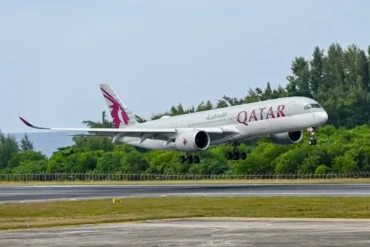
Qatar Airways commands the list with an impressive five of the ten longest A350-1000 routes linking the US and Doha. The crown jewel is its Doha to Los Angeles (LAX) flight, which tops out at 17 hours and 5 minutes block time in one direction. This figure includes all taxiing, anticipated delays, and most notably, the time impact of jet stream winds.
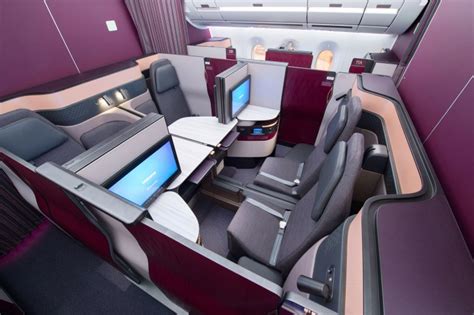
This LAX route first launched in 2016 with a Boeing 777-200LR, but since June 2020, it has been exclusively operated by the A350-1000 in a premium-heavy 327-seat configuration. This setup features 46 Q Suites, Qatar’s highly acclaimed business class product, and 281 economy seats, offering a balance between luxury and efficiency. It is worth noting that despite the long journey, first class is not offered on this route.
Qatar Airways has demonstrated strong load factors, with an impressive 92% seat occupancy in the 12-month period leading to March 2025. Key feeder markets for this flight include Yerevan, Tehran, and Mumbai, connecting passengers efficiently through Doha.
Ethiopian Airlines’ Stopover Strategy Adds Duration, Not Distance
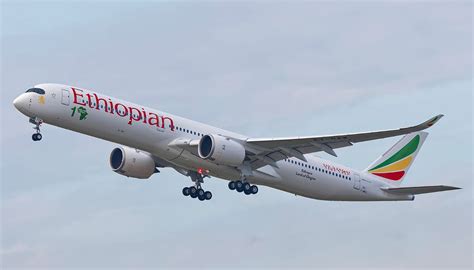
Second on the list is Ethiopian Airlines’ Addis Ababa to Washington Dulles flight, also clocking in at 17 hours and 5 minutes block time. However, the high duration is not due to sheer distance but rather its refueling and crew change stop in Rome. Due to the high altitude of Addis Ababa Bole International Airport (7,625 feet), the aircraft cannot take off at full payload for a nonstop US-bound journey.
This workaround involves a split journey:
- Addis Ababa to Rome: 6h 30m
- Rome to Washington Dulles: 9h 35m
The return leg, interestingly, is a nonstop 13h 15m flight back to Ethiopia. While no traffic rights are granted for the Rome-Washington segment, the stop remains essential. Ethiopian uses the A350-1000 in a 395-seat layout, with a 12% business class ratio, higher than any other widebody in its fleet.
Cathay Pacific Battles Headwinds and Airspace Restrictions
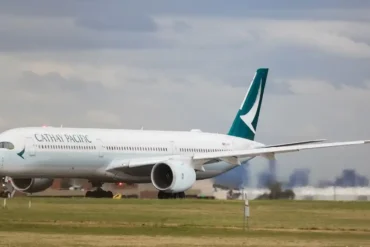
Cathay Pacific features heavily in the middle of the list, with four major US destinations served by the A350-1000 from Hong Kong: Dallas/Fort Worth, New York JFK, Chicago O’Hare, and Boston. The Hong Kong to Dallas/Fort Worth flight ranks third, tied with Qatar’s Doha-San Francisco service at 16 hours and 40 minutes.
One of the reasons Cathay Pacific’s flight times are so extended is due to the continued avoidance of Russian airspace. This forces detours over the Pacific, often north toward the Arctic, increasing total flight time significantly.
- Hong Kong to Dallas: 16h 40m
- Hong Kong to JFK: 16h 05m
- Hong Kong to Chicago: 15h 50m
- Hong Kong to Boston: 15h 50m
Cathay’s use of the A350-1000 enables it to offer consistent service despite geopolitical routing issues. The aircraft’s fuel efficiency and aerodynamic design are critical in managing such extended segments.
Houston, Dallas & Miami: Qatar’s A350-1000 US Strongholds
In addition to LAX and SFO, Qatar Airways continues its transpacific dominance with three more lengthy A350-1000 routes: Doha to Dallas/Fort Worth (16h 30m), Houston Intercontinental (16h 20m), and Miami (15h 45m).
- Dallas/Fort Worth (DFW) sees twice-daily A350-1000 service, further solidifying Qatar’s presence in Texas.
- Houston Intercontinental (IAH) maintains daily frequencies, serving Houston’s substantial Middle Eastern and South Asian diaspora.
- Miami (MIA), a relatively newer route in Qatar’s network, taps into both the tourism market and long-haul South American connections via Doha.
Each of these routes reflects Qatar Airways’ strategy of channeling traffic through its Doha hub from underserved US cities, providing seamless onward connections to Asia, Africa, and the Middle East.
Aircraft Configuration: A Key Factor In Route Viability
All carriers flying these long-haul A350-1000 flights have made strategic configuration decisions to balance passenger comfort with operational profitability. The Qatar Airways A350-1000 has no first class but uses its famed Q Suites layout for business class, providing a luxurious experience that rivals first-class standards.
Ethiopian’s 395-seat version favors higher density, with fewer frills and more emphasis on economy capacity. On the other hand, Cathay Pacific opts for a balanced configuration, offering enhanced comfort for ultra-long flights while maintaining cost efficiency. Their choice to avoid Russian airspace illustrates how aircraft performance, geopolitical shifts, and strategic planning all intersect.
The Role of Winds and Block Time Calculation
All figures discussed here refer to maximum block times, which include flight time, taxi time, and buffer for delays. These values vary significantly based on wind patterns, particularly in transpacific operations. For example, westbound flights typically take longer due to strong jet stream headwinds, while eastbound services are often considerably shorter.
This is why only the longest direction is counted. Cirium Diio data — an industry standard — reveals that although Doha-LAX is sometimes scheduled for 17h 05m, more commonly it flies in just over 16h. However, carriers must schedule according to worst-case scenarios, particularly at slot-constrained airports such as JFK, LAX, and SFO.
Notable Absentees and Honorable Mentions
One surprisingly absent route is Etihad Airways’ new Abu Dhabi to Atlanta service. Despite being among the longest A350-1000 flights at 15 hours, it ranks only 12th on this list and is thus excluded. Nonetheless, its inclusion in broader discussions underlines how the A350-1000 is expanding ultra-long-haul capabilities beyond traditional gateways.
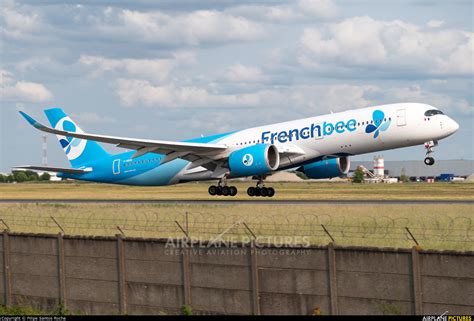
Another outlier is French bee, which operates Paris Orly to Newark using a high-density 480-seat configuration, the highest capacity for any A350-1000 flying to the US. However, due to its shorter duration, this route is not featured among the top 10 longest. Its model is instead tailored for high-volume leisure traffic rather than time-intensive ultra-long haul.
Conclusion: A350-1000’s Strategic Role in Global Aviation
The Airbus A350-1000 continues to redefine long-haul travel. Its deployment on these extensive US routes demonstrates not only its operational resilience and fuel efficiency, but also its role in enabling strategic global connections. Carriers like Qatar Airways and Cathay Pacific use the aircraft to maintain essential links across continents, despite airspace restrictions, fluctuating fuel prices, and slot challenges.
As more carriers integrate the A350-1000 into their fleets, especially with potential upgrades and next-generation enhancements, it’s likely that the thresholds of flight time and route distance will continue to expand. For now, the A350-1000 stands as a symbol of long-haul excellence, connecting cities that once seemed impossibly far apart.