The Boeing 777 has become one of the defining aircraft of modern long-haul aviation. Designed to connect distant cities with exceptional range, efficiency, and passenger capacity, the twin-engine widebody has transformed the way airlines operate intercontinental networks. While many travelers associate the 777 with nonstop journeys across oceans, some of its most fascinating missions involve one-stop ultra-long-haul routes that stretch across continents and push total travel times beyond what most passengers imagine.
According to current scheduling data from Cirium, the world’s longest Boeing 777 routes in 2026 reach extraordinary durations, with the longest scheduled journeys approaching 29 hours of total block time. These flights combine multiple continents, strategic stopovers, and complex operational planning. Some are permanent parts of airline networks, while others exist because of temporary challenges such as airspace restrictions and geopolitical disruptions.
The record-setting nature of these flights highlights how flexible the Boeing 777 platform remains. Even decades after entering service, the aircraft continues to serve as a critical tool for airlines seeking to connect cities that are separated by enormous geographic distances.
China Eastern’s Buenos Aires to Shanghai Route Leads the List
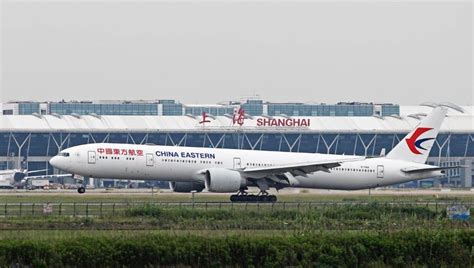
The longest Boeing 777 one-stop route currently scheduled is operated by China Eastern Airlines, connecting Buenos Aires, Argentina (EZE) and Shanghai, China (PVG) through Auckland, New Zealand (AKL). The westbound journey reaches a maximum scheduled duration of approximately 29 hours, making it one of the most demanding commercial aviation routes in operation.
The route represents a remarkable example of global connectivity. Passengers travel from South America to East Asia while crossing the Southern Hemisphere, with Auckland serving as a strategic intermediate point. China Eastern uses the stop to maintain passenger and cargo connections without requiring an aircraft change.
The airline has emphasized the importance of the route’s fifth freedom rights, allowing it to transport passengers and cargo between different countries during the journey. This creates additional economic links between China, New Zealand, and Argentina, while demonstrating the importance of aviation agreements in creating long-distance networks.
The route’s length is not only a test of aircraft capability but also of airline planning. Crew scheduling, fuel management, passenger comfort, and aircraft utilization all require careful coordination on such extreme missions.
British Airways and Singapore Airlines Operate Other Record-Length Flights
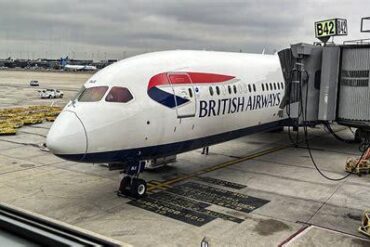
Following China Eastern’s leading route, several other major airlines operate Boeing 777 services that rank among the world’s longest. British Airways operates the famous Sydney (SYD) to London Heathrow (LHR) service via Singapore (SIN), reaching a maximum duration of around 24 hours and 25 minutes.
This journey connects two major global cities separated by more than 17,000 kilometers. The Singapore stop allows the aircraft to continue efficiently while giving passengers a break during one of aviation’s most demanding itineraries. The route also reflects the importance of Singapore as a global aviation hub.
Another major ultra-long Boeing 777 operation comes from Singapore Airlines, connecting Singapore Changi Airport with New York JFK through Frankfurt. This journey can take approximately 24 hours and 20 minutes. Although Singapore Airlines is well known for operating some of the world’s longest nonstop flights, this one-stop route remains an important link between Asia, Europe, and North America.

Air Canada and Emirates Add More Extreme Boeing 777 Missions
Air Canada’s Toronto (YYZ) to Sydney (SYD) service via Vancouver (YVR) ranks among the longest Boeing 777 routes, reaching around 22 hours and 55 minutes. The route combines domestic and international segments, using Vancouver as a natural gateway toward the Pacific region.
For passengers traveling between Canada and Australia, the journey demonstrates the ability of modern airlines to connect distant markets without relying solely on traditional hubs in Europe or Asia. The Boeing 777’s range and reliability make such operations practical.
Emirates also appears multiple times among the longest routes. Its Dubai (DXB) to Bogota (BOG) service via Miami (MIA) reaches approximately 22 hours and 25 minutes, while another Emirates Boeing 777 route from Dubai to Mexico City through Barcelona reaches around 22 hours and 15 minutes.
These flights showcase Emirates’ global hub strategy, where Dubai acts as a bridge between regions that historically had limited direct connectivity.
Airspace Restrictions Create Unexpected Ultra-Long Flights
Not all ultra-long Boeing 777 routes are created because airlines intentionally designed them to be extreme. Some have become longer due to changing global conditions.
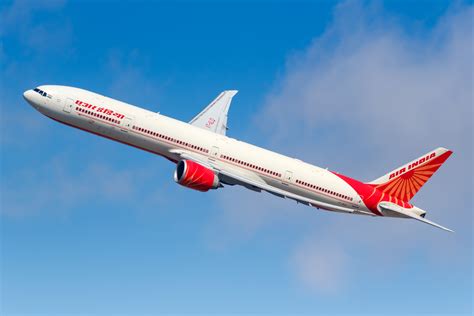
Air India’s San Francisco (SFO) to Delhi (DEL) service via Kolkata (CCU) is currently one example. The route can take around 21 hours and 15 minutes because aircraft must avoid certain airspace areas affected by geopolitical tensions. These restrictions force longer routings, increasing flight times and operational complexity.
Similarly, Air India’s Delhi to Toronto route via Vienna and Mumbai to Newark route via Rome have become longer because of airspace limitations. These flights demonstrate how international events can directly influence commercial aviation schedules.
The Remaining Boeing 777 Ultra-Long Routes
The rest of the world’s longest Boeing 777 one-stop routes continue to feature airlines from Asia and the Middle East. Qatar Airways operates a Doha (DOH) to Caracas (CCS) service via Bogota, reaching approximately 20 hours and 50 minutes. The airline also operates an Auckland to Doha route through Adelaide, with flights lasting around 20 hours and 15 minutes.
Two routes share a maximum duration of approximately 20 hours and five minutes: Air India’s Delhi to Toronto service via Vienna and Emirates’ Dubai to Buenos Aires route via Rio de Janeiro.
Other notable entries include Singapore Airlines’ Los Angeles (LAX) to Singapore route via Tokyo Narita, lasting around 19 hours and 35 minutes, and EVA Air’s Taipei (TPE) to London Heathrow route via Bangkok, reaching approximately 19 hours.
These flights reveal the extraordinary flexibility of the Boeing 777. While nonstop ultra-long-haul services continue to attract attention, one-stop operations remain essential for connecting cities that cannot always support direct flights.
The future of long-distance aviation may bring more efficient aircraft, but the Boeing 777’s role as a global workhorse remains undeniable. From South America to Asia, from Australia to Europe, these massive journeys prove that commercial aviation continues to expand the boundaries of distance and endurance.