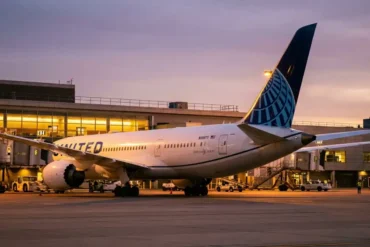
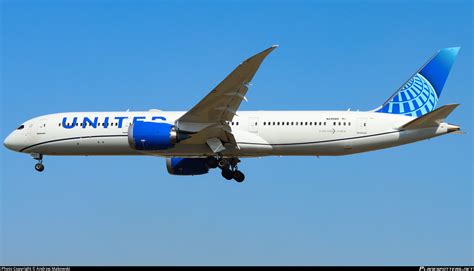
United Airlines is on the cusp of a decisive transformation, one that signals a recalibration of how the carrier wants to be perceived in the global premium travel market. In 2026, United will introduce its most refined widebody aircraft to date, a Boeing 787-9 Dreamliner equipped with the long-anticipated United Elevated interior. This aircraft is not merely a new configuration; it represents a deliberate statement about comfort, technology, and competitive intent on the world’s most demanding long-haul routes.
For years, United has invested heavily in lounges, loyalty, and network expansion, but the cabin itself has now become the centerpiece of its premium strategy. The Elevated Dreamliner blends architectural design, next-generation entertainment, and privacy-focused seating into a single cohesive experience that aims to rival the world’s most admired international airlines. The routes selected for its debut are equally revealing, highlighting where United sees both opportunity and pressure in the years ahead.
The decision to introduce this aircraft in 2026 is carefully timed. Global premium travel has rebounded faster than many forecasts predicted, particularly on long-haul routes linking technology hubs and financial centers. United’s Elevated 787-9 is designed to capture that demand with a product that feels intentionally crafted rather than incrementally improved. Every cabin, from Polaris Studio down to standard economy, reflects a sharper focus on passenger comfort during ultra-long flights.
More importantly, United has been explicit about where these aircraft will fly first. The launch routes are not experimental secondary markets but two of the most scrutinized long-haul corridors in global aviation. By placing its most luxurious widebody jet on these services, United is effectively putting its new premium identity under the brightest possible spotlight.
By 2026, passengers stepping onto these aircraft will not just be boarding another Dreamliner. They will be entering a redefined United experience, one built to endure competition, long flight times, and the evolving expectations of premium travelers who increasingly demand privacy, connectivity, and consistency across every stage of their journey.
The introduction of the Elevated interior also marks a philosophical shift. Instead of spreading new cabins thinly across the network, United is concentrating them on routes where product quality directly influences purchasing decisions. These aircraft are designed to be seen, talked about, and compared, serving as both a commercial asset and a brand signal to the market.
United’s Elevated 787-9: A New Flagship Takes Shape
At the heart of United’s premium transformation is the Elevated interior, debuting exclusively on newly delivered Boeing 787-9 Dreamliners. While the 787 family has long been a backbone of United’s long-haul fleet, this iteration elevates the aircraft into true flagship territory. The cabin architecture has been completely rethought, prioritizing space efficiency without sacrificing comfort or visual calm.
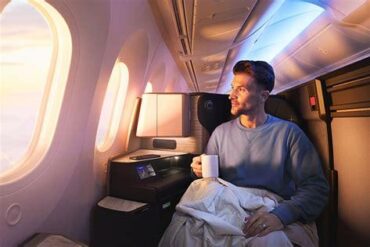
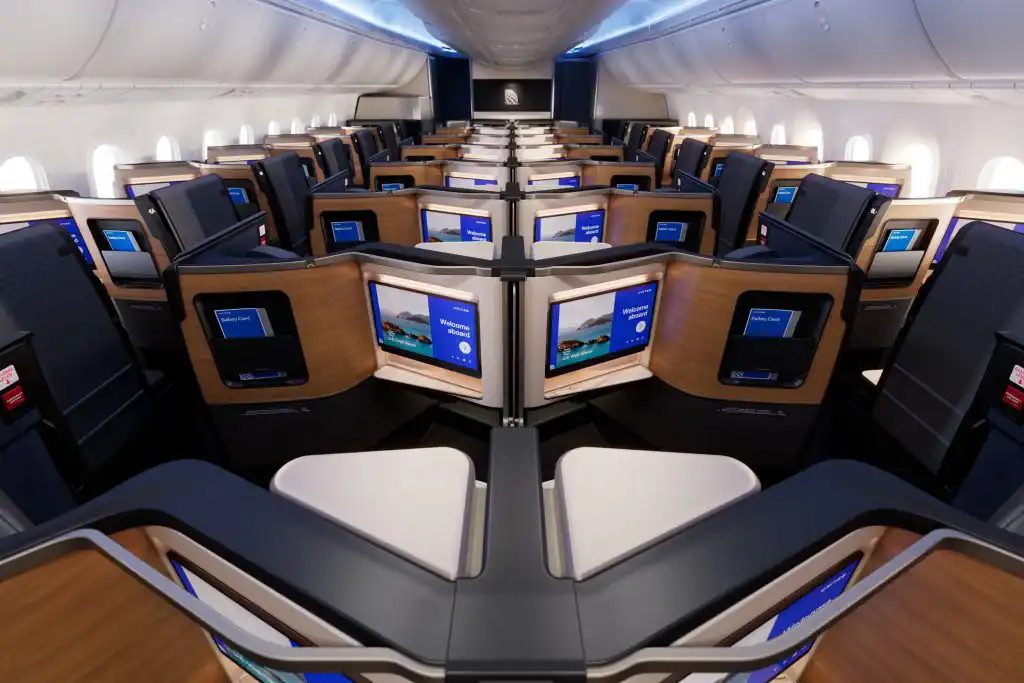
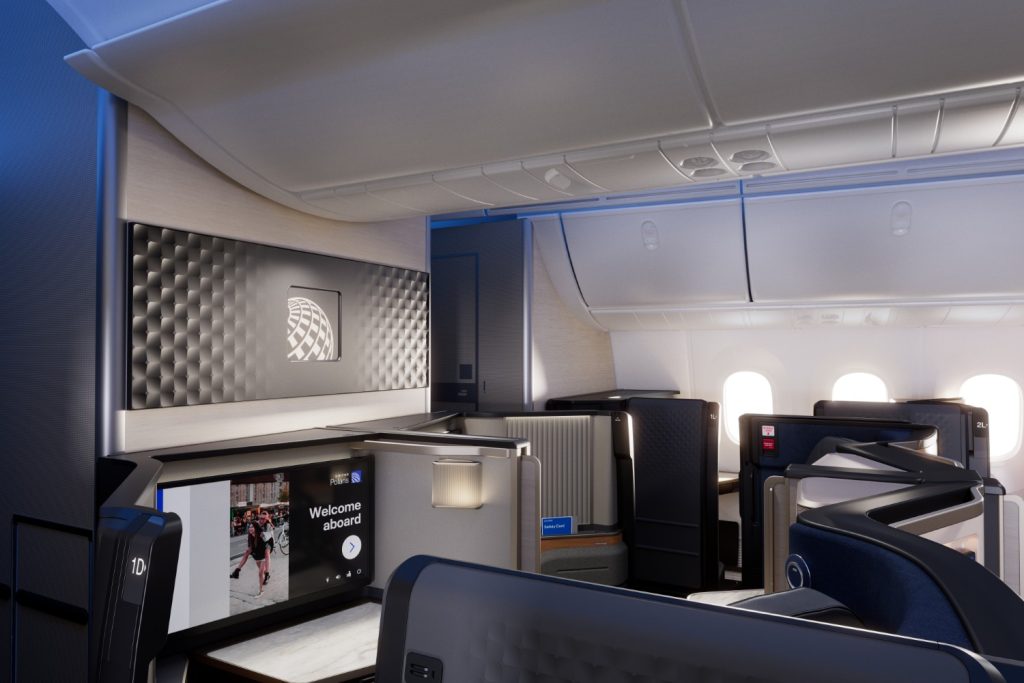
The most striking addition is the introduction of United Polaris Studio, a new sub-class within business class that sits at the very front of the aircraft. These suites are substantially larger than standard Polaris seats and are designed for travelers who expect the space and exclusivity traditionally associated with first class. Sliding privacy doors, oversized ottomans with companion seating, and refined materials immediately distinguish this cabin from anything previously flown by a US carrier.
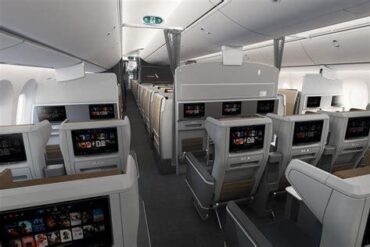
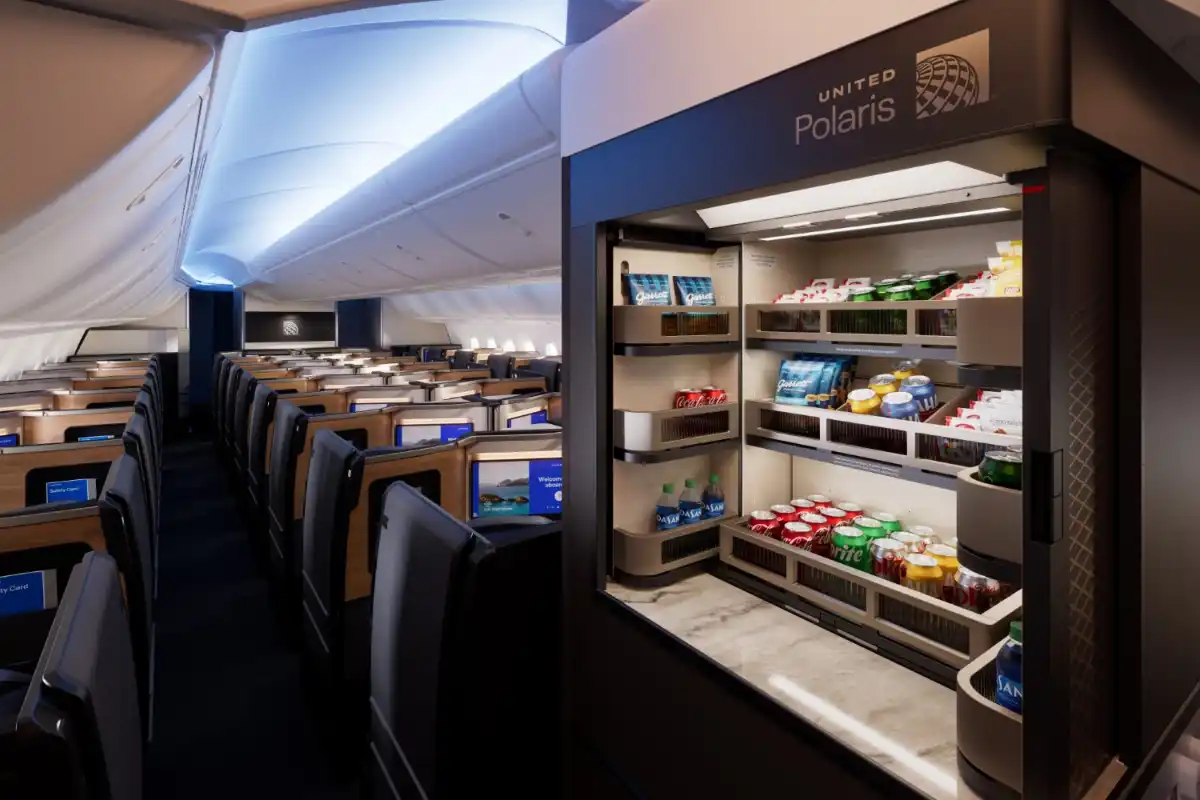
Behind the Studios, the standard United Polaris business class has also evolved. Every seat now features a privacy door, larger high-resolution screens, and a more intuitive storage layout. The familiar 1-2-1 configuration remains, but the visual and tactile experience feels more contemporary, quieter, and deliberately premium.
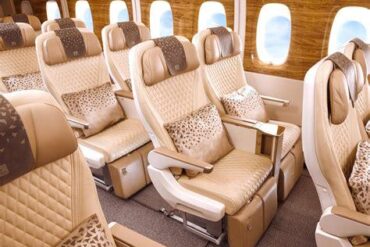
The improvements extend well beyond business class. United Premium Plus has been redesigned with upgraded finishes, increased privacy, and technology that mirrors what business travelers expect, narrowing the experiential gap between cabins. Even economy class has been reengineered with larger 4K screens, improved ergonomics, and lighting designed to reduce fatigue on long flights.
The Elevated interior is not a single feature but a layered experience. United has clearly designed this aircraft to perform under the harshest test of all: ultra-long-haul flying where comfort, sleep quality, and connectivity determine passenger satisfaction more than brand loyalty alone.
Why San Francisco Is the Strategic Launch Hub
San Francisco International Airport has long been one of United’s most important global gateways, and its selection as the launch hub for the Elevated Dreamliner is no coincidence. As United’s primary West Coast hub, SFO anchors the airline’s transpacific and transatlantic networks while serving one of the most premium-heavy passenger bases in the world.
The Bay Area generates an outsized share of high-yield corporate traffic, driven by technology, venture capital, and international business ties. Travelers departing from San Francisco are among the most discerning in aviation, often comparing products across multiple global carriers. Introducing the Elevated 787-9 here ensures that United’s most advanced cabin is immediately exposed to passengers who will notice the difference.
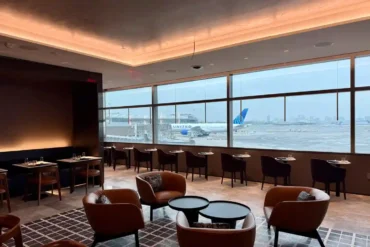
Operationally, SFO offers the ideal environment to support a new flagship aircraft. United maintains a dense long-haul schedule from the airport, making it easier to rotate aircraft while minimizing disruptions during the initial rollout. The airport is also home to some of United’s most modern Polaris lounges, allowing the airline to deliver a seamless premium experience from curb to cabin.
This alignment of ground and air products is crucial. United understands that premium travelers evaluate the journey holistically, and by anchoring the Elevated Dreamliner at SFO, the airline ensures consistency across check-in, lounge, boarding, and inflight service. The message is clear: this is where United’s premium future begins.
San Francisco to Singapore: The Ultimate Ultra-Long-Haul Showcase
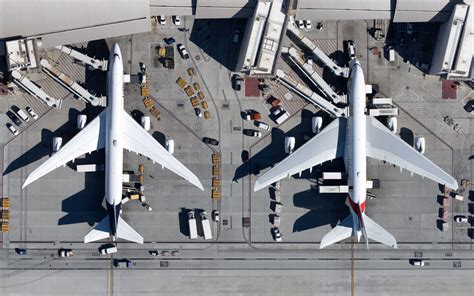
The first confirmed international route for United’s Elevated 787-9 is San Francisco to Singapore, a flight that stands among the longest nonstop services in commercial aviation. Covering nearly 8,500 miles, this route pushes both aircraft and passengers to their limits, making it the ultimate proving ground for a new cabin concept.
Ultra-long-haul flights magnify every detail of the onboard experience. Seat comfort, cabin pressure, lighting, noise levels, and entertainment all play an outsized role when passengers spend nearly 17 hours in the air. By deploying its most luxurious widebody on this route, United is signaling absolute confidence in the Elevated interior’s ability to perform under extreme conditions.
Singapore is also one of the most competitive premium destinations in the world. Carriers serving the route include airlines globally recognized for their service and cabin excellence. United’s decision to introduce its flagship Dreamliner here places it in direct comparison with some of the industry’s most respected products.
Historically, United has treated the Singapore route as a showcase, often assigning new aircraft types early in their lifecycle. The Elevated 787-9 continues that tradition, positioning the airline as a serious contender in the ultra-long-haul premium space. For many travelers, this route will provide their first exposure to United’s next-generation long-haul vision.
The combination of flight duration, passenger profile, and competitive intensity makes San Francisco to Singapore the ideal stage for United to demonstrate what the Elevated interior was designed to achieve.

San Francisco to London: A Premium Battleground Reimagined
While Singapore tests endurance, San Francisco to London Heathrow tests perception. This transatlantic corridor is one of the most premium-heavy and fiercely competitive markets in global aviation. Multiple daily frequencies, alliance partnerships, and corporate contracts make cabin quality a decisive factor in winning passenger loyalty.
London Heathrow is a magnet for high-yield travelers, and United already maintains a strong presence on the route. Introducing the Elevated 787-9 here allows the airline to directly challenge competitors that have recently invested in new business-class cabins. On flights of this length, passengers can easily compare experiences, making product differentiation especially powerful.
The Elevated interior gives United tangible advantages. Privacy doors, larger screens, and improved soft products immediately stand out in a market where many travelers fly the route multiple times per year. For corporate clients, consistency and comfort matter as much as schedule frequency.
By assigning its most luxurious widebody to this route, United is not merely upgrading a flight. It is repositioning itself in one of aviation’s most visible arenas, signaling that it intends to compete aggressively for premium travelers on both sides of the Atlantic.
Inside the Elevated Interior: Design, Technology, and Comfort
The Elevated interior is defined by an obsessive focus on detail. In Polaris Studio, passengers are surrounded by premium materials, from quartzite tables to wool-blend seating surfaces that feel residential rather than utilitarian. The massive 27-inch 4K OLED screens are the largest offered by any US airline, paired with Bluetooth audio and wireless charging that eliminate common inflight frustrations.
Standard Polaris suites maintain the same design language, ensuring that even travelers outside the Studio cabin experience a significant upgrade. Lighting has been recalibrated to support circadian rhythms, while storage solutions have been optimized for long-haul practicality.
Premium Plus introduces features traditionally reserved for business class, including enhanced privacy dividers and high-resolution entertainment. Economy class, often overlooked in premium discussions, benefits from larger screens and improved seat mechanics designed to reduce pressure points during long flights.
Connectivity plays a central role in the Elevated experience. United’s commitment to Starlink internet ensures fast, reliable Wi-Fi across global routes, a feature that has become essential for premium travelers who expect to remain productive in the air.
What the Elevated Dreamliner Signals for United’s Fleet Strategy
Beyond the cabin itself, the Elevated 787-9 represents a broader strategic shift in United’s fleet planning. Future Dreamliner deliveries will follow this premium-heavy configuration, increasing the proportion of high-yield seating while reducing overall economy density. This reflects confidence in sustained demand for premium international travel.
Rather than chasing capacity growth alone, United is prioritizing revenue quality. The Elevated interior allows the airline to maximize returns on long-haul routes where passengers are willing to pay for comfort, privacy, and technology. Over time, these aircraft will shape how United allocates resources and selects new long-haul markets.
The rollout also provides a clear upgrade path for loyal MileagePlus members, reinforcing United’s value proposition in an increasingly competitive loyalty landscape.
A Glimpse Into United’s Premium Future
The debut of United’s most luxurious widebody jet in 2026 marks a defining moment for the airline. By launching the Elevated 787-9 on premium-heavy routes from San Francisco to Singapore and London, United is aligning its product, network, and brand strategy with the expectations of modern global travelers.
For passengers, the promise is tangible. Flights that once felt purely functional are set to become experiences defined by comfort, privacy, and connectivity. As more Elevated Dreamliners enter service, these initial routes will serve as the benchmark for what United intends to deliver across its long-haul network.
In an industry where perception shapes loyalty as much as schedules and prices, United’s Elevated Dreamliner offers a compelling preview of a more refined, confident future in global aviation.