Air France is hardly a niche player across the Atlantic. In 2026, the French flag carrier will average 26 daily departures to the United States, reinforcing its position as one of Europe’s most powerful transatlantic operators, trailing only British Airways and Lufthansa in total US connectivity. Yet hidden within this vast network are a handful of routes so rare, so strategically targeted, that they almost feel experimental. Some will operate only twice. Others will appear for just a few days. Collectively, they reveal a sharp, data-driven approach to high-yield demand that goes far beyond conventional route planning.
While headlines focus on new long-term additions like Paris Charles de Gaulle (CDG) to Las Vegas, the real intrigue lies elsewhere. These are flights designed not for broad tourism flows or corporate contracts, but for concentrated, event-driven surges—the kind that can justify deploying widebody aircraft for only a handful of rotations.
Paris CDG to San Diego: Precision Targeting at 4,951 Nautical Miles
At 4,951 nautical miles (9,169 kilometers) each way, San Diego stands as Air France’s longest US route from Paris. Yet in 2026, it will operate just two round-trip flights. Departures from CDG are scheduled for April 17 and April 22, with same-day return departures from California.
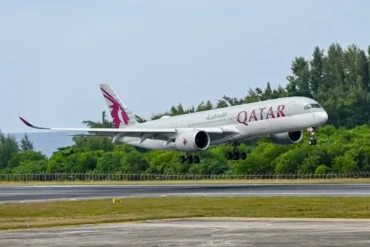
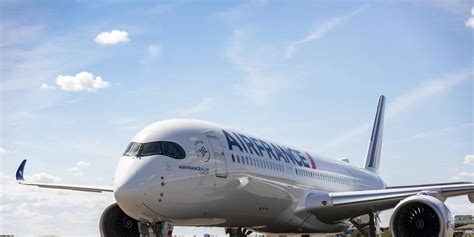
The aircraft choice is telling: the Airbus A350-900, configured with 292 seats. Modern, fuel-efficient, long-range—this is not a casual deployment. It is a calculated one.
San Diego has seen this pattern before. Air France has periodically launched ultra-short bursts of service since 2018, tied primarily to major conventions. In 2026, the likely catalyst is the American Association for Cancer Research conference, a magnet for thousands of international delegates. Rather than rely on connections via Los Angeles or other hubs, the airline creates a nonstop bridge tailored to that spike in demand.
The strategy is elegant. The outbound flight on April 17 and the return on April 22 will likely be dense with conference attendees. Meanwhile, the positioning legs—San Diego to Paris on April 17 and Paris to San Diego on April 22—remain bookable, though load factors may be light. Revenue from premium cabins during the high-demand segments can offset weaker legs. It is a textbook example of yield optimization over frequency expansion.
Interestingly, KLM’s regular Amsterdam–San Diego service, launched in 2025, provides SkyTeam network reinforcement. Travelers can mix carriers, adding flexibility while preserving alliance revenue streams.
New Orleans: A Four-Day Window with a Boeing 777-300ER
San Diego is not alone in its exclusivity. Air France will also operate just two round-trip flights between Paris and New Orleans in December, coinciding with the American Society of Hematology annual meeting.
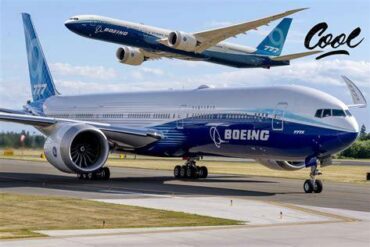
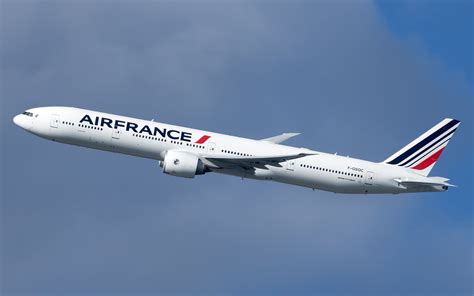
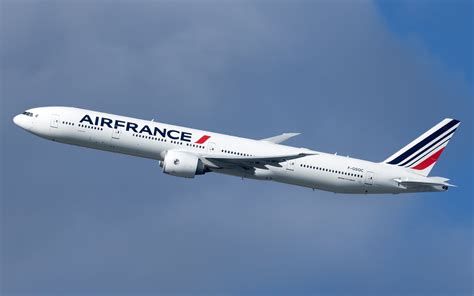
Flights depart CDG on December 11, returning from Louisiana on December 15. The aircraft: a 312-seat Boeing 777-300ER in four classes. Not the ultra-dense 472-seat configuration, but still featuring the carrier’s characteristic 3-4-3 economy layout.
New Orleans does not currently enjoy regular Air France service. In fact, British Airways is the only European airline maintaining consistent links. This makes the temporary French return especially notable. Departure from Paris is set for 1:10 pm, arriving in Louisiana at 5:00 pm local time. The return leg leaves at 7:20 pm, reaching CDG at 11:15 am the following day.
Again, this is not about building a long-term market. It is about capturing high-density, time-sensitive premium traffic. Hematology conferences attract researchers, pharmaceutical executives, and healthcare leaders—demographics that often travel in business class or premium economy. Even if positioning legs operate with lighter loads, overall revenue potential likely exceeds direct operating costs.
Air France is not experimenting. It is executing with precision.
Nice to Los Angeles: Cannes Film Festival Takes Flight
The Côte d’Azur becomes the center of global cinema each May, and Air France responds accordingly. On May 11, a Boeing 777-300ER will depart Los Angeles at 2:00 pm, arriving in Nice at 10:35 am the following day. The return will operate on May 25.
This is a direct, long-haul corridor built almost entirely around the Cannes Film Festival.
Nice already sees US connectivity from American, Delta, United, and La Compagnie. Yet Air France’s brief intervention reinforces its ability to mobilize capacity exactly when needed. Hollywood studios, media executives, and creative talent often require flexible, premium-heavy capacity during Cannes. A temporary nonstop aligns perfectly with that demand spike.
The aircraft choice again signals intent: a 312-seat 777-300ER, balancing premium cabin availability with overall seat supply. It is a seasonal pulse rather than a structural expansion.
Nice to New York JFK: Cannes Lions and Advertising’s Transatlantic Bridge
In June, attention shifts from cinema to advertising. The Cannes Lions International Festival of Creativity attracts agencies, global brands, and media conglomerates from across North America. Air France responds with special flights linking New York JFK and Nice.
Departures from New York are scheduled for June 20 and 21 at 6:30 pm, arriving at 6:20 am the following morning. Return flights leave Nice on June 25 and 26 at 12:00 pm, arriving in New York at 3:00 pm local time.
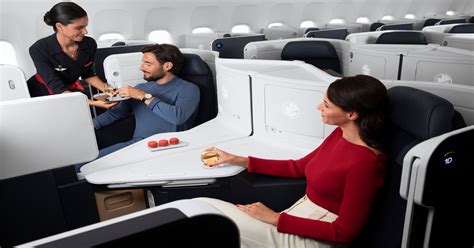
Once more, the 312-seat 777-300ER is deployed. The pattern is unmistakable. Air France identifies concentrated clusters of affluent, time-sensitive travelers and deploys long-haul capacity with surgical accuracy. Rather than operate marginally profitable year-round routes, it monetizes specific calendar windows.
Why Only Seven Flights Matter
Across these markets—San Diego, New Orleans, Nice–Los Angeles, and Nice–New York—Air France will operate just seven distinct round-trip events in 2026. The total number of flights is minuscule compared to its daily US network. Yet their strategic value is disproportionate.
These services illustrate a broader industry trend: airlines leveraging advanced demand forecasting and alliance synergies to operate ultra-targeted, high-yield micro-networks. Instead of committing aircraft to uncertain long-term routes, carriers can now deploy widebodies for short bursts, maximizing return while minimizing exposure.
In an era defined by volatile fuel prices, fluctuating corporate travel patterns, and intensifying competition, this flexibility becomes a competitive weapon. Air France’s 2026 US schedule is not simply about adding Las Vegas or increasing frequencies. It is about mastering the art of precision aviation economics—flying only when and where the revenue is undeniable.
Seven flights may sound insignificant. In reality, they represent a sophisticated calibration of aircraft, timing, and global event cycles. And in a transatlantic market crowded with daily departures, sometimes the rarest flights tell the most compelling story.