New Zealand sits at the far edge of the world map, yet its air corridors are anything but quiet. In 2026, international flight data paints a vivid picture of where New Zealanders are heading and where global travelers are coming from. The country’s isolation has never dulled its appetite for air travel. Instead, it has sharpened it, turning airports like Auckland into strategic crossroads linking Oceania, Asia, and North America.
Tourism remains the beating heart of this demand. New Zealand’s reputation for dramatic alpine scenery, untouched coastlines, and unique biodiversity continues to attract visitors willing to cross oceans. At the same time, deep economic, cultural, and familial ties—especially with Australia and the Pacific Islands—keep aircraft seats full year-round. In 2026, these forces converge into a clear hierarchy of routes that dominate the international schedule.
Auckland Airport stands at the center of this network. As the country’s largest and busiest international gateway, it absorbs the majority of long-haul services and high-frequency regional flights. Christchurch plays a growing secondary role, while Wellington, Queenstown, Hamilton, and Dunedin fill specialized niches, particularly across the Tasman Sea. Together, these airports form the skeleton of New Zealand’s global connectivity.

Australia: The Undisputed King of New Zealand’s International Travel
No international market comes close to Australia in scale or frequency. The Trans-Tasman corridor is effectively a shared domestic market in the sky, driven by business travel, migration, tourism, and education. In 2026, the single busiest international route from New Zealand is Auckland to Sydney Kingsford Smith Airport. With 4,412 one-way flights scheduled, the route averages around 12 flights every day, creating a near-continuous aerial bridge between the two cities.
Multiple airlines compete aggressively on this corridor. Air New Zealand anchors the route, while Qantas, Jetstar, and China Eastern add capacity and pricing pressure. The result is one of the most competitive short-haul international markets in the Southern Hemisphere, characterized by high load factors and frequent schedule adjustments.
Melbourne follows closely behind as New Zealand’s second-largest international destination. The Auckland–Melbourne route records 3,330 one-way flights in 2026, averaging nine daily services. Melbourne’s pull lies in its role as a cultural capital and business hub, making it equally attractive to leisure travelers and corporate flyers.
Brisbane completes the top three Australian destinations. Flights between Auckland and Brisbane total 2,995 one-way services, reflecting Queensland’s enduring appeal for holidays, family visits, and commercial links. The presence of carriers like Qantas, Jetstar, Air New Zealand, China Airlines, and Solomon Airlines underlines the route’s strategic importance.
Beyond these giants, secondary routes add remarkable depth to the network. Queenstown to Sydney thrives on tourism, Christchurch maintains strong links to both Sydney and Melbourne, and Wellington sustains steady demand to Sydney despite its shorter runway and operational constraints. Even leisure-focused destinations like the Gold Coast see nearly three daily services from Auckland, highlighting how deeply Australia is woven into New Zealand’s travel patterns.
The Pacific Islands: Cultural Ties and Regional Lifelines
While Australia dominates in volume, the Pacific Islands represent something more intimate. These routes are less about sheer scale and more about heritage, family connections, and regional responsibility. Auckland Airport functions as a vital hub for Pacific nations, many of which rely heavily on New Zealand for trade, education, healthcare, and tourism.
The largest Pacific market in 2026 is Auckland to Nadi, Fiji. With 1,456 one-way flights, this route averages nearly four daily services. Operated by Air New Zealand and Fiji Airways, it reflects Fiji’s dual role as a holiday destination and a regional transit point for the wider Pacific.
Rarotonga in the Cook Islands ranks second. As a self-governing nation in free association with New Zealand, the Cook Islands maintain unusually close travel links. In 2026, 740 one-way flights connect Auckland and Rarotonga, sustaining a steady rhythm of tourism and family movement.
Apia, Samoa completes the Pacific top three. Air New Zealand currently dominates the route, but the competitive landscape shifts in mid-2026 with the introduction of Qantas services. A total of 688 one-way flights underline Samoa’s importance within New Zealand’s Pacific network.
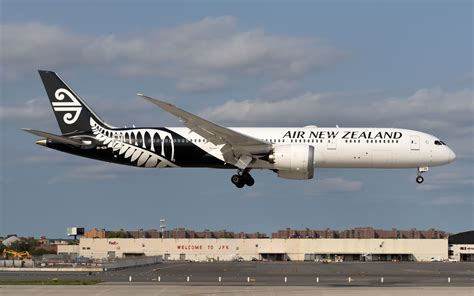
These Pacific routes may not match Australian volumes, but their significance runs deeper. They support regional stability, cultural continuity, and economic resilience across island nations that depend heavily on reliable air links.
Long-Haul Routes: New Zealand’s Global Reach Expands
Long-haul flights reveal how New Zealand plugs into the wider global system. The most popular intercontinental route in 2026 is Auckland to Singapore Changi Airport. With 1,179 one-way flights, the route averages just over three daily services and serves as a critical bridge between New Zealand and Southeast Asia, Europe, and beyond. Operated by Air New Zealand and Singapore Airlines, it benefits from strong premium demand and efficient onward connections.
North America remains a cornerstone of long-haul travel. Auckland to Los Angeles International Airport ranks second among long-haul routes, with 815 one-way flights scheduled. Air New Zealand provides year-round coverage, while American Airlines and Delta Air Lines bolster capacity during the Southern Hemisphere summer. This seasonal layering reflects tourism peaks and diaspora travel patterns.
China continues to reassert its role in New Zealand’s aviation landscape. Auckland to Shanghai Pudong sees 788 one-way flights, closely followed by Auckland to Hong Kong with 778 flights. These routes, operated by combinations of Air New Zealand, China Eastern, and Cathay Pacific, signal a steady recovery in Asia-Pacific travel and enduring commercial ties.
What the 2026 Route Rankings Really Say About New Zealand
Taken together, New Zealand’s top international routes in 2026 tell a clear story. Australia is not just the largest market—it is the backbone of international travel. The Pacific Islands remain culturally and strategically essential, while long-haul routes anchor New Zealand firmly into Asia and North America.
This network reflects a country that, despite its remoteness, is deeply connected. Aircraft movements mirror migration flows, trade relationships, and tourism trends with remarkable precision. In 2026, New Zealand’s skies are busy not by accident, but by design—shaped by geography, history, and an enduring desire to stay connected with the rest of the world.