The modern American airport experience—jet bridges, glass terminals, precision approaches guided by satellites—feels unmistakably contemporary. Yet beneath the asphalt and concrete of many of today’s busiest runways lies a wartime foundation poured in urgency during the 1940s. Across the country, from sprawling international gateways to quiet municipal airfields surrounded by cornfields, World War II-era airports remain fully operational, woven seamlessly into the fabric of modern aviation.
Between 1941 and 1945, the United States executed one of the most ambitious infrastructure expansions in its history. The rapid mobilization of the US Army Air Forces (USAAF) required hundreds of new airfields capable of training pilots, staging bombers, and supporting logistics on an unprecedented scale. Runways were lengthened, layouts standardized, and facilities constructed with durability that far exceeded prewar civilian expectations. The war ended, but the concrete endured.
Today, travelers landing in Atlanta, Los Angeles, Phoenix, or Minneapolis may be touching down on infrastructure conceived for B-17 bombers rather than Boeing 787s. These surviving airports are not relics; they are living systems, constantly modernized yet fundamentally shaped by wartime planning. Understanding their origins reveals how military urgency accelerated the evolution of American aviation decades ahead of schedule.
The Wartime Aviation Boom That Redefined America’s Landscape
Before World War II, American aviation infrastructure was modest. Most civil airports supported light aircraft and early propeller-driven airliners. Runways were often short, grass-surfaced, and limited in capacity. The demands of global conflict transformed that landscape almost overnight.
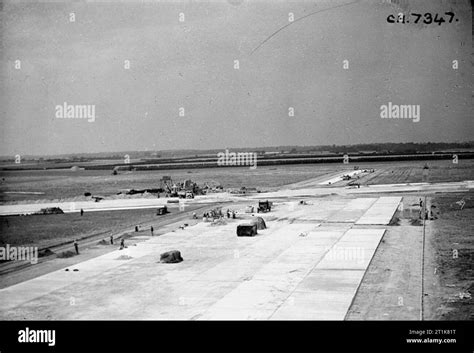
The USAAF required airfields capable of handling heavy bombers such as the B-17 Flying Fortress and B-24 Liberator, along with troop transports and training aircraft operating around the clock. Between 1941 and 1945, more than 400 airfields were constructed or substantially expanded across the continental United States. Strategic placement mattered. Locations were selected for flat terrain, proximity to rail lines, favorable weather, and access to open airspace—particularly in the Midwest, Southwest, and Southeast.
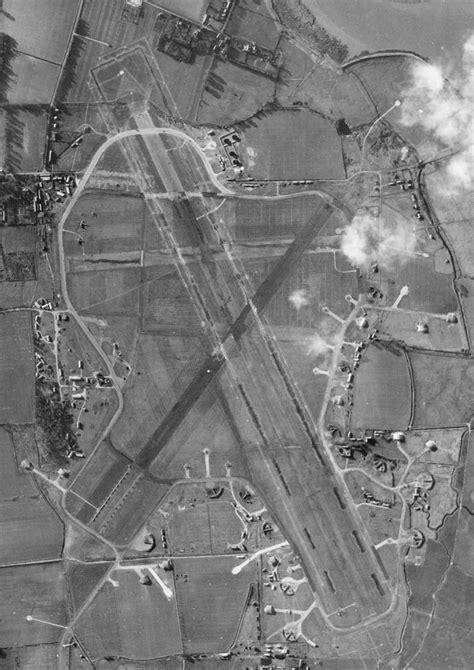
These installations introduced design standards that would shape airports for generations. Long concrete runways, often arranged in triangular patterns to accommodate shifting wind directions, became common. Aprons were expansive. Hangars were massive. Support infrastructure was designed to house thousands of personnel. The scale dwarfed most civilian facilities of the era.
When peace returned, the federal government faced a decision: dismantle or repurpose. Many airfields were transferred to local governments at minimal cost, provided they remained aviation facilities. This policy effectively seeded the nation with ready-made airports, catalyzing the postwar commercial aviation boom.
From Army Air Fields to Commercial Gateways
The transformation from military base to commercial airport was not accidental; it was strategic. Cities that accepted wartime airfields inherited infrastructure that would have been financially impossible to build independently. Long runways originally designed for bombers proved perfectly suited to the first generation of jetliners in the 1950s and 1960s.
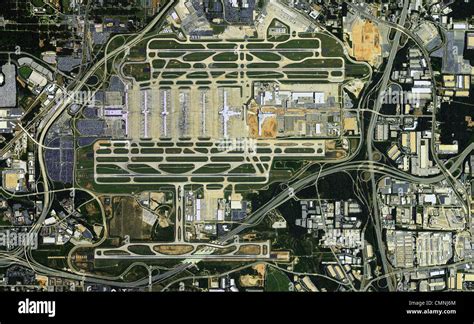
Hartsfield-Jackson Atlanta International Airport offers a defining example. Known as Candler Field before the war, it became Atlanta Army Air Field, supporting pilot training and logistics operations. Federal wartime investment dramatically improved its runways and facilities. When commercial aviation expanded after 1945, Atlanta was uniquely positioned to capitalize. Today, it consistently ranks among the world’s busiest airports.
Similarly, Dallas Love Field, Phoenix Sky Harbor International Airport, and Minneapolis–Saint Paul International Airport all played wartime roles. Federal funding extended runways, upgraded navigation systems, and expanded operational capacity. Those improvements provided a decisive advantage as airlines transitioned from piston-driven transports to jet aircraft.
The ripple effects were profound. Airports that benefited from wartime upgrades were able to attract early airline routes, secure airmail contracts, and expand cargo operations. Meanwhile, cities without comparable infrastructure struggled to keep pace or were forced into costly expansions decades later.
Major US Airports With Direct WWII Lineage
Several of today’s most recognizable airports owe their modern form directly to World War II military use. While some existed in limited capacity before 1941, wartime expansion fundamentally reshaped their scale and trajectory.
On the West Coast, Los Angeles International Airport (LAX)—then known as Mines Field—played a critical role in aircraft manufacturing and military operations. Infrastructure upgrades during the war enabled the airport to handle high traffic volumes and heavy aircraft, laying the groundwork for its emergence as a premier transpacific gateway.
In New York, Stewart International Airport began as Stewart Army Airfield. Unlike many converted facilities, Stewart retained a dual identity. It continues to support both commercial operations and Air National Guard activities, embodying the enduring civil-military integration that characterized many WWII-era airports.
These examples illustrate a broader truth: wartime necessity accelerated airport development decades ahead of civilian demand. Runways built for heavy bombers proved more than adequate for early jets like the Boeing 707 and Douglas DC-8. Airports without such infrastructure often required extensive retrofitting or entirely new construction.
Regional and Municipal Airports Born From Training Fields
Beyond the major hubs, World War II left an especially durable imprint on regional America. Training demands were immense. Pilots, navigators, bombardiers, and mechanics required facilities capable of sustaining constant sorties. Many of these training bases later transitioned into municipal airports that remain operational today.
Kansas stands as a vivid example. Its flat terrain, predictable weather, and uncongested airspace made it ideal for flight training. Salina Municipal Airport, originally Smoky Hill Army Airfield, trained crews for the B-29 Superfortress, the bomber that would later conduct missions over Japan. Even today, Salina’s oversized runways reflect its military origins.
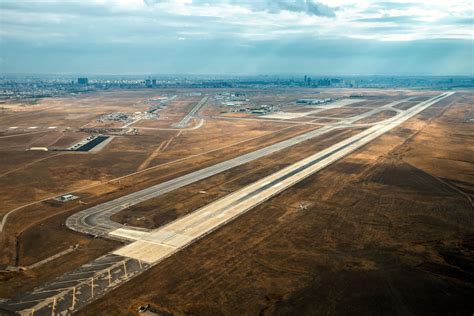
Other Kansas fields—Garden City Regional Airport, Great Bend Municipal Airport, and Liberal Municipal Airport—share similar histories. Their expansive layouts and robust pavement standards hint at their past lives as training installations. Comparable stories can be found in Arkansas, Florida, North Carolina, Texas, and California, where favorable climates allowed year-round operations.
Although many now host limited commercial service, these airports are far from obsolete. They support general aviation, air cargo, aerial firefighting, medical evacuation, and National Guard operations. Their continued relevance demonstrates the durability of wartime investment.
Air Force Bases That Never Closed
Not all WWII airfields transitioned to civilian hands. Some remained under military control and evolved into core components of modern American airpower. Eglin Air Force Base in Florida, Edwards Air Force Base in California, Dover Air Force Base in Delaware, and Altus Air Force Base in Oklahoma were either established or dramatically expanded during the war.
Their original siting decisions proved remarkably prescient. Wide-open airspace, favorable weather, proximity to coastlines or testing ranges, and distance from dense population centers allowed seamless adaptation to Cold War missions. Edwards became synonymous with experimental flight testing and aerospace innovation. Eglin emerged as a critical weapons development and training hub. Dover evolved into a linchpin of strategic airlift operations.
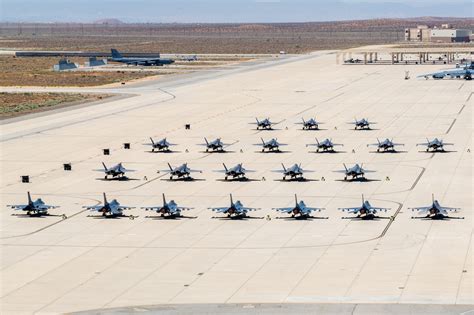
In many cases, the fundamental runway layouts remain recognizable from wartime construction, even as hangars have been modernized and missions transformed. Aircraft once limited to piston engines have given way to stealth bombers, refueling tankers, and remotely piloted systems. The concrete remains, but the capabilities have multiplied.
Infrastructure Built for War, Adapted for Jets
One of the most striking legacies of WWII-era airports is how effectively they accommodated the jet age. Early jets demanded longer runways and stronger pavement than most prewar airports could provide. Fields constructed during the 1940s, however, were already designed for heavy bombers, which required similar performance margins.
This alignment reduced the need for costly relocations. Instead of abandoning older airfields, cities could upgrade terminals, install modern navigation systems, and extend runways incrementally. The wartime infrastructure functioned as a ready-made platform for commercial growth.
The triangular runway patterns common at WWII training fields also enhanced operational flexibility. Aircraft could take off and land regardless of shifting wind conditions, improving safety and efficiency. Many airports retain elements of these original configurations, even as parallel runway systems have expanded around them.
The Strategic Geography of WWII Airports
The geographic distribution of surviving WWII-era airports reveals deliberate strategic thinking. The Midwest and Southwest hosted numerous training installations due to favorable flying weather and expansive terrain. Coastal regions accommodated staging bases and manufacturing support. Proximity to rail networks facilitated rapid movement of personnel and materials.
This geography continues to shape modern route networks. Airports positioned along historic training corridors often evolved into cargo hubs or regional connectors. Their central locations within the continental United States provide logistical advantages that remain relevant in the era of overnight shipping and integrated supply chains.
WWII-Era Airports in the Modern Defense Context
The relevance of WWII airfields extends beyond domestic aviation. In recent years, attention has returned to long-dormant wartime runways across the Pacific. Islands once central to Allied operations have seen renewed interest as part of modern contingency planning. The restoration of these facilities reflects a strategic shift toward dispersed and resilient aviation infrastructure.
Runways poured more than 80 years ago are being evaluated for contemporary use. This continuity underscores the foresight embedded in wartime construction. Infrastructure built for global conflict has proven adaptable across technological revolutions.
Why These Airports Still Matter
The continued operation of WWII-era airports in the United States is more than a historical curiosity. It represents a case study in infrastructure longevity. Built under extraordinary pressure, these facilities were designed with scalability and durability in mind. They have supported piston aircraft, jets, widebodies, and now next-generation airframes powered by sustainable fuels.
Modernization efforts—advanced navigation systems, satellite-based approaches, electric ground equipment—layer new technology onto foundations laid in the 1940s. The past and present coexist seamlessly. Each takeoff from a former Army Air Field connects contemporary air travel with a period when airpower reshaped global history.
There is something quietly remarkable about that continuity. Concrete poured in urgency, hangars erected in haste, and layouts designed for wartime necessity have outlived the conflict that inspired them. They have adapted, expanded, and evolved, proving that well-conceived infrastructure can transcend its original purpose.
The next time an aircraft accelerates down a runway at Atlanta, Los Angeles, or Salina, it may be tracing a line first measured for a bomber crew heading overseas. The roar of jet engines replaces the rumble of radial pistons, yet the geometry of the airfield remains a testament to wartime engineering. These airports are not frozen in history; they are living, breathing components of a national network shaped by one of the most transformative periods in American aviation.