Airports in the United States are far more than logistical hubs. They are civic symbols, deeply embedded in the cultural and political identity of the regions they serve. When an airport bears the name of a political figure, it transforms into a living monument—one encountered not occasionally, but by millions of travelers moving through security lines, scanning departure boards, and announcing destinations. These names are repeated daily, normalized through travel, yet often born from fierce debates over legacy, power, and public memory.
The practice of naming airports after politicians reflects a uniquely American intersection of infrastructure and ideology. While statues and buildings may commemorate leaders, airports amplify their names across global networks. A name spoken in Tokyo, London, or São Paulo carries the imprint of domestic political decisions. This global projection of local values makes each naming choice more consequential—and more contested.
At the heart of these disputes lies a fundamental question: who has the authority to define public memory? Is it local communities, federal lawmakers, or shifting political majorities? The answers have rarely been simple, and the outcomes often leave lasting tensions embedded in the very identity of these transit gateways.
The Reagan National Controversy: A Defining Political Flashpoint
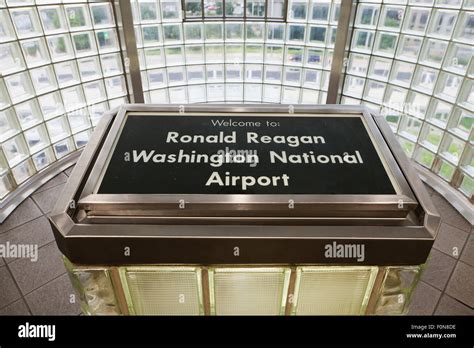
Few airport naming battles illustrate the stakes more clearly than the renaming of Washington National Airport in 1998. The decision to honor Ronald Reagan was not a quiet tribute but a forceful political maneuver. Congress, under Republican control at the time, pushed through legislation to rename the airport despite strong opposition from local authorities in Washington, D.C., and Northern Virginia.
The resistance was not merely procedural. For many, the original name—“National”—carried its own historical significance, symbolizing the airport’s role as a central gateway to the nation’s capital. The change was perceived as an imposition, a federal override of local sentiment. The Metropolitan Washington Airports Authority openly opposed the move, highlighting the unusual top-down nature of the decision.
The controversy deepened due to Reagan’s complex legacy within the aviation community. His administration’s 1981 dismissal of over 11,000 striking air traffic controllers remained a defining and painful episode. For those directly affected, the renaming felt less like an honor and more like a provocation. Even decades later, many travelers continue to refer to the airport simply as “DCA,” subtly resisting the official name in everyday speech.
From Tribute to Transformation: The Tradition Expands
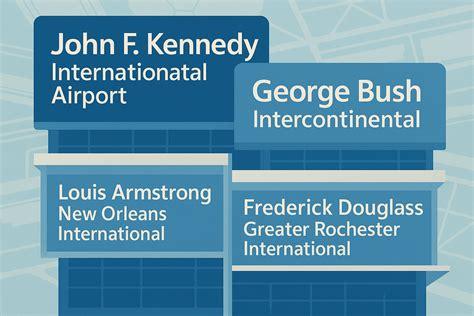
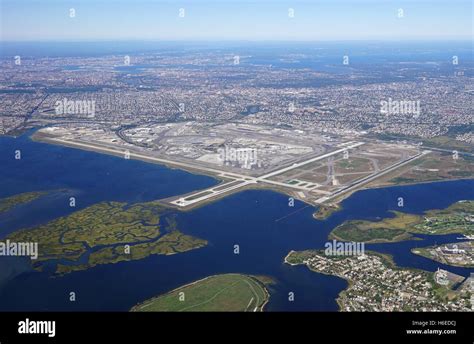
Despite the Reagan controversy, naming airports after political figures is not an anomaly but part of a long-standing tradition. In many cases, these decisions emerged from moments of national mourning or regional pride. John F. Kennedy International Airport in New York, for instance, was renamed shortly after the president’s assassination, embedding his legacy into one of the world’s busiest international gateways.
Similarly, LaGuardia Airport honors Fiorello La Guardia, a mayor whose influence on New York City’s development remains widely recognized. Washington Dulles International Airport commemorates John Foster Dulles, reflecting his role in shaping mid-20th-century American foreign policy. In Houston, George Bush Intercontinental Airport stands as a tribute to the 41st president, reinforcing his ties to Texas.
These examples suggest that airport naming can serve as a form of collective remembrance, aligning civic identity with admired leadership. Yet even in these cases, the process is rarely devoid of political calculation. Decisions often reflect prevailing power structures, with certain figures elevated while others are overlooked.
Rewriting History: The Case of Las Vegas and Harry Reid
Modern controversies increasingly revolve around reassessing the past rather than celebrating it. The renaming of Las Vegas’s primary airport in 2021 exemplifies this shift. Previously named after Senator Pat McCarran, the airport became the focus of intense scrutiny as historical investigations revealed his record of antisemitism, racism, and xenophobia.
For many residents and leaders, continuing to honor McCarran no longer aligned with the values of a diverse and globally connected city. The decision to rename the airport after Senator Harry Reid marked a deliberate effort to redefine the region’s public image. Reid, a longtime political figure in Nevada, represented a more contemporary and inclusive legacy.
This transformation was not without debate. Critics questioned whether replacing one politician with another truly resolved the underlying issue. Yet the change underscored a broader trend: airport names are no longer static. They are subject to revision, reflecting evolving societal standards and historical awareness.
Partisan Lines and Regional Identity
Not all naming decisions stem from retrospective reassessment. Some emerge directly from partisan divides. In Little Rock, the naming of Bill and Hillary Clinton National Airport sparked opposition from Republican lawmakers who viewed the move as politically motivated. The debate highlighted how airport names can become proxies for broader ideological conflicts.
In Houston, discussions surrounding the naming of George Bush Intercontinental Airport revealed competing visions of honor. While Bush ultimately received recognition, earlier proposals had suggested commemorating Congressman Mickey Leland, known for his humanitarian work. The choice reflected not only political alignment but also differing interpretations of whose contributions deserved prominence.
These disputes illustrate how airport naming operates at the intersection of local pride and national politics. Each decision carries implications for how a region defines itself—and how it wishes to be perceived by the world.
![Harry Reid International Airport Las Vegas signage terminal interior]](https://boltflight.com/wp-content/uploads/2026/04/Harry-Reid-International-Airport-Las-Vegas-signage-terminal-interior.webp)
The Trump Proposal: A New Chapter in an Old Debate
The latest controversy surrounding Palm Beach International Airport demonstrates that these debates are far from settled. A proposal to rename the airport after Donald Trump has reignited familiar tensions while introducing new complexities. Supporters argue that Trump’s association with the region and his national prominence justify the honor. His residence at Mar-a-Lago strengthens the symbolic connection to Palm Beach County.
Opponents, however, contend that the move represents an overreach of state authority into a locally controlled asset. They argue that introducing such a polarizing figure into the name of a public transportation hub risks deepening divisions rather than fostering unity. The debate has extended beyond symbolism, encompassing legal challenges related to cost, safety, and administrative coordination.
This case highlights an important evolution in airport naming disputes. What was once primarily a question of legacy has become entangled with operational and legal considerations. The stakes are no longer confined to memory—they now include the practical realities of managing complex infrastructure.
Airports as Living Monuments of Power and Memory
The history of U.S. airports named after politicians reveals a pattern of ongoing negotiation between past and present. These names are not fixed markers but dynamic symbols, continually reinterpreted through the lens of changing values and political landscapes. Each renaming, each controversy, reflects a deeper struggle over who gets to shape public memory.
Airports, by their very nature, are places of movement and transition. Yet their names anchor them in specific narratives, turning them into enduring statements about identity and power. Whether through celebration, controversy, or revision, the act of naming ensures that politics remains embedded in the everyday experience of travel.
As future debates unfold, one reality remains clear: the question is never just about a name. It is about the stories a society chooses to elevate—and the ones it decides to leave behind.