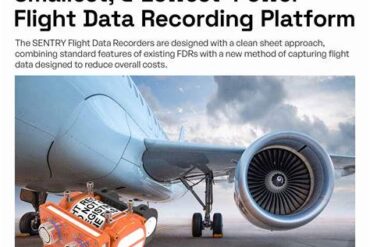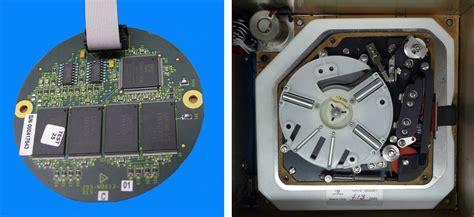
A flight recorder—commonly known as the “black box,” though its unmistakable hue is a vivid international orange—stands as aviation’s most resilient witness. Far from mere technical appendage, it is a legally mandated, crash-survivable unit that plays a critical role in post-accident investigations, safety reforms, and regulatory policymaking. Since 1967, international aviation standards have required commercial aircraft to be equipped with these devices, now engineered to endure impact forces of 3400 g and temperatures surpassing 1000°C.
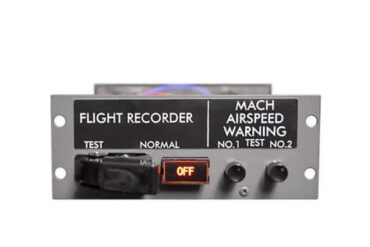
The modern flight recorder typically combines two systems in one reinforced container: the Flight Data Recorder (FDR) and the Cockpit Voice Recorder (CVR). These technologies preserve hours of critical aircraft performance parameters and cockpit conversation, ensuring that investigators, regulators, and engineers can reconstruct events even after catastrophic failures.
The Origins and Evolution of Flight Recorders
The path to today’s flight recorder spans over a century of innovation. The concept dates back to 1897, when John Sen Inches Thomson developed a maritime recorder to log a vessel’s position. Aviation’s first meaningful step came in the 1930s–1940s, notably in France with the Hussenograph, a photographic recorder used in test flights, though it lacked audio capabilities and was destroyed after a single use.
During World War II, the British developed a copper-foil indentation recorder, while in the U.S., efforts began to record B-17 intercom activity using magnetic wire. In 1953, Australian scientist Dr. David Warren emerged as the pioneer of the modern black box, inventing the first integrated prototype that captured both flight data and cockpit voice.
By the mid-1960s, the UK adopted the “Red Egg” recorder, and by 1967, the U.S. Federal Aviation Administration mandated the installation of FDRs and CVRs on large commercial aircraft.
Decoding the Components: FDR and CVR Explained
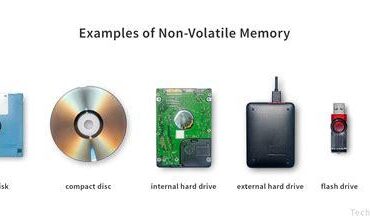
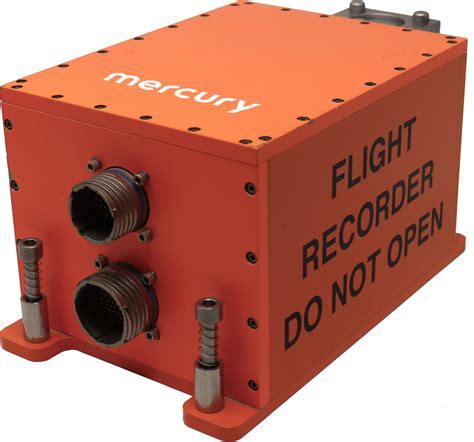
The Flight Data Recorder (FDR) continuously logs an array of aircraft parameters, typically 88 or more, including engine thrust, control surface positions, altitude, speed, and time. The device is usually housed in the tail section of the aircraft to maximize survivability. It employs solid-state memory and is protected by a double-wrapped titanium or stainless-steel case, featuring layers of heat insulation. Modern FDRs loop up to 25 hours of data, which is overwritten unless marked by a cockpit-triggered event button.
Meanwhile, the Cockpit Voice Recorder (CVR) captures cockpit conversations, ambient noise, and radio transmissions. It records four audio channels, allowing investigators to distinguish between pilots, background sounds, and radio communications. Traditional CVRs stored only 2 hours of data, but European regulations now require 25-hour loops for newer aircraft, with the FAA proposing a similar upgrade.
Together, these devices form a combined CVDR unit—common since the 1990s—designed by firms like L3Harris and Hensoldt. These units require no scheduled maintenance and feature integrated battery power, allowing them to operate autonomously even during aircraft system failure.
The Science of Survivability: Technical Requirements and Durability
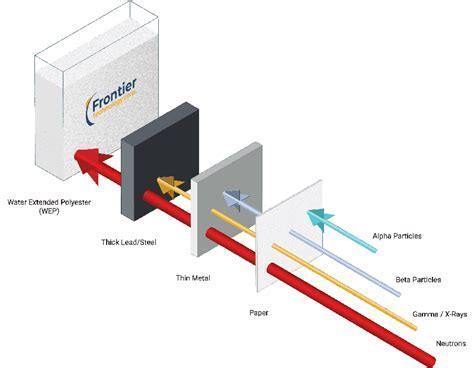
Flight recorders are not merely resilient—they are built to extreme certification standards set by ICAO Annex 6, EUROCAE ED-112, and FAA Technical Standard Orders. These include:
- Impact resistance: Withstand 3400 g for 6.5 milliseconds
- Penetration testing: Survive high-speed projectile impacts
- Fire resistance: Endure 1100°C for 60 minutes
- Deep-sea immersion: Remain waterproof for 30 days at 6,000 meters
- Fluid immersion: Resistant to fuel, oil, salt water, and lubricants
Additionally, recorders are fitted with Underwater Locator Beacons (ULBs), which emit ultrasonic pings for 30 days after a crash. These beacons are crucial in recovering recorders from oceans or deep lakes—a task that remains a logistical and technological challenge.
Beyond the Black Box: Additional Monitoring Systems
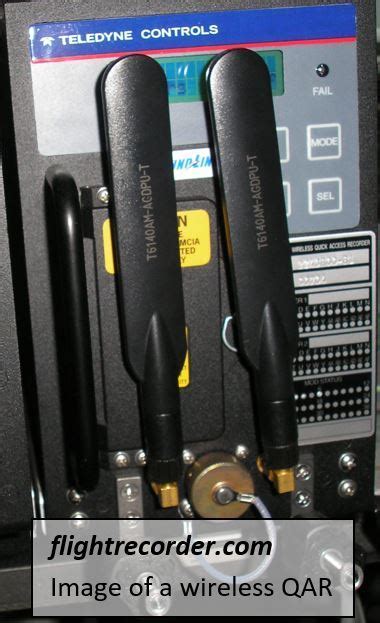
Modern aircraft are increasingly outfitted with supplementary recording devices like the Quick Access Recorder (QAR) and the Flight Data Acquisition Unit (FDAU). The QAR allows for removable media storage, enabling airlines to analyze flight trends and detect operational anomalies without invasive investigation. The FDAU functions as the data aggregator, routing signals from avionics and sensors to both the FDR and QAR for real-time or post-flight analysis.
From Regulations to Reform: The Legal Backbone of Recorder Usage
The regulatory journey of the flight recorder is rooted in both technological feasibility and tragic necessity. In the 1940s, the U.S. Civil Aeronautics Board (CAB) made early attempts at mandating recorders but retracted due to reliability limitations. By the late 1950s, mandates resumed with specific storage and continuous recording requirements.
By 1967, CVRs became mandatory in the U.S. for larger aircraft, and by 2014, both FDRs and CVRs were required on all large commercial airliners. Globally, the National Transportation Safety Board (NTSB) spearheads accident investigations in the U.S., relying heavily on recorder data. However, CVR audio is confidential by federal statute (49 USC 1114), with transcripts released only under limited conditions.
Current standards include:
- ARINC 747 for FDR architecture
- ARINC 757 for CVR structure
- FAA 2023 directive preventing CVR overwriting post-incident
Towards a Smarter Future: Proposed Enhancements and New Designs
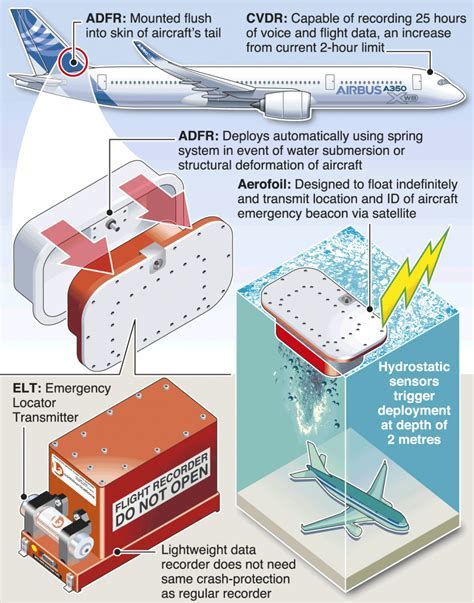
In response to catastrophic losses, such as Malaysia Airlines Flight MH370 (2014) and AirAsia Flight 8501, there have been growing calls to incorporate live flight data streaming, ejectable recorders, and longer-lasting ULBs. The NTSB has repeatedly proposed that aircraft be fitted with deployable recorders that can eject on impact, float, and transmit location data via satellite.
Legislative efforts, including the SAFE Act (2003–2007, reintroduced in 2014), have aimed to make such systems mandatory. While implementation remains slow, some aircraft manufacturers are evaluating second CVDR units or satellite-linked telemetry as a preventive measure.
Recording More Than Data: The Case for Cockpit Cameras
The push for image-based recorders—cockpit cameras—has gained momentum in recent years. These devices, recommended by the NTSB and costing about $8,000 per unit, aim to capture visual information from instrument panels, external views, and crew interactions. When integrated with audio and data streams, visual context can significantly improve accident analysis.
Despite privacy concerns raised by pilot unions, regulators argue that video evidence complements CVR and FDR data, particularly in scenarios involving disorientation, spatial confusion, or instrument misreading.
Cultural Imprint and Public Curiosity
Flight recorders, especially CVRs, have seeped into popular culture, often evoking both solemnity and fascination. The German band Rammstein used CVR-derived art for their album Reise, Reise, while the play Charlie Victor Romeo reenacts real crash scenarios using authentic transcripts.
Authors like Chuck Palahniuk and comedians George Carlin and Chris Rock have also referenced black boxes—whether as storytelling devices or darkly comic metaphors. This public engagement underscores the symbolic gravity of flight recorders: not just instruments of analysis, but custodians of final moments.
Conclusion: Safeguarding the Skies with Silent Witnesses
The modern flight recorder is more than just a crash-survivable archive—it is a testament to aviation’s unwavering commitment to learning, transparency, and safety evolution. As technology advances, so too must the tools we use to decode tragedy and prevent recurrence. The conversation now turns toward real-time streaming, ejectable designs, and enhanced visual surveillance—measures that promise not just better investigations, but better futures for air travel.