The oceans of World War II became some of the most dangerous battlefields in human history. Naval forces fought across the Atlantic, Pacific, Mediterranean, and countless coastal waters, leaving behind thousands of sunken vessels. More than 20,000 ships disappeared beneath the waves during the conflict, but not every dangerous wreck was destroyed by enemy fire. Some became hazards because of what they carried beneath the surface.
The title of the deadliest WWII shipwreck does not belong to a battleship, aircraft carrier, or heavily armed warship. Instead, it belongs to a humble Allied supply vessel: the SS Richard Montgomery, a Liberty Ship resting in shallow waters near Sheerness, Kent, England. Unlike famous wartime wrecks that represent historic battles, this ship remains a threat because its cargo could still unleash catastrophic destruction more than eight decades after it sank.
The Liberty Ships That Helped Win World War II
The Liberty Ship program was one of the most important industrial achievements of the Allied war effort. Designed as simple, reliable cargo vessels, these ships transported weapons, fuel, vehicles, food, and other critical supplies across oceans threatened by German U-boats.
The United States built an astonishing 2,710 Liberty Ships during World War II. Their construction was revolutionary because shipyards developed standardized production methods that dramatically reduced building times. Some vessels went from the first stages of construction to launch in just a matter of days, demonstrating the enormous manufacturing power behind the Allied victory.
Although Liberty Ships lacked the armor and firepower of naval combat vessels, their contribution was equally significant. They kept armies supplied across continents and allowed Allied forces to maintain operations far from home. Without these cargo ships, many major campaigns would have struggled to continue.
The SS Richard Montgomery was one of these essential vessels. Built during the height of the war, it represented the logistical backbone that supported Allied military operations. However, its journey ended not during a dramatic naval battle, but through a navigation disaster that created one of the most dangerous maritime hazards in modern history.
How the SS Richard Montgomery Became a Floating Bomb
In August 1944, the SS Richard Montgomery was carrying a massive shipment of military explosives while anchored in the Thames Estuary. The ship was waiting for further instructions when it grounded on a sandbank. Despite attempts to rescue the vessel, its hull eventually broke apart, sending the Liberty Ship and much of its cargo to the bottom.
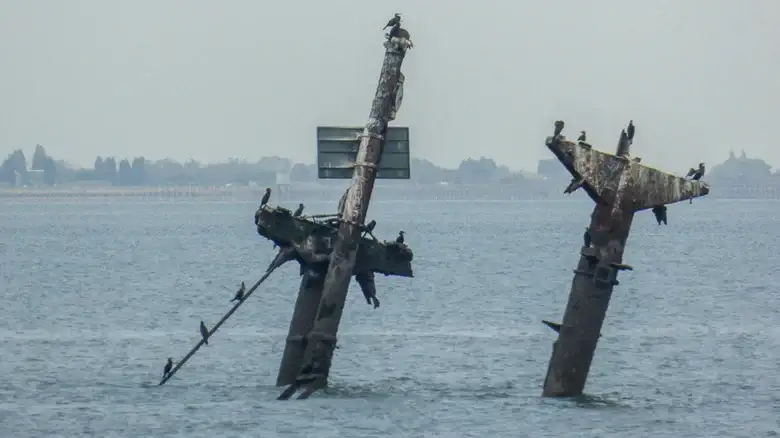
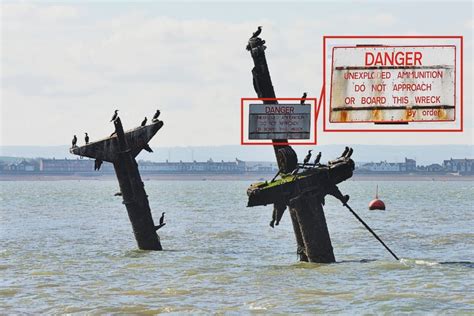
The wreck now rests in approximately 50 feet of water, with its broken masts still visible above the surface for decades. This unusual sight has made the shipwreck one of Britain’s most recognizable maritime hazards, but the real danger lies beneath the waves.
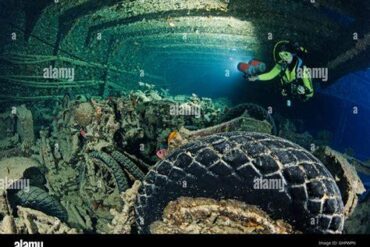
Inside the wreck remain approximately 1,400 tons of high explosives, including aerial bombs, ammunition, and anti-tank weapons. Much of the original cargo was removed after the sinking, but authorities determined that recovering the remaining explosives would create an even greater risk.
The ship therefore became a permanent underwater danger zone. Unlike ordinary shipwrecks, which gradually become artificial reefs or historical sites, the SS Richard Montgomery remains under constant observation because any disturbance could potentially trigger a devastating chain reaction.
Why This WWII Shipwreck Could Still Cause Disaster
The greatest concern surrounding the SS Richard Montgomery is not only the quantity of explosives but also its location. The wreck lies extremely close to populated areas of Kent, making any accidental explosion far more serious than similar incidents occurring in remote waters.
A comparable example occurred with the SS Kielce, another vessel carrying explosives that sank in the English Channel. When its cargo detonated years later, the explosion created a large underwater crater and generated seismic activity measured at approximately 4.5 on the Richter scale. However, the SS Kielce was located farther offshore and in deeper water.
The SS Richard Montgomery presents a much greater challenge because of its shallow position and proximity to communities, shipping routes, and infrastructure. A large explosion could potentially send shockwaves across the surrounding region and create dangerous debris.
Over the years, authorities have established exclusion zones around the wreck and conducted regular monitoring operations. The ship is treated as both a historical artifact and an unexploded wartime threat.
The Future of the Most Dangerous WWII Shipwreck
One of the biggest concerns has been the deterioration of the ship’s remaining structures. The masts rising above the water have gradually weakened, raising fears that they could collapse onto the wreck and disturb the unstable cargo below.
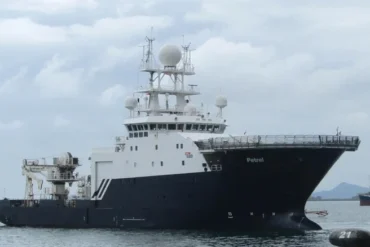
In 2026, a major operation costing $12.7 million began to remove the remaining masts. The project was designed to reduce immediate risks and preserve the wreck site for as long as possible. However, completely removing the explosives remains considered too dangerous with current technology.
The SS Richard Montgomery will likely continue resting beneath the waters of Kent for generations. It stands as a reminder that the dangers of World War II did not disappear when the fighting ended. Some threats survived quietly beneath the waves, waiting decades after the war to remind the world of the enormous destructive power left behind.
Unlike legendary battleships lost in combat, this forgotten Liberty Ship became the most dangerous WWII shipwreck because of a simple fact: it still carries the weapons of war.