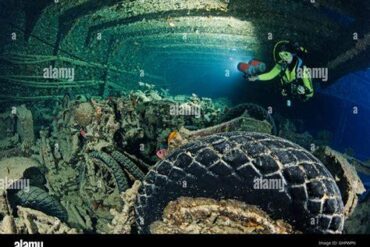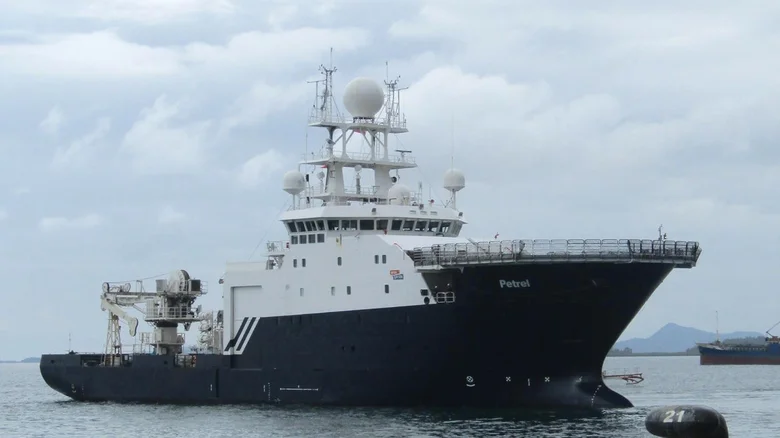
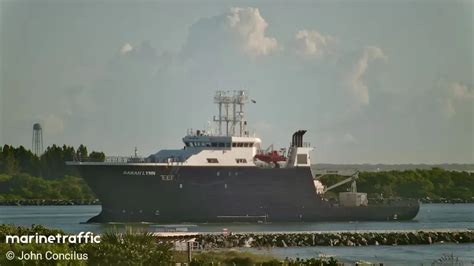
The RV Petrel earned worldwide recognition for uncovering some of the most significant World War II shipwrecks ever discovered. Built as a state-of-the-art deep-ocean research vessel, it combined advanced technology with a mission centered on historical preservation rather than treasure hunting. After years of revealing wartime secrets hidden beneath thousands of feet of seawater, the vessel has entered an entirely different phase of service. Renamed MV Sarah Lynn, the legendary ship now operates for the U.S. Navy, where its sophisticated survey capabilities are being used to support modern maritime operations instead of archaeological expeditions.
The transformation marks an uncommon journey for a civilian exploration vessel. Research ships rarely transition into active government service, yet MV Sarah Lynn possesses a rare combination of technologies that remain highly valuable today. Its cutting-edge sonar systems, remotely operated vehicles, autonomous underwater vehicles, and deep-sea mapping equipment allow it to perform tasks that relatively few vessels can accomplish. Rather than leaving its remarkable legacy behind, the ship now applies those same strengths to a new generation of naval missions beneath the world’s oceans.
The vessel’s story also demonstrates how investments in scientific exploration often produce capabilities that extend well beyond archaeology. Technologies developed to locate lost warships have become increasingly important as modern navies expand their understanding of underwater environments, critical infrastructure, and strategic maritime regions.
RV Petrel’s Historic Role in Discovering WWII Shipwrecks
Before joining the U.S. Navy, RV Petrel was owned by Microsoft co-founder Paul Allen, whose passion for naval history inspired one of the world’s most successful underwater exploration programs. Allen envisioned expeditions that respected military graves while documenting historically important wrecks using non-invasive technology. Every mission sought to preserve history, honor fallen sailors, and provide historians with new evidence about some of the war’s most consequential naval battles.
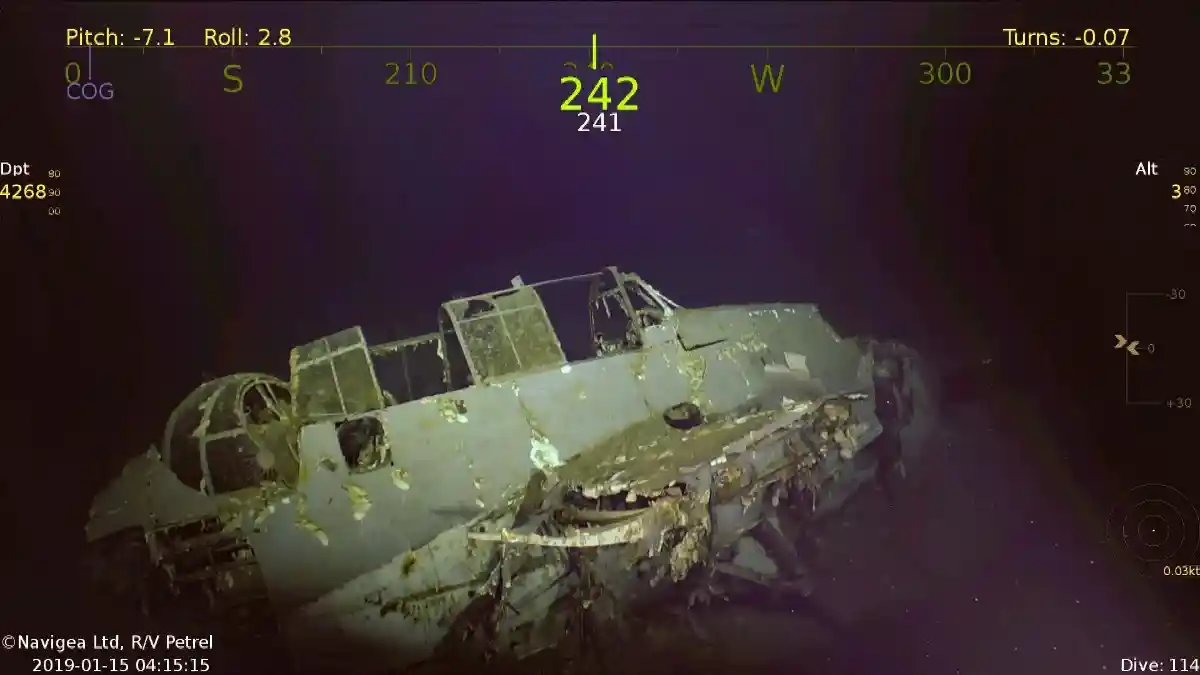
Equipped with sophisticated multi-beam sonar, high-resolution imaging systems, remotely operated submersibles, and autonomous underwater vehicles, the vessel became exceptionally effective at locating wrecks resting several miles beneath the ocean’s surface. Its equipment enabled researchers to produce remarkably detailed images without disturbing fragile sites that had remained untouched since the 1940s.
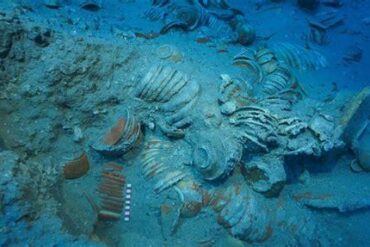
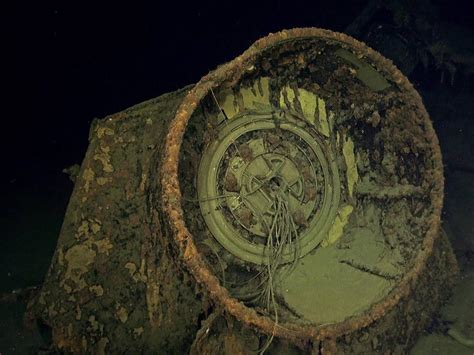
Among its greatest achievements were the discoveries of the USS Wasp, resting nearly 14,000 feet below the surface, along with the legendary USS Indianapolis, USS Juneau, and the Japanese aircraft carriers Akagi and Kaga. Each expedition helped answer long-standing historical questions while providing valuable documentation for historians, researchers, and families seeking closure decades after the war ended.
Why the US Navy Selected MV Sarah Lynn
Following its remarkable archaeological career, the vessel entered a new chapter when it was renamed MV Sarah Lynn and transferred into U.S. Navy service. Although the mission has changed, the ship’s most valuable assets remain exactly the same. Deep-water survey equipment, exceptional endurance, and highly advanced sonar systems make the vessel perfectly suited for today’s increasingly complex maritime environment.
Modern naval operations rely heavily on accurate seafloor mapping and underwater data collection. Oceans contain communication cables, energy infrastructure, navigation hazards, and countless natural features that require constant monitoring. A vessel already proven capable of conducting precise deep-ocean surveys represents a significant operational advantage without requiring years of new development.
Rather than searching exclusively for historic wrecks, MV Sarah Lynn is expected to support maritime domain awareness, underwater surveying, and other specialized oceanographic missions. While the Navy has revealed few operational details, the vessel’s technological capabilities suggest it will play an important supporting role in expanding knowledge of strategically important underwater regions.
A Second Career Built on Deep-Ocean Expertise
The transition from archaeological research to naval service reflects a natural evolution instead of a complete reinvention. Every capability that once helped locate forgotten WWII shipwrecks can now contribute to understanding modern underwater environments. High-resolution mapping, precision navigation, and advanced remote exploration remain essential regardless of whether the objective is documenting history or supporting present-day maritime operations.
The ship also symbolizes how historical preservation and national security can intersect through shared technology. Its remarkable career has already transformed historians’ understanding of several famous naval battles, while its future promises to strengthen the Navy’s ability to operate effectively beneath the sea.
Although RV Petrel has adopted a new identity as MV Sarah Lynn, its defining mission remains remarkably consistent. It continues exploring remote sections of the ocean that few vessels can reach, using world-class technology to reveal what lies beneath the surface. The difference is that instead of uncovering forgotten chapters of World War II, it now helps prepare the U.S. Navy for the challenges of the modern maritime domain.