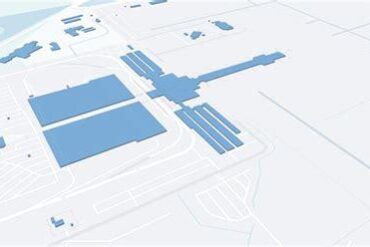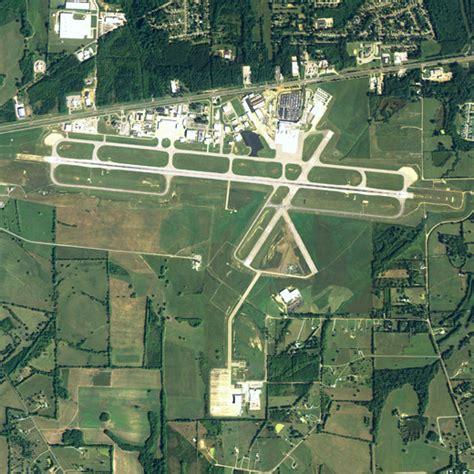
Montgomery Regional Airport (IATA: MGM, ICAO: KMGM, FAA LID: MGM), also widely known as Dannelly Field, stands as a pivotal civil-military aviation hub, strategically located seven miles southwest of downtown Montgomery, the historic capital city of Alabama. Owned and meticulously operated by the Montgomery Airport Authority, this multifaceted facility serves not only the commercial air travel needs of Montgomery and the surrounding River Region but also plays a crucial role in military aviation and general aviation activities. Its official coordinates are 32°18′02″N 086°23′38″W, and it sits at an elevation of 221 feet (67 meters) above mean sea level. The airport’s official website, flymgm.com, offers a wealth of information for travelers and aviation enthusiasts alike. Despite seeing a dynamic shift in passenger numbers over the years, with 164,680 passengers recorded in 2020 during the global travel downturn, and a rebound to 178,825 enplanements in 2023, MGM continues to be a vital artery for connectivity in central Alabama. The Federal Aviation Administration (FAA) recognized its importance in the National Plan of Integrated Airport Systems for 2017–2021, categorizing it as a non-hub primary commercial service facility, underscoring its significance beyond just local traffic.
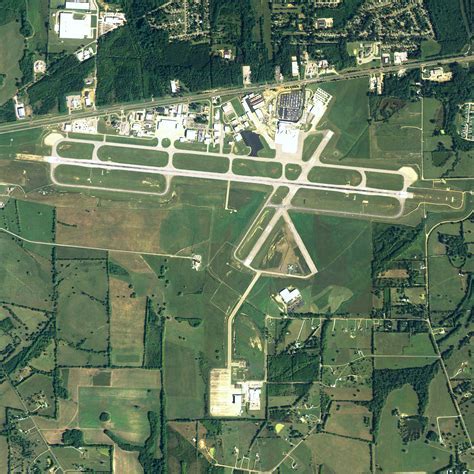
The history of aviation in Montgomery is a fascinating narrative of intertwined commercial and military interests, a theme that defines Dannelly Field to this day. The very first commercial air services in the city were not at the current site but operated out of Maxwell Field, a military facility established by the legendary Wright Brothers located west of Montgomery. Recognizing the burgeoning need for dedicated civilian air travel infrastructure, the City of Montgomery established its original municipal airport in 1929, situated to the east of the city. This facility was subsequently named Gunter Field and initially served by a predecessor of what would become American Airlines. Later, the prominent Eastern Air Lines took over commercial services at Gunter. However, the dawn of World War II dramatically altered the landscape. In 1940, the War Department selected Gunter Field as a new pilot training facility. This rapid militarization led to significant congestion at Gunter, compelling Eastern Air Lines to temporarily relocate its operations back to Maxwell Field. Faced with this challenge and the clear need for a distinct civilian airport, the city purchased a substantial tract of land southwest of downtown along US Highway 80. This new site was chosen to replace Gunter for civilian aviation purposes. Concurrently, the Army Air Forces (AAF) had identified a pressing need for seven auxiliary airfields in the vicinity of Gunter Field to support its training missions. In a synergistic agreement, the city and the USAAF decided that the newly acquired site would also serve as Gunter’s auxiliary field #6. This dual-purpose facility officially opened in 1943 and was poignantly named Dannelly Field in honor of Ensign Clarence Moore Dannelly Jr., a U.S. Navy pilot and Montgomery native who was killed in a training accident in 1940 and is widely considered to be Montgomery’s first casualty of World War II. The legacy of this era is still visible today, with the original Army Air Forces hangars now forming an integral part of the Montgomery Aviation complex, a fixed-base operator (FBO) at the airport.
The Evolution of Dannelly Field’s Infrastructure
Upon its opening in 1943, Dannelly Field featured three primary runways, each designed to accommodate the aircraft of that era. Their original dimensions were:
- Runway 3/21: 4,000 feet by 150 feet (1,219 m × 46 m). This runway still exists today, serving primarily general aviation traffic.
- Runway 9/27: 3,500 feet by 150 feet (1,067 m × 46 m). This runway underwent significant expansion over the years to meet the demands of larger and faster aircraft. It was first extended to 7,000 feet (2,100 m) in 1955 and then further extended to its current impressive length of 9,020 feet (2,749 m) in 1963. It was redesignated as Runway 10/28 in 1992 due to shifts in magnetic declination.
- Runway 15/33: 4,000 feet by 150 feet (1,219 m × 46 m). This runway was eventually closed in 1981, though some portions of its pavement remain in use as taxiways and apron areas, silent reminders of the airport’s original layout.
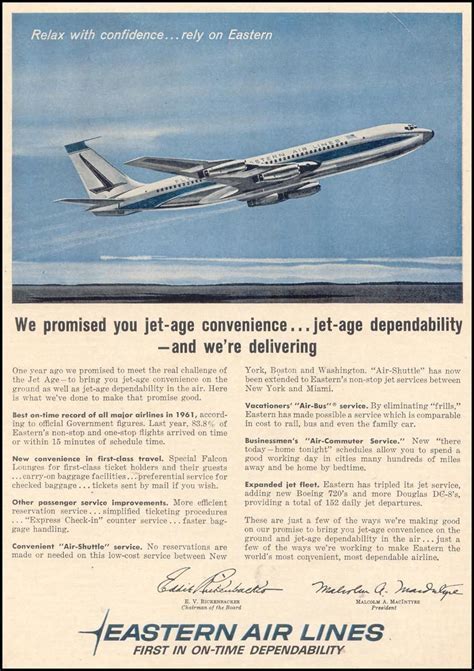
When Dannelly Field commenced operations, Eastern Air Lines promptly moved its services to the new facility. The City of Montgomery officially took title to Dannelly Field in 1946, although the arrangement for joint commercial and military use continued seamlessly, a hallmark of the airport’s operational philosophy. A significant milestone in the airport’s development was the construction of a permanent passenger terminal and control tower in 1955, strategically located north of Runway 9/27. This development marked a new era of passenger comfort and operational efficiency. There were periods, notably in 1963 and again in 1970, when Runway 9/27 (now 10/28) was undergoing major reconstruction. During these times, commercial flights were temporarily diverted to Maxwell Air Force Base, highlighting the enduring cooperative relationship between civilian and military aviation entities in Montgomery.
A Strong Military Presence: The Alabama National Guard at MGM
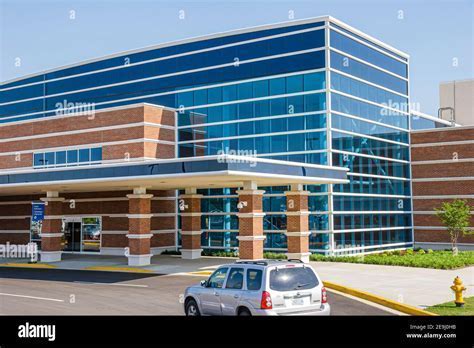
Montgomery Regional Airport is not just a civilian gateway; it is also home to a significant military presence, most notably the Alabama Air National Guard’s 187th Fighter Wing (187 FW). This esteemed unit is based on the west side of the airport at the Montgomery Air National Guard Base and currently operates a squadron of advanced F-16C Fighting Falcon multirole fighter aircraft. The 187th Fighter Wing boasts a rich history, having evolved from the 160th Tactical Reconnaissance Squadron, which began its operations at Dannelly Field in 1953. Throughout its distinguished service, the 187th and its predecessor units have based a variety of iconic aircraft types at Montgomery. These include the RF-51 Mustang, the RF-80 Shooting Star, the RF-84 Thunderflash, the formidable RF-4 Phantom II and F-4 Phantom II, and the versatile C-131 Samaritan transport aircraft. This lineage showcases the unit’s adaptability and its long-standing contribution to national defense.
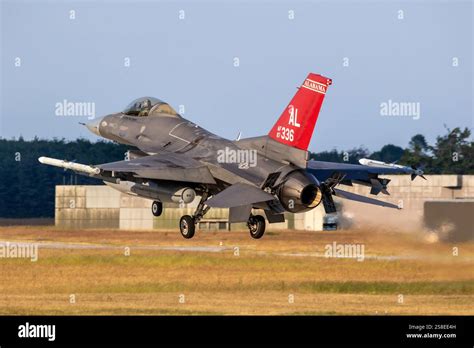
In addition to the Air National Guard, the Alabama Army National Guard maintains an Army Aviation Support Facility (AASF) on the south side of the airport. While this facility is primarily oriented towards supporting helicopter operations, it is also fully capable of accommodating fixed-wing aircraft. The 31st Aviation Battalion was established here in 1986, and just a year later, it was reorganized and redesignated as the 1st Battalion, 131st Aviation Regiment, a unit that continues to serve with distinction. Further enhancing the airport’s safety and emergency response capabilities, an Air National Guard Aircraft Rescue and Fire Fighting (ARFF) unit is co-located at the airport. This unit, equipped with multiple specialized fire fighting and rescue vehicles, operates in conjunction with the airport’s civilian ARFF unit, providing an augmented and robust emergency response posture for all aircraft operations at MGM.
Modern Facilities for a Seamless Travel Experience
Montgomery Regional Airport spans an impressive 1,907 acres (772 hectares). Its primary runway, Runway 10/28, is an asphalt surface measuring 9,020 feet by 150 feet (2,749 x 46 m). This runway is equipped with Category I Instrument Landing Systems (ILS) and approach lighting systems on both ends, enabling operations in a wide range of weather conditions and enhancing safety. The second runway, Runway 3/21, is also asphalt and measures 4,011 feet by 150 feet (1,223 x 46 m), primarily catering to general aviation and smaller aircraft. Additionally, the airport features one asphalt helipad (H1), measuring 100 by 100 feet (30 x 30 m), supporting helicopter operations.
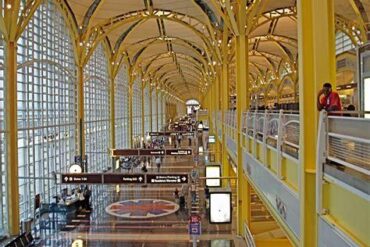
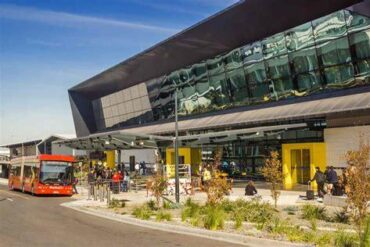
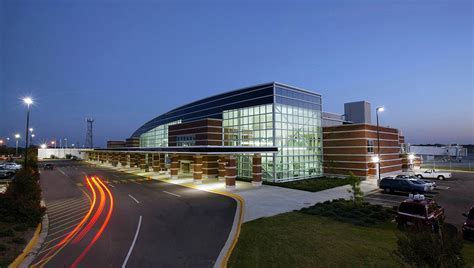
The airline terminal at MGM has undergone several expansions and modernizations since its original construction in 1955. The most transformative of these was a $40 million capital improvement program that concluded in November 2006. This ambitious project effectively doubled the size of the terminal, completely revamped its appearance, and introduced state-of-the-art amenities. Key enhancements included the introduction of second-floor boarding, sleek passenger loading bridges (jetways) for all gates, eliminating the need for ramp-level boarding and providing weather protection. A centerpiece of the renovated terminal is its stunning rotunda, featuring a domed ceiling that artistically simulates sunrises, sunsets, and a starry night sky, creating a unique and welcoming ambiance for travelers. The airport’s apron, main runway, and taxiways are designed to accommodate very large aircraft, up to the size of a Boeing 747 or an Antonov An-124 cargo plane. This capability is occasionally utilized by college football teams visiting nearby Auburn University, who charter larger aircraft into Montgomery for their games. Beyond the passenger terminal, MGM hosts numerous corporate aviation hangars and support facilities, catering to the needs of private and business aviation. A new, modern control tower was constructed in 1996, located south of Runway 10/28, providing air traffic controllers with enhanced visibility and technology.
Airlines, Destinations, and Passenger Volume
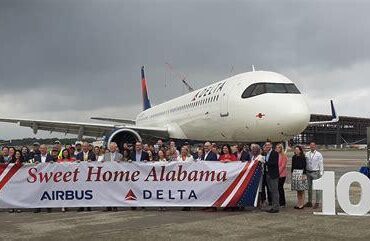
Currently, Montgomery Regional Airport is served by two major airline brands, operating through their regional affiliates: American Eagle and Delta Connection. These carriers provide essential connectivity to major hubs, facilitating travel to and from Alabama’s capital city.
- American Eagle offers scheduled nonstop flights to its hubs at Charlotte Douglas International Airport (CLT), Dallas/Fort Worth International Airport (DFW), and Ronald Reagan Washington National Airport (DCA).
- Delta Connection provides frequent nonstop service to the world’s busiest airport, Hartsfield-Jackson Atlanta International Airport (ATL).
These routes are crucial, linking Montgomery to extensive domestic and international networks. For the year ending September 30, 2022, the airport recorded 63,511 aircraft operations, which averages out to approximately 174 operations per day. This traffic was composed of 35% military flights, 51% general aviation, 11% air taxi services, and 3% scheduled airline operations. As of September 2022, there were 110 aircraft based at MGM. This diverse fleet included 32 military aircraft, 51 single-engine general aviation aircraft, 15 multi-engine aircraft, 6 jet aircraft, and 6 helicopters, reflecting the airport’s varied roles.
Federal Aviation Administration records indicate that the airport had 157,958 passenger enplanements (boardings) in calendar year 2013, a decrease from 182,313 in 2012. More recent data shows fluctuations, with 85,498 enplanements in the pandemic-affected year of 2020, followed by a recovery to 127,323 in 2021, 150,694 in 2022, and 178,825 in 2023. The projection for 2024 suggests a further increase to 194,627 enplanements, indicating a positive trend in passenger traffic.
Key Air Traffic Statistics and Trends
Analyzing passenger data provides insights into the airport’s busiest routes and the airlines that carry the most passengers.
Busiest Domestic Routes from MGM (January 2024 – December 2024 Estimate):
- Atlanta, Georgia (ATL): 86,680 passengers (Delta)
- Dallas/Fort Worth, Texas (DFW): 57,980 passengers (American)
- Charlotte, North Carolina (CLT): 32,810 passengers (American)
- Washington–National, Virginia (DCA): 13,220 passengers (American)
Carrier Shares (November 2023 – October 2024):
- Endeavor Air (operating as Delta Connection): 103,000 passengers (27.64%)
- Envoy Air (operating as American Eagle): 87,330 passengers (23.52%)
- SkyWest Airlines (operating as Delta Connection and historically for other majors): 67,800 passengers (18.26%)
- Piedmont Airlines (operating as American Eagle): 64,770 passengers (17.44%)
- PSA Airlines (operating as American Eagle): 48,790 passengers (13.14%)
These statistics underscore the vital roles played by Atlanta, Dallas/Fort Worth, and Charlotte as primary connecting hubs for Montgomery travelers. The dominance of regional carriers reflects a broader industry trend for airports of MGM’s size.
A Look Back: Former Airlines and Historic Air Services
Over its long history, commencing commercial services in 1943, Montgomery Regional Airport has been served by a diverse array of airlines, reflecting the dynamic nature of the U.S. airline industry. Notable past carriers include the pioneering Eastern Air Lines, its commuter arm Eastern Metro Express, Waterman Airlines, the prominent regional carrier Southern Airways (which later merged to form Republic Airlines), Republic Airlines itself, Piedmont Aviation (the original, not the current regional carrier), Sun Airlines, Southeast Commuter Airlines, South Central Air Transport (SCAT), Air Illinois, and Trans Air Express. More recently, airlines such as Ocean Airways, Continental Airlines (before its merger with United), its regional partner Continental Express, Northwest Airlink (before Northwest’s merger with Delta), US Airways Express (before the US Airways merger with American), and Via Airlines have also served MGM.
While today the airport predominantly sees 50-90 seat regional jets, in previous decades, Montgomery was served by larger mainline aircraft. Airlines like Delta Air Lines regularly scheduled aircraft such as the Douglas DC-9, McDonnell Douglas MD-80, Boeing 737, Boeing 727, and even, on occasion, the larger Douglas DC-8 for specific routes or charter operations. Northwest Airlink provided service to its hub in Memphis until Northwest Airlines merged with Delta; Delta subsequently discontinued the Memphis route approximately a year and a half after acquiring Northwest. Continental Express offered nonstop flights to Houston Intercontinental (IAH). Historically, Delta’s routes from Montgomery also included flights to New Orleans, Jackson (Mississippi), Cincinnati, and Dallas. Eastern Air Lines connected Montgomery with key southern cities like Atlanta, Birmingham, Dothan, Mobile, and Pensacola. Southern Airways and later Republic Airlines offered flights to destinations including Birmingham, Dothan, Panama City (Florida), Orlando, Tallahassee, and Memphis. Prior to its merger with American Airlines in October 2015, US Airways Express operated three daily flights direct to its Charlotte hub, a service seamlessly continued by American Eagle post-merger. More recently, Via Airlines offered nonstop flights to Orlando-Sanford International Airport (SFB) from May 2018 to May 2019, providing a low-cost option to a popular leisure destination.
Envisioning the Future: MGM’s Master Plan
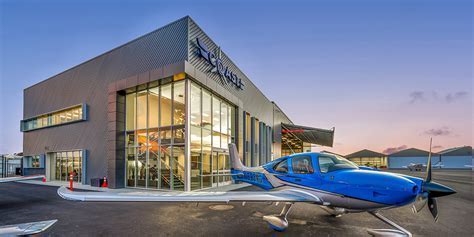
The Montgomery Airport Authority has a forward-looking vision for Dannelly Field, detailed in its comprehensive 20-year master plan. This ambitious plan, valued at approximately $98 million, projects a significant increase in passenger activity, with enplanements anticipated to reach 245,000 per year by 2030. A cornerstone of this master plan is the proposed extension of Runway 3/21. The plan calls for this runway to be nearly doubled in length, from its current 4,011 feet to 8,000 feet (approximately 2,438 meters). This substantial extension would allow commercial airline jets, which currently rely solely on Runway 10/28, to utilize Runway 3/21 as well. This would enhance operational flexibility, provide redundancy, and potentially open up new air service opportunities. In addition to runway improvements, the master plan also includes provisions for the development of new corporate hangars, catering to the growing needs of business and private aviation users at MGM. These planned enhancements signal a commitment to ensuring Montgomery Regional Airport remains a modern, capable, and growing asset for the city and region.
Operational Safety and Notable Incidents
Like all aviation facilities, Montgomery Regional Airport has experienced operational incidents over its many decades of service. It is important to note these with a focus on continuous safety improvement.
On February 19, 2021, a U.S. Air Force T-38 Talon trainer aircraft, assigned to the 50th Flying Training Squadron (Columbus AFB, Mississippi), tragically crashed in a wooded area near the airport. Both Air Force pilots on board were fatally injured in the accident. The incident prompted a thorough investigation by the Air Force to determine the cause and implement any necessary safety measures.
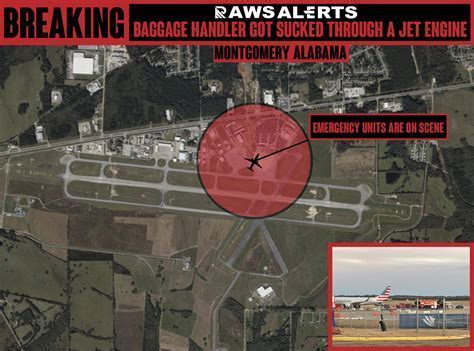
More recently, on December 31, 2022, a tragic ground incident occurred involving an American Airlines ramp agent, Courtney Edwards. Ms. Edwards was fatally injured after being ingested into an active engine of an Embraer E175 aircraft that had just arrived at a gate and was in the process of shutting down its engines. An initial investigation by the National Transportation Safety Board (NTSB) found that established safety procedures were not followed, as the ramp agent approached the still-operating engine too closely. The NTSB’s final report indicated that a pre-departure safety briefing was conducted, and during the incident, ground crew members observed the agent approaching the aircraft with an orange safety cone but saw her continue to move towards the front of the aircraft and then disappear from view near the No. 1 engine. The report also noted that the aircraft’s rotating beacon light was illuminated at the time of the incident. The NTSB also found that the ramp agent had a history of cognitive impairment which may have been a contributing factor to the decisions made prior to the incident. This heartbreaking event underscored the critical importance of strict adherence to all safety protocols in the airport environment.
In conclusion, Montgomery Regional Airport (Dannelly Field) is far more than just a transportation node; it is a dynamic entity deeply woven into the fabric of Montgomery’s history, economy, and community. Its unique blend of commercial airline services, robust general aviation activity, and a proud, ongoing military presence makes it a distinctive and vital airport. With a modern terminal, capable infrastructure, and a clear vision for future growth outlined in its master plan, MGM is well-positioned to continue serving as Alabama’s capital city gateway, connecting Montgomery to the nation and the world for many years to come.