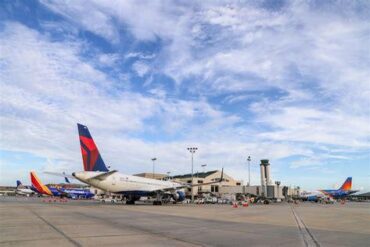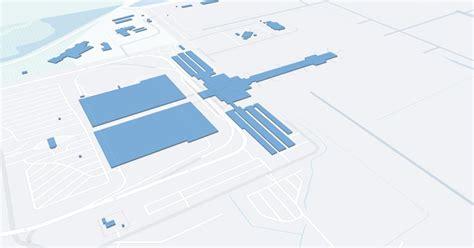
Savannah/Hilton Head International Airport (IATA: SAV, ICAO: KSAV, FAA LID: SAV) stands as a pivotal transportation hub, gracefully serving the historic charm of Savannah, Georgia, the picturesque allure of Hilton Head Island, South Carolina, and the broader Coastal Georgia and Lowcountry regions, including vibrant communities like Bluffton and Beaufort. This publicly owned airport, meticulously managed by the Savannah Airport Commission, is strategically positioned approximately seven nautical miles (which translates to about 8 miles or 13 kilometers) northwest of Savannah’s renowned Historic District. Its prime location offers seamless access for travelers, with the passenger terminal directly connected to Interstate 95, a major north-south artery, situated between Savannah and the burgeoning city of Pooler. The airport’s rich history is reflected in its previous names, including Savannah International Airport, Travis Field, and Chatham Field, each marking a distinct era in its evolution. Recognized for its significant passenger traffic, SAV is classified as a primary commercial service airport, consistently handling over 10,000 enplanements annually, a testament to its regional importance. Furthermore, the presence of U.S. Customs facilities and its inclusion in a Foreign Trade Zone underscore its capacity for international commerce and travel.
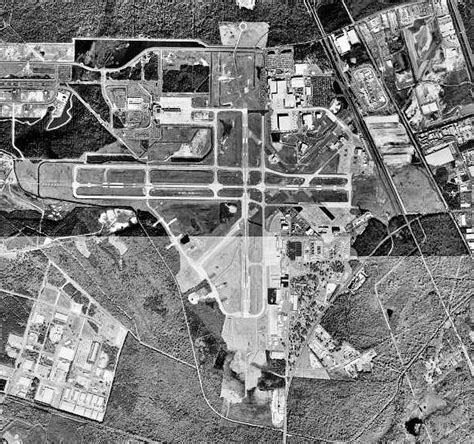
The journey of Savannah’s primary aviation facility began on September 20, 1929, with the inauguration of the first Savannah Municipal Airport, coinciding with the launch of Eastern Air Express services connecting New York City and Miami. This early endeavor marked Savannah’s entry into the burgeoning age of air travel. By 1932, a city resolution officially named the airport Hunter Field. In its nascent stages, the airport’s infrastructure was modest, with a repurposed trolley car serving as its first terminal during the mid-1930s. The strategic importance of the airport grew, and in 1940, as global tensions rose, the U.S. Army Air Corps identified Hunter Field for potential military use in the event of war. While commercial operations continued, the city, anticipating the increased military presence, embarked on developing a second municipal airport. A 600-acre parcel near Cherokee Hill, notable for its high elevation within the county, was acquired for this purpose. Construction commenced under the Works Progress Administration, initially planning for three 3,600-foot runways. However, before its completion, the U.S. Army Air Corps assumed control of the new facility in 1942, naming it Chatham Field. Throughout World War II, Chatham Field played a crucial role as a bomber base, primarily for B-24 Liberators, and as a training center for bomber crews and fighter pilots, contributing significantly to the war effort.
Following the cessation of World War II hostilities, Chatham Army Airfield was transferred to the Georgia Air National Guard in 1948. In a poignant tribute, the airport was renamed Travis Field. This renaming honored Savannah native Brigadier General Robert F. Travis, who tragically died in a B-29 bomber crash near Fairfield-Suisun AFB, California, and his brother, Colonel William Travis. To better serve the returning and growing commercial airline industry, Travis Field was upgraded with a new control tower and an airline terminal, ingeniously housed in the former base theater. The airport continued to evolve, and in 1958, construction began on a new, dedicated airline terminal, signaling a new era of passenger service. The jet age officially arrived at Travis Field in 1965 when Delta Air Lines introduced its sleek Douglas DC-9-10 aircraft, ushering in faster and more efficient air travel. A significant industrial development occurred in 1967 when Grumman Aircraft established a $7.5 million Gulfstream manufacturing plant at Travis, cementing the airport’s role in the aerospace industry. This facility would become synonymous with the production of world-class business jets.
Terminal Evolution and International Aspirations
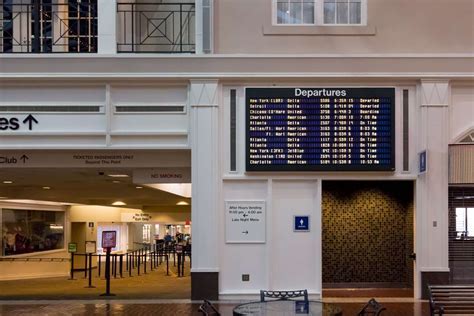
The airport underwent a transformative upgrade with the construction of a new $21-million terminal building, strategically located on the northwest corner of the airport grounds, which opened its doors in May 1994. This state-of-the-art, 275,000-square-foot facility replaced the older six-gate terminal from 1960 and initially featured eight gates, with a design allowing for future expansion up to 19 gates. The comprehensive project, designed by KBJ Architects, also included new access roads, an aircraft taxiway and parking apron, essential stormwater management ponds, extensive landscaping, and a new interchange at I-95 (Exit 104) for direct airport access. Remarkably, the entire $68.5 million project was completed a month ahead of schedule and under budget. Even before the opening of this new terminal, the airport had already signaled its international ambitions. In 1983, it was renamed Savannah International Airport, despite not having regularly scheduled direct international flights at that precise moment. This forward-looking designation was further refined in 2003 to Savannah/Hilton Head International Airport, acknowledging its vital role in serving the popular South Carolina resort destination. For a period in 1992, the airport did boast significant international service when Key Airlines operated a passenger hub from Savannah. According to Key Airlines’ October 1, 1992, system timetable, the airline offered non-stop Boeing 727 jetliner services to an impressive array of international destinations, including Antigua (ANU), Aruba (AUA), Cancun (CUN), Cozumel (CZM), Curaçao (CUR), Freeport (FPO), Montego Bay (MBJ), Nassau (NAS), St. Maarten (SXM), and St. Thomas (STT), alongside domestic routes to Atlanta (ATL), Baltimore (BWI), Boston (BOS), Chicago Midway (MDW), New York Newark (EWR), and Orlando (MCO). Key Airlines also provided one-stop direct service to St. Croix (STX). Unfortunately, Key Airlines encountered financial difficulties and ceased all operations in 1993, temporarily halting Savannah’s direct international connectivity. Regular international service was eventually reinstated in 2017 when Air Canada launched seasonal flights between Toronto and Savannah, although this specific route has since been discontinued.
A Unique Feature: The Runway Graves
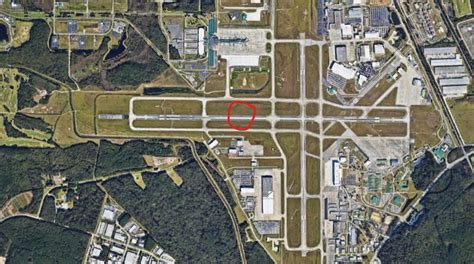
One of the most distinctive and poignant features of Savannah/Hilton Head International Airport lies embedded within its primary east-west runway, Runway 10/28. Approximately 3,680 feet (1,120 meters) from the western end of Runway 10, aviators and keen-eyed passengers might notice two concrete grave markers. These markers belong to Richard and Catherine Dotson, the original owners of a portion of the land upon which the airport was later built. Their family plot, dating back to at least 1857 with Richard Dotson’s burial, became an issue during a runway extension project. The Dotson family descendants could not be located to grant permission for relocation, or expressed a desire for the graves to remain undisturbed. Under federal law, moving graves typically requires the consent of the next of kin. Consequently, in a unique resolution, the graves were left in place, and the runway was constructed over and around them, with the markers now flush with the asphalt. Two additional graves from the Dotson family plot are located just off the runway surface. This makes Runway 10 at SAV arguably the only airport runway in the United States with marked gravestones directly within its paved surface, a truly remarkable and somber testament to the land’s history and the respect afforded to its past inhabitants.
Modern Facilities and Acclaimed Passenger Experience
Savannah/Hilton Head International Airport spans an impressive 3,650 acres (1,477 hectares) and sits at an elevation of 50 feet (15 meters) above mean sea level. It boasts two robust concrete runways: the primary Runway 10/28, measuring 9,351 feet by 150 feet (2,850 m x 46 m), capable of handling a wide array of aircraft, and Runway 1/19, which is 7,002 feet by 150 feet (2,134 m x 46 m). The airport’s commitment to passenger satisfaction is evident in its continued accolades. For two consecutive years, in 2022 and presumably before, SAV was named the #1 Best Domestic Airport in the Travel+Leisure World’s Best Awards, a prestigious recognition based on reader surveys. Similarly, Condé Nast Traveler magazine readers ranked Savannah/Hilton Head International Airport as the #1 U.S. airport for three years running. These awards highlight excellence across various criteria, including airport accessibility, the quality and variety of shopping and dining options, the efficiency of check-in and security processes, overall cleanliness, and other passenger-centric factors. The terminal expansion completed in July 2007 further enhanced the passenger experience by adding five departure gates, bringing the total to 15. Complementing this, a $35 million parking garage was completed in October of the same year, providing 1,700 additional parking spaces and featuring an innovative electronic guidance system that alerts drivers to the number of available spaces on each level, streamlining the parking process.
Airlines, Destinations, and Operational Statistics
SAV is well-served by a diverse range of airlines, connecting the region to numerous domestic and, at times, international destinations. The airport serves as an operating base for Allegiant Air, which offers a significant number of routes. For the 12-month period ending July 31, 2023, the airport recorded 112,822 aircraft operations, averaging approximately 309 per day. This activity was composed of 49% general aviation, 14% air taxi services, 33% scheduled commercial flights, and 4% military operations. As of 2023, there were 150 aircraft based at SAV, including 82 single-engine planes, 27 multi-engine aircraft, 29 jets, 4 helicopters, and 8 military aircraft. In 2024, passenger numbers reached 4,134,381, with aircraft operations at 114,986 for that year, indicating sustained growth.
Passenger airline services include:
- Allegiant Air: Akron/Canton, Allentown, Baltimore, Boston, Cincinnati, Flint, Fort Lauderdale, Grand Rapids, Punta Gorda (FL), St. Petersburg/Clearwater, Washington–Dulles. Seasonal: Appleton, Belleville/St. Louis, Chicago–Midway, Columbus–Rickenbacker, Indianapolis, Louisville, Nashville, Newark, Pittsburgh.
- American Airlines: Charlotte, Dallas/Fort Worth. Seasonal: Chicago–O’Hare.
- American Eagle: Charlotte, Dallas/Fort Worth, Miami, Philadelphia, Washington–National.
- Avelo Airlines: Seasonal: New Haven.
- Breeze Airways: Hartford, New Orleans (begins September 5, 2025), Providence. Seasonal: White Plains.
- Delta Air Lines: Atlanta. Seasonal: Boston, Detroit, Minneapolis/St. Paul.
- Delta Connection: Boston, New York–JFK, New York–LaGuardia.
- JetBlue: Boston, New York–JFK.
- Southwest Airlines: Baltimore, Chicago–Midway, Dallas–Love, Houston–Hobby, Nashville. Seasonal: Denver, St. Louis.
- Spirit Airlines: Detroit (begins October 10, 2025), Fort Lauderdale (begins October 9, 2025), Nashville (begins October 9, 2025), Newark (begins August 14, 2025).
- Sun Country Airlines: Seasonal: Minneapolis/St. Paul.
- United Airlines: Chicago–O’Hare. Seasonal: Denver, Houston–Intercontinental, Newark, Washington–Dulles.
- United Express: Chicago–O’Hare, Denver, Houston–Intercontinental, Newark, Washington–Dulles.
In terms of cargo, FedEx Express connects to its Memphis hub, and UPS Airlines serves Columbia (SC), facilitating important freight movements for the region.
Looking at airline market share for the period between April 2023 and March 2024, Delta Air Lines led with 20.99% of passengers (810,000). Southwest Airlines followed with 15.61% (603,000 passengers), and American Airlines captured 12.12% (468,000 passengers). United Airlines accounted for 8.18% (316,000), while PSA Airlines (operating for American Eagle) handled 7.86% (303,000). Other airlines collectively represented 35.25% of the passenger volume. The top domestic destinations during this same period were Atlanta (ATL) with 381,060 passengers (primarily Delta), Charlotte (CLT) with 217,400 passengers (American), and New York–JFK with 121,280 passengers (Delta, JetBlue).
Military Significance: The 165th Airlift Wing
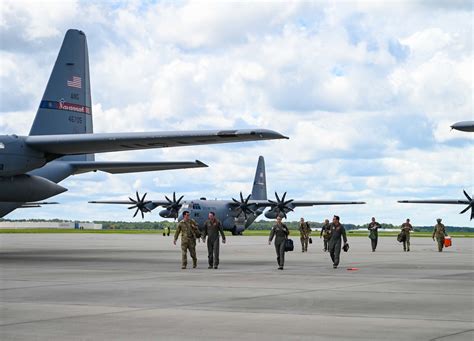
Beyond its civilian operations, Savannah/Hilton Head International Airport is also home to the Savannah Air National Guard Base, garrison for the 165th Airlift Wing (165 AW) of the Georgia Air National Guard. This distinguished unit operates the versatile C-130H Hercules tactical airlift aircraft. As an Air National Guard unit, the 165 AW falls under the operational claimancy of the Air Mobility Command (AMC). The base is a significant local employer and military installation, with over 310 full-time Active Guard and Reserve (AGR) and Air Reserve Technician (ART) personnel. Additionally, more than 700 part-time traditional air national guardsmen (Drill Status Guardsmen) contribute to its mission. The Savannah ANGB encompasses over 145 buildings and occupies 239 acres of leased land situated in the southeast and northeast quadrants of the airport. Furthermore, the base is home to the Air Dominance Center, a premier combat training facility that hosts various fighter aircraft units from across the Department of Defense for advanced air-to-air combat training, further highlighting the airport’s strategic military importance.
Future Growth: Expansion Projects Underway
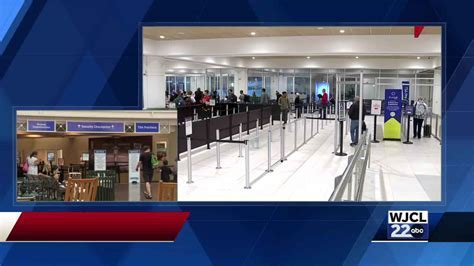
To effectively manage its rapidly increasing passenger volumes and maintain its award-winning service levels, Savannah/Hilton Head International Airport is actively pursuing significant expansion projects. Construction is currently underway to enlarge the TSA security screening checkpoint. Upon its anticipated completion in Fall 2024, the expanded area will feature six TSA security lanes, a crucial upgrade designed to reduce passenger wait times and improve overall flow through this critical chokepoint. Looking further ahead, the airport is planning an even more substantial expansion of its gate capacity. Construction on an additional four gates is slated to commence in September 2024, with a projected completion date of November 2025. This will bring the airport’s total number of gates to 19, accommodating more aircraft and flights. In parallel with terminal enhancements, improvements to parking facilities are also planned. Construction is expected to begin in 2024 on two new surface parking lots, which will provide much-needed additional space for travelers’ vehicles. These expansion initiatives are vital for ensuring SAV can comfortably handle projected growth in air traffic and continue to provide a seamless and positive experience for all users, solidifying its role as a premier gateway to the Southeastern coast.
Tragic Incident: The 2018 WC-130H Crash
Airports, despite their focus on safety, are sometimes sites of unfortunate incidents. On May 2, 2018, a United States Air Force Lockheed WC-130H Hercules aircraft experienced a catastrophic failure shortly after takeoff from Savannah/Hilton Head International Airport. The aircraft, assigned to the 156th Airlift Wing of the Puerto Rico Air National Guard, was on a ferry flight to Davis-Monthan Air Force Base in Arizona for retirement. Investigations later determined that the aircraft stalled and crashed approximately 2 kilometers (1.2 miles) northeast of the airport, near Georgia State Highway 21. The primary cause was identified as the failure of the number one engine compounded by the improper application of left rudder by the crew. Tragically, all nine military personnel on board perished in the crash. This incident served as a somber reminder of the inherent risks in aviation and led to reviews of maintenance and operational procedures for aging military aircraft.
Savannah/Hilton Head International Airport continues to be a dynamic and evolving entity, deeply intertwined with the economic vitality and accessibility of the communities it serves. From its historical roots in early aviation and significant wartime contributions to its current status as an award-winning, modern international gateway, SAV is poised for continued growth. With ongoing infrastructure enhancements and a strong airline portfolio, the airport is well-equipped to welcome an increasing number of visitors and residents to the unique charms of Savannah, Hilton Head Island, and the surrounding Lowcountry, ensuring it remains a cornerstone of regional transportation and commerce for years to come.