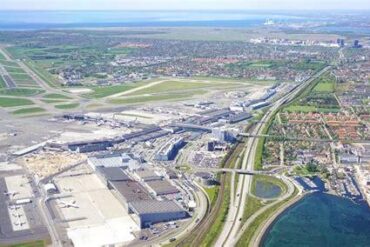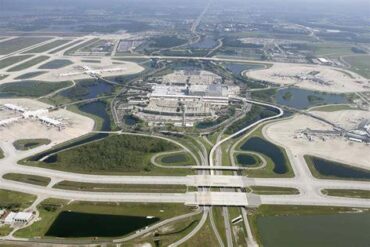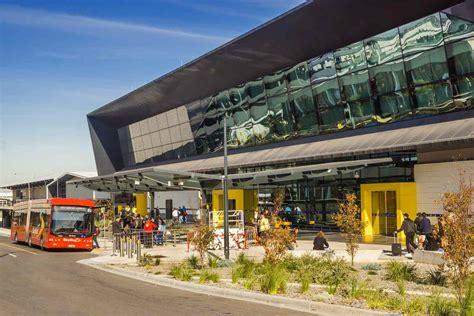
Melbourne Airport (IATA: MEL, ICAO: YMML, WMO: 94866), known colloquially as Tullamarine Airport, stands as the primary international and domestic aviation hub serving Melbourne, the vibrant capital of Victoria, Australia. Operating 24 hours a day, this bustling airport is a critical piece of infrastructure, not only for Victoria but for the entire nation, holding the distinction of being Australia’s second-busiest airport by passenger traffic. Situated 18 kilometres (11 miles) northwest of Melbourne’s city centre, adjacent to the suburb of Tullamarine, the airport even has its own dedicated suburb and postcode – Melbourne Airport, Victoria, 3045. Encompassing a vast 2,741 hectares (6,773 acres), MEL is one of Australia’s largest airports by land area, offering extensive on-site parking, a diverse array of shopping outlets, and a wide selection of dining experiences to cater to millions of travellers annually.
Opened on 1 July 1970, Melbourne Airport was developed to replace the capacity-constrained Essendon Airport, which had served as Melbourne’s international gateway since 1950. Today, MEL is the sole international airport for Victoria, comprising four distinct terminals: one dedicated international terminal (T2), two primarily domestic terminals (T1 and T3), and one budget domestic terminal (T4). In the financial year ending June 2024, the airport facilitated travel for approximately 35.1 million passengers, comprising around 24 million domestic and 11 million international travellers. This significant passenger volume is supported by 217,041 aircraft movements during the same period. The airport’s economic impact is substantial, contributing an estimated $17.7 billion in 2023 and supporting around 146,000 jobs. Melbourne Airport boasts direct flight connections to 33 domestic destinations and numerous international locations across the Pacific, Europe, Asia, North America, and South America. It serves as a crucial arrival and departure point for passengers travelling to and from four of Australia’s seven other capital cities. Furthermore, MEL is a major hub for Qantas and Virgin Australia, and a home base for Jetstar. In the realm of cargo, Melbourne serves as the headquarters for Team Global Express and handles more domestic freight than any other airport in Australia, underscoring its logistical importance.
A Rich History: From Grasslands to Global Hub
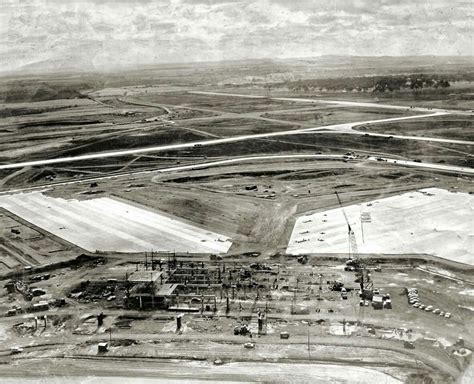
The story of Melbourne Airport’s establishment is rooted in the post-war aviation boom. By the mid-1950s, Essendon Airport, Melbourne’s then-main airport, was struggling to cope with over 10,000 passengers annually. Its runways were too short for the emerging jet aircraft, and its terminal facilities were inadequate for the burgeoning passenger numbers. Expansion was impossible due to surrounding residential development. The search for a new site began in February 1958, with a panel considering various locations including Tullamarine, Whittlesea, Hastings, Port Melbourne, Werribee, Laverton, Avalon, and Moorabbin. Proximity to Melbourne and lower development costs led to Tullamarine and Laverton being shortlisted. Laverton was eventually ruled out due to complexities in coordinating military and civil aviation operations. Thus, in 1959, the Commonwealth Government acquired 5,300 hectares (13,000 acres) of grassland in the then-rural area of Tullamarine. The official announcement for the new airport came in May 1959, with Prime Minister Robert Menzies detailing a five-year plan on 27 November 1962, to provide Melbourne with a A$45 million “jetport” by 1967. Construction commenced with the first sod turned in November 1964. While Tullamarine was being built, Essendon’s runways were extended to handle larger aircraft, with Ansett Australia launching the Boeing 727 there in October 1964, marking the arrival of domestic jet travel in Australia.
Melbourne Airport was officially opened for international operations by Prime Minister John Gorton on 1 July 1970, bringing an end to Essendon’s role as Melbourne’s international airport. Domestic flights continued to operate from Essendon for another year, transferring to Tullamarine on 26 June 1971. The first Boeing 747 arrival occurred later that year. In its inaugural year, Melbourne Airport handled six international airlines and 155,275 international passengers. Originally named “Melbourne International Airport,” it is situated in Tullamarine, a name derived from the Indigenous name Tullamareena. Locals often refer to it simply as “Tullamarine” or “Tulla” to distinguish it from Melbourne’s other airports. Upon opening, the airport featured three interconnected terminals: International in the centre, Ansett to the South, and Trans Australia Airlines (TAA) to the North. The initial design capacity was eight Boeing 707s, handling 500 passengers per hour. Minor expansions in 1973 enabled Boeing 747s to serve the airport. By the late 1980s, peak passenger flows had surged to 900 per hour, leading to significant congestion.
Strategic Expansion and Privatisation Era
In 1988, the Australian Government established the Federal Airports Corporation (FAC), which assumed operational control of Melbourne Airport and 21 other airports nationwide. The FAC initiated several crucial upgrades. The domestic terminals were among the first to be improved, with an expansion of the Ansett domestic terminal approved in 1989 and completed in 1991, adding a second pier for regional airlines. Upgrades to the international terminal commenced in 1991. The “SkyPlaza” retail complex was completed in late 1993, followed by the opening of a new three-level satellite concourse in 1995. This diamond-shaped concourse, measuring 80 metres on each side, added 10 aerobridges, effectively doubling the international passenger handling capacity.
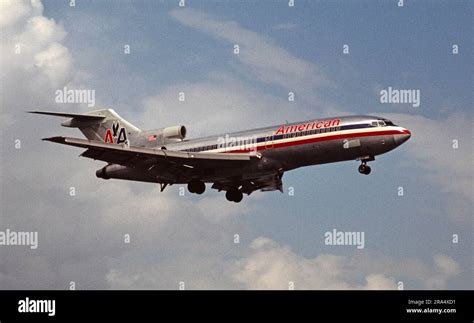
In April 1994, the government announced the privatisation of all FAC-operated airports. Melbourne Airport was part of the first phase, acquired by the newly formed Australia Pacific Airports Corporation (APAC) for $1.3 billion. The transfer was finalized on 30 June 1997, under a 50-year long-term lease with an option for a further 49 years. Since privatisation, Melbourne Airport has seen continuous infrastructure enhancements. A multi-storey car park, providing 3,100 undercover spaces, was completed between 1995 and August 1997. The six-story, 276-room Hilton Hotel (now Parkroyal) above this car park was finished in mid-2000. The Qantas domestic terminal expansion, including a second pier and nine additional aircraft stands, was completed in 1999. December 2000 saw the opening of a fourth passenger terminal, the Domestic Express Terminal (now part of Terminal 4), the first new terminal facility since 1971. Car park expansions continued, with a $40 million project in 2004 doubling the short-term car park’s size. Retail revenue surpassed $100 million for the first time in 2004, a 100% increase since privatisation.
To accommodate the Airbus A380, the main north-south runway was widened by 15 metres in May 2005. Other improvements included dual airbridges (Gates 9 and 11), an extension of the international terminal building with new penthouse airline lounges, and an additional baggage carousel. This made Melbourne the first Australian airport capable of handling the A380. The superjumbo made its first test flight to MEL on 14 November 2005, and its first passenger flight (a diversion) on 15 May 2008. Qantas commenced the first scheduled A380 services from Melbourne to Los Angeles in October 2008. Further expansion of Terminal 2 began in March 2006, and a major $330 million project started in 2008, completed in 2011, adding five aerobridges on a new passenger concourse and a new outbound passenger security and customs processing zone. By 2017, international passenger movements at Melbourne Airport had surpassed 10 million annually. Post-COVID recovery saw international passenger numbers exceed 8 million in FY2022/2023, a 330% increase.
Navigating Melbourne Airport: Terminals and Facilities
Melbourne Airport’s passenger facilities are logically organised into four interconnected terminals, boasting a total of 68 gates: 53 dedicated to domestic flights and 15 for international services. Additionally, the Southern Freighter Apron provides five dedicated parking positions for cargo aircraft. The current terminal numbering system (T1, T2, T3, T4) was introduced in July 2005, replacing the previous designations of Qantas Domestic, International, and South (formerly Ansett Domestic).
Terminal 1: The Qantas Group Domain
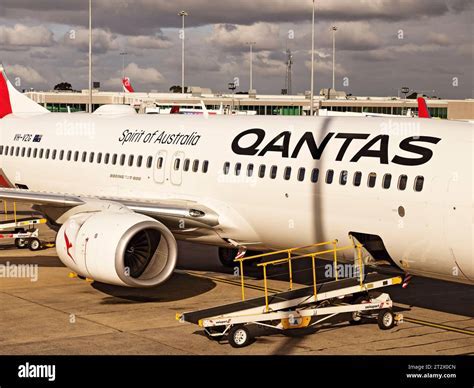
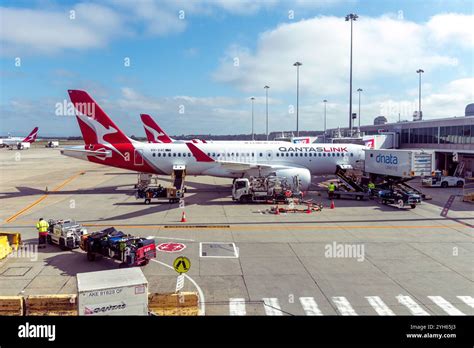
Terminal 1 is the primary hub for Qantas and its regional arm, QantasLink, handling their domestic services. Located at the northern end of the airport complex, its departures area on the first floor houses check-in counters, security screening, a food court, and the entrance to the extensive Qantas Lounge Precinct. Baggage claim facilities are conveniently situated on the ground floor. The terminal features 16 parking bays equipped with aerobridges, of which twelve are single and four are double, catering to larger aircraft. An additional five non-aerobridge gates serve QantasLink’s regional fleet. Originally built for Trans Australia Airlines (TAA) in 1970, the terminal became part of Qantas’s portfolio in 1992 following its acquisition of TAA. A significant $50 million upgrade, completed in late 1999, included the addition of a second pier, nine more aircraft stands, an extended access roadway, and an overall terminal expansion. Today, Terminal 1 offers a wide array of shops and dining options, particularly near its connection point with Terminal 2. Qantas provides premium passengers with access to a Qantas Club, a Domestic Business Lounge, and an exclusive Chairman’s Lounge within this terminal.
Terminal 2: Melbourne’s International Gateway
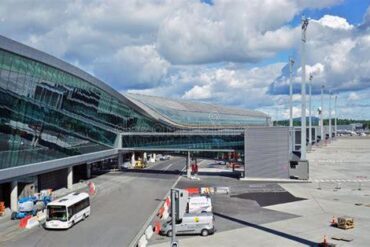
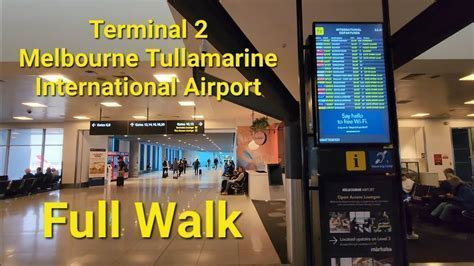
Terminal 2 serves as Melbourne Airport’s dedicated international terminal, processing all international flights and a limited number of domestic services. Opened concurrently with the airport in 1970, it is equipped with 20 gates, all featuring aerobridges. Several major international airlines operate their own lounges within Terminal 2, including Cathay Pacific, Singapore Airlines, Air New Zealand, and Emirates. Qantas also maintains a significant lounge presence here, with both a luxurious First Lounge and a combined Business Lounge/Qantas Club. The terminal’s interior is adorned with works by prominent Australian Indigenous artists, such as Daisy Jugadai Napaltjarri and Gloria Petyarre, adding a unique cultural dimension to the travel experience. A substantial $330 million expansion program for Terminal 2, announced in 2007 and finalized in 2012, delivered new lounges, enhanced retail facilities, a new satellite concourse, increased luggage capacity, and a redesigned customs and security zone. This satellite terminal, connected via an above-ground corridor, features floor-to-ceiling windows offering panoramic views of the North-South runway and includes three double-decker aerobridges capable of handling A380s or two smaller aircraft simultaneously, plus one single aerobridge. Baggage handling capacity was also significantly boosted with two new carousels specifically for A380 traffic.
Terminal 3: Home to Virgin Australia
Originally opened as the Ansett Australia terminal in 1970, Terminal 3 is now owned by Melbourne Airport and serves as the primary base for Virgin Australia. It offers eleven parking bays with single aerobridges and an additional eight non-aerobridge parking bays. An expansion in 1991 saw Ansett add a second pier to the south, primarily for its regional subsidiary, Kendell Airlines. Following Ansett’s collapse in 2001, the terminal was intended for the “new Ansett” under Tesna ownership. However, when this acquisition fell through in 2002, Ansett’s administrators sold the terminal back to Melbourne Airport. Subsequently, the airport undertook a major refurbishment, after which Virgin Australia (then Virgin Blue) relocated from the Domestic Express Terminal (now Terminal 4). Virgin Australia now operates “The Lounge” in Terminal 3, utilizing the former Ansett Australia Golden Wing Lounge space. Rex Airlines also operates an airline lounge in this terminal, providing amenities for its passengers.
Terminal 4: The Budget Airline Hub
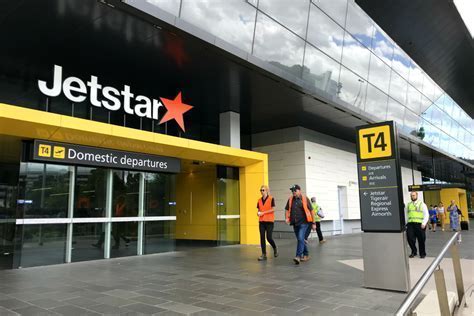
Terminal 4 is uniquely designed as a dedicated hub for budget airlines, representing the first facility of its kind at a conventional Australian airport. It was initially built for Virgin Blue and Impulse Airlines. After Virgin Blue moved to Terminal 3, Terminal 4 underwent a $5 million refit in 2007, modeled on budget terminals at Singapore Changi Airport and Kuala Lumpur International Airport. This model involves lower landing and airport handling fees for airlines due to more basic facilities, a lack of jet bridges in its original configuration, and fewer retail outlets compared to full-service terminals. Tiger Airways Australia used Terminal 4 as its main hub from its first domestic flight on 23 November 2007 until its cessation. Recognizing the growth in low-cost travel, Melbourne Airport embarked on a major expansion of Terminal 4, with construction breaking ground in October 2012 and completing in August 2015. The new 35,000 square metre (380,000 sq ft) T4 facility is now linked “under one roof” with Terminal 3. Currently, Terminal 4 is utilized by Rex Airlines, Jetstar, and Airnorth. Tigerair Australia and the more recent Bonza also operated from T4 before ceasing operations. The terminal layout features check-in, baggage claim, and bag drop on the ground floor, while the first floor houses a food court, shops, and lounges leading to the departure and arrival gates. A section of Terminal 4 is equipped with jet bridges, which are currently used by some Virgin Australia flights, while Jetstar primarily uses the non-jet bridge equipped gates.
Southern Freighter Apron
The Southern Freighter Apron is a critical component of Melbourne Airport’s cargo operations. It features five dedicated freighter parking positions that accommodate 21 dedicated freighter operations per week. This facility was extended in August 1997 with the addition of the fifth freighter parking position and an apron expansion, underscoring the airport’s commitment to supporting Australia’s air freight industry.
Beyond the Terminals: Airport Amenities
Melbourne Airport offers a range of accommodation options to suit various traveller needs and budgets, with six hotels located on or near the airport precinct. The Parkroyal Melbourne Airport is conveniently situated just 100 metres from Terminal 2, directly atop the multi-level car park. This 280-room hotel, originally a Hilton, was completed in mid-2000 and relaunched under the Parkroyal brand on 4 April 2011. It underwent a major refurbishment of all guest rooms in late 2023. A Holiday Inn is located approximately 400 metres from the terminal precinct. For budget-conscious travellers, Ibis Budget offers rooms 600 metres from the terminals. The Mantra Tullamarine opened in 2009, located 2 kilometres from the airport. Most recently, a combined 4.5-star Novotel (248 rooms) and 4-star Ibis Styles (216 rooms) hotel opened on 1 July 2024, situated in The Hive precinct, a 5-minute walk from Terminals 3 and 4, and a 10-minute walk from Terminals 1 and 2.
Streamlined Operations at Melbourne Airport
As Australia’s second busiest airport, Melbourne Airport maintains a curfew-free, 24-hour operation. While passenger flights are predominant, the hours between 2 am and 4 am see a higher concentration of freight aircraft movements. Demonstrating a commitment to environmental stewardship, Melbourne Airport’s environmental management systems achieved ISO 14001 accreditation in 2004, the world’s best practice standard, making it the first airport in Australia to receive this recognition.
Runways and Airfield Infrastructure
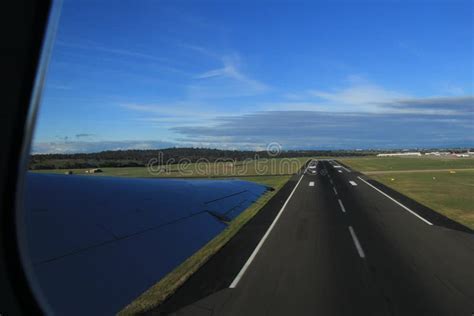
Melbourne Airport features two intersecting runways: a primary north-south runway (16/34) measuring 3,657 metres (11,998 feet) in length, and an east-west runway (09/27) spanning 2,286 metres (7,500 feet). Both runways have grooved asphalt surfaces. Long-term master plans include significant runway extensions: an 843-metre extension to the north-south runway, bringing it to 4,500 metres, and a 1,214-metre extension to the east-west runway, making it 3,500 metres. In 2008, the airport announced the installation of a Category III (CAT III) landing system. This advanced system, commissioned in March 2010 at a cost of $10 million, allows aircraft to land in low visibility conditions, such as heavy fog, enhancing operational reliability and safety. It was the first of its kind in Australia.
The Third Runway Project: Expanding Capacity
The prospect of a third runway at Melbourne Airport has been a topic of discussion since the 1990s due to consistently increasing air traffic and capacity demands. Initial proposals considered two new 3,000-metre runways: one parallel to the existing north-south runway and another south of the current east-west runway. In 2013, a new parallel east-west runway was proposed, with an estimated cost of $500–$750 million, targeting completion by 2023. However, following a consultation period in 2019, Melbourne Airport shifted its focus to constructing a new parallel north-south runway to the west of the existing one. This decision was influenced by concerns about aircraft noise impacts on suburbs like Gladstone Park, Westmeadows, Attwood, and Jacana, as well as wind direction considerations.
In September 2024, the Federal Government officially approved the construction of this third runway. The $3 billion project, wholly funded by the airport, will involve building the new parallel north-south runway (3,000 metres long) and associated taxiways, while the existing east-west runway’s length will be retained. Construction is slated to commence in 2025, with an expected completion by 2031. The new runway aims to significantly increase capacity and support Melbourne’s projected population growth. Despite the anticipated benefits, the project has faced opposition from some nearby residents, local councils including the City of Brimbank, and community groups over concerns about noise pollution in suburbs such as Bulla, Keilor, Kealba, St Albans, and Sunshine North, as well as potential environmental impacts.
Air Traffic Control and Management
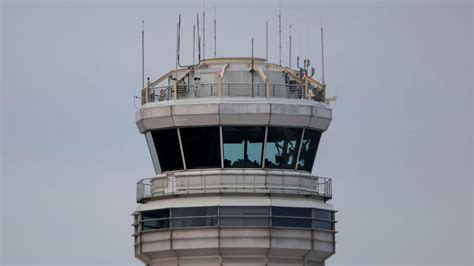
The original control tower, standing at 47 metres (154 feet), was constructed with the airport and opened in 1969. To meet modern demands, construction of a taller, second control tower began in 2010. Located just west of the original tower, this new structure is 75 metres (246 feet) tall. It became operational in 2013 and was officially opened on 14 March 2014. While the original tower is no longer in use, it has not been demolished. Both towers are situated south of the east-west runway and west of the original north-south runway.
Beyond on-site control, Melbourne Airport hosts the Melbourne Centre, a critical air traffic control facility. This centre is responsible for aircraft separation within Australia’s busiest Flight Information Region (FIR), the Melbourne FIR. This vast airspace covers Victoria, Tasmania, southern New South Wales, most of South Australia, the southern half of Western Australia, and extends over parts of the Indian and Southern Oceans, controlling approximately 6% of the world’s airspace. The airport is also home to the approach control facilities for Canberra, Adelaide, and Melbourne, managing aircraft arriving at and departing from these cities.
Airlines and Destinations: Connecting Melbourne to the World
Melbourne Airport is a major international and domestic crossroads, served by a multitude of airlines connecting the city to destinations across Australia and around the globe.
Passenger Airlines and Destinations
- Air China: Beijing–Capital
- Air India: Delhi, Mumbai (resumes 14 September 2025)
- Air New Zealand: Auckland, Christchurch, Queenstown, Wellington
- AirAsia X: Kuala Lumpur–International
- Asiana Airlines: Seasonal: Seoul–Incheon
- Batik Air Malaysia: Denpasar, Kuala Lumpur–International
- Beijing Capital Airlines: Hangzhou, Qingdao
- Cathay Pacific: Hong Kong
- Cebu Pacific: Manila
- China Airlines: Taipei–Taoyuan; Seasonal: Auckland
- China Eastern Airlines: Nanjing, Shanghai–Pudong
- China Southern Airlines: Guangzhou; Seasonal: Beijing–Daxing
- Delta Air Lines: Seasonal: Los Angeles (begins 5 December 2025)
- Emirates: Dubai–International
- Etihad Airways: Abu Dhabi
- Fiji Airways: Nadi
- Garuda Indonesia: Denpasar, Jakarta–Soekarno-Hatta
- Hainan Airlines: Haikou
- Japan Airlines: Tokyo–Narita
- Jetstar: Adelaide, Auckland, Ayers Rock, Ballina, Bangkok–Suvarnabhumi, Brisbane, Busselton, Cairns, Canberra, Christchurch, Darwin, Denpasar, Gold Coast, Hamilton Island, Hervey Bay, Hobart, Ho Chi Minh City, Launceston, Nadi, Newcastle, Perth, Phuket, Proserpine, Queenstown, Singapore, Sunshine Coast, Sydney, Townsville
- Juneyao Air: Shanghai–Pudong
- LATAM Chile: Santiago de Chile
- Link Airways: Dubbo, Orange, Shellharbour
- Malaysia Airlines: Kuala Lumpur–International
- Philippine Airlines: Manila
- Qantas: Adelaide, Alice Springs, Auckland, Brisbane, Cairns, Canberra, Christchurch, Dallas/Fort Worth, Denpasar, Gold Coast, Hobart, Hong Kong, Honolulu, Jakarta–Soekarno-Hatta, Los Angeles, Perth, Queenstown, Singapore, Sunshine Coast, Sydney, Tokyo–Narita, Wellington; Seasonal: Broome, Delhi, Hamilton Island
- QantasLink: Adelaide, Albury, Brisbane, Burnie, Canberra, Coffs Harbour, Darwin, Devonport, Hobart, Launceston, Mildura, Newcastle, Townsville, Wagga Wagga; Seasonal: Merimbula
- Qatar Airways: Doha
- Rex Airlines: Burnie, Devonport, King Island, Merimbula, Mildura, Mount Gambier, Wagga Wagga
- Royal Brunei Airlines: Bandar Seri Begawan
- Scoot: Singapore
- Sichuan Airlines: Chengdu–Tianfu
- Singapore Airlines: Singapore
- SriLankan Airlines: Colombo–Bandaranaike
- Thai Airways International: Bangkok–Suvarnabhumi
- Turkish Airlines: Istanbul, Singapore
- United Airlines: Los Angeles, San Francisco
- VietJet Air: Hanoi, Ho Chi Minh City
- Vietnam Airlines: Hanoi, Ho Chi Minh City
- Virgin Australia: Adelaide, Ayers Rock, Brisbane, Cairns, Canberra, Darwin, Denpasar, Doha (begins 1 December 2025), Gold Coast, Hamilton Island, Hobart, Launceston, Nadi, Newcastle, Perth, Queenstown, Sunshine Coast, Sydney
- XiamenAir: Xiamen
Additionally, Qantas operates unique “flightseeing” services over Antarctica from Melbourne using a Boeing 787 Dreamliner. These approximately thirteen-hour flights depart from Terminal 1, offering a guided aerial tour of the Antarctic continent before returning to Australia.
Cargo Airlines and Destinations
Melbourne Airport is a significant hub for air freight, with several dedicated cargo carriers operating regular services:
- Cathay Cargo: Hong Kong, Toowoomba
- DHL Aviation: Singapore, Sydney
- Qantas Freight: Adelaide, Brisbane, Cairns, Canberra, Gold Coast, Hobart, Launceston, Perth, Sydney
- Singapore Airlines Cargo: Auckland, Singapore
- Tasman Cargo Airlines: Auckland, Christchurch, Singapore
Traffic and Statistics: A Snapshot of Activity
In the 2016–17 financial year, Melbourne Airport handled approximately 25 million domestic passengers and around 10 million international passengers, with a total of 239,466 aircraft movements. Projections before the COVID-19 pandemic anticipated 47 million passengers for the year ending June 30, 2020; however, due to border closures, the actual number recorded was 27.2 million. Melbourne consistently ranks as Australia’s second busiest airport for passenger movements, trailing Sydney and ahead of Brisbane.
Total Annual Passengers (Selected Years)
| Year | Domestic | International | Total | Change |
|---|---|---|---|---|
| 2018 | 25,692,745 | 11,223,884 | 36,916,629 | 1.8% |
| 2019 | 25,815,647 | 11,318,644 | 37,134,291 | 0.5% |
| 2020 | 6,462,941 | 2,434,451 | 8,897,392 | -75.0% |
| 2021 | 6,763,686 | 396,590 | 7,160,276 | 4.7% |
| 2022 | 20,309,831 | 5,381,023 | 25,690,854 | 200.3% |
| 2023 | 22,504,461 | 8,278,905 | 30,783,366 | 17% |
(Source: Bureau of Infrastructure & Transport Research Economics)
Busiest Domestic Passenger Routes (Year to 31 December 2023)
- Sydney: 8,202,400 passengers (+24.8%)
- Brisbane: 3,562,700 passengers (+26.9%)
- Adelaide: 2,464,500 passengers (+25.4%)
- Gold Coast: 2,422,100 passengers (+5.7%)
- Perth: 2,085,500 passengers (+54.7%)
Busiest International Routes (Year ending 30 June 2024)
- Singapore: 1,700,851 passengers (+11.6%)
- Auckland: 1,040,701 passengers (+17.5%)
- Denpasar: 943,706 passengers (+21.1%)
- Dubai: 644,363 passengers (+4.4%)
- Hong Kong: 604,001 passengers (+116.9%)
Busiest International Freight Routes (Year ending 31 December 2021)
- Singapore-Changi: 69,873 tonnes (+57.8%)
- Hong Kong: 29,662 tonnes (+8.4%)
- Doha: 28,261 tonnes (+24.4%)
- Auckland: 20,993 tonnes (+5.5%)
- Kuala Lumpur International: 11,500 tonnes (−5.6%)
Ground Transportation: Accessing Melbourne Airport
Melbourne Airport is located 23 kilometres (14 miles) from the Melbourne city centre and is well-connected by road. The primary access route is the Tullamarine Freeway. A dedicated freeway off-ramp leads directly into the airport grounds, while a second off-ramp to the south serves freight transport, taxis, buses, and airport staff. The Airport Drive extension, completed in June 2015, provides another major link, connecting from the M80 Ring Road to Melrose Drive, 1.5 kilometres from the terminal area. The Tullamarine Freeway underwent widening, completed in late 2018, and a new elevated off-ramp specifically for Terminal 4 access was constructed in mid-2023. Melbourne Airport offers five car parks (short-term, multi-level long-term, business, express, and open-air long-term), all operating 24/7. In the year to 30 June 2017, the airport recorded over 2.2 million taxi movements.
Public Transport Options
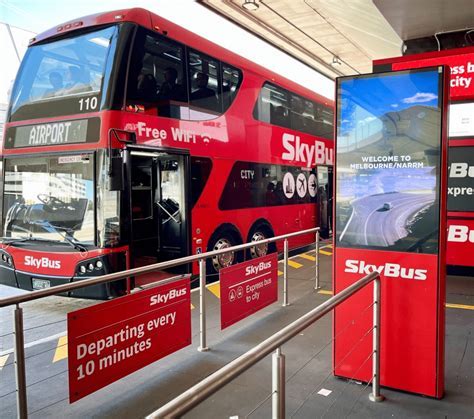
The SkyBus is a popular express bus service connecting the airport to Southern Cross railway station in Melbourne’s CBD and to St Kilda. SkyBus transports approximately 3.4 million passengers annually between the airport and the city. Shuttle services also run to the Mornington Peninsula. Several metropolitan and regional public bus routes serve the airport. Routes 478, 479, and 482 connect to Airport West, near the Route 59 tram terminus. Route 479 also extends to Sunbury railway station. The high-frequency Route 901 SmartBus, introduced in September 2010, links the airport to train services at Broadmeadows, Epping, Greensborough, and Blackburn stations. V/Line operates timetabled regional coach services to destinations like Barham and Deniliquin, which stop at the airport. Nine other bus companies provide services to various regional centres and Melbourne suburbs, offering connections to other V/Line services.
Future Rail Connection: Melbourne Airport Rail
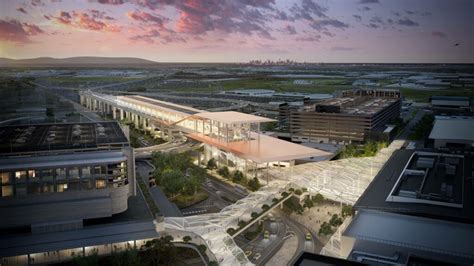
Despite discussions spanning decades, Melbourne Airport currently lacks a direct passenger rail link to the city. However, this is set to change with the Melbourne Airport Rail project (formerly SRL Airport). Early construction by the Victorian state government commenced in 2022. Initially slated for completion by 2029, disagreements between the state government and the airport operator (APAC) regarding the Airport station design (elevated versus underground) have delayed major construction, with completion now anticipated by 2033. The proposed 27 km link will run via Sunshine station in Melbourne’s west, integrating into the central city through the under-construction Metro Tunnel. This will provide connections to western regional rail services at Sunshine, and to the metropolitan rail network at Sunshine, Footscray, and the new State Library and Town Hall stations in the CBD. The 2022 business case proposed an elevated station at the airport, approximately six storeys high, to minimize costs and construction time. APAC initially argued for an underground station to safeguard future terminal expansion and improve connectivity with the proposed Suburban Rail Loop. However, in July 2024, Melbourne Airport agreed to the state government’s preference for an elevated station, allowing detailed planning to resume.
Noteworthy Accidents and Incidents
- On 29 May 2003, Qantas Flight 1737 from Melbourne to Launceston experienced an attempted hijacking shortly after takeoff. Passenger David Robinson intended to crash the aircraft into Walls of Jerusalem National Park in Tasmania. Flight attendants and passengers successfully subdued him, and the aircraft returned safely to Melbourne.
- On 20 March 2009, Emirates Flight 407, an Airbus A340-500 bound for Dubai, failed to become airborne within the normal distance on Runway 16. The crew executed a sharp nose-up manoeuvre near the runway’s end, causing a tail strike. The aircraft returned to Melbourne after dumping fuel. The incident caused substantial damage to runway end lighting and a localiser antenna, temporarily disrupting ILS operations.
- On 11 October 2022, a security breach occurred when a passenger inadvertently moved from an unscreened to a screened area. The Australian Federal Police temporarily shut down a section of the airport, requiring all passengers in the affected terminal, including those already on board aircraft, to be rescreened.
- In December 2023, it was confirmed that two near misses involving construction work on a runway had occurred in September 2023. A Malaysia Airlines aircraft took off approximately 200 metres from workers and equipment, while a Bamboo Airways plane cleared them by only about 3 metres.
Awards and Recognition
Melbourne Airport has consistently been recognised for its excellence in service and facilities. The International Air Transport Association (IATA) ranked Melbourne among the top five airports globally in 1997 and 1998. In 2003, the airport received IATA’s prestigious Eagle Award for service and two National Tourism Awards for tourism services. Further accolades include various national and state tourism awards. Singapore Airlines presented Melbourne Airport with its Service Partner Award in 2002 and the Premier Business Partner Award in 2004. In 2006, the runway widening project earned the Australian Construction Achievement Award, hailed as “the most outstanding example of construction excellence for 2006.” More recently, the Parkroyal Melbourne Airport was named the best airport hotel in Australia/Pacific by Skytrax in 2012. In Skytrax’s World’s Top 100 Airports List, Melbourne Airport significantly improved its ranking from 43rd in 2012 to 27th in 2018, reflecting its ongoing commitment to enhancing the passenger experience and operational efficiency as a leading global aviation gateway.