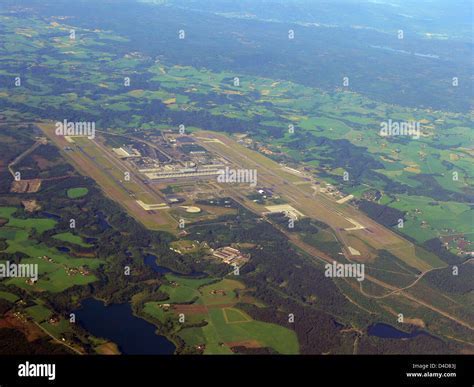
Located 35 kilometers northeast of Oslo, Oslo Airport Gardermoen (OSL/ENGM) stands as Norway’s largest airport and the second-busiest in Scandinavia, only surpassed by Copenhagen. As the country’s primary international gateway, Gardermoen is more than a transport hub—it is a national symbol of engineering, sustainability, and global connectivity. In 2024 alone, it served over 26 million passengers, reaffirming its position as a crucial node in Northern Europe’s aviation network.
A Strategic and Historic Site Rooted in Military Origins
The story of Gardermoen begins far before it became a civilian airport. Established in 1740 as a military camp, the site began its aviation history in 1912, with Norway’s early forays into flight. Under German occupation during World War II, the Luftwaffe constructed hangars and two paved runways—each 2,000 meters in length—embedding aviation infrastructure into the landscape.
Following the war, Gardermoen transitioned into a Royal Norwegian Air Force (RNoAF) base, functioning as a reserve airfield for the constrained Fornebu Airport and doubling as a base for general aviation and training. By the 1970s, the increasing demand for jet traffic saw charter flights gradually redirected to Gardermoen, setting the groundwork for its civilian transformation.
From Fornebu’s Constraints to a National Airport Strategy
As Norway’s aviation needs outgrew the spatial limitations of Fornebu Airport, various sites—including Hobøl, Hurum, and Gardermoen—were studied extensively. Meteorological data, environmental impact, and infrastructure viability fueled public and political debate. Despite initial support for Hurum, weather inconsistencies at that location shifted momentum in favor of Gardermoen.
In August 1992, the Norwegian Parliament finalized its decision: Gardermoen would become the new international airport. One critical stipulation was the development of a high-speed rail link, intended to ensure that at least 50% of airport users would rely on public transport—a visionary move that would later distinguish OSL on sustainability metrics.
A Massive Undertaking: Airport Construction and Infrastructure Expansion
The task of bringing Oslo Airport Gardermoen to life was entrusted to a newly formed entity, Oslo Lufthavn AS, a subsidiary of Avinor, Norway’s airport authority. Construction, which commenced in 1994, encompassed more than just terminal buildings. It involved:
- A new 3,600-meter runway, suitable for intercontinental traffic.
- Expansion of road networks, including the E6 motorway and National Road 35.
- The construction of the 64-kilometer Gardermoen Line, a dedicated high-speed rail link to Oslo Central Station.
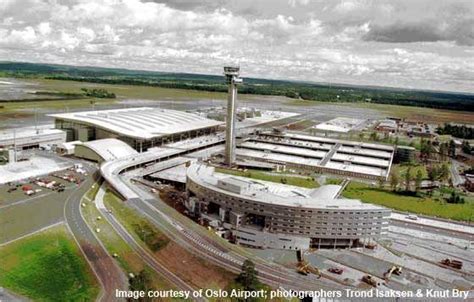
Costing an estimated NOK 22 billion, the airport officially opened its doors on October 8, 1998, marking a new era for Norwegian civil aviation.
Design, Art, and Environmental Pioneering
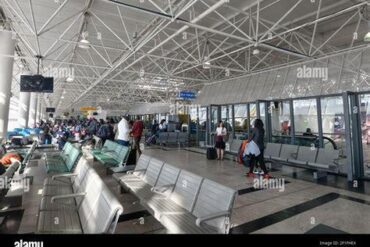
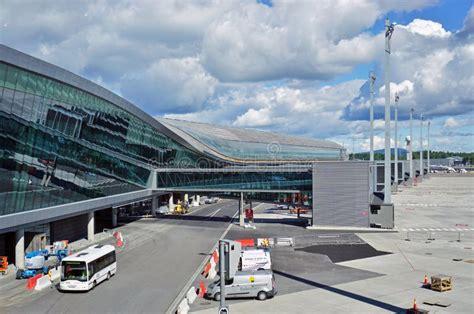
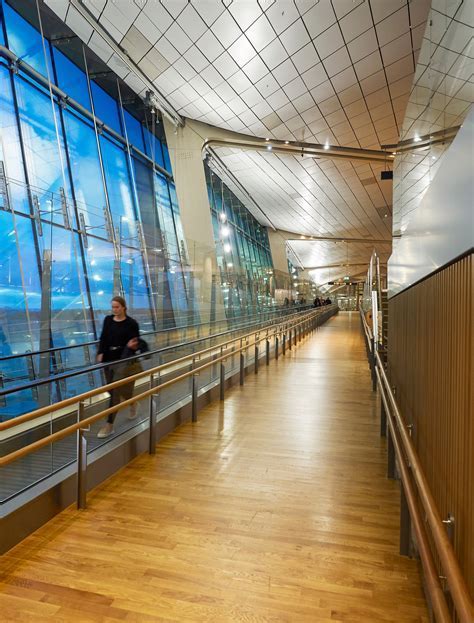
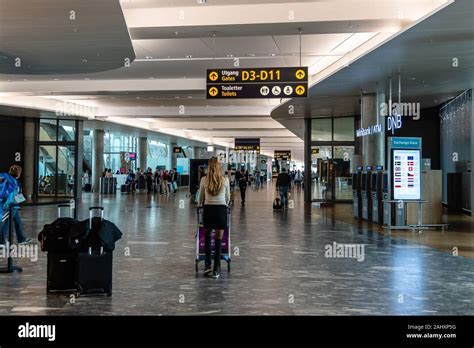
The architecture of Gardermoen merges Nordic minimalism with functionality. Designed by the renowned firm Aviaplan in collaboration with Niels Torp, the terminal incorporates glass, timber, and low-carbon materials to create an atmosphere that is airy, warm, and deeply Scandinavian. Sustainability was baked into the blueprint. In fact, Oslo Airport became the first airport in the world to achieve a BREEAM “Excellent” sustainability rating.
Among its most celebrated green innovations is the use of recycled snow—collected in winter and stored in insulated piles—to provide summer cooling through heat exchange systems. This approach not only minimizes carbon emissions but also reduces operational costs over time.
Public spaces within the terminal double as a gallery of modern Norwegian art. Highlights include:
- Per Inge Bjørlo’s steel “Alexis” sculptures.
- Carin Wessel’s “Ad Astra”, a thread installation symbolizing aspiration and connectivity.
- The Kepler Star, a luminous polyhedron marking the main highway intersection.
Terminal Layout and Operational Facilities
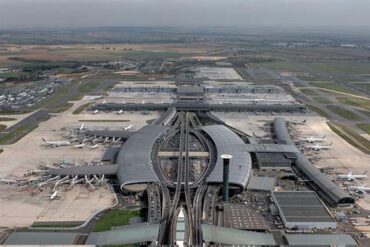
Spanning 265,000 square meters, the airport terminal comprises three piers:
- South pier: B-gates
- North pier: C and D-gates
- East pier: E and F-gates (opened in 2017)
The airport offers 72 gates, including 50 equipped with jet bridges, and an hourly movement capacity of 80 flights. Ground operations are supported by two parallel north–south runways—one measuring 3,600 meters, the other 2,950 meters. Advanced Instrument Landing Systems (ILS CAT IIIA), an automated light guidance network, and a 91-meter air traffic control tower ensure year-round, all-weather operation.
De-icing is facilitated by three dedicated platforms, essential for winter reliability in Norway’s demanding climate.
The Integrated Military Component: Gardermoen Air Station
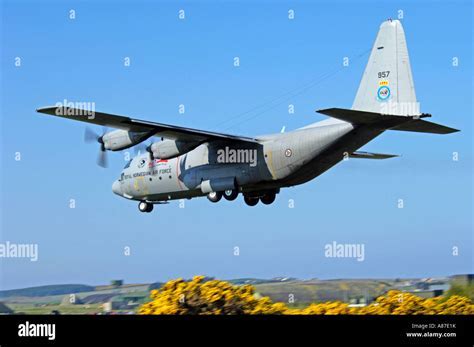
Since 1994, the airport has shared its airfield with the Gardermoen Air Station, home to the 335 Squadron and its fleet of Lockheed C-130 Hercules transport aircraft. This co-location supports both military logistics and VIP government flights. Despite its military role, civilian passengers remain unaffected; military travelers—roughly 200,000 per year—are integrated seamlessly into terminal flows.
Public Transport and Access Infrastructure
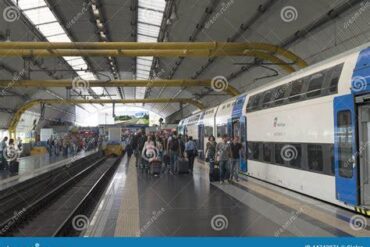
Oslo Airport is a beacon of intermodal accessibility. Its connection to the Gardermoen Line enables a 20-minute train journey to Oslo Central Station, making it one of Europe’s fastest airport-to-city links. Additionally, bus, taxi, and road options are abundant. Today, nearly 70% of travelers use public transport, far exceeding global averages and fulfilling its original mandate.
Commercial Development and Real Estate Holdings
Oslo Lufthavn AS is more than just an airport operator—it is also a commercial developer. Its real-estate division manages hotels, retail, and conference facilities. Notable properties include:
- Radisson Blu Airport Hotel, with direct terminal access.
- Park Inn by Radisson, offering budget-friendly convenience.
- Flyporten, a commercial center offering shopping, dining, and business services.
In 2010, the airport recorded NOK 3.7 billion in revenue, with a portion reinvested into regional Norwegian airports under Avinor’s cross-subsidy model.
Airlines, Routes, and Passenger Dynamics
With 195 direct connections—31 domestic and 164 international—Oslo Airport is a critical launchpad for Scandinavian air traffic. Key players include:
- Norwegian Air Shuttle: strong domestic and intra-European coverage.
- SAS (Scandinavian Airlines): a leading hub operator with intercontinental routes.
- Widerøe: regional connections to remote Norwegian towns.
- Norse Atlantic Airways: long-haul services to North America and beyond.
While charter flights dominate summer peaks, long-haul growth has seen fluctuations, particularly due to the COVID-19 pandemic, which temporarily halted expansion efforts after 2020.
Performance, Rankings, and Regional Influence
Serving a catchment area of 2.8 million people, including parts of western Sweden, Oslo Airport has cemented its place among Europe’s top-tier facilities. In 2024, it handled:
- 26.4 million passengers
- 217,000 aircraft movements
- 170,000 metric tons of cargo
It is ranked as Europe’s 19th busiest airport (as of 2017), and the most trafficked in the Nordic region after Copenhagen. The Trondheim–Oslo route remains Norway’s busiest domestic air corridor, with over 2 million annual passengers.
Conclusion: A Model for Modern, Sustainable Aviation
Oslo Airport Gardermoen embodies precision planning, architectural finesse, and sustainable ambition. From its military roots to its present role as an intercontinental connector, it reflects Norway’s broader ethos of balancing innovation with environmental stewardship. With robust passenger services, military synergy, and an evolving network of global routes, Gardermoen remains not just a critical infrastructure asset, but a symbol of Norway’s place in the global aviation landscape.