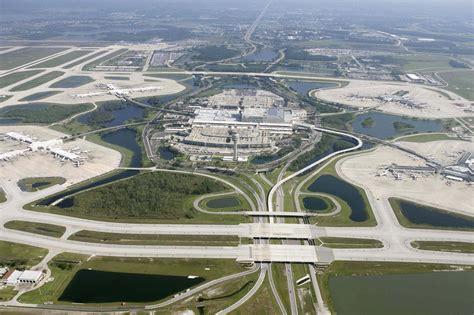
Located just six miles southeast of downtown Orlando, Orlando International Airport (MCO) stands as Florida’s busiest and one of the most dynamic airports in the United States. With over 57 million passengers served in 2024, MCO ranks as the ninth busiest airport in the nation, offering expansive domestic and international connectivity. Spanning more than 11,600 acres, this airport isn’t just a transportation hub—it’s a vital economic engine and architectural icon of Central Florida.
The Origins: From Military Base to International Hub
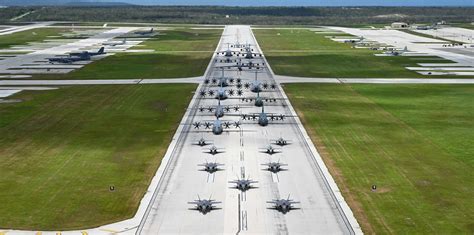
The roots of Orlando International Airport trace back to 1942, when it opened as Orlando Army Air Field #2, later known as Pinecastle Army Airfield. During WWII, it was pivotal for training and experimental aviation programs, notably Bell X-1 glide tests. By the 1950s, the base had evolved into Pinecastle AFB, a Strategic Air Command (SAC) installation operating B-47 and KC-97 aircraft. Tragedy struck in 1958 when Colonel Michael N. W. McCoy died in a B-47 crash, leading to the base being renamed McCoy Air Force Base.
In the Cuban Missile Crisis of 1962, McCoy AFB became a critical launch point for U-2 reconnaissance missions and fighter-bomber deployments. This strategic importance persisted until the base was marked for closure in 1973. By 1975, the military formally transferred operations to the City of Orlando, and the airfield’s transformation into a civilian airport began.
Civil Aviation Takes Flight
The shift from military to civilian use began in 1962 with the establishment of the Orlando Jetport at McCoy, allowing jet aircraft to operate jointly with military flights. Its importance grew exponentially following the 1971 opening of Walt Disney World, attracting carriers like Delta, Eastern, and National Airlines. In the 1970s, Shawnee Airlines even connected MCO to Disney’s own short-lived STOLport near Magic Kingdom.
The Greater Orlando Aviation Authority (GOAA) was formed in 1975 to manage this new aviation powerhouse. The airport earned international status in 1976 and the IATA code MCO was retained to honor its military legacy. By the early 1980s, MCO had added its first major terminals: Airsides 1 and 3, followed by Airside 4 and the International Concourse in the following decade.
Infrastructure and Expansion Milestones
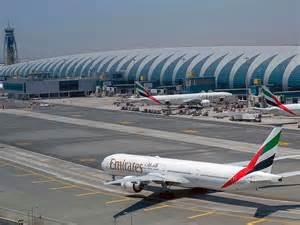
Orlando International is built to impress. With four runways—including two over 12,000 feet long—it accommodates everything from narrow-body domestic jets to the Airbus A380, the world’s largest passenger aircraft. Notably, Gate 90 was remodeled in 2018 with triple jetways to support the A380, first used by Emirates during its inaugural MCO-Dubai route.
The terminal complex is divided into two main sectors:
Terminals A & B – The North Terminal
Housed in a single landside building, Terminals A and B split access to four airsides:
- Airside 1 and 3 (west atrium)
- Airside 2 and 4 (east atrium)
Each airside holds 29 gates, linked to the main terminal via elevated people mover systems. These terminals are home to key U.S. and international carriers, including Southwest, Spirit, Delta, American, and Air Canada.
Terminal C – The South Terminal Complex
Opened in September 2022, Terminal C reflects MCO’s future-forward vision. Featuring 20 modern gates and seamless connection to the Intermodal Terminal, it hosts JetBlue’s full operations and numerous international airlines. Sleek architecture, advanced security, and sustainability features distinguish it as a cutting-edge facility.
Intermodal Terminal and Transit Integration
MCO’s Intermodal Terminal, launched in 2017, was designed as a regional transport hub. With the Brightline high-speed rail connecting Orlando to South Florida since 2023, the terminal plays a vital role in regional mobility. Future integration with SunRail commuter trains, light rail, and even a planned vertiport will make MCO one of the most connected airports in the U.S.
Airline Operations and Market Share
Orlando’s aviation market is vibrant and highly competitive. In 2024:
- Southwest Airlines led with 11.7 million passengers (24.2% market share)
- Delta Air Lines followed at 14.82%
- Spirit Airlines and Frontier held 14.38% and 11.83%, respectively
Over 40 airlines operate at MCO, offering more than 1,000 daily flights to 170+ destinations globally.
Major hubs served include:
- Domestic: Atlanta, Dallas/Fort Worth, New York, Chicago, Los Angeles, Boston
- International: Toronto, London, Panama City, Bogotá, Cancún, São Paulo, Dubai
Historical Airline Hubs and Strategic Shifts
MCO’s airline landscape has evolved significantly over the decades. Delta Air Lines operated a major hub from 1987 to 2007, with dedicated concourses and regional affiliate Comair. After Delta’s withdrawal, AirTran Airways shifted its hub to MCO, occupying many of Delta’s former gates until its 2014 merger with Southwest.
In 2015, Emirates launched a highly anticipated Dubai-Orlando service after years of negotiation. JetBlue consolidated all its flights into Terminal C in 2022, streamlining passenger experience for one of the airport’s most prominent carriers.
Passenger Amenities and Experience
Orlando International Airport is more than a transit point—it’s an experience hub:
- Hyatt Regency Hotel: Nestled inside Terminals A/B, offering premium accommodations, restaurants, and event spaces.
- Chapel Services: The interfaith chapel opened in 1981 and remains a quiet space, with services relocated for safety in 2019.
- FlyMCO Radio (105.1 HD2): A dedicated channel offering airport information, music, and weather updates.
- Automated Parking Systems: MCO pioneered SunPass/E-Pass toll transponder payments for parking in Florida.
Future Growth: Building for 100 Million Passengers
MCO’s vision extends far beyond today. Plans are underway for Terminal D, part of the continued South Terminal Complex expansion. Once complete, Terminals C and D will house up to 120 gates. The airport’s projected capacity aims to handle 100 million annual passengers.
Additionally, upgrades to North Terminal (A/B), a new Consolidated Rental Car (CONRAC) facility, baggage systems, and transit expansions are all in progress. Proposed transport innovations include:
- SunRail extension via OUC spur
- Elevated Maglev system to International Drive, the Orange County Convention Center, and Florida Mall
- Future light rail and vertiport facilities
Cargo and Commercial Operations
In addition to passenger volume, MCO is a significant cargo hub, moving over 222,000 tons of airfreight in 2024. Carriers include:
- UPS (DFW, Louisville, JFK, Tampa, etc.)
- FedEx Express and Feeder services
- DHL (Cincinnati, Miami)
- Kalitta Air and Amerijet International
These operations support local industry, global trade, and Florida’s growing logistics economy.
Safety and Incident Response
MCO has a commendable safety record, but like all major airports, it has faced isolated incidents:
- 1985: Eastern Airlines A300 hijacked en route to Cuba; safely resolved at MCO.
- 1996: Comair EMB-120 gear failure; no injuries.
- 2019: Frontier A321 tailstrike; safe second landing.
- 2021–2025: Minor excursions and an engine fire, all with no fatalities.
These events underscore the airport’s rigorous emergency protocols and well-trained response teams.
Conclusion: Orlando’s Aviation Crown Jewel
Orlando International Airport is more than a transportation facility—it’s a cornerstone of Florida’s tourism economy, a gateway to the world, and a model for future-ready infrastructure. From its roots as a strategic airbase to its role as a thriving global airport, MCO continues to evolve with innovation, scale, and service excellence.
With unparalleled connectivity, cutting-edge terminals, and a bold vision for the future, MCO is poised to remain one of the most important airports in North America for decades to come.