Punta Cana International Airport (IATA: PUJ, ICAO: MDPC) stands as a monumental achievement in Caribbean aviation. Located in Punta Cana, La Altagracia Province of the Dominican Republic, this airport is not only the busiest in the country, but also ranks as the second-busiest in the Caribbean, following Puerto Rico’s Luis Muñoz Marín International Airport. Developed and operated by Grupo Puntacana, the airport is unique in its heritage — the first privately-owned international airport in the world, inaugurated on 17 December 1983.
With two 10,171-foot (3,100-meter) asphalt-concrete runways, PUJ connects over 90 airports in 26 countries, serving more than 10 million passengers annually by 2024. The facility’s strategic location, volume of international traffic, and innovative open-air design cement its status as a critical gateway to the Caribbean.

Origins Rooted in Vision and Necessity
The story begins in 1971, when Grupo Puntacana launched the first hotel in the area — the Punta Cana Club. With no roads or harbors, access to this paradisiacal location was limited to a makeshift airstrip, essentially just flattened terrain. As international tourism began to trickle into the Dominican Republic, travelers were forced to route through Las Américas International Airport in Santo Domingo, followed by short flights in light aircraft.
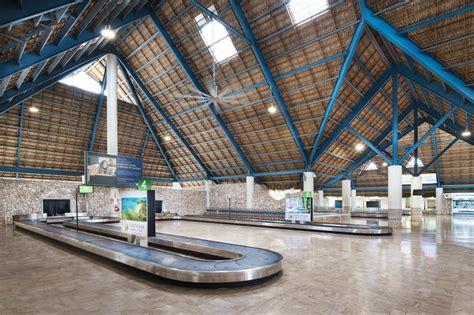
Faced with increasing visitor demand and logistical challenges, Grupo Puntacana envisioned a permanent solution. In 1974, plans began for what would become a globally significant first: a privately financed international airport. Despite initial resistance from local authorities, years of negotiation culminated in official approval and construction began in 1982. The architectural design, spearheaded by Oscar Imbert, channeled Taíno and Arawak cultural influences, with palm-frond roofs and stone from local jungles, allowing for natural air flow instead of costly air conditioning systems.
By December 1983, the dream took flight.
Transformative Growth Through the Decades
1980s: Foundations for Future Expansion
Punta Cana International Airport debuted with a 5,000-foot runway and a 3,200 sq ft terminal, accommodating modest propeller aircraft and 150 passengers every 90 minutes. The first international flight — from San Juan, Puerto Rico, operated by Prinair — arrived in January 1984. That year, the airport recorded 2,976 passengers.
Rapid tourism growth fueled expansions: in 1986, the runway was lengthened to 7,500 feet, enabling jet service. Upgrades included terminal improvements, tarmac enlargement, and a modernized control tower. In 1987, the airport welcomed its first U.S. flight from Miami. A second expansion in 1988 included a new taxiway and further runway extensions.
1990s: Welcoming Long-Haul International Carriers
With its runway extended to 10,171 feet by the early 1990s, the airport began accommodating wide-body jets and long-haul flights. European carriers like Monarch Airlines, Air Belgium, and Condor introduced direct routes from Frankfurt and Berlin. This period marked the start of transatlantic connectivity. Other milestones included:
- 1993: Hapag-Lloyd from Düsseldorf, Air Transat from Montréal
- 1994: American Airlines begins regular service from Miami
- 1995–1996: New routes from Amsterdam, Vienna, Chicago Midway, Bogotá, and Santiago
The growth outpaced infrastructure. By 1998, severe congestion on the apron and lack of parallel taxiways caused delays and operational inefficiencies, prompting plans for large-scale expansion.
2000s: Infrastructure Modernization and Capacity Surge
A comprehensive expansion began in 2000, doubling the terminal to 6,500 sq ft, adding a full-length taxiway, and enlarging the apron to accommodate six aircraft. The boom in hotel and mall development in Punta Cana spurred consistent airline traffic growth, again leading to terminal overcrowding by 2002. Further updates included:
- 2003: Expansion of terminal and apron
- 2004: Opening of Terminal 2, improving passenger processing and enabling more routes
- Arrival of large aircraft from new leisure carriers such as Corsairfly and Transaero
2010s: Becoming the Region’s Premier Long-Haul Hub
In 2011, PUJ became the first Caribbean airport with two runways over 10,000 feet, accommodating long-haul aircraft like the Boeing 747-400, Boeing 777, and Airbus A340. Major developments included:
- New control tower, radar control facility, and automated weather station
- Terminal B opened in 2014, the first fully enclosed terminal at the airport, with seven jet bridges and capacity for 6,500 travelers daily
- In 2017, a luxury VIP lounge with a pool elevated the premium experience
Terminal Infrastructure: A Model of Caribbean Efficiency
Punta Cana International Airport features five terminals:
- Terminal A: The original international terminal, using stairs with wheelchair lift access
- Terminal B: Fully enclosed with 14 boarding bridges and 3 remote gates as of 2023
- VIP Terminal: A luxury facility with its own private aircraft apron
- FBO Terminal: Serving executive and general aviation
- National Terminal: Handling domestic charter and general aviation traffic
The open-air terminal concept, complemented by tropical design and practical flow, remains a unique architectural hallmark of PUJ.
Future Plans: U.S. Preclearance Facility on the Horizon
Efforts are ongoing to establish a U.S. Customs and Border Protection preclearance facility at PUJ, allowing travelers to complete immigration procedures before departure. Although initially targeted for 2009, delays have persisted. As of December 2020, authorization was still pending from the Dominican Government, with Grupo Puntacana committed to completing the process, potentially making PUJ the first Latin American airport with such a facility.
Airline Connectivity and Global Reach
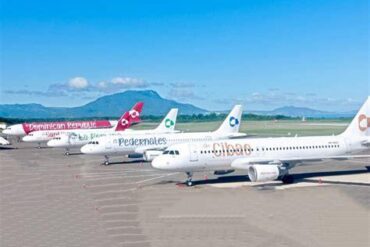
PUJ is served by a comprehensive network of legacy, low-cost, and charter airlines, connecting the Dominican Republic to North America, Europe, and Latin America. Highlights include:
- North American carriers: Air Canada, Air Transat, American Airlines, JetBlue, Delta, United, WestJet, Southwest, Spirit, Sun Country
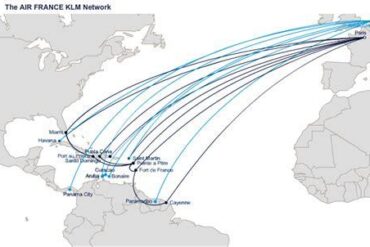
- European carriers: British Airways, Condor, Air Europa, Air France (seasonal), TUI Airways, LOT Polish Airlines, Iberojet
- Latin American and Caribbean airlines: Arajet, Avianca, Copa, LATAM, Wingo, Gol, Air Century
Top international routes by 2024 include:
- Toronto–Pearson (947,678 passengers)
- New York–JFK, Panama City–Tocumen, Montréal–Trudeau, and Miami
Safety Record and Incident Management
Punta Cana International Airport maintains a strong safety record, with few notable incidents in its four-decade history:
- May 2005: Skyservice 767-300 hard landing resulted in damage but no fatalities
- October 2014: Air Century aircraft engine fire on landing; aircraft lost but no injuries
- February 2016: Orenair Flight 554 experienced an engine fire and cabin smoke; emergency landing succeeded without injuries despite aircraft damage
Each case demonstrated effective emergency protocols and commitment to passenger safety.
Conclusion: The Dominican Republic’s Aviation Powerhouse
From humble beginnings as a flat airstrip to a globally connected airport handling over 10 million annual passengers, Punta Cana International Airport is a testament to vision, resilience, and innovation. It not only supports the Dominican Republic’s thriving tourism economy, but also serves as a blueprint for public-private partnership success in global aviation infrastructure.
With continuous expansion, enhanced passenger experiences, and growing international reach, PUJ remains a cornerstone of Caribbean air travel and a symbol of how far the Dominican Republic has flown on wings of ambition.