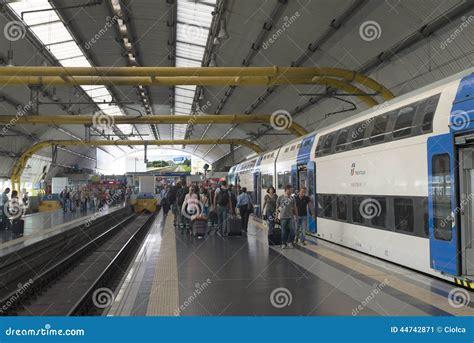
Nestled within the bustling complex of Italy’s busiest airport, the Fiumicino Aeroporto railway station (Italian: Stazione di Fiumicino Aeroporto) stands as a critical artery connecting Rome and beyond to the Leonardo da Vinci-Fiumicino Airport (IATA: FCO). This vital transportation hub, strategically located in Fiumicino, Lazio, central Italy, serves as the southwestern terminus of the Rome–Fiumicino railway line. Opened to the public on May 27, 1990, the station has since become an indispensable part of the travel infrastructure for millions of passengers annually, offering seamless transitions from air to rail and vice-versa. Its official address, Via Generale Felice Santini 11–14, 00054 Fiumicino RM, places it directly at the heart of airport activity, facilitating unparalleled convenience for travelers.
The airport itself, often referred to as Rome-Fiumicino Airport (Italian: Aeroporto di Roma-Fiumicino), is the primary international gateway to the Italian capital. The railway station’s integration into this major European air hub underscores its importance, not just for Rome but for the entire Lazio region and, indeed, for national and international travel itineraries. The station’s management falls under the purview of Rete Ferroviaria Italiana (RFI), the Italian rail network manager, while train services are predominantly operated by Trenitalia, the primary Italian train operating company. Both RFI and Trenitalia are subsidiaries of Ferrovie dello Stato (FS), Italy’s state-owned railway holding company, ensuring a coordinated approach to rail transport. Reflecting its significance and high passenger throughput, RFI classifies Fiumicino Aeroporto station as a “Gold” category station, a testament to its strategic importance and the quality of services offered.
A Strategic Inception: The Birth of Fiumicino Aeroporto Station
The development and inauguration of the Fiumicino Aeroporto railway station in May 1990 were timely and strategic, coinciding with a period of significant growth in air travel and Italy’s hosting of the 1990 FIFA World Cup. This major international sporting event spurred substantial infrastructural investments across the country, with a keen focus on enhancing transportation links to key cities and international gateways. The creation of a dedicated rail link to Fiumicino Airport was a forward-thinking project designed to alleviate road congestion, provide a reliable and efficient alternative to taxis and buses, and elevate the passenger experience for both international visitors and domestic travelers. The station was conceived to integrate directly with the airport terminals, offering a streamlined journey from baggage claim to train platform. Its establishment marked a significant upgrade in Rome’s public transportation network, positioning Fiumicino Airport as a modern, accessible hub. The ensuing decades have only solidified its role, as passenger numbers have continued to climb and the demand for efficient airport connectivity has intensified. The station has evolved to accommodate these growing needs, becoming an essential component of Italy’s national rail network.
Prime Location and Unrivaled Airport Access
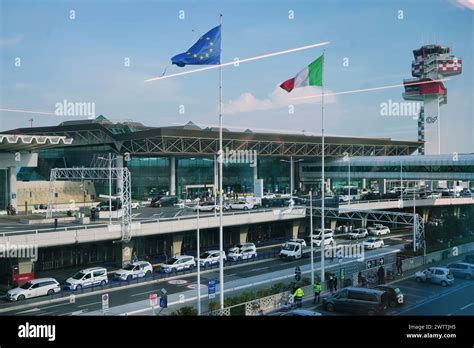
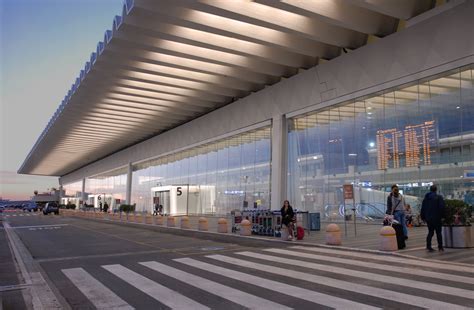
The Fiumicino Aeroporto railway station boasts an exceptionally strategic location, meticulously planned for optimal passenger convenience. Situated at coordinates 41°47′39″N 12°15′04″E, it is embedded directly within the Leonardo da Vinci-Fiumicino Airport complex. Specifically, the station is positioned directly opposite Terminal 3, one of the airport’s major international terminals. This proximity is a cornerstone of its design, minimizing transfer times and simplifying the journey for passengers laden with luggage. Clear and abundant signage within the airport terminals guides arriving passengers effortlessly towards the station, while those arriving by train find themselves just a short walk from check-in desks and departure gates. This seamless integration between air and rail travel is a hallmark of modern airport design, and Fiumicino Aeroporto station exemplifies this principle effectively. The address, Via Generale Felice Santini 11–14, places it at the nucleus of airport operations, ensuring that it is easily accessible not only to passengers but also to the thousands of employees who work at the airport, many of whom rely on the rail services for their daily commute.
Architectural Design and Station Features
The Fiumicino Aeroporto railway station is characterized by its functional and modern design, tailored to handle a high volume of passenger traffic efficiently. The station comprises a dedicated passenger building and an expansive train hall that shelters the platforms and ticketing facilities. This integrated structure ensures that passengers are protected from the elements and can navigate the station comfortably. It is equipped with three platforms, all of which are actively used for passenger services, accommodating the diverse range of trains that terminate and originate here. The platforms are designed to be accessible, and the overall layout prioritizes clarity and ease of movement. Within the station, passengers will find essential amenities, including numerous ticket machines for both Trenitalia services and the Leonardo Express. The “Gold” classification bestowed by RFI signifies not only high passenger traffic but also a commitment to maintaining a certain standard of facilities and services, ensuring a reliable and comfortable environment for travelers. The train hall itself is typically well-lit and spacious, designed to manage the ebb and flow of passengers arriving from or heading to flights. The distance from Roma Termini, the main railway station in central Rome, is precisely 31.406 kilometers (19.515 miles), a journey covered with remarkable speed by the dedicated express services.
Diverse Train Services: Connecting Rome and Beyond
Fiumicino Aeroporto railway station is a dynamic hub served by a variety of train services, catering to different passenger needs, from rapid transit to the city center to regional and even long-distance national connections. These services are primarily operated by Trenitalia, ensuring a high level of reliability and integration with the broader Italian rail network.
The Leonardo Express: Rome’s Premier Airport Connection
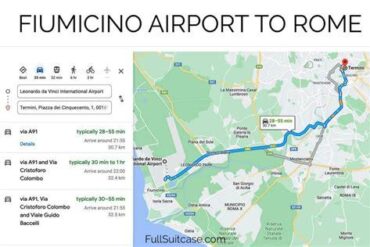
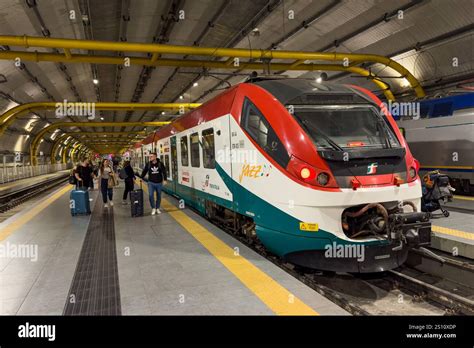
The flagship service operating from Fiumicino Aeroporto station is undoubtedly the Leonardo Express. This dedicated, first-class-only, non-stop train service provides the quickest and most direct rail link between the airport and Roma Termini, Rome’s central railway station. The journey typically takes approximately 32 minutes, offering a swift and comfortable ride, bypassing the often-congested Rome traffic. The Leonardo Express operates with remarkable frequency, with departures scheduled every 15 minutes during peak hours and every 30 minutes during off-peak times, running from early morning until late evening. This high frequency ensures minimal waiting times for passengers. Being a first-class exclusive service, passengers can expect comfortable seating, ample luggage space, and a generally quieter travel environment, making it particularly popular among business travelers and tourists seeking a hassle-free transfer. Tickets for the Leonardo Express can be purchased at station ticket machines, Trenitalia ticket counters, online, or via the Trenitalia app. The dedicated platforms for the Leonardo Express are clearly marked, ensuring easy boarding. Its reliability and speed make it a cornerstone of the airport’s transport offerings and a highly recommended option for reaching central Rome.
FL1 Regional Line: Versatile Commuter and Local Access
Beyond the premium Leonardo Express, Fiumicino Aeroporto station is also a crucial terminus for the Ferrovie regionali del Lazio FL1 commuter service. This regional train line provides a vital connection between the airport and numerous destinations in Rome and the northern Lazio region, with its other terminus at Orte. Unlike the non-stop Leonardo Express, the FL1 trains make stops at several key stations within Rome, offering greater flexibility for passengers whose final destinations are not near Roma Termini. Important stops include Roma Trastevere, Roma Ostiense, and Roma Tiburtina. These stations are significant interchange points; from Roma Ostiense and Roma Tiburtina, passengers can connect to Rome’s Metro Line B, providing access to a wider area of the city, including landmarks like the Colosseum and Circus Maximus. Roma Tiburtina is also a major hub for high-speed and long-distance trains, as well as regional buses. From Roma Trastevere, passengers can connect to Tram 8, which offers a scenic and efficient route towards Piazza Venezia, right in the historical heart of Rome. The FL1 line is a more economical option compared to the Leonardo Express and is frequently used by airport employees, local residents, and budget-conscious travelers. Trains on the FL1 line, often recognizable by their double-decker Treno ad Alta Frequentazione (TAF) rolling stock, typically run every 15 minutes on weekdays and every 30 minutes on weekends and holidays. The journey to stations like Roma Tiburtina takes approximately 48 minutes, and to Roma Ostiense around 31 minutes. The line also extends north of Rome, serving communities such as Fara Sabina, Poggio Mirteto, and Stimigliano, making the airport accessible to a wider regional population. The concept of an “urban fare limit” applies to sections of this line, indicating zones where specific Rome metropolitan area travel passes are valid, though travel to and from the airport itself usually requires a dedicated ticket.
High-Speed Rail Links: Direct National Connectivity
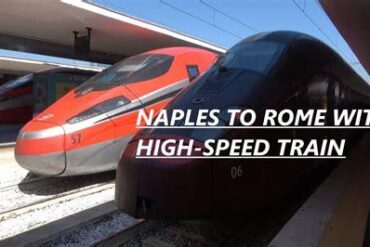
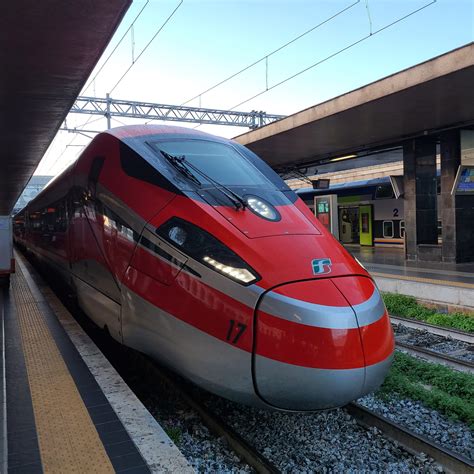
In a significant enhancement to its connectivity, Fiumicino Aeroporto station is also served by direct high-speed train services, namely Trenitalia’s Frecciarossa and Frecciargento trains. This development has transformed the station from merely a city-airport link into a direct gateway to Italy’s wider high-speed rail network. Passengers can now travel directly from Fiumicino Airport to major Italian cities such as Florence (Firenze), Bologna, Venice (Venezia), Padua, and Naples (Napoli) without the need to transfer at a central Rome station. This offers immense convenience, saving time and simplifying travel logistics, especially for those with onward national journeys. For example, a direct Frecciarossa train can connect Fiumicino Airport to Florence Santa Maria Novella station in approximately 2 hours and 15 minutes, or to Napoli Centrale in around 2 hours. These services typically offer multiple classes of service, onboard catering, Wi-Fi, and the high levels of comfort associated with Italy’s premier high-speed trains. The availability of direct high-speed connections further elevates Fiumicino Airport’s status as a major international and national transport hub, facilitating seamless end-to-end journeys for both business and leisure travelers. These services are particularly beneficial for tourists looking to explore multiple Italian cities directly after arriving by air, or for Italians returning from international trips with direct connections to their home regions.
Seamless Integration and Passenger Amenities
The design and operation of Fiumicino Aeroporto railway station prioritize seamless integration with the airport terminals and a positive passenger experience. As previously mentioned, its location directly opposite Terminal 3 is a key advantage, with well-marked pedestrian pathways, often including covered walkways and travelators, facilitating easy movement between the station and the airport. Inside the station, passengers find a range of amenities designed for their convenience. Multiple Trenitalia ticket vending machines are available, offering multilingual interfaces for purchasing tickets for all services, including the Leonardo Express, regional FL1 trains, and high-speed Freccia services. For those who prefer personal assistance or have more complex ticketing needs, staffed ticket counters are also typically available during operational hours. Digital display boards provide real-time information on train departures and arrivals, platform numbers, and any potential delays, ensuring passengers are well-informed. Given its “Gold” RFI classification, the station is expected to maintain high standards of cleanliness and accessibility, including facilities for passengers with reduced mobility, although specific details should always be verified by travelers with particular needs. Basic retail and refreshment options may also be available within or near the station concourse, complementing the extensive offerings within the main airport terminals. The overall environment is geared towards efficiency and minimizing stress for travelers who are often navigating tight schedules or unfamiliar surroundings.
The Broader Impact on Rome and Lazio’s Transport Ecosystem
Fiumicino Aeroporto railway station plays a far more significant role than simply serving airport passengers. It is an integral part of the wider public transportation ecosystem for Rome and the Lazio region. For the city of Rome, it provides a crucial, high-capacity link that helps to mitigate road congestion on routes to the airport, offering an environmentally friendlier alternative to private cars and taxis. The FL1 line, in particular, functions as a key commuter artery, connecting various Roman neighborhoods and suburban towns directly to the airport, which is a major employment center. This facilitates daily commutes for thousands of airport staff and workers in related industries. Furthermore, the station’s connections to major Roman transport interchanges like Roma Ostiense and Roma Tiburtina integrate the airport rail link into the city’s comprehensive public transport network, including metro lines, tram services, and extensive bus routes. For the broader Lazio region, the FL1 line extends accessibility to the airport for communities situated north of Rome, fostering economic and social links. The introduction of direct high-speed services has further amplified its importance, effectively making Fiumicino Airport a national rail hub for international arrivals and departures, thereby enhancing Italy’s overall transport connectivity and supporting tourism and business travel across the country. The station, therefore, is not just an airport amenity but a strategic asset for regional and national mobility.
Navigating Fiumicino Aeroporto Station: Tips for Travelers
For a smooth experience at Fiumicino Aeroporto railway station, a little preparation can go a long way. When purchasing tickets, consider using the self-service machines, which are generally quick and offer English language options. For the Leonardo Express, tickets are for a specific service (non-stop to Termini) and are usually open for a certain time window on the chosen day. Remember to validate your ticket before boarding regional trains like the FL1. Validation machines (usually small yellow or green boxes) are typically located at the entrance to the platforms or along them. Failure to validate can result in a fine. Platforms for the Leonardo Express are usually clearly distinguished from those for the FL1 regional trains or high-speed services; always check the departure boards for the correct platform for your specific train. If you have pre-booked tickets online for Trenitalia services (including Frecciarossa, Frecciargento, or even Leonardo Express), you often receive a PNR code and a QR code, which can be shown directly to the conductor on your smartphone or as a printout, usually not requiring validation at the station. Allow ample time for navigating from your airport terminal to the station, especially if you have a lot of luggage or are unfamiliar with the airport layout, though the signage is generally very good. For those connecting from the station to airport terminals, follow the clear “Airport Terminals” signs. The station is well-integrated, but it’s always wise to factor in walking time.
The Future of Rail at Fiumicino Airport
As Leonardo da Vinci-Fiumicino Airport continues to grow and evolve as one of Europe’s premier aviation hubs, the demands on its ground transportation infrastructure, particularly the Fiumicino Aeroporto railway station, will undoubtedly increase. Future enhancements could potentially include further increases in service frequency for existing lines, the introduction of new direct routes to other Italian cities, or upgrades to station facilities and capacity to accommodate rising passenger numbers. Investments in rolling stock, signaling technology, and track infrastructure on the lines serving the airport could also lead to reduced journey times and improved reliability. As sustainability becomes an even more critical consideration in transport planning, the role of efficient rail links like those serving Fiumicino Airport will become increasingly vital. The continued success and development of the Fiumicino Aeroporto railway station are intrinsically linked to the airport’s competitiveness and the overall efficiency of Italy’s national transport network, ensuring it remains a key gateway for years to come.
In conclusion, the Fiumicino Aeroporto railway station is far more than just a train stop; it is a sophisticated and essential component of Italy’s travel infrastructure. Offering a diverse range of services from the premium, non-stop Leonardo Express to the versatile FL1 regional line and direct national high-speed connections, it efficiently links Rome’s primary airport with the city center, the surrounding Lazio region, and major destinations across Italy. Its strategic location, modern facilities, and robust train operations underscore its critical role in facilitating seamless, efficient, and convenient travel for millions of passengers each year, solidifying its status as Rome’s premier airport rail gateway.