Seamless Transfers from Fiumicino Airport to the Heart of Rome
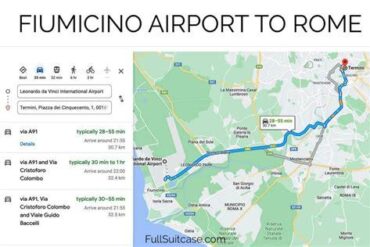
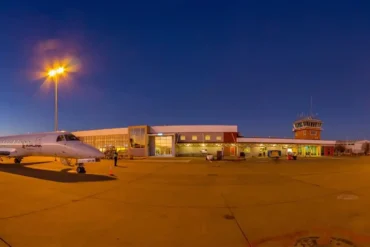
Touching down at Rome Fiumicino Airport (FCO), officially known as Leonardo da Vinci International Airport, marks the beginning of your Roman holiday. As Italy’s busiest airport and a primary international gateway, Fiumicino welcomes millions of travelers eager to explore the Eternal City. Situated approximately 32 kilometers (about 20 miles) southwest of Rome’s historic center, the journey from the airport to your accommodation is the first step in your adventure. Fortunately, a well-established and efficient transport network connects FCO to various points within Rome, offering options to suit every budget, preference, and final destination. Understanding these choices is key to a smooth, stress-free transition from arrival hall to Roman charm.
Before diving into the specifics of each transport mode, consider where your Roman sojourn will be based. Are you staying near the bustling Roma Termini, the city’s main transport hub? Perhaps a charming apartment in the cobbled lanes of Trastevere? Or a hotel near the Vatican? Your final destination within Rome can significantly influence which transfer option is the most convenient and cost-effective. While some routes offer a direct path to major interchanges, others might bring you closer to specific neighborhoods, potentially saving you an additional taxi or metro ride upon arrival in the city.
The Leonardo Express: Your Direct High-Speed Link to Roma Termini
For many travelers, the Leonardo Express is the most straightforward and popular method for reaching central Rome. This dedicated, non-stop Trenitalia train service provides a direct connection between Fiumicino Airport and Roma Termini, Rome’s principal railway station. The journey is swift, typically taking around 32 minutes, whisking you away from the airport’s hustle and into the city’s core without the worry of traffic congestion. This makes it an exceptionally reliable option, especially if you have ongoing train connections from Termini to other Italian cities like Florence, Venice, or Naples.
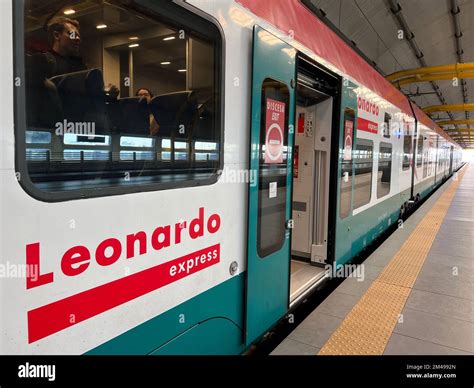
Trains are frequent, departing from the airport every 30 minutes for most of the day. During peak hours, this frequency increases to every 15 minutes, ensuring minimal waiting time. The first Leonardo Express service leaves Fiumicino Airport at 6:08 a.m., and the last train departs at 11:23 p.m., catering to a wide range of flight arrival times. A one-way ticket for the Leonardo Express costs €14 per person. While it’s not the cheapest option, the convenience, speed, and direct route to Termini often justify the premium for many visitors, especially those new to the city or laden with luggage.
Finding the train station within Fiumicino Airport is relatively easy. After clearing customs and collecting your baggage, simply follow the prominent overhead signs displaying “Ai Treni / To Trains.” The walk from the arrival terminals (Terminal 3 is the main international terminal) to the train station is well-signposted and takes approximately 5-10 minutes, partly via covered walkways and travelators. Along the way, you’ll find amenities such as restrooms and snack bars if you need a quick refreshment before your journey.
Before proceeding to the platforms, you’ll need to secure your tickets. While it’s possible to purchase tickets from multilingual self-service kiosks (often large green Trenitalia machines) or the staffed ticket counter at the airport station, purchasing your tickets online in advance is highly recommended. This not only saves time but also allows you to head straight towards the validation process if you have a digital ticket or a PNR (Passenger Name Record) number to print physical tickets from a kiosk. If you’ve pre-purchased and have a PNR, you can use the self-service machines to print your ticket. Once you have your physical ticket, a crucial step is ticket validation. Before boarding the Leonardo Express (and indeed, most Italian regional trains), you must validate your paper ticket at one of the small, usually green and white (or sometimes yellow) stamping machines typically found at the entrance to the platforms or along the platform itself. Failing to validate your ticket can result in a hefty fine if checked by an inspector onboard. If you have a digital ticket purchased online with a specific train time, validation is often automatic, but always double-check the terms of your e-ticket. Train station staff are usually on hand to assist if you’re unsure.
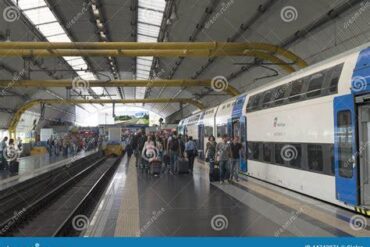
The Leonardo Express trains are modern, comfortable, and designed with travelers in mind. There’s ample space for luggage, with dedicated racks at the end of each carriage and overhead compartments for smaller bags. Seats are comfortable, offering a chance to relax after your flight and perhaps catch your first glimpses of the Roman countryside as you speed towards the city. Upon arrival at Roma Termini, you’ll disembark at dedicated platforms, often platforms 23 or 24. From here, you’ll have immediate access to Rome’s Metro (Lines A and B), numerous bus routes, a large taxi rank, and, of course, onward high-speed and regional train services.
The FL1 Regional Train: A Cost-Effective Alternative to Key Roman Hubs
For the budget-conscious traveler or those whose accommodation isn’t conveniently located near Termini, the FL1 regional train presents an excellent and often overlooked alternative. This commuter line, also operated by Trenitalia, connects Fiumicino Airport with several important train stations within Rome, though it notably does not stop at Roma Termini. Instead, the FL1 serves stations such as Roma Trastevere, Roma Ostiense, Roma Tuscolana, and Roma Tiburtina, before continuing its journey towards destinations north of Rome like Fara Sabina or Orte.
The most significant advantage of the FL1 train is its price. A one-way ticket costs only €8, making it considerably cheaper than the Leonardo Express. The journey time varies depending on your destination station but generally ranges from 26 minutes to Roma Trastevere up to 47 minutes to Roma Tiburtina. Trains are frequent, typically running every 15 minutes on weekdays and every 30 minutes on weekends and public holidays. The first FL1 train usually departs Fiumicino Airport around 5:57 a.m., with the last service around 11:27 p.m., though schedules can vary slightly, so it’s always wise to check the Trenitalia website or app for the most up-to-date timings.
The process of finding the FL1 train at Fiumicino Airport is identical to finding the Leonardo Express, as they both depart from the same airport train station. Follow the “Ai Treni / To Trains” signs. Ticket purchase can also be done at the same Trenitalia kiosks or ticket office. Ensure you select the correct destination station (e.g., Roma Trastevere, Roma Ostiense) when buying your ticket. Crucially, just like the Leonardo Express, if you have a paper ticket for the FL1, it must be validated in the stamping machines before boarding.
FL1 trains are standard commuter trains. While generally clean and efficient, they may not offer the same level of luggage space or plush seating as the Leonardo Express. During peak commuter hours, these trains can also be more crowded with locals. However, they provide an authentic glimpse into Roman daily life and can be a very practical choice. Choosing the right FL1 stop depends entirely on your final destination:
- Roma Trastevere: Ideal if you’re staying in the charming Trastevere neighborhood, Monteverde, or need to connect to tram line 8, which runs into Largo di Torre Argentina in the historic center.
- Roma Ostiense: A strategic stop connecting with the Metro Line B (Piramide station). This is useful for reaching areas like the Colosseum, Circus Maximus, Testaccio, or EUR. The Italo high-speed train company also serves Ostiense, and the famous Eataly Rome food emporium is right next door.
- Roma Tuscolana: Connects with Metro Line A (Ponte Lungo station), useful for reaching areas around San Giovanni or further along Line A towards the eastern suburbs.
- Roma Tiburtina: Rome’s second-largest railway station. It’s a major hub for high-speed trains (both Trenitalia and Italo) and long-distance buses. Tiburtina also has a direct connection to Metro Line B.
From any of these stations, you might still need a short taxi ride, a bus, or a metro journey to reach your exact hotel or apartment, but the FL1 can often get you much closer to your specific neighborhood than the Leonardo Express would, and at a lower cost.
Navigating the Fiumicino Airport Train Station: A Step-by-Step Guide
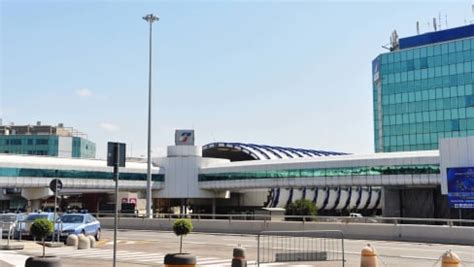
Regardless of whether you choose the Leonardo Express or the FL1 regional train, your journey begins at the Fiumicino Aeroporto railway station, conveniently integrated within the airport complex. As mentioned, clear bilingual signage (Italian and English) for “Ai Treni / To Trains” will guide you from the arrivals halls of all terminals. The station is located opposite Terminal 3, easily accessible via a short, covered pedestrian skyway.
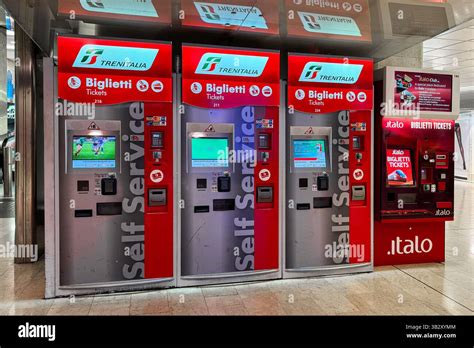
Upon reaching the station concourse, you’ll find several Trenitalia ticket vending machines. These are typically large, green, and equipped with touch screens offering multiple language options, including English. You can purchase tickets for both the Leonardo Express and the FL1 trains using cash (Euro coins and banknotes) or credit/debit cards. If you’ve purchased your ticket online and received a PNR code, you can also use these machines to retrieve and print your physical ticket. Alternatively, there’s a staffed Trenitalia ticket office (“Biglietteria”) if you prefer human interaction or have more complex ticketing needs, though queues can sometimes be long.
Once you have your physical ticket, the validation step is paramount. Look for the small, often green and white, or sometimes yellow, oblong machines mounted on walls or posts, usually at the entrance to the platforms or near the ticket machines themselves. These are the convalidatrici (validating machines). Insert your ticket (usually arrow-first, face-up, but check for diagrams on the machine) to have it time-stamped. An unvalidated ticket is considered the same as no ticket at all during an inspection, leading to potential fines. If you are using an e-ticket purchased for a specific train and time, it usually doesn’t require physical validation, but always read the conditions of your e-ticket carefully.
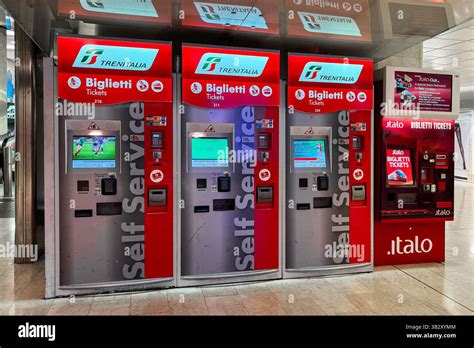
The Fiumicino Airport station has a few platforms. Electronic departure boards (Partenze / Departures) clearly display the train type (e.g., Leonardo Express, Regionale FL1), destination, scheduled departure time, and crucially, the platform number (Binario / Platform). The Leonardo Express typically departs from dedicated platforms (often 1 or 2), while the FL1 trains will depart from other platforms, usually indicated on the departure boards. Announcements are also made in Italian and English. The station itself is relatively compact, making it easy to navigate once you’re past the ticket purchasing area.
Arriving at Roma Termini: Your Gateway to the City and Beyond
If you’ve opted for the Leonardo Express, your arrival point in Rome will be Roma Termini. This isn’t just a train station; it’s a city within a city, the largest railway station in Italy and one of the busiest in Europe. Located on Piazza dei Cinquecento, Termini is a monumental structure that serves as the primary hub for public transportation in Rome.
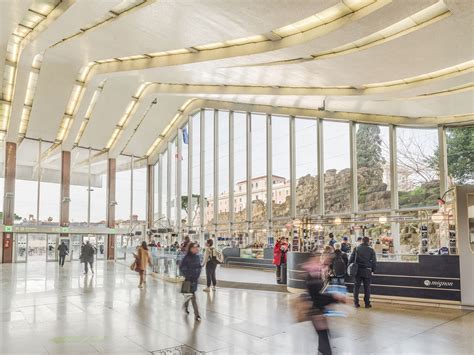
Upon disembarking from the Leonardo Express (usually at platforms 23 or 24, which are slightly set back from the main concourse), you’ll find yourself in a bustling environment. Termini offers a vast array of services and facilities. For onward travel within Rome, you have direct access to both lines of the Rome Metro: Linea A (the orange line) and Linea B (the blue line). The Metro station is located beneath the main railway station and is well-signposted. Numerous city bus lines also depart from the large bus terminus (Piazza dei Cinquecento) directly in front of the station. An official taxi rank is also situated outside the main entrance, where you should only take licensed white city taxis.
Roma Termini is also the main departure point for high-speed trains (Frecciarossa, Frecciargento, Italo) to other major Italian cities like Florence, Milan, Venice, and Naples, as well as international services. The station boasts an extensive shopping mall (Forum Termini) with clothing stores, bookshops, and electronics. You’ll find a wide variety of food options, from quick takeaway pizzerias and cafes to sit-down restaurants. Luggage storage facilities (Deposito Bagagli) are available if you need to store your bags for a few hours. For eligible travelers, the ItaliaPass Lounge offers a comfortable space to relax, though access conditions apply.
Beyond Termini: Utilizing FL1 Stops for Strategic Access
Choosing the FL1 regional train means you’ll arrive at one of several other key stations within Rome, potentially closer to your final destination and offering different connectivity.
- Roma Trastevere: Arriving here places you on the doorstep of the vibrant Trastevere district, known for its picturesque cobblestone streets, artisan shops, and lively restaurants. From Roma Trastevere station, you can easily walk into the heart of the neighborhood or take the Tram 8, which provides a direct link to Largo di Torre Argentina, very close to Piazza Navona and the Pantheon. This station is also useful for reaching the Monteverde district or the Janiculum Hill for panoramic city views.
- Roma Ostiense: This station is a significant interchange. It’s directly connected via a pedestrian underpass to the Piramide Metro station (Line B). This makes Ostiense an excellent choice if your accommodation is near Metro B stops like Colosseo (Colosseum), Circo Massimo, Cavour (for Monti district), or even further out towards EUR. The area around Ostiense itself has seen regeneration, with the impressive Eataly Rome food complex housed in a former air terminal being a major attraction. Ostiense is also served by some Italo high-speed trains.
- Roma Tiburtina: As Rome’s second-largest station, Tiburtina is a modern transport hub. It’s a primary stop for many high-speed Trenitalia and Italo services, making it a good alternative to Termini if you have an onward long-distance train journey. Tiburtina is also directly connected to Metro Line B (Tiburtina FS station) and serves as a major terminal for regional and international bus lines (Tibus terminal).
- Roma Tuscolana: This station is less commonly used by tourists but can be convenient for certain residential areas. It offers an interchange with Metro Line A at Ponte Lungo station, which is a short walk away. This could be useful if you’re staying near Re di Roma or San Giovanni.
Considering Other Airport Transfer Options
While trains are highly efficient, other transport methods are available from Fiumicino Airport to Rome, each with its own set of pros and cons.
- Official Taxis: Licensed white Rome city taxis offer a fixed fare from Fiumicino Airport to destinations within the Aurelian Walls (which encompass most of the historic center). As of late 2023/early 2024, this fare is €50, inclusive of luggage, for up to four passengers. Always ensure you take an official taxi from the designated ranks outside the terminals (follow the “Taxi” signs) and confirm the fixed fare with the driver before starting your journey. Avoid individuals soliciting taxi rides inside the terminal. The journey time can vary significantly depending on traffic, typically 45-60 minutes.
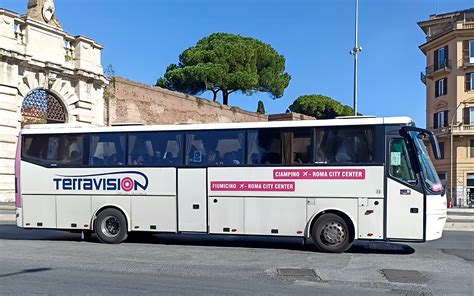
- Airport Shuttle Buses: Several companies, such as Terravision, SIT Bus Shuttle, and TAM Bus, operate coach services between Fiumicino Airport and central Rome. Most terminate at Roma Termini (usually on Via Marsala or Via Giolitti, on the sides of the station), while some may offer stops near the Vatican (e.g., Via Crescenzio). Buses are generally the cheapest option, with tickets often priced between €6 and €10 one-way. However, they are also the slowest, as they are subject to traffic conditions, with journey times ranging from 50 minutes to well over an hour. You can usually buy tickets online in advance or from kiosks at the airport bus station (located outside Terminal 3, follow signs for “Regional Bus Station”).
- Ride-Sharing Services (Uber): Standard Uber services like UberX are not permitted to operate from Fiumicino Airport in the same way as taxis. However, Uber Black, Uber Lux, and Uber Van (higher-end services) are available. These are typically more expensive than official taxis for a similar journey. You would request a ride through the app as usual, and the app will direct you to a designated pick-up area.
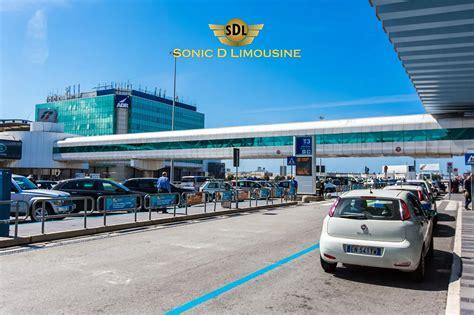
- Private Car Transfers (NCC): For maximum convenience and a seamless experience, especially if traveling in a group or with a lot of luggage, you can pre-book a private car transfer (Noleggio Con Conducente – NCC). Your driver will typically meet you in the arrivals hall holding a sign with your name, assist with your luggage, and take you directly to your accommodation. This is the most expensive option but offers door-to-door service and comfort. Prices vary depending on the vehicle size and company.
Essential Tips for a Smooth Airport Transfer
To ensure your journey from Fiumicino Airport to Rome is as hassle-free as possible, keep these final tips in mind:
- Book Train Tickets in Advance: Especially for the Leonardo Express, purchasing tickets online through the Trenitalia website or app can save you time at the airport. You’ll receive an e-ticket with a QR code, often eliminating the need for physical ticket printing or validation for that specific timed train.
- ALWAYS Validate Paper Tickets: This cannot be stressed enough. If you have a paper ticket for any regional train (including the FL1) or for the Leonardo Express (unless it’s a time-specific e-ticket), you must validate it in the stamping machines before boarding. Inspectors are common, and fines are significant.
- Child Fares: Trenitalia offers discounted fares for children. Typically, infants and children up to 3 years old travel free if they don’t occupy a seat. Children aged 4 to 11 (or sometimes up to 14 on certain high-speed trains, though this usually applies to intercity rather than airport expresses) receive a discount, often 30-50% off the adult fare. Always check the specific conditions when booking.
- Group Travel: If you’re traveling in a group of 10 or more, you might be eligible for group discounts on Trenitalia services. It’s best to inquire directly with Trenitalia or through a specialized group booking agent well in advance.
- Rail Passes (Eurail/Interrail): If you hold a valid Eurail or Interrail Pass that covers Italy, you can use it on the FL1 regional trains without a supplement (just ensure your pass is active for the travel day). For the Leonardo Express, passholders usually need to pay a supplement or purchase a separate ticket, as it’s considered a premium airport service. Always check the specific conditions of your pass.
- Luggage Handling: Be mindful of your luggage, especially on crowded trains or buses. Keep valuables secure and within sight. The Leonardo Express offers dedicated luggage areas, while on FL1 trains, you might need to keep your bags closer to you.
- Beware of Pickpockets: Like any major transport hub, Fiumicino Airport and stations like Roma Termini can attract pickpockets. Stay vigilant, especially in crowded areas, when boarding trains, or while distracted by ticket machines.
- Check Timetables: While services are frequent, it’s always a good idea to check the latest timetables on the Trenitalia website or app, especially if traveling very early in the morning, late at night, or on public holidays.
Choosing Your Ideal Path into the Eternal City
Getting from Fiumicino Airport to the heart of Rome is a well-trodden path with multiple reliable options. The Leonardo Express offers speed and directness to Roma Termini, ideal for those prioritizing convenience and connections. The FL1 regional train provides a more budget-friendly route to other key Roman stations, perfect for travelers whose accommodation is better served by these stops. Taxis and private transfers offer door-to-door comfort at a higher price, while buses represent the most economical, albeit potentially slower, choice. By considering your budget, final destination in Rome, amount of luggage, and travel style, you can confidently select the transfer method that best suits your needs, ensuring your Roman adventure begins smoothly and efficiently. Welcome to Rome!