Understanding the Educational Foundation for Pilots
Choosing the best degree for pilots is a crucial decision that can significantly influence a future aviator’s career trajectory. While a college degree is not always mandatory to obtain pilot certifications, many commercial airlines and aviation employers strongly prefer or require a bachelor’s degree from an accredited institution. The degree not only demonstrates academic competency but also reinforces critical knowledge in aerodynamics, weather systems, aircraft mechanics, and navigation protocols.
Aspiring pilots who attend a Federal Aviation Administration (FAA)-certified school often find themselves at an advantage. Schools like Embry-Riddle Aeronautical University, Purdue University, and the United States Air Force Academy offer specialized degree tracks that align closely with pilot training programs.

Let us explore the top academic pathways that aspiring aviators can pursue.
Bachelor of Science in Aviation
Arguably the most direct route into the cockpit, a Bachelor of Science in Aviation focuses on providing foundational flight training while immersing students in aviation law, weather systems, air traffic control, and aircraft systems. Many aviation programs partner with regional airlines to offer internships, giving students valuable hands-on experience.
Graduates of this program often leave with a Private Pilot License (PPL) and may be well into earning their Commercial Pilot License (CPL) or Airline Transport Pilot (ATP) Certificate. The curriculum typically includes:
-
Instrument flight fundamentals
-
Aviation safety and meteorology
-
Aircraft performance and limitations
-
Flight physiology and regulations

Bachelor of Science in Aeronautics
A degree in aeronautics delves deeper into the science of flight. Students learn about the physics of aircraft, aircraft design principles, and navigation technologies. These insights are particularly valuable for pilots who plan to transition into aerospace testing, flight engineering, or military aviation roles.
Many aeronautical programs align closely with pilot ground training and even include simulator sessions that reinforce real-world scenarios. Students benefit from a dual perspective: understanding both how to operate aircraft and how they’re engineered.
Bachelor of Science in Aviation Technology
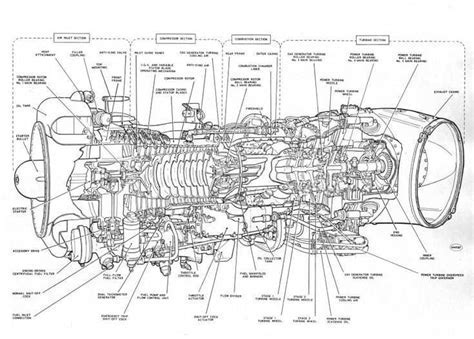
Aviation technology programs bridge the gap between hands-on maintenance and flight training. These degrees often include coursework in mechanical systems, avionics, and aircraft inspections — critical knowledge areas for any pilot. Graduates may leave with multiple certifications, including:
-
FAA Airframe & Powerplant (A&P) certification
-
Instrument Rating (IR)
-
Certified Flight Instructor (CFI) license
For pilots who want to build hours while instructing or performing aircraft inspections, this path offers flexibility and technical depth.
Bachelor of Science in Physics
Though less direct than aviation-centric degrees, physics equips pilots with a deep understanding of aerodynamics, fluid mechanics, and energy systems. This theoretical background supports superior decision-making in complex flight scenarios.
Pilots who study physics are especially adept at understanding the kinetics of flight, such as thrust-to-weight ratios, lift and drag coefficients, and structural stress limits. These insights are crucial when navigating emergency procedures or evaluating aircraft performance limitations.
Bachelor of Science in Aviation Management
For those interested in understanding the business and regulatory side of aviation, aviation management programs offer exposure to airport operations, flight scheduling, crew management, and aviation law. While flight hours are minimal in these programs, graduates gain administrative insight that makes them ideal candidates for roles as:
-
Corporate pilots
-
Airport operations managers
-
Airline schedulers
Many aviation management students still pursue their licenses privately or as part of accelerated flight programs during summer sessions.
Bachelor of Science in Aviation Maintenance
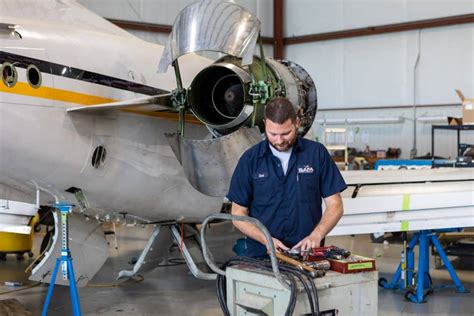
Understanding how an aircraft operates internally gives pilots an edge. Aviation maintenance degrees focus on the mechanical systems, engine diagnostics, and preventative procedures used in aircraft inspections. Students learn how to identify system failures and perform integrity checks — tasks pilots perform before every flight.
This degree is especially beneficial for pilots flying in remote or less-regulated regions where self-reliance is paramount. It’s also common for graduates to start in maintenance roles while accruing flight hours toward commercial licenses.
Bachelor of Science in Air Traffic Management
Though not a flying degree, air traffic management is invaluable for pilots who want to master communication protocols, navigation systems, and flight planning logistics. Students learn how to interact with air traffic control (ATC) systems, build optimized flight paths, and manage high-density airspace.
Pilots with this background often have better situational awareness and are more adept at navigating congested or compromised airspace.
Bachelor of Science in Computer Science
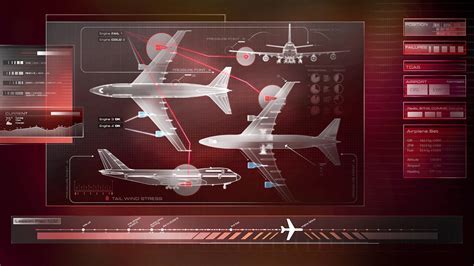
As aircraft become more dependent on digital systems and automated avionics, a strong understanding of software architecture and machine systems becomes vital. A degree in computer science offers a modern approach to piloting, especially for those flying technologically advanced aircraft.
This pathway is particularly attractive to pilots aiming to enter fields such as UAV (unmanned aerial vehicle) piloting, systems testing, or AI-assisted navigation research.
Why a Degree Is Critical for Today’s Pilots
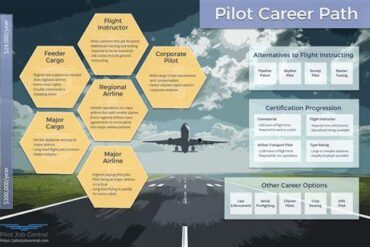
While the FAA does not mandate a degree for pilot licensure, many airlines, especially in North America, Europe, and Asia-Pacific, now require a bachelor’s degree in a related field as part of their hiring criteria. The benefits include:
-
Demonstrated academic discipline and problem-solving ability
-
Strong grounding in the sciences that underpin flight theory
-
Access to university-aligned flight training and internships
-
Development of professional aviation networks and references
Additionally, in today’s evolving aviation sector, where automation, climate considerations, and next-gen aircraft are reshaping the skies, academic knowledge offers resilience and adaptability.
FAA Certifications and Course Requirements
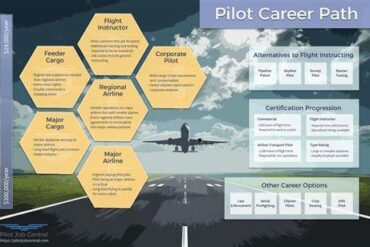
To become a commercial pilot, students must pursue several FAA credentials, regardless of their degree path:
-
Private Pilot License (PPL)
-
Instrument Rating (IR)
-
Commercial Pilot License (CPL)
-
Airline Transport Pilot Certificate (ATP)
These require a minimum of 1,500 flight hours, including night flying, cross-country flights, and command hours. Coursework typically encompasses:
-
Aircraft operations and weather systems
-
Multi-engine aircraft performance
-
Advanced navigation and flight planning
-
Aviation law and safety protocols
How to Choose the Right Degree
Your decision should be based on:
-
Career Goals: Do you plan to fly commercial jets, charter planes, or unmanned vehicles?
-
Training Format: Do you prefer a traditional college program or an accelerated flight school?
-
Affiliation: Does the program offer airline partnerships, ROTC options, or internship placements?
-
Certifications Offered: Does the degree include licensing or advanced training hours?

Choosing the right degree gives you the technical proficiency, flight experience, and academic prestige to soar in a competitive industry.
FAQ
What is the best degree to become a commercial airline pilot?
A Bachelor of Science in Aviation is the most direct path. It includes actual flight training, instrument rating preparation, and regulatory coursework aligned with FAA certification requirements. Many programs also include internship opportunities with regional airlines.
Can I become a pilot with a non-aviation degree?
Yes, you can pursue pilot certification with any bachelor’s degree. However, technical degrees such as physics, computer science, or engineering are preferred, especially if you aim to fly technologically advanced aircraft or pursue roles in flight testing and avionics.
Do all airlines require a college degree?
Not all, but many major commercial airlines, particularly in the United States and Europe, require a bachelor’s degree as a minimum hiring standard. This requirement ensures that candidates possess critical thinking, communication, and analytical skills essential for professional flight operations.