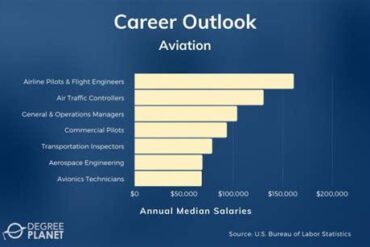
The aviation industry is a massive sector of the U.S. economy, with nearly 20,000 airports nationwide and a $446.8 billion annual economic impact. Over 10 million Americans work in aviation-related roles, and each day the Air Traffic Organization manages roughly 44,000 flights. In this context of high demand for skilled professionals, Aviation Management and Operations programs train the business and operations leaders who will run airlines, airports, and aerospace companies. We have analyzed the latest data and student reviews to highlight the leading U.S. colleges for Aviation Management and Operations in 2025. Our evaluation reflects updated ranking criteria, including a new Economic Mobility Index and the removal of standardized test scores from consideration. These changes align with college admissions trends and emphasize which institutions most effectively elevate graduates from lower-income backgrounds into higher earning brackets.
In its 2025 college rankings, Niche introduced an Economic Mobility Index, reflecting the percentage of Pell Grant recipients, net tuition for low-income students, and those students’ median earnings after six years. This index shines a light on colleges where graduation truly leads to upward economic mobility. At the same time, Niche’s methodology now omits SAT/ACT scores entirely, mirroring the test-optional movement that gained momentum during and after the pandemic. In practice, this means our top Aviation Management programs are judged more on outcomes, affordability, and student satisfaction than on entrance exam statistics. We rely on multiple factors – academics, value, and especially student and alumni surveys – to ensure a well-rounded view of each program.
The Ohio State University – Columbus, Ohio.
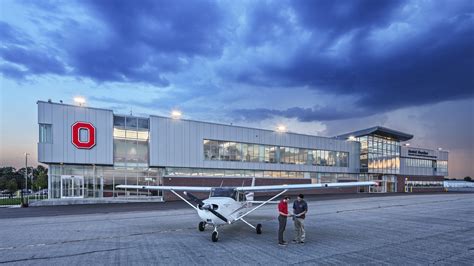
OSU offers a BS in Business Administration with an Aviation Management specialization through its Fisher College of Business. This program is designed “to prepare students for professional positions in the aviation industries”, combining business fundamentals with aviation-specific courses. Students benefit from OSU’s Center for Aviation Studies, which partners with industry leaders to provide internships and networking opportunities. Situated adjacent to campus at Don Scott Airport, the program allows hands-on learning in flight operations and airport management. On campus, aviation students can join groups like Alpha Eta Rho, Buckeye Air Traffic Control, and a student flight team, which enhance the classroom experience with mentorship and practical skills. We found that students thrive on OSU’s supportive environment; many comment on the manageable class formats (smaller 55-minute sessions) and welcoming culture that help integrate newcomers into the aviation field.
Auburn University – Auburn, Alabama.

Auburn’s College of Business offers an Aviation Management major that prepares students for roles in airline and airport operations. Feedback from students highlights Auburn’s vibrant campus life. One senior raved that “Auburn has given me everything and more… Auburn is nothing short of amazing! I love the campus-wide involvement and how much everyone truly does love Auburn.”. This enthusiastic community support extends to the aviation program: students can participate in aviation clubs and enjoy access to the nearby Auburn University Regional Airport for flight training. Auburn’s professors are praised for balancing rigor with flexibility, and the curriculum emphasizes logistics, aviation policy, and airline management. Overall, the sense of “Auburn Family” and engaged student body make it a top choice for many aviation management students.
Eastern New Mexico University – Portales, New Mexico.

ENMU is frequently noted for its affordability and close-knit atmosphere. An alum observed that “the tuition was low, and the classes were not overly time consuming… It has a very small college feel, while offering some of the options you would expect from a larger university.”. The Aviation Science program at ENMU emphasizes airport management and aviation safety, offering hands-on flight training with modern Cessna aircraft. Despite its size, the department provides access to simulators and industry-standard software. ENMU’s low cost of attendance (especially for in-state students) and personalized attention have earned it high marks on value. Students often mention that faculty are approachable and focused on teaching, while smaller class sizes encourage collaboration. For those seeking a supportive campus and minimal debt, ENMU stands out as a strong value in aviation management education.
Louisiana Tech University – Ruston, Louisiana.
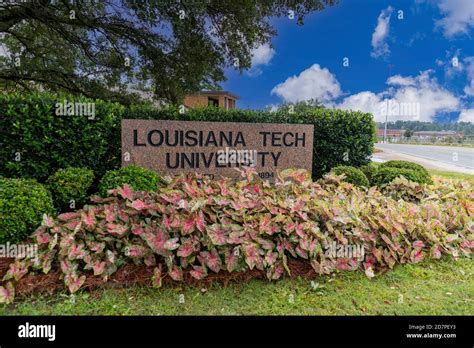
Louisiana Tech’s Aavtion Management program, housed within the College of Applied and Natural Sciences, also receives high praise. One sophomore described Tech as “one of my best experiences,” noting that, as a parent, they appreciated the program’s flexibility and that “the teachers really care about your learning”. Louisiana Tech offers a range of aviation-related courses – including aviation marketing, safety, and regulatory policy – integrated with Tech’s strengths in engineering and technology. The university’s smaller campus size allows faculty to mentor students closely. Many students report enjoying a tight-knit community; the college sponsors special events like career expos that bring students together with airlines and airport managers. Tech’s balance of rigorous academics and personal support explains its high rankings; graduates leave with both the technical knowledge and the confidence needed to enter the aviation workforce.
Embry-Riddle Aeronautical University – Worldwide – Daytona Beach, Florida.
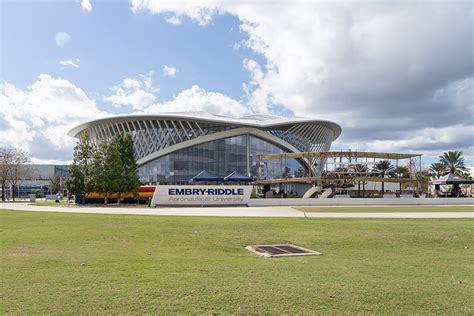
Embry-Riddle is synonymous with aviation education. Its Bachelor of Science in Aviation Business Administration “explores all aspects of aviation business, airport management and airfield management.”. Students here benefit from a curriculum deliberately aligned with industry needs: as one student noted, the programs offer “cutting-edge knowledge” in aviation management, aerospace engineering, and related fields, ensuring graduates are “competitive in a fast-evolving field.”. Embry-Riddle’s experiential learning is legendary; students train on a large fleet of aircraft, intern at major airlines, and engage in hands-on research through the university’s labs. The outcomes speak for themselves – the school reports a near-94% placement rate within a year, with alumni employed by Boeing, American Airlines, Textron, and other leading aviation firms. The campus culture is intensely focused on flight and aerospace; student organizations like the Eagle Flight Team and aviation fraternities create a professional network from day one. In short, Embry-Riddle offers an immersive environment that consistently places it among the top programs in the nation for aviation management and operations.
Florida Institute of Technology – Melbourne, Florida.

Florida Tech’s College of Aeronautics emphasizes innovation and applied science. Students praise its academic rigor and supportive community: one noted their experience was “truly inspiring,” highlighting FIT’s “commitment to academic excellence, innovation, and diversity” as well as its faculty’s encouragement. The Aviation and Airport Management degree at Florida Tech blends business coursework with aviation science and offers specialized tracks in airport administration and safety. A key feature is the hands-on learning – students conduct research in areas like human factors and air traffic safety, and Fly in FIT’s fleet of Piper aircraft. The university’s location on Florida’s Space Coast also enables partnerships with aerospace companies and NASA contractors. Graduates benefit from Fitz’s strong alumni network in the aviation industry. Overall, Florida Tech delivers an education that is practical and forward-looking, preparing students to tackle real-world aviation challenges after graduation.
University of North Dakota (John D. Odegard School of Aerospace Sciences) – Grand Forks, North Dakota.

UND’s Aerospace College is one of the largest flight schools in the world. It offers a broad Aviation Management curriculum alongside programs in commercial and unmanned flight. Student life is lively: one freshman reported that UND “has been one of the best decisions… not only for my academic career, but also for my social life”, explaining how campus events helped them make “so many friends”. This reflects UND’s tightly knit campus culture and emphasis on student support. Academically, the program covers airline and airport management, aviation law, and safety. On the technical side, UND maintains a fleet of advanced training aircraft, ATC simulators, and even spaceflight research facilities. The school partners with industry through internships with Delta, Republic Airways, and other carriers. In short, UND combines a globally-recognized aerospace curriculum with a friendly community atmosphere, making it a top choice for students who want both strong academics and a lively student experience.
Kansas State University – Salina Campus – Salina, Kansas.
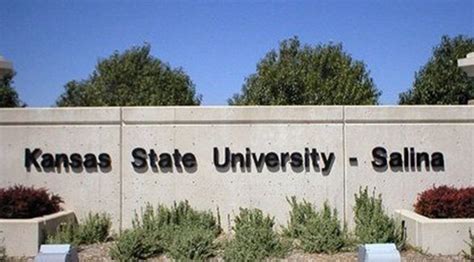
K-State’s Salina campus offers a distinctive Aviation Management program because it is located literally on an active airport. This means students are constantly immersed in a real aviation environment. According to the university, this gives students a “unique advantage” with chances to “learn from industry leaders and professionals”. Indeed, many instructors at Salina are former airline pilots or FAA officials who bring real-world insight into the classroom. The curriculum prepares graduates to “climb the career ladder” as the industry grows, covering everything from airport operations to aviation logistics. Students also participate in clubs like Air Force ROTC and unmanned systems teams. Because of this experiential focus and close ties to the aviation industry, K-State Salina’s program is especially well-regarded by students seeking a hands-on, career-oriented education.
Each of the institutions above has its own strengths in Aviation Management and Operations, but they all share a commitment to preparing students for the aviation workforce. They combine rigorous academics with practical training and a positive campus environment. Importantly, our 2025 evaluation gives weight not only to academic factors but also to the Economic Mobility Index, highlighting how well each college lifts students into higher earning brackets after graduation. Students entering these programs today can expect an education that is respected by employers and enriched by campus life – from internships and flight labs to student aviation clubs – all without relying on test scores in the admission or ranking process.
Frequently Asked Questions
Q: What criteria determine the “best” aviation management programs?
A: We assess programs using a mix of data-driven measures and student feedback. Academics and value still matter – for example, Niche’s methodology considers outcomes like graduation rates, alumni earnings, and academic resources. Crucially, our 2025 criteria also incorporate the new Economic Mobility Index, which factors in Pell Grant enrollment, net price for low-income students, and post-graduation earnings. This helps identify programs that genuinely advance their students’ careers. We also give weight to student satisfaction: surveys and reviews of campus life and learning environments are included. Overall, a top program must balance strong coursework (often with flight labs or internships), career support, and an engaged student community. (Notably, standardized test scores are no longer part of the ranking at all, reflecting the test-optional trend.)
Q: Why were SAT/ACT scores removed from consideration?
A: The removal of SAT/ACT factors mirrors the widespread shift to test-optional admissions nationwide. Since 2020, many colleges have stopped requiring tests, and it is now understood that exam scores are a less reliable predictor of college success than they used to be. Niche updated its 2024 and 2025 college rankings to reflect this shift, dropping SAT/ACT entirely. In practical terms for students, this means that the quality of an aviation program (curriculum, faculty, facilities, outcomes) is what counts, not your test scores. When evaluating colleges, focus on academic programs, internship opportunities, and campus fit rather than entering test scores.
Q: What is the Economic Mobility Index and why is it important?
A: The Economic Mobility Index (EMI) is a measure used in these rankings to highlight colleges that help students move up the economic ladder. It is calculated from three components: the percentage of students receiving Pell Grants, the net price paid by low-income students, and the median earnings of those students about six years after entry. The idea is to show which institutions enable graduates — especially those from modest backgrounds — to achieve higher income levels than they would have otherwise. A college with a high EMI typically has affordable tuition, robust financial aid, and graduates with strong career outcomes. Including the EMI in rankings helps future students identify programs that provide real return on investment, beyond just test scores or rankings.
Q: What career opportunities do aviation management graduates have?
A: An aviation management degree opens doors to diverse careers in the aviation industry. Graduates often start in roles such as airport operations managers, airline planners, or flight dispatch coordinators. They may work for airlines (e.g. scheduling, route planning), airports (overseeing terminals or airfield operations), or government and corporate aviation departments (safety analysis, logistics). The strong industry connections of top schools also mean many graduates are quickly employed by major companies. For example, Embry-Riddle reports that 94% of its aviation business graduates are placed within a year, with alumni at airlines and aerospace firms like Boeing and American Airlines. The knowledge of business, logistics, and regulation gained in these programs is highly valued across the aviation sector, offering a solid foundation for advancement.
Q: How should I choose an aviation management program?
A: When selecting a program, consider factors such as FAA accreditation, available flight training (if pursuing a pilot track), faculty experience, and location. Schools located at airports (like K-State Salina) or those with partnerships to airlines can offer unique hands-on experiences. Also look at affordability (in-state vs. out-of-state tuition) and support services for career placement. Visiting campuses and talking to current students can reveal much about the culture. Importantly, review recent graduates’ outcomes (internships, job placement rates) and check if the program has advisory boards involving industry experts. Ultimately, the best program is one that matches your career goals, provides practical training, and fits your financial needs – all while fostering a strong student community that will support you through graduation.