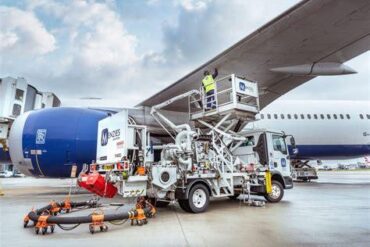
Fuel management is a crucial aspect of a pilot’s responsibilities, involving the verification, utilization, monitoring, recording, and reconciliation of fuel loaded onto the aircraft. This article focuses on abnormal operations, which can include dispatching under Minimum Equipment List (MEL) or Configuration Deviation List relief, fuel leaks, inflight failures, or planned flights in non-standard configurations like a gear down ferry flight. During these situations, fuel management becomes more challenging because the usual tools for monitoring fuel, such as Flight Management System (FMS) predictions and flight plan comparisons, may not provide accurate information. Thus, pilots must exercise heightened vigilance.
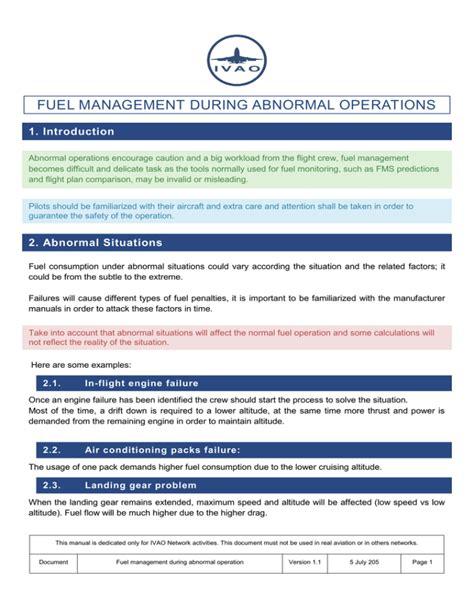
In most cases of abnormal operations, fuel consumption occurs at a significantly higher rate than normal. The primary threat is fuel exhaustion. The impact of abnormal operations on fuel consumption can vary widely. For instance, dispatching under CDL relief due to a missing fuel panel access door might lead to an additional 1% fuel consumption throughout the flight. Conversely, an uncontrolled fuel leak could result in a substantial loss of fuel in a very short time. Other specific scenarios include engine failures during cruise, which require a descent to a lower altitude, thus potentially increasing fuel flow on the remaining engine(s). The total fuel consumption may vary based on the aircraft type and the altitude change required. However, true airspeed and ground speed will typically decrease, reducing overall range.
Failures such as air conditioning or pressurization pack malfunctions during flight or dispatching under MEL with one pack inoperative can impact the maximum cruising altitude, leading to increased fuel consumption. Similarly, issues like landing gear failing to retract or slat and flap jams will affect speed and altitude, resulting in higher fuel flow due to increased drag. Although FMS fuel predictions may adjust for altitude changes, they often do not account for non-standard configurations, which can mislead pilots about fuel status.
To address these abnormal operations, pilots must follow the manufacturer’s published guidance, which includes dispatch criteria, specific fuel penalties for non-standard configurations, and emergency procedures outlined in the Aircraft Operating Manual (AOM) or Operations Manual. It’s crucial to recognize that FMS fuel predictions may not be reliable in these scenarios. Instead, pilots should use actual fuel flow data to calculate endurance and range. Once the range is determined, a diversion strategy must be developed, closely monitoring actual fuel consumption and adjusting plans as needed.
Typical scenarios highlight these challenges. In one case, engine failure during flight necessitated a drift down procedure with maximum thrust set on the operating engine. As a result, fuel flow increased, and the planned destination was no longer reachable, leading to a successful diversion to an alternate airport. In another scenario, a mechanical failure prevented the landing gear of a passenger jet from retracting. Misguided by FMS predictions, the pilots attempted to divert but ultimately faced fuel exhaustion and an emergency landing, resulting in injuries and significant aircraft damage.
To mitigate risks during normal operations, regular fuel monitoring is essential. Discrepancies between remaining fuel and flight plan predictions should be investigated immediately following established protocols. Fuel leaks can be deceptive, and mishandling them may lead to severe consequences, including engine failure. Pilots must understand that abnormal configurations will lead to abnormal fuel consumption patterns and reduced range. Awareness that FMS predictions may not hold true in such situations is vital. Basic metrics like fuel flow and ground speed are critical for assessing endurance and range. If an inflight failure leads to an abnormal configuration, maintaining situational awareness regarding fuel state is imperative. This ensures that any necessary diversions, troubleshooting, or checklist procedures can be accomplished within the limits of available fuel.
Several notable incidents underline the importance of these practices. For instance, an Airbus A330 experienced fuel exhaustion due to a mishandled fuel leak during a transoceanic flight. Another case involved an Airbus A310 that crash-landed after the landing gear failed to retract post-takeoff, while a Bombardier CRJ faced a low fuel emergency due to jammed flaps during a missed approach.