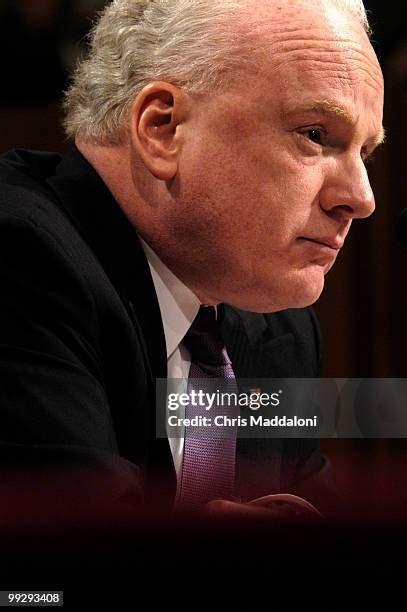
Richard A. Clarke stands as one of the most influential figures in American national security history. With a career that spanned four presidential administrations, Clarke’s work fundamentally reshaped how the United States responds to terrorism and cyber threats. His tenure reflects a pivotal evolution in American foreign and domestic security policy — an evolution marked by both prescient warnings and fierce controversy.
Born in Dorchester, Massachusetts, in 1950, Clarke’s upbringing was grounded in the working-class values of a nurse and a chocolate factory worker. He graduated from the prestigious Boston Latin School in 1968 and later earned a BA from the University of Pennsylvania and a master’s in management from MIT. His educational foundation provided a unique fusion of liberal arts and systems thinking — the latter becoming a hallmark of his strategic approach to national security.
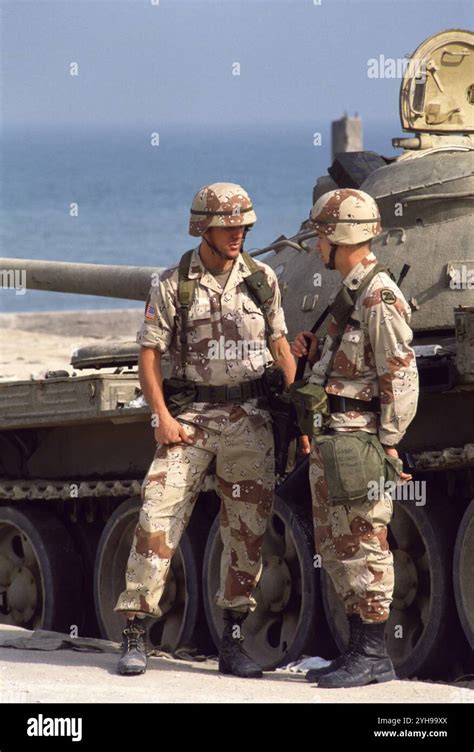
Clarke’s federal career began humbly in 1973 as a management intern at the Department of Defense, but he quickly moved into intelligence roles at the State Department. From 1979 to 1985, he worked as an analyst before becoming Deputy Assistant Secretary of State for Intelligence. During the Reagan administration, his work began to focus on geopolitical stability and military diplomacy, eventually leading to his role as Assistant Secretary for Politico-Military Affairs under President George H. W. Bush, where he coordinated the U.S. response during the 1990–91 Gulf War.
The pivot point in Clarke’s public service came in 1998, when President Bill Clinton appointed him as the National Coordinator for Security, Infrastructure Protection, and Counter-terrorism — an unprecedented cabinet-level position that centralized oversight across multiple agencies. It was under this title that Clarke earned the moniker of “terrorism czar.” He became the chief architect of U.S. counterterrorism strategy, often advocating aggressive action against al-Qaeda and international extremist networks. His foresight during this period is now widely recognized, especially his coordination after the 1993 World Trade Center bombing and his involvement in Operation Orient Express, which controversially maneuvered the United States to veto Boutros Boutros-Ghali’s reappointment as UN Secretary-General.
Clarke’s role became more complicated with the arrival of President George W. Bush’s administration. Though he continued in his role, his cabinet access was downgraded, a shift that foreshadowed critical breakdowns in interagency communication. On January 25, 2001, Clarke urgently sent a memo to National Security Advisor Condoleezza Rice, pressing for a Principals Committee meeting on al-Qaeda. The request was ignored until September 4, 2001 — just one week before the 9/11 attacks.
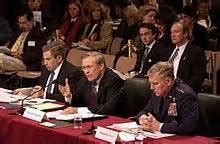
In July 2001, Clarke explicitly warned, “something really spectacular is going to happen here, and it’s going to happen soon.” His frustration grew as his advice — including recommendations to arm the Northern Alliance and initiate Predator drone surveillance missions — went unheeded. After the attacks, his internal demotion and exclusion from war planning were deeply criticized.
Following the tragedy of September 11, Clarke was appointed as Special Advisor to the President on Cybersecurity. Here, his attention shifted to the vulnerabilities of American digital infrastructure. Clarke’s famous observation that corporations were spending more on coffee than cybersecurity exposed a dangerous complacency, one he worked tirelessly to reverse. However, the political landscape was shifting, and in 2003, Clarke resigned from the Bush administration.
His departure marked the beginning of his public critique. In March 2004, Clarke released his best-selling memoir, “Against All Enemies: Inside America’s War on Terror”, a searing indictment of the Bush administration’s failure to act on early warnings. His 9/11 Commission testimony, just days after the book’s release, was explosive: he apologized to victims, laid out ignored intelligence, and rejected any linkage between Iraq and the 9/11 attacks — contradicting the administration’s justifications for war.
Clarke’s public statements drew both praise and condemnation. He was accused of political opportunism, and critics pointed to his earlier 1999 comments suggesting potential Iraq–al-Qaeda ties. He was also linked to the controversial September 20, 2001 clearance allowing bin Laden family members to leave the U.S., though he denied personal involvement. His fiery exchange with former CIA officer Michael Scheuer on media platforms, including Meet the Press, further cemented his reputation as a divisive but crucial voice in post-9/11 discourse.
After leaving government, Clarke founded Good Harbor Consulting, advising governments and corporations on cybersecurity. His clients included the United Arab Emirates, where he helped establish a national cyber unit. This unit was later connected to surveillance operations targeting activists and diplomats, raising ethical concerns about Clarke’s involvement. Nonetheless, he remained a central figure in discussions on cyber defense.
He also became a prominent commentator for ABC News, a lecturer at Harvard’s Kennedy School of Government, and a prolific author. His fictional thrillers — The Scorpion’s Gate and Breakpoint — explored geopolitical threats, while his nonfiction works, including “Cyber War” (2010) and “The Fifth Domain” (2019), provided sobering insights into cyber conflict and infrastructure resilience.

Clarke’s expertise led him to serve on the NSA advisory panels, advocating for privacy protections, data integrity, and international cyber norms. In a surprising move, he later joined the advisory board of Clearview AI, a controversial facial recognition firm known for scraping biometric data. This decision sparked debates about the boundaries between privacy, ethics, and national security — themes that defined much of Clarke’s public life.
Throughout his career, Richard A. Clarke remained unrelentingly focused on anticipating and mitigating threats that others often failed to see. His work before 9/11 demonstrated extraordinary prescience. His cybersecurity advocacy helped spark a national conversation that remains urgently relevant. And his outspoken critique of governmental inertia — regardless of political affiliation — positioned him as a rare figure: a career official unafraid to speak hard truths to power.
Today, Clarke’s legacy is complex but critical. He is remembered both for warnings that went unheeded and for forcing uncomfortable truths into public view. As threats to national and digital security continue to evolve, Clarke’s body of work remains a vital blueprint for resilience, vigilance, and transparency in government.