Boeing 737 MAX 7 Certification Finally Moves Toward FAA Approval
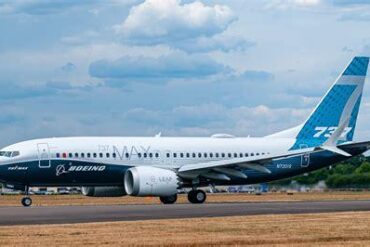
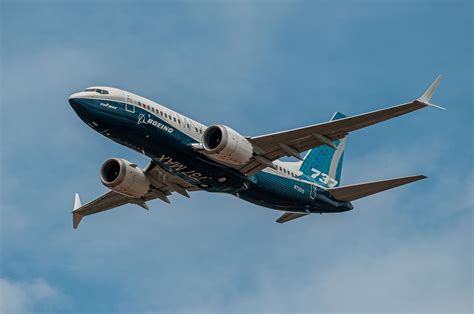
After years of delays, uncertainty, and intense regulatory scrutiny, the Boeing 737 MAX 7 is approaching one of the most important milestones in its development program: final FAA certification. Industry reports indicate that the smallest member of the 737 MAX family could receive approval in the latter weeks of July 2026, potentially ending a prolonged certification process that has delayed deliveries and disrupted airline fleet plans.
For Boeing, the approval would represent another major step in completing the MAX family lineup. The 737 MAX 8, MAX 8-200, and MAX 9 are already in commercial service, but the MAX 7 and MAX 10 have remained stuck in regulatory limbo due to additional certification requirements introduced after several high-profile safety events involving Boeing aircraft.
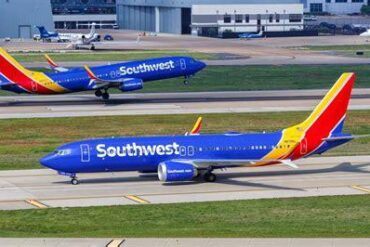
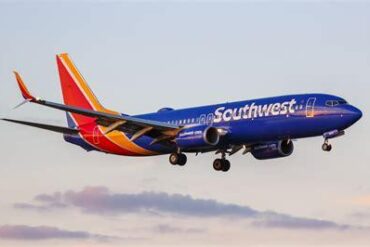
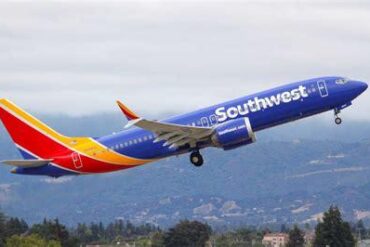
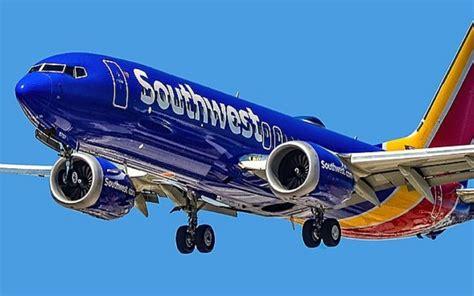
However, the significance of the MAX 7 approval extends far beyond Boeing’s product portfolio. No airline has been waiting more closely than Southwest Airlines, which has built its entire future fleet strategy around the aircraft. With 314 Boeing 737 MAX 7 aircraft on order, Southwest is counting on the new jet to replace its aging 737-700 fleet and support its goal of becoming an all-MAX operator by 2031.
The aircraft’s arrival is not simply about adding a new model to Southwest’s fleet. It represents the foundation of the airline’s next decade of growth, efficiency improvements, and network planning.
Why the Boeing 737 MAX 7 Faced Years of Certification Delays
The journey toward Boeing 737 MAX 7 FAA approval has been far more complicated than originally expected. When Boeing launched the MAX family, the company anticipated a smooth certification process based on the existing 737 platform. However, regulatory standards changed significantly after the two fatal 737 MAX 8 accidents in 2018 and 2019, which resulted in a worldwide grounding of the aircraft.
Following those incidents, the FAA adopted a much more rigorous approach toward aircraft certification. Regulators increased oversight of Boeing’s engineering processes, safety assessments, and design modifications. The scrutiny intensified again after the January 2024 incident involving an Alaska Airlines-operated 737 MAX 9, where a cabin panel separated during flight.
Although the MAX 7 shares many systems and characteristics with existing MAX variants, regulators identified specific areas requiring additional analysis. The primary challenge involved the aircraft’s engine anti-ice system, which became the central obstacle preventing certification.
The redesigned system was required to meet FAA standards while ensuring long-term reliability during demanding operating conditions. Boeing engineers worked to modify the system, complete additional flight testing, and demonstrate compliance with regulatory requirements.
The company has now completed the majority of the MAX 7 certification flight-test campaign. The redesigned engine anti-ice system not only addresses regulatory concerns but also provides additional improvements, including reduced engine noise and improved protection against fan flutter.
With final testing nearing completion, Boeing appears positioned to secure approval after years of delays.
Southwest Airlines Has Waited the Longest for the 737 MAX 7
Among all Boeing customers, Southwest Airlines has been affected most significantly by the MAX 7 delays. The airline’s business model has always depended on fleet simplicity, operating only Boeing 737 aircraft for more than five decades.
As of early 2026, Southwest operates hundreds of Boeing 737 aircraft, including approximately 334 Boeing 737-700s, which remain the backbone of many domestic routes. These aircraft have served the airline reliably for years, but their average age is approaching three decades, increasing maintenance demands and limiting efficiency improvements.
Southwest originally expected the first MAX 7 deliveries years earlier. The airline initially planned to receive its first aircraft in 2022 after placing firm orders for the type. However, certification delays forced Southwest to continue operating older aircraft longer than planned.
The carrier has since expanded its commitment to the MAX 7, placing orders for 314 aircraft. The company now expects the aircraft to enter passenger service during the first quarter of 2027, assuming certification and deliveries progress as planned.
For Southwest, every additional year of delay creates challenges. Older aircraft require more maintenance investment, consume more fuel than newer models, and reduce the airline’s ability to modernize its fleet at the desired pace.
Unlike many competitors, Southwest cannot simply introduce another aircraft type as a temporary replacement. Its entire operational structure is designed around a single-family fleet strategy.
The Boeing 737 MAX 7 Is Designed as the Perfect 737-700 Replacement
The reason Southwest has remained committed to the MAX 7 is simple: the aircraft is almost perfectly positioned as a next-generation replacement for the Boeing 737-700.
The 737-700 has played a crucial role in Southwest’s history. It provided the airline with the right balance of passenger capacity, range, and operating flexibility for its extensive domestic network.
The MAX 7 continues that philosophy while introducing significant improvements. Compared with the previous-generation aircraft, the MAX 7 offers better fuel efficiency, longer range, improved passenger capacity, and lower operating costs.
The aircraft can carry up to 172 passengers in a high-density configuration and offers a range of approximately 3,850 nautical miles, exceeding the capabilities of the 737-700. It is powered by CFM International LEAP-1B engines, which provide improved fuel efficiency compared with the older CFM56 engines used on Next Generation 737 aircraft.
For Southwest, the biggest advantage is not only performance but compatibility. The airline can continue using its existing pilot training systems, maintenance infrastructure, and operational procedures with minimal disruption.
Introducing the MAX 7 allows Southwest to modernize without abandoning the simplicity that has defined its business model.
Why Southwest Airlines Rejected the Airbus A220 Alternative
During the years of Boeing 737 MAX 7 delays, industry observers questioned whether Southwest might finally abandon its exclusive Boeing strategy and order the Airbus A220.
The A220 appeared to be a logical alternative. The aircraft has gained popularity among North American airlines because of its efficiency, advanced technology, and ability to serve routes that require smaller narrowbody aircraft.
Airlines including Delta Air Lines, Air Canada, JetBlue, and Breeze Airways have successfully integrated the A220 into their fleets. Its passenger capacity and economics make it a strong competitor in the same market segment targeted by the MAX 7.
However, Southwest ultimately decided that switching aircraft manufacturers would create more problems than it would solve.
Adding the A220 would require extensive investments in pilot training, simulator facilities, maintenance programs, spare parts inventories, and airport support equipment. It would also introduce additional complexity into scheduling and daily operations.
Southwest’s single-aircraft strategy has always been one of its greatest competitive advantages. A mixed fleet could reduce those benefits by increasing operational complexity and costs.
By remaining committed to Boeing, Southwest preserved its traditional operating model. However, that decision also increased its dependence on Boeing’s ability to certify, manufacture, and deliver the MAX 7 successfully.
FAA Approval Is Only the Beginning of Boeing’s Challenge
Although certification would be a major victory for Boeing and Southwest, it would not immediately solve every problem.
FAA approval only clears the regulatory barrier. Boeing must still increase production, deliver aircraft to customers, and maintain quality standards under continued regulatory oversight.
The manufacturer has faced significant attention regarding production quality and manufacturing processes in recent years. As a result, maintaining a reliable delivery schedule will be just as important as obtaining certification.
For Southwest, the gap between certification and passenger service remains important. Even after approval, the airline expects several months of preparation before launching commercial operations with the MAX 7.
The aircraft must be delivered, inspected, configured, and integrated into Southwest’s network. Flight crews must complete necessary training, and maintenance teams must prepare for the new aircraft type.
After years of waiting, the challenge will shift from regulatory approval to execution.
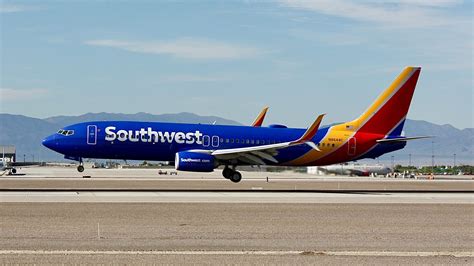
Southwest Airlines’ Entire Next Decade Depends on Boeing MAX 7 Deliveries
Southwest Airlines has built one of the most recognizable airline strategies in aviation history. Its success has been based on operational simplicity, fast aircraft utilization, low complexity, and a standardized fleet.
The airline’s decision to rely exclusively on Boeing 737 aircraft has helped reduce costs associated with training, maintenance, and scheduling. It has allowed Southwest to operate one of the world’s largest and most efficient narrowbody fleets.
The transition to an all-Boeing 737 MAX fleet by 2031 represents the next stage of that strategy. The MAX 7 will replace older 737-700 aircraft, while existing MAX 8 aircraft continue serving higher-capacity routes.
The airline remains financially strong, reporting an approximately 80.4% load factor during the 2024 financial year, but long-term competitiveness depends on completing its fleet transformation.
A successful MAX 7 introduction could provide Southwest with lower operating costs, improved fuel efficiency, and greater flexibility for future growth. It could also help the airline compete more effectively in an increasingly competitive domestic market.
However, additional delays would create new challenges. If Boeing cannot deliver aircraft at the required pace, Southwest may need to continue operating older jets longer than expected.
The Future of Southwest Airlines Is Tied to One Boeing Aircraft
The upcoming FAA approval of the Boeing 737 MAX 7 represents much more than the certification of another aircraft variant. It is a turning point for both Boeing’s narrowbody strategy and Southwest Airlines’ long-term future.
For Boeing, the approval completes another major piece of the MAX family and demonstrates progress after years of regulatory challenges. For Southwest, it unlocks the fleet renewal program that has been delayed for years.
The airline’s decision to remain a single-fleet operator has delivered enormous advantages throughout its history, but it has also created a high level of dependence on Boeing.
Now, with certification finally approaching, the focus will shift toward production, delivery reliability, and operational execution.
If Boeing can deliver hundreds of MAX 7 aircraft on schedule, Southwest will have the foundation it needs to modernize its fleet and enter the next decade with a more efficient operation. The long wait may soon be over, but the future of one of America’s largest airlines will depend on how successfully Boeing turns certification into reality.