Prague is not the obvious European gateway for an ambitious, fast-growing Asian airline. It lacks the scale of London, the transfer muscle of Frankfurt, and the global brand recognition of Paris. Yet in aviation, the smartest network decisions are often made in the gaps between obvious choices. STARLUX Airlines’ decision to make Prague its first European destination is less a gamble and more a carefully engineered move that blends demand forecasting, geopolitics, fleet strategy, and long-term brand positioning into a single route launch.
At first glance, Václav Havel Airport Prague looks like a peripheral player in long-haul aviation. Transatlantic services are largely seasonal, East Asian routes operate with limited frequency, and the airport does not function as a classic intercontinental hub. But this surface-level assessment misses a deeper reality. Prague sits at the crossroads of Central Europe, serves a tourism market with strong yield potential, and occupies a unique position in Taiwan–Central Europe economic relations that few other cities can replicate.
For STARLUX, a premium-focused airline with global aspirations, Prague offers something rarer than hub scale: strategic clarity. The route from Taipei to Prague is not designed to chase volume alone. It is designed to capture a specific blend of business, leisure, and high-end connecting traffic that aligns precisely with the airline’s brand and fleet philosophy.
Prague’s Quiet Strength in Long-Haul Strategy
Prague’s aviation profile has long been underestimated. While it does not dominate transfer traffic, it excels at something increasingly valuable in modern aviation: origin-and-destination demand with high cultural and economic pull. The city consistently ranks among Europe’s most visited capitals, drawing travelers who stay longer, spend more, and travel year-round rather than purely seasonally.
For Taiwanese travelers, Prague holds a particular allure. Before the pandemic, nearly 200,000 visitors from Taiwan traveled to Czechia annually, a remarkable figure for a Central European nation. While volumes have not yet fully rebounded, the underlying demand never disappeared. STARLUX is betting that restored capacity, paired with a premium onboard product, can accelerate that recovery rather than wait for it to happen organically.
Prague also benefits from its geographic neutrality. Positioned between Western and Eastern Europe, it allows STARLUX to tap into secondary European markets without confronting the slot constraints, fierce competition, and razor-thin margins that dominate larger hubs. This makes Prague an ideal beachhead city—a place to establish brand presence without immediately triggering competitive retaliation from entrenched network carriers.

Business Ties That Quietly Shape Route Decisions
Tourism alone does not justify a long-haul route flown by a widebody aircraft three to four times per week. The real gravitational force behind Prague’s selection lies in industrial cooperation, particularly in the semiconductor sector. Czechia has emerged as an increasingly important European partner for Taiwanese technology firms, creating steady, year-round demand for premium business travel.
This type of traffic is especially valuable. Business travelers book later, pay higher fares, and are more loyal to airlines that deliver consistency and comfort. STARLUX’s leadership has openly acknowledged that the combination of leisure appeal and expanding corporate links tipped the scales in Prague’s favor. In network planning terms, this creates a balanced demand curve, reducing reliance on peak-season tourism alone.
Prague also avoids the political sensitivities that sometimes complicate aviation expansion in larger Western European capitals. For a Taiwanese airline navigating complex international dynamics, choosing a Central European capital with strong bilateral ties offers stability as well as growth potential.

Fleet Capability Meets Market Precision
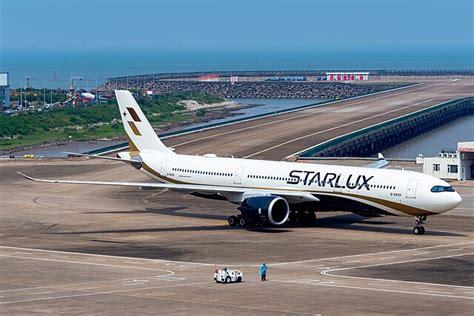
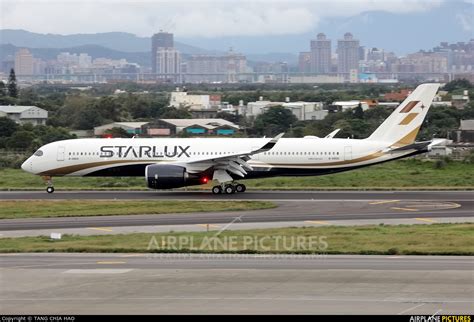
The choice of aircraft tells as much of the story as the choice of city. The Taipei–Prague route will be operated by the Airbus A350-900, one of the most efficient long-haul aircraft currently in service. With an average fleet age of just two years, STARLUX operates what is widely regarded as the youngest fleet in the world, a fact that underpins both cost efficiency and brand perception.
The A350-900 allows STARLUX to serve Prague with the right balance of range, capacity, and operating economics. It is large enough to offer a full premium cabin mix, yet efficient enough to sustain profitability on a route that does not rely on daily frequency. This flexibility is critical for secondary European markets, where demand is strong but not always dense.
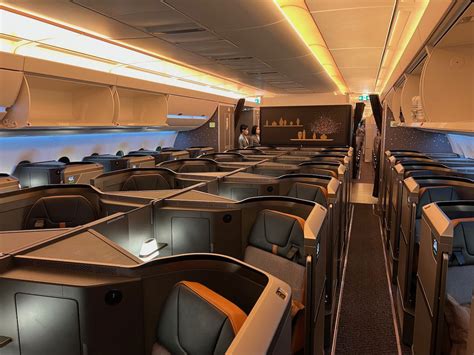
Inside the cabin, STARLUX differentiates aggressively. Its four-class configuration, including First Class suites with privacy doors, positions the airline above many competitors on similar-length routes. The BMW Designworks–inspired “Glisten” interior is not merely aesthetic. It signals intent. STARLUX is not entering Europe quietly; it is entering with a statement about what long-haul travel should feel like in the post-pandemic era.
Competitive Dynamics on a Manageable Battlefield
On paper, STARLUX will compete directly with China Airlines, which already operates the Taipei–Prague route using its own A350 fleet. In practice, this is a measured competitive environment. Two Taiwanese carriers serving the same route is not saturation; it is validation of sustained demand.
What distinguishes STARLUX is its positioning. Where legacy carriers often rely on alliance connectivity and scale, STARLUX competes on experience, consistency, and modernity. For travelers willing to pay a premium for comfort and design, the airline offers a compelling alternative that does not depend on feeding traffic through massive hubs.
Prague’s manageable competitive landscape also allows STARLUX to refine its European operations before expanding further. Lessons learned in scheduling, ground handling, and market response can be applied to future destinations with lower execution risk.
A Launchpad for Broader European Ambitions
STARLUX has made it clear that Prague is not an endpoint. It is a beginning. The airline has already signaled that a second European route is imminent, widely expected to be Milan. This pattern reveals a deliberate strategy: enter Europe through cities with strong point-to-point demand, then gradually layer in additional destinations as fleet capacity grows.
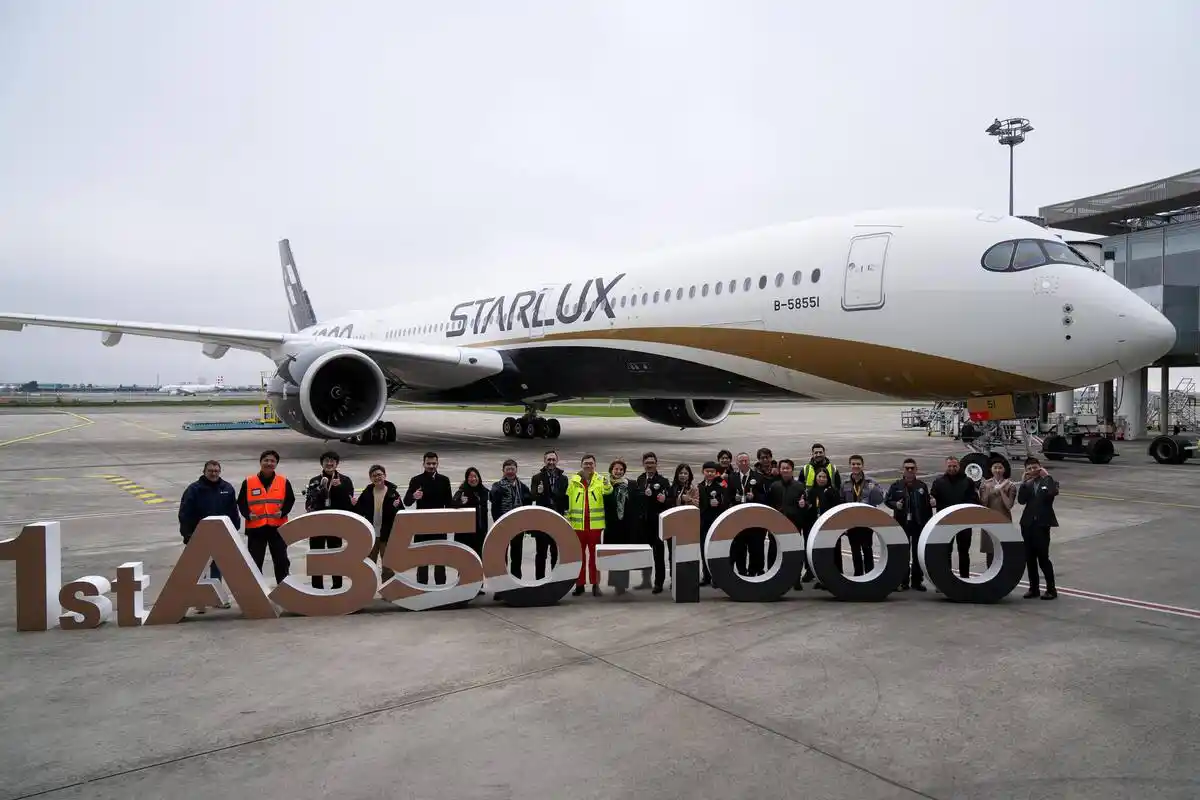
The arrival of the Airbus A350-1000 into STARLUX’s fleet accelerates this vision. With greater range and capacity, the aircraft opens doors not only in North America but also in Europe, where longer sectors and higher premium demand can be served more efficiently. Prague, in this context, becomes a proof-of-concept—a demonstration that smaller European capitals can support premium Asian carriers when matched with the right aircraft and product.
Why Prague Makes Sense Right Now
Timing matters as much as geography. STARLUX launched in early 2020, only to see global aviation shut down weeks later. Its subsequent growth has been shaped by caution, resilience, and an almost obsessive focus on quality. Choosing Prague now reflects a belief that European travel demand has stabilized enough to support expansion, but not yet become overcrowded with excess capacity.
By entering Europe through Prague, STARLUX avoids the noise of mega-hubs and speaks directly to travelers who value destination over transfer. It is a strategy built on precision rather than scale, confidence rather than haste. In an industry often driven by headline-grabbing launches, this decision stands out for its quiet intelligence.
Prague may not be Europe’s largest aviation market, but for STARLUX Airlines, it offers something far more valuable: a city where ambition, opportunity, and execution align.