The unusual legal requirement mandating no fewer than 11 U.S. Navy aircraft carriers is not a quirk of bureaucracy; it is the product of congressional conviction, global power-projection necessity, and the cold arithmetic of naval readiness cycles. While the figure appears arbitrary, its impact is anything but. This article breaks down why the United States is legally locked into the world’s largest carrier force—and why that number cannot realistically shrink without sacrificing global reach.
The U.S. Navy’s carrier count is not simply a reflection of strategic desire. It is written into federal law. Since 2007, Congress has required the Navy to maintain at least 11 aircraft carriers, a reduction from the mandated 12 established in the 2006 National Defense Authorization Act. This figure was designed to support a global operations tempo that demands persistent presence in key theaters while still allowing for maintenance, refueling, and overhaul periods.
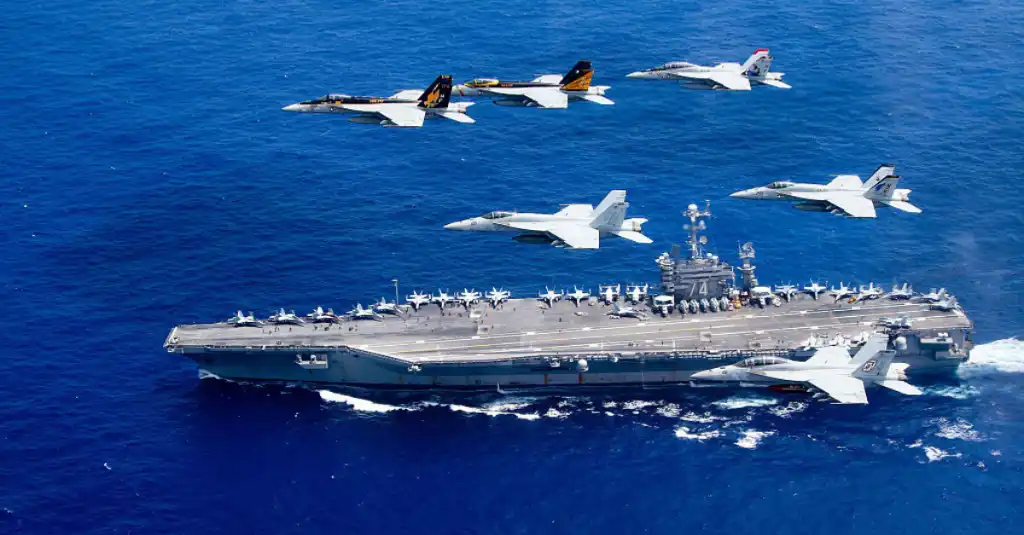
As of late November 2025, only five carriers were deployed: USS Abraham Lincoln, USS Theodore Roosevelt, and three others operating globally, including the USS Gerald R. Ford in the Caribbean. Meanwhile, USS Ronald Reagan was in maintenance, USS John C. Stennis was undergoing refueling, and the remaining four were under construction or advancing toward completion. The machinery of a supercarrier fleet is vast, slow-moving, and staggeringly expensive—making each vessel effectively irreplaceable when out of rotation.
Production Timelines That Stretch Into Decades
Two new Ford-class carriers—William J. Clinton and George W. Bush—are scheduled for delivery in 2040 and 2043. Meanwhile, the John F. Kennedy and the Enterprise have experienced delays, shifting the Navy’s timeline for achieving a stable 11-carrier posture. The complexities of nuclear propulsion systems, electromagnetic catapult technology, and advanced combat systems make each carrier a generational investment.
This long production horizon coincides with another challenge: the gradual retirement of the aging Nimitz-class. Even with new ships entering the fleet, the Navy must replace vessels one-for-one just to maintain the legal minimum. The 11-carrier rule effectively locks the United States into continuous, decades-long construction cycles.
A Global Landscape Where No Rival Comes Close
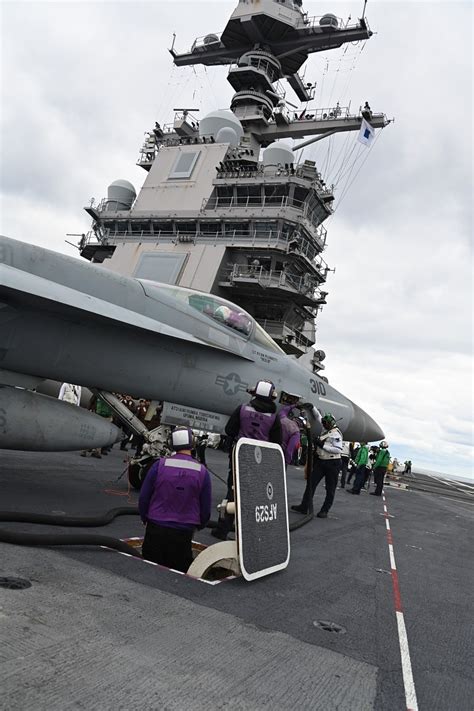
The United States maintains a carrier force unmatched in size and capability. China sits in a distant second place with only three carriers—though its newest vessel incorporates technology previously exclusive to the United States. Nations like the United Kingdom and Italy maintain two each, and globally, as of late 2025, only 22 fixed-wing aircraft carriers existed.
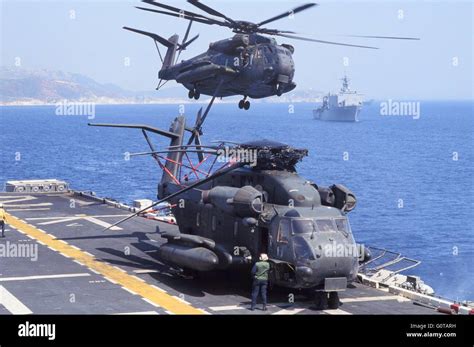
The picture widens further when helicopter carriers are included. The U.S. leads here too, with nine helicopter carriers. China and Japan operate four each, and France fields three. When combined, the United States possesses 20 total carrier-type vessels—nearly half of the world’s 51.
Why 11 Carriers Remain the Bare Minimum
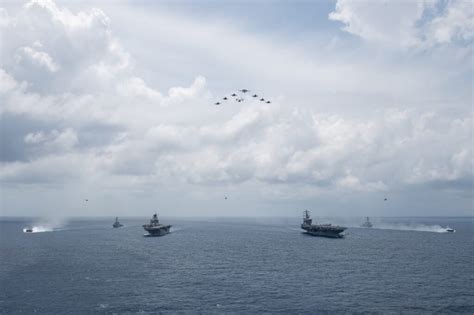
A single aircraft carrier strike group is a floating military ecosystem, capable of launching power projection, air superiority, humanitarian assistance, deterrence, and rapid response. But these capabilities hinge on consistent forward presence.
Global commitments require the United States to maintain carriers in the Pacific, Indian Ocean, Mediterranean, Middle East, and Western Atlantic. Considering that each carrier must periodically undergo deep maintenance—and refueling every 25 years—only a fraction are deployable at any given moment. The 11-ship rule ensures that the U.S. can sustain obligations across multiple continents simultaneously without thinning its deterrent posture.
Without 11 carriers, the Navy cannot guarantee continuous presence in all major theaters. Deterrence would weaken, allies would feel exposed, and adversaries would sense opportunity. The number may appear wonky, but it is the mathematical minimum required to keep an ocean-spanning superpower effective.
The Strategic Reality Behind the Number
The U.S. Navy’s fleet is the backbone of American global influence. Aircraft carriers remain the most flexible tools of national power ever created—capable of shifting the tide of conflict or stabilizing crisis zones with unmatched speed. The 11-carrier fleet ensures that the United States can respond everywhere, all the time, without lowering its guard. The law may define the number, but the world’s demands justify it.