Aircraft maintenance is a discipline where precision meets necessity, and few components symbolize this philosophy more than safety wire. Though small and often overlooked, safety wire plays a critical role in ensuring the mechanical integrity of aircraft systems. Used predominantly to secure fasteners against loosening, its importance cannot be overstated. But why is it used, and more intriguingly, why is it routed in such a specific manner? This article explores the engineering rationale behind safety wire and its precise routing with a level of technical depth reserved for professionals and enthusiasts alike.
Understanding Safety Wire: A Fundamental Fail-Safe in Aviation
In aircraft systems, safety wire (also known as lock wire) is used as a mechanical locking device. It prevents bolts, nuts, screws, and other fasteners from loosening due to vibration, thermal expansion, or operational stresses. It’s not merely a passive component; it’s a dynamic tension mechanism that actively resists the mechanical forces attempting to undo critical fasteners.
Aircraft, particularly propeller-driven models, experience intense vibrations during operation. These vibrations, coupled with fluctuating pressures and temperatures across different altitudes, create an environment where fasteners can slowly rotate loose. Safety wire combats this threat by being routed in a way that opposes the direction of fastener rotation. In other words, if a bolt attempts to turn loose, the wire immediately becomes taut, resisting further rotation.
Where Safety Wire Is Used and Why It’s Critical
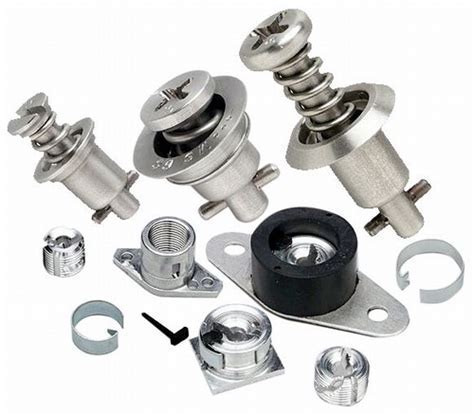
Safety wire is deployed across various systems within an aircraft, including:
- Engine assemblies: Where vibration is highest and thermal expansion is frequent.
- Propeller hubs and blades: To counter rotational stresses.
- Hydraulic and fuel line fittings: Preventing loosening due to system pressure and fluid pulsation.
- Oil filters and screens: Ensuring reliable lubrication and filtration.
- Flight control linkages and actuators: Where mechanical failure could be catastrophic.
What makes the application of safety wire non-trivial is that it’s not just installed—it’s engineered. Every loop, twist, and anchor point is determined based on aerospace maintenance manuals, most notably the FAA AC 43.13-1B, which outlines best practices for wire diameter, twist direction, and routing angles.
The Routing Logic: Engineering a Counter-Torque Mechanism
The essence of safety wire routing lies in torque resistance. Fasteners are almost universally designed to tighten clockwise. Therefore, safety wire is routed such that if a fastener attempts to rotate counterclockwise (loosen), the wire tightens and halts the motion.
When two adjacent bolts need to be wired together, they are routed in a way that the pull between them locks both bolts tighter. If improperly routed, the wire could inadvertently assist loosening, which would be a dangerous failure of function. This is why experienced technicians always ensure:
- The wire exits the hole in the bolt head in a direction pulling against loosening.
- The twists are consistent, tight, and properly tensioned.
- The termination is secure, with no sharp ends or excessive slack.
This method is called positive wire locking, ensuring the only way a bolt can loosen is by shearing the wire—an unlikely event when properly installed.
Materials and Specifications: Strength in Subtlety
Safety wire is usually made from annealed stainless steel due to its corrosion resistance and tensile strength. The most common diameters range from 0.020 inches for light-duty applications to 0.041 inches for heavy-duty scenarios. For high-temperature environments, Inconel safety wire may be used, offering exceptional resistance to oxidation and creep at elevated temperatures.
Key technical specs include:
- Breaking strength: Must exceed the torque forces expected in the system.
- Fatigue resistance: Essential in high-vibration zones.
- Corrosion resistance: Crucial for long-term reliability in varying climates.
Technicians follow strict protocols, including:
- Minimum of six twists per inch.
- Wire must be neatly twisted and not kinked.
- No fraying or loose ends; they must be bent inward or tucked to prevent injury or snags.
A Visual Language of Security: Wire Patterns as Status Indicators
Aircraft inspectors often read wire routing patterns as a kind of visual indicator—like a safety signature. Properly routed wire instantly signals that the component was installed and verified per specifications. Conversely, poor routing—or the absence of safety wire where it should be—immediately flags potential risk.
This “language of loops” includes:
- Single-wire technique: For isolated bolts or when multiple fasteners cannot be wired together.
- Double-twist method: For pairs of fasteners, typically with a central twisted segment.
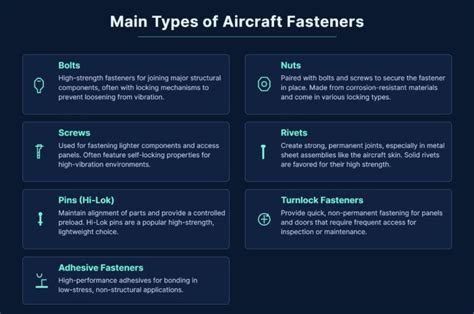
- Multiple fastener wiring: For more complex installations, where a single wire locks three or more bolts.
Failure to Comply: Risks of Improper Safety Wire Installation
The consequences of incorrect safety wire routing are serious. An improperly secured fastener could lead to:
- Oil leaks from filters or pumps.
- Hydraulic failures due to hose detachment.
- Flight control malfunctions from loose linkage components.
- Engine damage if internal bolts or sensors detach.
In commercial aviation, such risks are unacceptable. Maintenance personnel undergo rigorous training, and inspections include verification of all safety wire installations. Airworthiness directives and maintenance logs often document when and where safety wire was applied or reinstalled.
Beyond Vibration: Thermomechanical Forces at Play
Although vibration is the most cited reason, temperature fluctuations also influence fastener security. Thermal cycling causes metal components to expand and contract, potentially loosening fittings over time. Safety wire maintains consistent tension regardless of these dimensional shifts, serving as a buffer against thermal loosening.
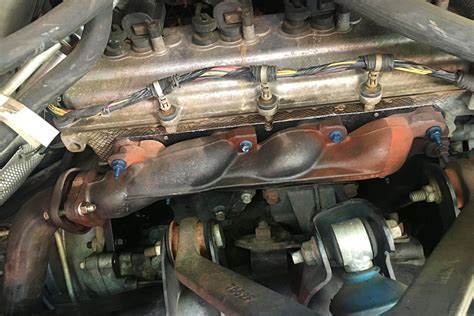
This is particularly relevant in turbocharged engines, where rapid temperature changes occur. Safety wire becomes a form of static insurance against dynamic shifts, locking components into structural stasis even when physics tries otherwise.
A Cultural Mainstay in Military and Civil Aviation
The ubiquity of safety wire in military aviation has led to inside jokes among aircraft mechanics, particularly in the Air Force, where it’s said that “we would safety wire the paint if we could.” The underlying truth is that every opportunity to secure a component is taken seriously. Fasteners designed with wire holes are always wired. This uniform application serves not only safety but also ease of maintenance, as disassembly reveals whether tampering or loosening has occurred.
Modern Trends and Alternatives: Safety Wire in the 21st Century
Despite its widespread use, modern aircraft systems are exploring wireless alternatives such as self-locking fasteners, castellated nuts with cotter pins, and chemical threadlockers. These innovations offer faster installation and reduce labor time. However, safety wire remains the gold standard in critical systems, primarily due to its visual verifiability and mechanical dependability.
Advanced inspection technologies, such as digital maintenance logging and smart fastener systems, are augmenting traditional methods rather than replacing them. These systems may eventually reduce reliance on safety wire, but for now, the coiled steel remains the most trusted sentinel against mechanical failure.
Conclusion: Engineering Safety Through Simplicity and Precision
Safety wire may appear simple, but its design and application are steeped in aerospace-grade engineering logic. Each twist, loop, and anchor point is a small yet vital contribution to the holistic safety of an aircraft. Its correct use reflects an uncompromising standard of excellence, safeguarding lives with nothing more than precision-cut wire and methodical human discipline.
In an age of high-tech avionics and composite materials, it’s easy to overlook the power of mechanical basics. But safety wire reminds us that good engineering isn’t always glamorous—it’s effective. And in aviation, effectiveness saves lives.