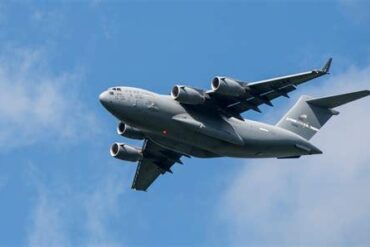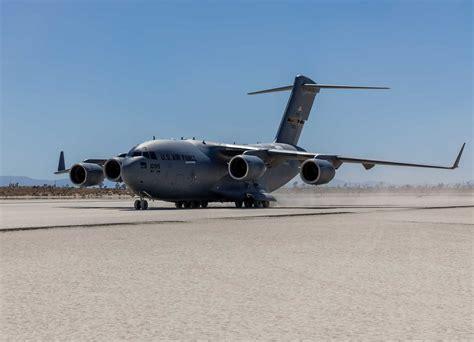
The C-17 Globemaster III stands as one of the most capable military transport aircraft ever built, a machine engineered not just for flight, but for global reach, rapid deployment, and operational flexibility. Among its most recognizable features is its T-tail configuration, a design choice that is far more than aesthetic. It is a deliberate aerodynamic and operational solution to the unique demands placed on a heavy strategic airlifter.
Understanding why McDonnell Douglas chose a T-tail for the C-17 requires looking beyond simple design trends and into the aircraft’s mission profile. Every line, surface, and structural decision reflects a singular goal: to move massive payloads into and out of hostile, remote, and infrastructure-limited environments with precision and reliability.
The T-Tail Design Explained: Form Following Function
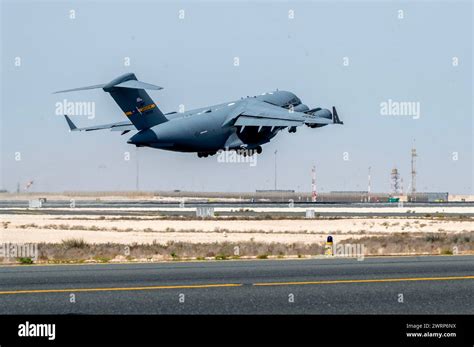
At its core, a T-tail configuration places the horizontal stabilizer at the top of the vertical fin, forming a “T” shape. On the C-17, this arrangement is not merely stylistic—it directly supports the aircraft’s rear cargo loading system, one of its defining operational features.
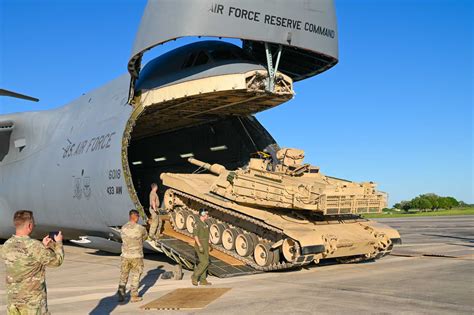
Unlike conventional aircraft that load from the side, the C-17 is designed for drive-on, drive-off cargo operations through a large rear ramp. This requires unobstructed clearance at the aft section, something a low-mounted horizontal stabilizer would interfere with. By elevating the stabilizer, engineers created a clean, open pathway for vehicles, equipment, and personnel.
The result is an aircraft that can rapidly load and unload heavy cargo, even in austere conditions where time and space are limited. This design also facilitates airdrop missions, where cargo is deployed mid-flight through the rear ramp without aerodynamic interference from tail surfaces.
Airflow Stability During Critical Operations
The placement of the horizontal stabilizer high above the fuselage offers a crucial aerodynamic advantage: it keeps the elevator surfaces clear of turbulent airflow generated by both the wings and the open cargo ramp.
During mid-air airdrops, the rear door is open, and airflow around the fuselage becomes highly disturbed. A conventional tail design would place the stabilizer directly in this turbulent stream, reducing control effectiveness at precisely the moment when stability is most critical.
The T-tail avoids this problem by maintaining clean, undisturbed airflow over the नियंत्रण surfaces, ensuring that pilots retain precise pitch control even in complex, low-speed, high-drag conditions. This is especially important when deploying paratroopers or heavy equipment, where even minor instability can have serious consequences.
Separation from Engine Exhaust and Wake Turbulence
The C-17’s four Pratt & Whitney PW2040 turbofan engines generate significant exhaust flow and turbulence beneath the wings. A low-mounted tail would sit directly in this disturbed air, leading to reduced aerodynamic efficiency and inconsistent control response.
By elevating the horizontal stabilizer, the T-tail ensures that it operates in cleaner, smoother airflow, improving both handling precision and overall flight stability. This separation also minimizes the impact of wake turbulence and wingtip vortices, which can degrade performance in large aircraft.
The result is a more predictable and stable aircraft, particularly during low-speed approaches, steep descents, and short-field landings, where control authority is paramount.
Optimized Performance for Short and Austere Runways
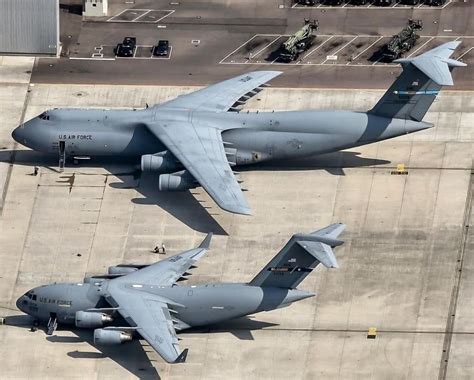
One of the C-17’s defining capabilities is its ability to operate from short, narrow, and unprepared airstrips. This is not a minor feature—it is central to its role in modern military logistics.
The T-tail contributes to this capability by enhancing pitch authority at high angles of attack, allowing the aircraft to maintain control during steep takeoffs and landings. When operating on runways as short as 3,500 feet, the aircraft must generate lift quickly and maintain stability at low speeds.
In these conditions, airflow over the wings can become disrupted, but the elevated stabilizer remains in cleaner air, ensuring consistent elevator effectiveness. This translates into safer, more controlled operations in environments where margin for error is minimal.
Superior Stall Characteristics and Recovery
Heavy transport aircraft operate across a wide range of weights and speeds, often pushing aerodynamic limits. The T-tail configuration improves stall behavior by keeping the नियंत्रण surfaces effective even as airflow over the wings begins to break down.
In a stall scenario, a low-mounted stabilizer might be engulfed in turbulent air, reducing its ability to control pitch. The C-17’s T-tail avoids this by maintaining usable airflow over the elevator, enabling quicker and more reliable recovery.
This characteristic is particularly valuable during low-speed tactical maneuvers, where the aircraft may be flying close to stall conditions while carrying heavy payloads.
Influence of the YC-15 Prototype
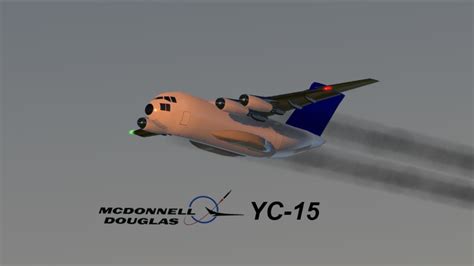
The roots of the C-17’s design trace back to the McDonnell Douglas YC-15, an experimental aircraft developed to explore short takeoff and landing (STOL) capabilities. The YC-15 demonstrated that a combination of high-wing configuration and T-tail design could deliver exceptional performance in austere environments.
Engineers carried these lessons directly into the C-17 program, refining and scaling the concept into a strategic airlift platform capable of global operations. The T-tail, proven in the YC-15, became a cornerstone of the aircraft’s design philosophy.
Enhancing Maneuverability and Control Authority
Despite its size, the C-17 is known for its remarkable maneuverability, a trait that owes much to its aerodynamic design. The T-tail contributes by ensuring consistent elevator response across all flight regimes, from high-altitude cruise to low-level tactical flight.
This consistency allows the aircraft to perform tight turns, steep descents, and precise approaches, even when heavily loaded. The unobstructed airflow over the vertical and horizontal stabilizers also improves rudder efficiency, enhancing directional control.
Combined with its advanced flight control systems, the T-tail helps the C-17 achieve a level of agility that seems almost counterintuitive for an aircraft of its size.
Integration with the High-Wing Configuration
The high-wing design of the C-17 works in tandem with the T-tail to maximize operational efficiency. The elevated wings provide ground clearance for engines and landing gear, while also enabling better lift characteristics at low speeds.
Together, the high wing and T-tail create a configuration that is ideally suited for cargo operations, short-field performance, and aerodynamic stability. The downward-sloping wing design further enhances lift distribution and drag reduction, contributing to the aircraft’s efficiency.
This integrated approach ensures that every component of the aircraft supports its mission, rather than functioning in isolation.
Operational Versatility Across Mission Profiles
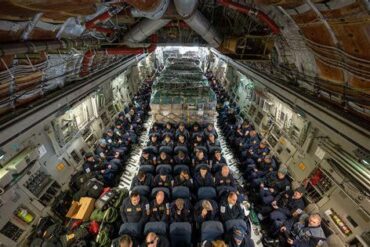
The C-17 is not limited to a single role. It performs strategic airlift, tactical resupply, humanitarian missions, aeromedical evacuation, and special operations support. The T-tail plays a subtle but critical role in enabling this versatility.
Whether delivering heavy armored vehicles, deploying paratroopers, or transporting medical patients, the aircraft must maintain stable, predictable handling characteristics. The T-tail ensures that control remains consistent regardless of payload configuration or mission type.
This reliability has made the C-17 a cornerstone of global air mobility, trusted by air forces around the world.
Engineering Simplicity and Reduced Interference
While the T-tail may appear complex, it actually simplifies certain aerodynamic challenges. By elevating the stabilizer, engineers reduce the need to account for interference effects between the wing, fuselage, and tail surfaces.
This leads to a cleaner aerodynamic profile and more predictable performance characteristics, which are easier to model, test, and optimize. In an aircraft as large and mission-critical as the C-17, this predictability translates into greater reliability and lower operational risk.
A Design That Defines Strategic Airlift
The decision to equip the C-17 Globemaster III with a T-tail was not a stylistic flourish or a legacy choice—it was a mission-driven engineering solution. From enabling rear cargo operations to improving airflow stability and enhancing short-field performance, the T-tail is integral to the aircraft’s identity.
More than three decades after its introduction, the C-17 continues to demonstrate why this design works. It remains a workhorse of global logistics, capable of delivering massive payloads with precision and reliability in conditions that would challenge lesser aircraft.
In the end, the T-tail is not just a feature—it is a defining element of the C-17’s success, a testament to how thoughtful engineering can transform operational capability into enduring performance.