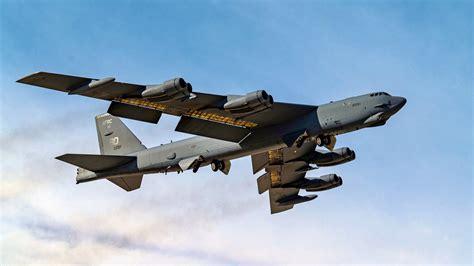
The Boeing B-52 Stratofortress is an aircraft whose design choices often appear enigmatic to casual observers. Perhaps the most curious of these design features is the pair of small wheels mounted on the outer edges of each wing. These are not merely aesthetic quirks—they are a vital part of the bomber’s engineering solution to some very specific aerodynamic and structural challenges.
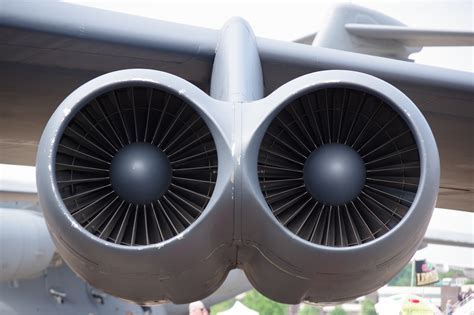
Looking at a B-52 on the ground, one might assume that the small wing-mounted wheels are a vestige of outdated design. In reality, they serve a highly functional purpose that remains just as critical today as it was when the aircraft was first conceived in the early 1950s. The Stratofortress has a wingspan of roughly 185 feet and weighs over 185,000 pounds when fully loaded. A significant amount of that weight is carried on its wings, which house eight powerful turbojet engines and can flex up to 12 feet downward under strain.
Wingtip Wheels: Not Cosmetic, But Crucial
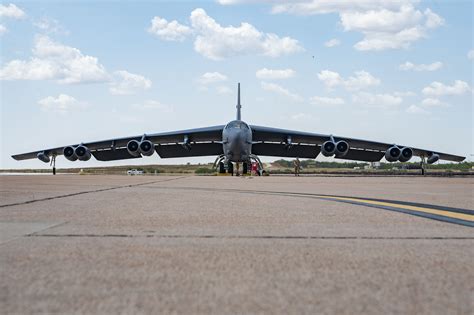
The B-52’s wingtip wheels—technically referred to as outrigger landing gear—exist because of the extreme flexing that occurs in its long wings during ground operations. When fully loaded with ordnance and fuel, the wings naturally droop downward, placing them dangerously close to the runway surface. Without the wingtip gear, these drooping wingtips would risk scraping or even crashing into the ground during taxiing, takeoff, or landing.
The wingtip wheels offer lateral support, ensuring that the wings maintain proper clearance from the tarmac even under heavy loads and intense aerodynamic forces. Given that a B-52 can carry up to 70,000 pounds of mixed ordnance, including nuclear payloads, the preservation of wing integrity during every phase of flight is critical. The design accounts for the flexing by supporting the wings with these auxiliary wheels, which contact the ground only when necessary.
The Bicycle Landing Gear Arrangement
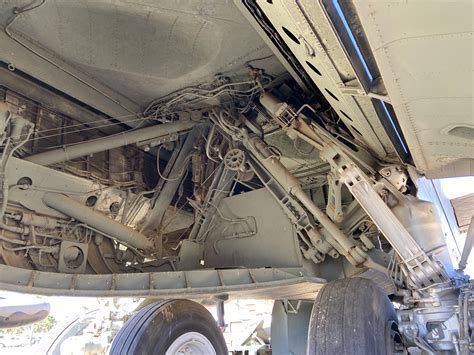
The B-52 features a “bicycle” landing gear configuration, a concept also seen on its predecessor, the B-47. This system involves two main sets of landing gear aligned longitudinally along the fuselage. These primary bogies—each featuring four wheels in a two-by-two configuration—carry the bulk of the aircraft’s weight. However, this centralized system introduces a potential hazard: instability, particularly on the ground during turns or crosswinds.
To counteract this, the outrigger wheels on the wings act as stabilizers, preventing the aircraft from tipping during tight maneuvers. They are not retractable like conventional gear because they need to maintain constant readiness. Without them, the B-52 would be dangerously susceptible to roll-over incidents or structural wing damage.
Mitigating Wing Flex and Load Distribution
Aircraft with wings of this size and span experience significant torsional and bending loads during flight and ground operations. The B-52’s wings were designed to flex deliberately. This allows the aircraft to withstand turbulent airflows and support massive payloads without transferring all of that energy into the fuselage. However, this also means that the aircraft must be engineered to accommodate vertical and lateral displacement at the wingtips.
The outrigger gear essentially acts as an additional stress mitigation mechanism, reducing strain on the wings’ root attachment points and distributing mechanical forces more evenly across the aircraft’s structure. Without these wheels, the wings would be under far greater stress during high-G maneuvers or emergency landings.
Landing in Crosswinds: Crab and Pivot
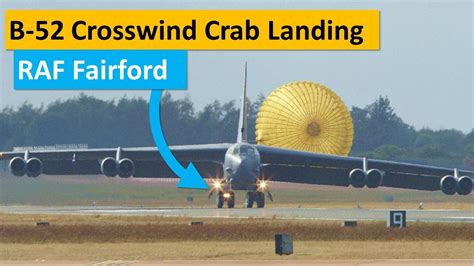
The B-52’s flight characteristics make it particularly unwieldy during low-speed approaches. With its massive frame and relatively low thrust-to-weight ratio, it responds sluggishly to rudder input. Modern airliners typically handle crosswinds using a technique known as a “crab landing,” in which the aircraft approaches the runway at an angle and straightens out just before touchdown.
In the B-52, a full straightening maneuver before touchdown isn’t always possible due to its size and low-speed responsiveness. Instead, engineers designed a cleverly adjustable landing gear system that allows the main landing bogies to rotate up to 20 degrees in either direction. This means the B-52 can literally land while crabbed, keeping its heading aligned with the runway while minimizing structural torsion.
The outrigger wheels ensure that the wings remain stabilized during such landings, especially in heavy crosswinds. Anecdotal reports from B-52 pilots note that while these wingtip wheels occasionally strike runway lights or signage on narrow airstrips, they prevent far more serious damage from occurring to the airframe.
Longevity in the Sky: Why the Design Still Works
It’s tempting to assume that a bomber design from the 1950s would be obsolete by modern standards. However, the B-52 remains an active part of the U.S. Air Force’s long-range bomber fleet precisely because of its resilient and modular engineering. With regular avionics upgrades, new weapons integrations, and engine retrofits, the B-52 is expected to remain in service until at least 2050—an astonishing centennial milestone for any military aircraft.
The wingtip landing gear has never required fundamental redesign because it performs its job without fault. Its simplicity, ruggedness, and reliability exemplify the kind of pragmatic engineering that has allowed the Stratofortress to operate under a broad range of combat and environmental conditions, from the jungles of Vietnam to the deserts of the Middle East.
A Design Dictated by Necessity
Critically, the presence of wheels on the B-52’s wings wasn’t about stylistic flair or engineering novelty—it was about aerodynamic necessity and structural safety. The bomber’s enormous payload capacity, long-range capabilities, and narrow undercarriage footprint meant the standard tricycle gear arrangement wouldn’t suffice. A broader, more supportive configuration would have added weight and complexity, so engineers created a streamlined solution with central fuselage gear and minimalist wingtip supports.
It’s this kind of purpose-driven design that has kept the B-52 not only airborne, but also strategically vital. When a B-52 takes off, its wingtip wheels often lift a few feet off the ground, only touching down again when the aircraft banks or lands. They serve quietly, without fanfare, ensuring that one of the largest combat aircraft ever built can operate safely and efficiently.
Conclusion: The Legacy of Engineering Ingenuity
The B-52’s wingtip wheels stand as a testament to thoughtful, elegant engineering rooted in real-world requirements. Far from being a relic, they are a functional and enduring solution to the complex problems posed by massive payloads, wing flexing, and operational stability. As the Stratofortress continues flying well into the 21st century, these wheels will remain a visible, humble reminder of the aircraft’s remarkable design legacy.