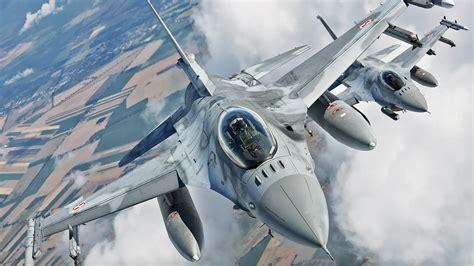
The General Dynamics F-16 Fighting Falcon did far more than introduce another successful combat aircraft into Western air forces. It fundamentally changed how engineers designed fighter jets, how pilots interacted with aircraft, and how military planners thought about aerial maneuverability. When the F-16 first flew in 1974, it represented a radical break from decades of conventional aviation wisdom. Instead of building an aircraft that naturally wanted to remain stable in flight, General Dynamics intentionally designed the F-16 to be aerodynamically unstable. That decision would have been reckless without one crucial innovation: the fly-by-wire flight control system.
The result was one of the most influential fighter aircraft ever created. More than 4,600 F-16s have been built, making it the most successful fourth-generation fighter in history. Yet the aircraft’s true legacy extends beyond production numbers or export success. The F-16 became the proof that digital-assisted instability could outperform traditional aerodynamic stability, forever changing military aviation design philosophy.
Before the F-16, fighter aircraft designers constantly battled a difficult compromise. Stable aircraft were easier and safer to fly but slower to react in combat. Highly maneuverable aircraft, meanwhile, were often difficult or dangerous to control. The F-16’s fly-by-wire system destroyed that compromise and opened the door for a new generation of agile fighters that dominate modern skies today.
The Fighter Mafia And The Push For A Lightweight Revolution
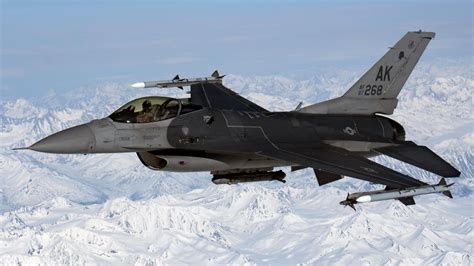
The origins of the F-16 trace directly to a controversial group of military reformers known as the Fighter Mafia. Emerging during the late 1960s and early 1970s, these analysts and officers believed the United States Air Force was drifting toward excessively large, expensive, and technologically overcomplicated aircraft. Fighters like the F-111 and even the advanced F-15 Eagle were viewed by critics as products of bloated procurement thinking rather than practical aerial combat needs.
The Fighter Mafia argued for something radically different: a small, lightweight, inexpensive fighter built primarily for close-range dogfighting. Their philosophy prioritized maneuverability, acceleration, and pilot visibility over heavy radar systems and long-range missile dependence. They believed future wars could still involve visual-range engagements where turning performance mattered more than electronic sophistication.
General Dynamics embraced that challenge. Instead of designing a flying missile truck loaded with sensors and massive payloads, engineers pursued an aircraft optimized for agility. The result became the YF-16 prototype, a machine that looked dramatically different from earlier American fighters.
The aircraft featured a frameless bubble canopy that dramatically improved visibility. Its side-mounted control stick reduced pilot fatigue during high-G maneuvers. The reclined ejection seat helped pilots tolerate greater gravitational forces during combat turns. Even the aircraft’s blended fuselage design contributed lift, improving energy retention during aggressive maneuvers.
Most importantly, the F-16 incorporated relaxed static stability, a revolutionary aerodynamic principle that intentionally made the aircraft unstable in normal flight conditions. This instability made the aircraft extraordinarily responsive, but it also created a terrifying problem. No human pilot could manually make corrections fast enough to keep the aircraft safely controlled under all conditions.
That challenge forced engineers toward fly-by-wire technology.
Why Traditional Mechanical Flight Controls Reached Their Limit
For most aviation history, aircraft relied on mechanical or hydro-mechanical control systems. When a pilot moved the stick or rudder pedals, cables, pulleys, rods, and hydraulic actuators physically transmitted those inputs to the aircraft’s control surfaces. This approach worked effectively for decades because aircraft were intentionally designed to remain naturally stable.
Commercial airliners still operate according to this philosophy today. Stability ensures smoother flight characteristics and reduces pilot workload. If a pilot releases the controls, a stable aircraft naturally returns toward predictable flight behavior.
Fighter aircraft, however, operate in a completely different environment. Air combat rewards rapid directional changes, extreme angles of attack, and aggressive energy management. The more stable an aircraft becomes, the harder it is to quickly redirect its flight path. Stability acts like resistance against maneuverability.
By the late Cold War era, designers attempted to overcome this limitation through variable-geometry wings. Aircraft like the F-111 Aardvark, Panavia Tornado, and B-1B Lancer used swing-wing designs to balance low-speed handling with high-speed stability. While effective, these systems added tremendous weight, complexity, and maintenance requirements.
The F-16 introduced a cleaner solution.
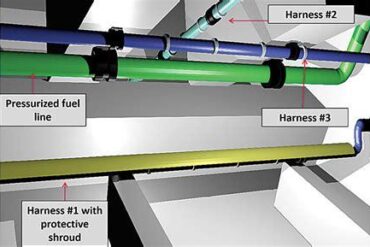
Instead of physically changing wing geometry, General Dynamics used computers to constantly manage instability in real time. The aircraft could remain aerodynamically unstable while electronic systems continuously corrected its flight attitude many times per second.
That innovation eliminated the need for pilots to manually fight instability themselves.
NASA’s Space Program Made The F-16 Possible
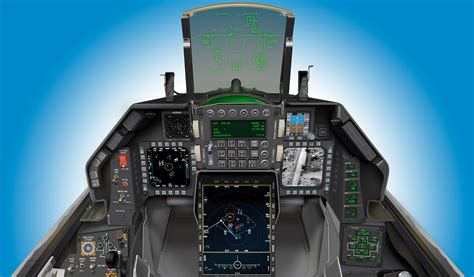
Although the F-16 became famous for fly-by-wire technology, the roots of the system came from NASA and the American space program. During the Apollo era, engineers needed methods for astronauts to control spacecraft without traditional aerodynamic surfaces or mechanical flight systems. This requirement accelerated development of electronic flight controls capable of translating pilot commands into computer-managed adjustments.
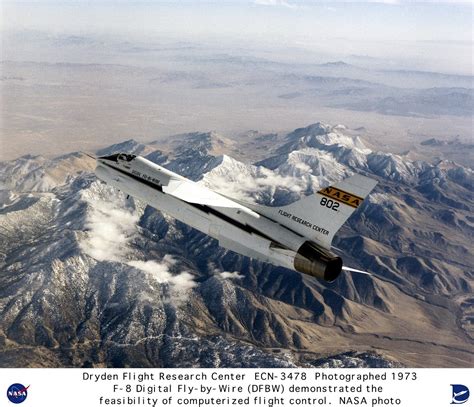
NASA’s experimental work reached a major milestone through the modified F-8 Crusader research aircraft. In 1972, the NASA F-8 became the first American aircraft to fly entirely without a mechanical connection between the pilot and control surfaces. Inputs passed electronically through a digital flight control computer rather than cables or hydraulic linkages.
This Digital Fly-By-Wire program demonstrated that computers could react faster and more precisely than human pilots during unstable flight conditions. Engineers discovered the electronically controlled F-8 responded dramatically quicker than conventionally controlled aircraft.
One General Dynamics engineer paid particularly close attention: Harry Hillaker.
Hillaker recognized that fly-by-wire technology could unlock maneuverability levels impossible with traditional aircraft design. Instead of building a fighter constrained by human reaction limitations, he envisioned an aircraft stabilized electronically in real time.
The YF-16 prototype became the ideal platform for that concept.
Ironically, the original F-16 did not use a fully digital system like NASA’s F-8. Engineers feared digital computing technology in the early 1970s lacked sufficient maturity and reliability for front-line combat operations. Instead, the first production F-16s used an analog fly-by-wire architecture. Even so, the system represented a monumental leap beyond earlier mechanical controls.
The aircraft effectively became a computer-assisted fighter built around instability as a performance advantage.
Relaxed Static Stability Changed Fighter Jet Aerodynamics Forever
The F-16’s most revolutionary characteristic was not merely fly-by-wire itself, but what the technology allowed designers to achieve aerodynamically. Relaxed static stability fundamentally changed fighter aircraft engineering.
In simple terms, a traditionally stable aircraft naturally resists sudden changes in attitude. An unstable aircraft does the opposite. It reacts immediately and aggressively to control inputs, making it far more maneuverable. Without electronic stabilization, however, such an aircraft could quickly become uncontrollable.
The F-16 intentionally shifted its center of aerodynamic pressure behind the aircraft’s center of gravity, creating a condition where the jet constantly wanted to diverge from steady flight. The fly-by-wire system continuously corrected this instability thousands of times during a flight.
This configuration delivered enormous combat advantages.
The F-16 could sustain rapid pitch changes, tighter turns, and faster response rates than many earlier fighters. Pilots experienced an aircraft that seemed almost telepathic in responsiveness. Instead of wrestling with sluggish controls, they could focus on tactical positioning and weapons employment.
The aircraft’s blended wing-body design amplified these benefits. At high angles of attack, the fuselage itself generated significant lift, helping maintain maneuverability even during aggressive turns. Combined with the Pratt & Whitney F100 engine’s powerful thrust-to-weight ratio, the F-16 achieved exceptional energy performance during dogfights.
The impact on future fighter development was immediate.
Aircraft such as the F/A-18 Hornet, Eurofighter Typhoon, Dassault Rafale, Saab Gripen, and F-35 Lightning II all adopted unstable aerodynamic layouts supported by sophisticated fly-by-wire systems. Modern fighter design now assumes electronic stabilization as a baseline requirement rather than an exotic innovation.
The F-16 Proved Computers Could Outfly Human Reflexes
One of the most transformative aspects of the F-16 program was psychological rather than mechanical. Pilots and military institutions initially distrusted the idea of surrendering flight stability to computers. Earlier aviation philosophy emphasized direct mechanical connection between pilot and aircraft. Fly-by-wire disrupted that relationship completely.
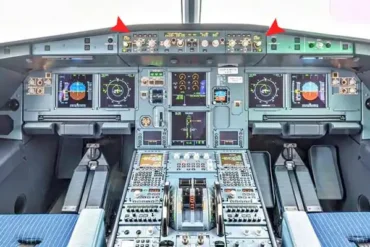
In the F-16, the pilot no longer directly moved control surfaces. Instead, pilot inputs became electronic signals interpreted by flight control computers. The computer then determined the optimal control surface adjustments necessary to achieve the requested maneuver while maintaining safe flight parameters.
This approach dramatically enhanced both performance and survivability.
Computers could process control corrections far faster than human reflexes ever could. They could also prevent pilots from exceeding certain aerodynamic limitations that might otherwise cause structural damage or loss of control. The F-16 effectively introduced the concept of “carefree handling,” where pilots could aggressively maneuver without constantly fearing aerodynamic departure.
This became particularly important during high-G combat situations. The aircraft’s side-stick controller required only minimal movement, reducing pilot workload during intense engagements. Meanwhile, the fly-by-wire system smoothed out instability behind the scenes.
The result was a fighter aircraft that felt extraordinarily agile without becoming impossibly difficult to fly.
That balance changed military pilot training as well. Aircraft increasingly relied on software-managed flight characteristics rather than purely mechanical flying skill. The pilot evolved from physically wrestling the aircraft toward managing tactical systems and combat decisions.
This philosophy dominates modern combat aviation today.
From Lightweight Dogfighter To Multirole Combat Workhorse
The F-16’s evolution contains a deep irony. The Fighter Mafia originally envisioned a simple, lightweight dogfighter free from excessive mission complexity. Over time, however, the F-16 gradually transformed into exactly the kind of multirole platform the reformers criticized.
Modern F-16 variants bear little resemblance internally to early Fighting Falcons. Contemporary F-16V Viper models feature Active Electronically Scanned Array radars, advanced electronic warfare suites, helmet-mounted cueing systems, precision-guided strike capability, and network-centric warfare integration.
The aircraft evolved from a visual-range dogfighter into a sophisticated multirole platform capable of deep strike missions, suppression of enemy air defenses, reconnaissance, and beyond-visual-range combat.
Yet the fly-by-wire foundation remained central throughout that transformation.
Because the aircraft’s flight characteristics were software-managed, engineers could continually update performance parameters through system upgrades rather than complete aerodynamic redesigns. The fly-by-wire architecture gave the F-16 extraordinary adaptability across decades of modernization.
This flexibility helped explain its massive export success. Nations seeking affordable but capable fighters found the F-16 adaptable to vastly different operational needs. From NATO air policing to Middle Eastern strike operations and Indo-Pacific deterrence missions, the aircraft proved remarkably versatile.
Its longevity also demonstrated how revolutionary the original design truly was.
How The F-16 Influenced Every Modern Fighter Jet
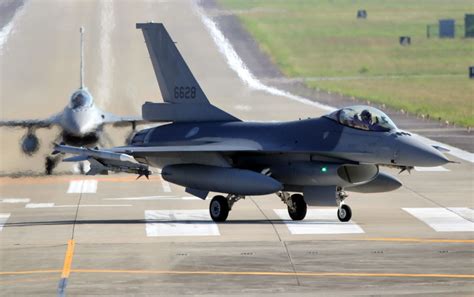
The F-16’s influence extends far beyond American aviation. Nearly every major fighter developed after the late 1970s incorporated lessons pioneered by the Fighting Falcon.
Fly-by-wire systems became standard across military aviation because they unlocked entirely new aerodynamic possibilities. Designers no longer needed to prioritize natural stability. Instead, they could optimize aircraft for agility while relying on computers to manage control.
This shift enabled several defining characteristics of modern fighters:
- Relaxed static stability for extreme maneuverability
- Advanced control surface integration
- Reduced pilot workload during combat
- Software-driven flight envelope protection
- Improved fuel efficiency through optimized aerodynamics
- Enhanced survivability during aggressive maneuvers
Even stealth aircraft benefited directly from these principles. The F-22 Raptor and F-35 Lightning II both rely heavily on unstable aerodynamic layouts stabilized electronically. Without fly-by-wire, many stealth shaping compromises would significantly reduce maneuverability.
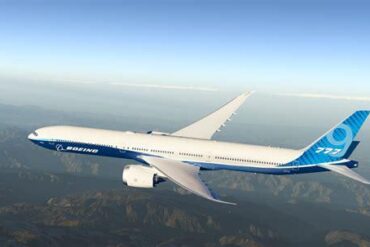
The technology also migrated into civilian aviation. Modern airliners such as the Airbus A320 and Boeing 787 now use advanced fly-by-wire systems to improve efficiency, reduce pilot workload, and enhance flight safety. What began as a revolutionary fighter technology became a global aviation standard.
The Debate The F-16 Started Still Shapes Air Combat Today
The F-16 did not merely transform aircraft engineering. It also intensified a defense philosophy debate that remains unresolved today. The original Fighter Mafia promoted affordable, agile fighters produced in large numbers rather than small fleets of expensive technological marvels.
That argument continues in modern form.
Today’s debate centers around high-end stealth fighters like the F-35 and future sixth-generation aircraft versus lower-cost drones and collaborative combat aircraft. Air forces worldwide continue searching for the right balance between elite capabilities and affordable mass.
The United States Air Force itself reflects this compromise. While investing heavily in advanced stealth platforms, it also continues upgrading F-16 fleets and purchasing F-15EX fighters to maintain force capacity.
In many ways, the F-16 sits at the center of this ongoing argument. It proved that technological innovation could make relatively affordable fighters extraordinarily capable. At the same time, its gradual evolution into a sophisticated multirole platform demonstrated how mission requirements inevitably drive complexity upward.
More than fifty years after its first flight, the F-16 remains one of the clearest examples of how a single engineering breakthrough can reshape an entire industry. Its fly-by-wire system did not simply improve one aircraft. It rewrote the rules of fighter jet design forever.