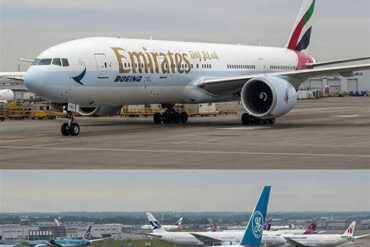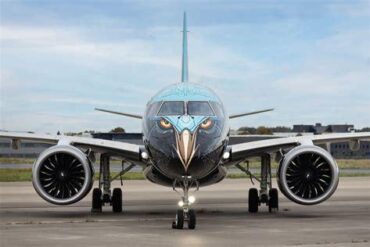
The last hundred years of aviation have witnessed countless technological marvels, but no single innovation has been as transformative as the jet engine. From the smoky battlefields of World War II to the plush cabins of today’s long-haul flights, the jet engine has carved a permanent trajectory through the skies and into the global economy. It is not merely an engineering triumph; it is aviation’s most profound breakthrough, one that has irrevocably altered how humanity connects, travels, and thrives.
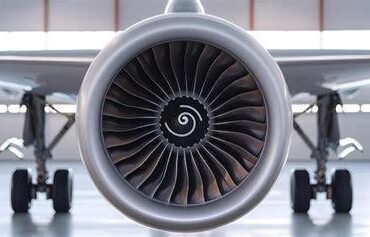
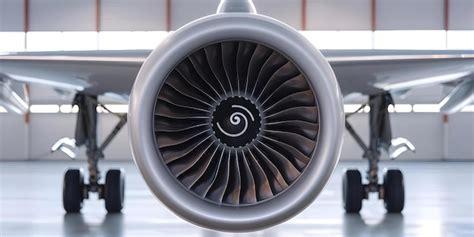
The jet engine’s brilliance lies in its elegant simplicity combined with brutal power. Unlike the piston engines of yesteryear, jets compress air, mix it with fuel, ignite it, and expel it with relentless force to produce thrust. This method allows aircraft to fly faster, higher, and more efficiently than propeller-driven planes ever could. And while the underlying concept of jet propulsion has remained relatively unchanged since the 1940s, the evolution of materials, fuel efficiency, and computational precision has propelled the jet engine into the realm of near-perfection.
The Dawn of Jet-Powered Aviation: From Battlefield to Commercial Brilliance
The origin of the jet engine is rooted in wartime necessity. Developed independently by British engineer Sir Frank Whittle and German engineer Hans von Ohain in the late 1930s, the first operational jet aircraft, the Heinkel He 178, took flight in 1939. However, it wasn’t until 1952 that the civilian world caught its first glimpse of the future with the de Havilland Comet, the world’s first commercial jet airliner.
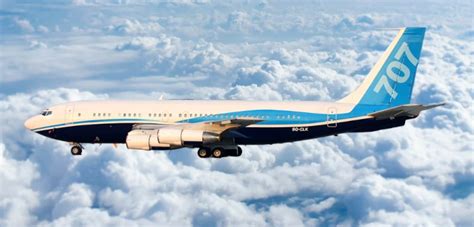
Though pioneering, the Comet suffered from early structural failures that dampened its immediate success. But it paved the way for Boeing’s masterpiece—the Boeing 707. Introduced in 1958, the 707 was the first commercially successful jetliner, revolutionizing how the world flew. It combined speed, range, and reliability in a way never seen before, ushering in what would become the blueprint for modern air travel.
The Boeing 707: DNA of Every Modern Jetliner
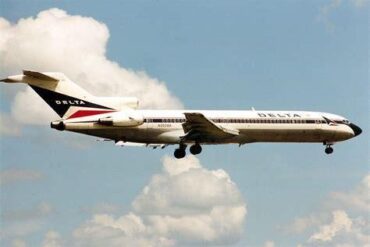
The Boeing 707 wasn’t just a jetliner—it was the genesis of the modern aviation template. With swept-back wings, pressurized fuselage, and jet engines mounted on pylons beneath the wings, the aircraft introduced core design principles that are still in use today. Its influence ripples across generations of aircraft, from the 737 to the 747, and even modern workhorses like the 777X and the Airbus A350.
The 707 also proved its versatility by serving military and governmental roles, some of which remain active today. Its airframe laid the foundation for a family of aircraft still in service with the U.S. Air Force, such as the E-3 Sentry and the KC-135 Stratotanker. As an aircraft, the 707 didn’t just shrink continents—it reshaped time zones into manageable, traversable intervals.
The Rise of the High-Bypass Turbofan: Speed Meets Efficiency
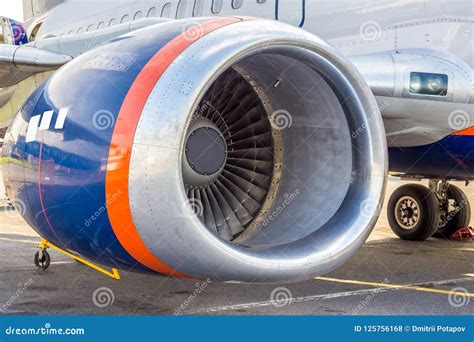
While the earliest jet engines were powerful, they were also thirsty and loud. Enter the high-bypass turbofan, a revolutionary design introduced in the 1970s. These engines diverted a large portion of air around the combustion chamber, significantly improving fuel efficiency and reducing noise levels. The result was an engine perfectly suited to the needs of commercial aviation—able to fly longer distances, more quietly, and with far better economics.
These advancements democratized air travel. Where once flying was a luxury for the elite, airlines could now offer affordable fares to the masses. This transformation led to an explosion in international tourism, business travel, and global logistics—industries that now depend on the jet engine’s reliability and reach.
Jet Engines and Globalization: Connecting the World
Jet propulsion did more than lift airplanes—it elevated economies. The ability to cross oceans in mere hours forged economic ties between continents and redefined trade routes. Cargo planes delivered perishable goods, life-saving pharmaceuticals, and critical electronics to every corner of the globe. The rise of e-commerce and just-in-time manufacturing would be impossible without the logistical backbone of jet-powered cargo fleets.
Culturally, the jet age collapsed borders. Concepts like the “global village” or “digital nomad” are a direct consequence of the freedom and access jet aviation provides. Once-isolated nations are now hubs of tourism and innovation. Conferences, reunions, rescues—all happen because jets make distance irrelevant.
Lifesaving Speed: Jet Aircraft in Humanitarian Missions
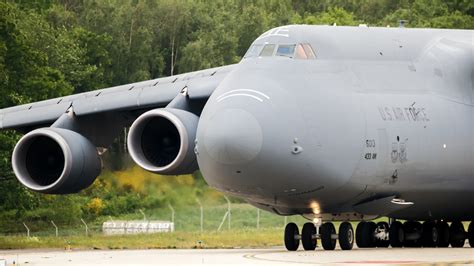
Jet engines have not only fueled luxury and commerce—they have been the difference between life and death in global crises. During the fall of Saigon in 1975, tens of thousands of civilians, including orphans, were rescued via massive airlifts conducted by the C-141 Starlifter and the gigantic Lockheed C-5 Galaxy. These aircraft, powered by jet engines, were able to execute evacuations at a scale and speed unimaginable in previous generations.
Similar heroics unfolded during Operation Solomon in 1991, when Israeli airliners and military jets evacuated over 14,000 Ethiopian Jews from civil war in less than two days. The capacity and urgency offered by jet aircraft make them indispensable tools for governments and NGOs alike during natural disasters, military withdrawals, and mass evacuations.
Supersonic Legacy: Concorde and the X-59
Although supersonic transport (SST) has yet to become a staple of modern travel, its influence on aerospace innovation is profound. The Concorde, introduced in the 1970s, could fly from New York to London in under four hours, a testament to both design and ambition. While its career was cut short due to high operating costs and noise pollution, the Concorde pushed the boundaries of aviation technology.
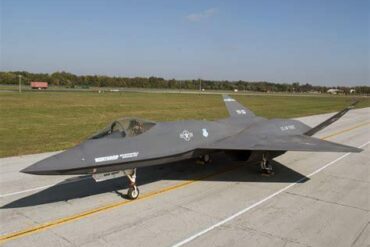
That legacy continues today through experimental programs like NASA’s X-59 Quiet Supersonic Transport, developed in partnership with Lockheed Martin. This prototype explores ways to eliminate the sonic boom, which could one day reopen the doors to high-speed, overland commercial flight.
The Economic Engine of Aviation
Jet engines are not just technological marvels—they are economic engines in their own right. Air travel now supports over 86 million jobs globally, accounting for 3.9% of the world’s GDP. In trade terms, one-third of goods by value now fly across skies once thought impassable. Aircraft manufacturing itself is a trillion-dollar industry, with intense innovation driven by efficiency, emissions standards, and safety.
The pursuit of engine optimization—longer life cycles, better thrust-to-weight ratios, lower emissions—fuels billions in R&D investments annually. These advancements not only benefit aviation but ripple out to industries like power generation, defense, and even computing.
Looking Ahead: Toward a Zero-Emission Jet Age
As the world contends with the urgent need for environmental sustainability, the future of jet engine design is shifting once again. Concepts like hydrogen combustion and fully electric propulsion are being tested by aerospace leaders like Airbus and Rolls-Royce. The promise of zero-emission flight is no longer science fiction—it’s a goal for the 2030s.
Artificial intelligence also plays a role in the evolution. AI systems are being embedded into aircraft operations, from predictive maintenance to autonomous flight capabilities. These technologies will not replace the jet engine but will instead elevate its utility and reliability to new heights.
Conclusion: Jet Engines—The Pulse of Modern Civilization
Jet engines have done more than change how we fly—they have changed who we are. They have rendered oceans irrelevant, made the world a single marketplace, and turned the sky from a barrier into a boulevard. The raw power and mechanical elegance of jet propulsion remain the single most important engineering breakthrough in aviation history.
While hypersonic speeds, sustainable fuels, and AI-driven systems are on the horizon, they are all built atop the foundation laid by the jet engine. It is an innovation that continues to evolve—an enduring symbol of human ingenuity, ambition, and the eternal desire to go further, faster, and higher.