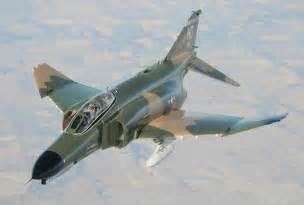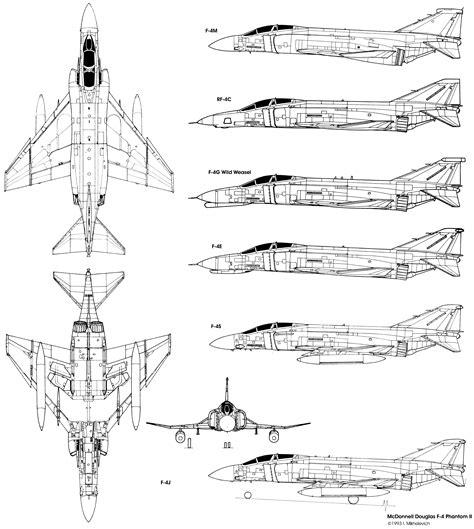
The story of modern aerial warfare has a handful of turning points—moments when a machine, a doctrine, and a philosophy converge to reshape how nations fight in the sky. The McDonnell Douglas F-4 Phantom II was one of those turning points. More than a jet, it was a flying manifesto that declared a new era of speed, sensors, missiles, and multirole flexibility. It was loud, smoky, unapologetically powerful, and technologically ambitious to a fault. By the time the program ended, more than 5,000 Phantoms had rolled off production lines, serving not just the United States but a global coalition of air forces that would shape Cold War geopolitics.
This aircraft did not merely participate in the Cold War; it helped define how that war was fought in the air. Its design philosophy shattered old assumptions about dogfighting, speed, and pilot workload, replacing them with radar-guided missiles, long-range interception, and a new understanding of what “situational awareness” really meant. The F-4 Phantom II was imperfect, sometimes misunderstood, and occasionally outpaced by its own ambition—but that ambition laid the foundation for every advanced fighter that followed.
The Crisis That Gave Birth to a Legend
McDonnell Aircraft Corporation’s path to the Phantom was anything but smooth. Founded in 1939, the company rode the early jet age with aircraft like the F2H Banshee, a twin-engine naval fighter that saw service during the Korean War. But the post-war drawdown hit hard. Military budgets tightened, production orders slowed, and the company gambled heavily on the F3H Demon—a single-engine interceptor that nearly bankrupted McDonnell and struggled to compete with rival designs like the Vought F-8 Crusader.
The U.S. Navy’s evolving requirements in the 1950s demanded something radically new: a carrier-based fighter that could intercept Soviet bombers long before they reached American fleets. The threat was no longer just a dogfighting MiG over a battlefield; it was nuclear-armed bombers streaking toward carriers across vast ocean distances. McDonnell’s engineers began working on a radical design originally nicknamed “Satan”—a name soon replaced with the more palatable Phantom II.
The first prototype flew in 1958, and its arrival was impossible to ignore. Twin engines, a massive radar, a heavy weapons payload, and supersonic performance made it unlike anything currently on deck. The Navy saw not just a fighter, but a shield—an airborne wall between Soviet bombers and American carriers.
The Phantom’s Radical Combat Philosophy
The Phantom II was built on a provocative idea: dogfighting was becoming obsolete. In the 1950s, guided missiles and radar systems promised to make close-in gun combat a relic of the past. Engineers believed the future lay in beyond-visual-range (BVR) engagements, where enemy aircraft would be detected, tracked, and destroyed long before pilots could see each other.
So radical was this belief that the Phantom was initially designed without an internal gun. Instead, it carried radar-guided AIM-7 Sparrow missiles and infrared-guided AIM-9 Sidewinders, backed by the powerful AN/APQ-120 radar. This philosophy marked a doctrinal revolution: the fighter as a missile platform, not a dogfighting acrobat.
To manage this technological complexity, the Phantom introduced a two-person crew configuration—pilot and radar intercept officer (RIO). This division of labor foreshadowed modern cockpit designs in complex combat aircraft, where managing sensors, weapons, and communications demands more than one brain.
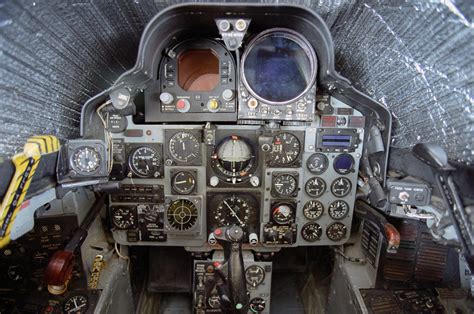
Power, Payload, and the “Flying Brick” Mythos
The Phantom’s sheer physical presence was imposing. It was big, loud, and unapologetically muscular. Some pilots jokingly called it a “flying brick,” a nickname that reflected its brute-force design philosophy rather than a lack of capability. With a payload capacity approaching 16,000 to 18,000 pounds and a top speed around Mach 2.2, the F-4 was a beast in the sky.
Its twin engines provided redundancy and power, crucial for carrier operations and long-range missions. The airframe was designed with growth in mind, able to carry future weapons and systems that did not yet exist. This forward-thinking approach allowed the Phantom to evolve over decades, adapting to new missiles, sensors, and mission profiles.
Despite its size, the Phantom proved versatile. It served in air superiority roles, ground attack missions, reconnaissance, suppression of enemy air defenses (SEAD), and close air support. Few aircraft in history have demonstrated such breadth of capability across multiple services and allied nations.
Speed: The Mirage of Supremacy
In the early jet age, speed was king. Engineers and strategists believed that the faster a fighter could fly, the more advanced it was. The Phantom embodied this obsession with speed, boasting Mach 2+ performance that rivaled or exceeded contemporaries like the MiG-21.
But Vietnam shattered the speed myth. After analyzing over 100,000 Phantom sorties, analysts discovered something astonishing: the aircraft almost never operated at its top speed in combat. Most engagements occurred around Mach 0.7 to 1.2, where maneuverability and turning performance mattered more than raw velocity. High-speed dashes burned fuel rapidly and reduced time on station, undermining operational effectiveness.
This revelation fundamentally changed fighter design priorities. Future aircraft like the F-15, F-16, and F/A-18 emphasized maneuverability, energy management, and sustained performance rather than headline-grabbing top speeds. Even modern stealth fighters like the F-35 prioritize sensors, stealth, and networking over extreme speed, a doctrinal shift that traces directly back to lessons learned from the Phantom.
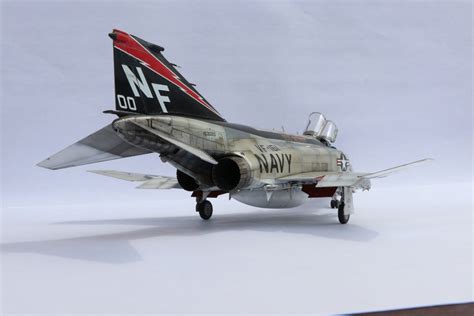
Beyond Visual Range: The Phantom’s Most Enduring Legacy
The Phantom’s most profound contribution to modern air combat was its embrace of beyond-visual-range warfare. While early BVR performance was disappointing—kill probabilities for Sparrow missiles were often under 10%—the conceptual leap was revolutionary. The aircraft was designed to fight at distances where pilots could not see the enemy, relying on radar, missiles, and electronic warfare.
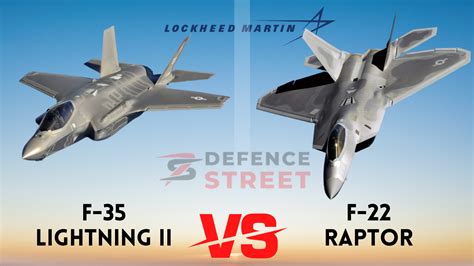
This philosophy laid the groundwork for modern aerial combat, where stealth, sensors, and data links dominate. Today’s fighters prioritize “first look, first shot, first kill,” a doctrine that the Phantom helped pioneer. Fifth-generation aircraft like the F-22 and F-35 take this to its logical extreme, using stealth to delay detection and extend engagement ranges even further.
The Phantom’s early struggles with ground clutter, radar limitations, and restrictive rules of engagement highlighted the gap between technological promise and operational reality. But these challenges drove innovation. Pulse-Doppler radars, improved identification systems, and evolving doctrine all emerged partly in response to Phantom-era lessons.
A New Era of Multirole Warfare
Before the Phantom, air forces often relied on specialized aircraft for different missions. Interceptors hunted bombers, strike aircraft attacked ground targets, and reconnaissance platforms gathered intelligence. The Phantom blurred these lines. Its large airframe and modular design allowed multiple variants to specialize in different roles while sharing a common platform.
This approach influenced later designs like the F-15, F-16, and F/A-18, which were built from the ground up as true multirole fighters capable of switching between air-to-air and air-to-ground missions in a single sortie. The F-35 represents the culmination of this philosophy, integrating electronic warfare, strike, air superiority, and intelligence roles into a single stealthy platform.
The Phantom demonstrated that flexibility was not just convenient—it was strategically essential. Air forces could standardize training, maintenance, and logistics while adapting to rapidly changing mission requirements.
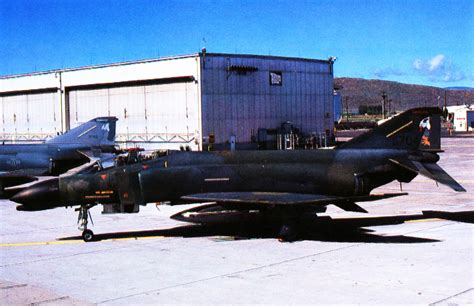
Vietnam: Trial by Fire
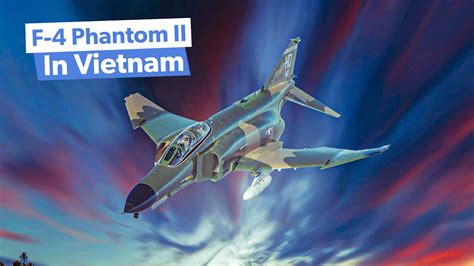
The Vietnam War was the Phantom’s crucible. Early in the conflict, the absence of a gun proved costly in close-range engagements with agile MiG-17s and MiG-21s. Missile reliability was inconsistent, and restrictive rules of engagement often forced visual identification, negating the Phantom’s BVR advantages.
The U.S. Air Force responded by adding gun pods and later internal cannons in upgraded variants, acknowledging that dogfighting was not dead—just transformed. Training programs like TOPGUN and Red Flag emerged, emphasizing air combat maneuvering, situational awareness, and realistic training.
Over time, Phantom crews adapted. Improved tactics, better missiles, and enhanced training led to respectable kill ratios against North Vietnamese fighters. The aircraft evolved from a misunderstood missile truck into a competent multirole combat platform.
Doctrine, Technology, and the Phantom Effect
The Phantom shaped three enduring principles of modern air combat. First, multirole capability is not optional; it is a necessity. Second, doctrine must evolve alongside technology; hardware alone cannot win wars without appropriate tactics and rules of engagement. Third, speed and missiles alone are insufficient—situational awareness, maneuverability, and pilot training are equally critical.
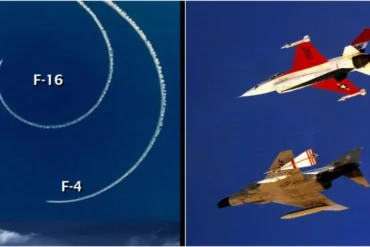
These lessons influenced every subsequent generation of fighters. The F-14 Tomcat addressed the Phantom’s radar limitations with powerful pulse-Doppler systems. The F-15 Eagle emphasized maneuverability and energy performance. The F-16 introduced fly-by-wire agility. The F-22 and F-35 integrated stealth, sensor fusion, and networked warfare.
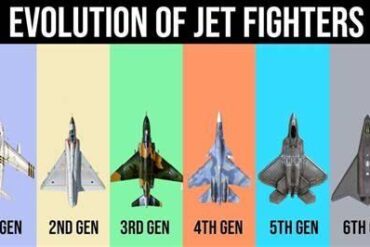
The Phantom was a third-generation fighter, but it was a bridge to the fourth and fifth generations. It was the rough draft of modern aerial warfare—a prototype philosophy refined over decades.
Global Influence and Export Success
Few fighters have achieved the Phantom’s global footprint. Allies across NATO and beyond adopted the aircraft, including the United Kingdom, Germany, Japan, Israel, Turkey, and many others. Each operator customized the Phantom for its own doctrine, leading to a diverse ecosystem of variants and upgrades.
In Israeli service, the Phantom played a crucial role in Middle Eastern conflicts, delivering precision strikes and air superiority missions. In RAF service, it served as both interceptor and strike aircraft, integrated into Britain’s Cold War defense posture. Japan’s domestically built Phantoms formed the backbone of its air defense for decades.
This global adoption reinforced the Phantom’s influence on doctrine and design worldwide. It became a shared reference point for air forces studying the transition from gunfighters to sensor-driven missile platforms.
The Phantom’s Evolutionary DNA in Modern Fighters
Modern fighters carry the Phantom’s genetic code in their design philosophies. The emphasis on sensors, data links, multirole flexibility, and long-range engagement traces directly back to the F-4. Even the two-seat configuration in complex aircraft like the F-15E Strike Eagle echoes the Phantom’s division of labor between pilot and systems operator.
The Phantom also demonstrated the value of growth potential. Its large airframe allowed decades of upgrades, a lesson embraced by modern platforms designed with open architectures and modular systems. Future sixth-generation fighters continue this lineage, prioritizing adaptability, range, and integration with unmanned systems.
The Cultural and Psychological Impact
Beyond its technical achievements, the Phantom shaped the culture of military aviation. Its thunderous engines, thick smoke trails, and imposing silhouette became symbols of American airpower. Pilots who flew it developed a reputation for toughness and adaptability, managing a complex machine in some of the most demanding combat environments.
The aircraft also influenced popular culture, appearing in documentaries, museums, and aviation lore as a symbol of Cold War technological ambition. Its nickname, quirks, and legendary service record turned it into an icon that transcended its era.
From “Flying Brick” to Strategic Masterpiece
Critics often pointed to the Phantom’s limited maneuverability compared to lighter fighters, but this critique misses the point. The Phantom was not designed to win turning contests; it was designed to dominate the battlespace through sensors, missiles, and flexibility. Its size was a feature, not a flaw—a platform for carrying the future.
Over time, upgrades improved its dogfighting capabilities, and experienced crews learned to exploit its strengths. The Phantom proved that engineering trade-offs are not weaknesses but strategic choices shaped by doctrine and threat environment.
The Phantom’s Enduring Lessons for the Future
As air forces prepare for sixth-generation fighters, the Phantom’s lessons remain relevant. Range matters. Multirole capability is essential. Sensors and networking define modern combat. Doctrine must evolve with technology. And pilots must be trained to exploit complex systems under pressure.
The Phantom also serves as a reminder that revolutionary ideas often arrive before the technology and doctrine are fully ready. Its early BVR struggles did not invalidate the concept; they accelerated the innovation needed to make BVR warfare effective.
Conclusion: The Jet That Designed the Future
The McDonnell Douglas F-4 Phantom II was not just America’s most prolific fighter jet; it was a blueprint for the modern age of air combat. It challenged assumptions, introduced radical technologies, and forced air forces to rethink how wars are fought in the sky. Its legacy is visible in every modern fighter that prioritizes sensors, multirole capability, and long-range engagement.
In the grand arc of aviation history, the Phantom stands as a pivot point—a machine that looked beyond dogfights and toward a networked, missile-driven future. Imperfect, ambitious, and transformative, it designed a new age of combat long before that age fully arrived.