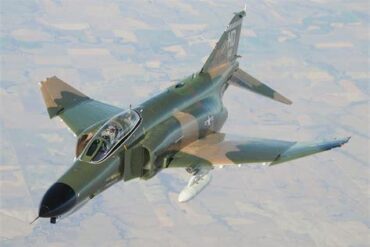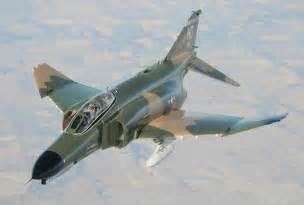
Loud, aggressive, and engineered for raw speed, the McDonnell Douglas F-4 Phantom II stands as one of the most recognizable fighter jets of the Cold War era. Born from the geopolitical tensions of the late 1950s, the Phantom became synonymous with high-speed interception, multi-role combat capability, and a legacy that spanned several decades in U.S. and allied air forces. Despite its awe-inspiring performance, the Phantom’s career was eventually grounded due to evolving military needs and inherent design flaws that were difficult to ignore.
The Unmatched Speed of the F-4 Phantom
The F-4 Phantom II achieved speeds that, at the time of its debut, seemed ripped from the pages of science fiction. Powered by a pair of General Electric J79 turbojet engines, the Phantom could reach a top service speed of Mach 2.23, which translates to roughly 1,473 miles per hour (2,370 kilometers per hour) at an operational altitude of 40,000 feet.
Its blistering pace wasn’t just theoretical. In 1961, an F-4 Phantom shattered expectations by recording a top speed exceeding 1,600 miles per hour during a short test circuit. The Phantom also achieved a now-legendary feat by crossing the continental United States in under three hours, relying on in-flight refueling to maintain its relentless speed. This kind of performance cemented its reputation as a record-breaker and a symbol of American air dominance during the early Cold War.
Design Origins and Combat Role
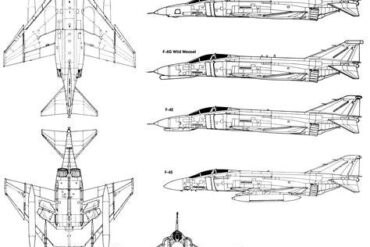
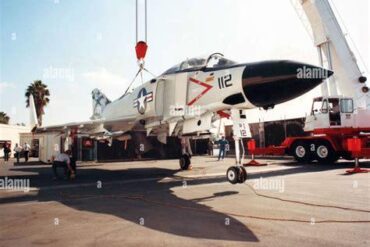
Introduced in 1958, the F-4 Phantom II was initially designed for the U.S. Navy as a fleet defense interceptor, but its versatility quickly attracted attention from the U.S. Air Force and U.S. Marine Corps. The jet’s adaptability allowed it to evolve into a multi-role aircraft capable of engaging in air-to-air combat, ground attack missions, and reconnaissance operations.
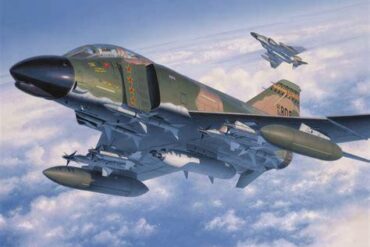
Throughout the Vietnam War, the F-4 Phantom became one of the most deployed fighter jets in the U.S. arsenal. Its impressive payload capacity enabled it to carry over 18,000 pounds of munitions, including air-to-air missiles, bombs, and rockets. Its long-range capabilities and two-man crew design — consisting of a pilot and a radar intercept officer — made it effective for both air superiority missions and close air support.
Yet, despite its successes, operational shortcomings became apparent under combat conditions.
The Challenges That Grounded the F-4 Phantom
As formidable as the F-4 Phantom II was, its retirement was inevitable due to several design flaws that compromised its effectiveness in increasingly sophisticated air combat environments.
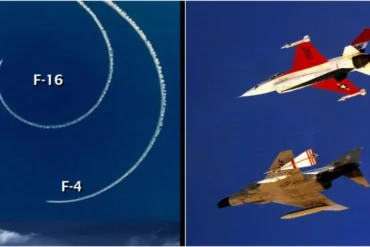
One of the most persistent issues was instability during high-G maneuvers. Pilots often reported that the aircraft struggled with controllability at the limits of its performance envelope, which was a significant handicap during dogfights. Compounding this, the F-4’s cockpit design suffered from poor rearward visibility, an issue that put pilots at a disadvantage when evading or pursuing enemy aircraft.
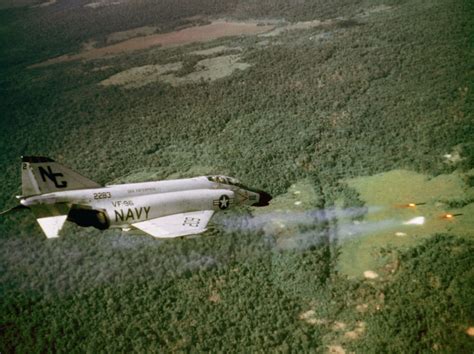
Another critical flaw lay in its engines. The powerful J79 engines, while capable of delivering astonishing thrust, produced dense plumes of smoke that made the Phantom easy to spot visually — a severe liability in both air-to-air engagements and ground attack missions. Enemy forces could track the jet by its exhaust trail long before radar detection, undermining its stealth profile.
Moreover, the hydraulic systems controlling the aircraft’s flight surfaces were particularly vulnerable to ground fire. Many Phantoms lost in Vietnam fell victim not to enemy aircraft but to anti-aircraft artillery and small-arms fire, which targeted these exposed systems.
The End of Production and Gradual Retirement
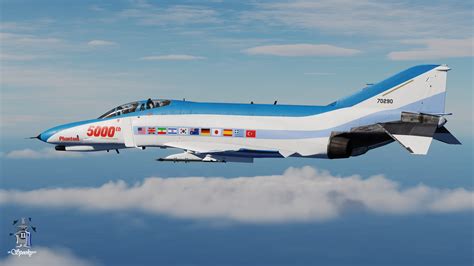
The final F-4E Phantom rolled off the production line in October 1979, marking the end of an era for one of the most prolific fighter jets ever built. By then, over 5,000 units had been produced, serving not only the United States but also the air forces of several allied nations.
Despite production ceasing in the late 1970s, the Phantom remained an active component of U.S. military aviation into the early to mid-1990s. Units of the Air National Guard continued flying F-4s in various support and training roles. The aircraft even made appearances with the U.S. Navy’s Blue Angels, showcasing its remarkable speed and agility at airshows across the country.
The final operational Phantoms in U.S. service were retired by 1997, closing the chapter on its distinguished, though imperfect, career.
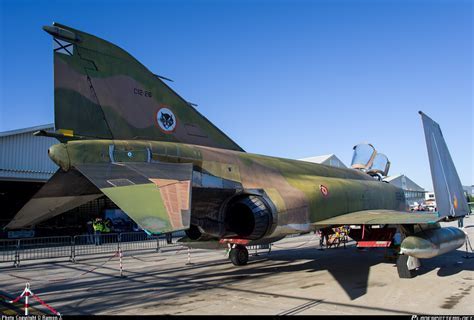
The Phantom’s Afterlife: Drones and Foreign Service
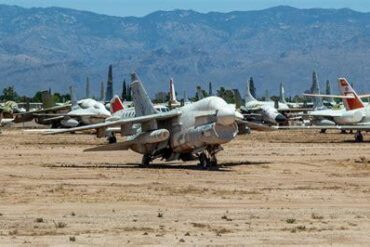
Though retired from front-line service, the Phantom refused to fade quietly into history. Many surplus F-4s found new life as QF-4 target drones, converted into remotely piloted aircraft used for live-fire exercises and missile testing. This repurposing provided invaluable training opportunities for modern fighter pilots and weapons developers.
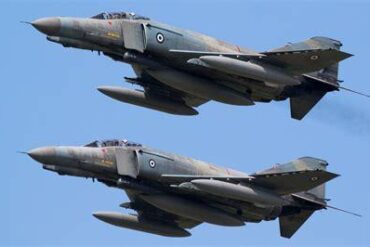
Internationally, the Phantom’s legend endured. Countries such as Greece, Turkey, South Korea, and Iran continued to operate variants of the F-4 well into the 21st century. As of 2024, reports indicated that approximately 167 F-4 Phantoms remained in active service worldwide, a testament to the jet’s durability and the ongoing reliance on its combat capabilities by certain air forces.
In some regions, the Phantom has been upgraded with modern avionics, weapons systems, and radar suites to extend its operational lifespan. These improvements have allowed it to remain a viable, though aging, platform in regional defense arsenals.
Successors to the F-4 Phantom
The decision to retire the F-4 Phantom from U.S. service coincided with the arrival of more advanced, fourth-generation fighter aircraft designed to overcome the Phantom’s deficiencies.
The U.S. Navy and Marine Corps replaced the F-4 with the legendary F-14 Tomcat, introduced in the 1970s, which provided superior maneuverability, variable-sweep wings, and cutting-edge radar technology. Alongside the Tomcat, the versatile F/A-18 Hornet entered service, offering multi-role capabilities and advanced avionics tailored for both air superiority and strike missions.
The U.S. Air Force, recognizing the limitations of the Phantom, transitioned to the F-15 Eagle and the F-16 Fighting Falcon, both of which offered improved dogfighting abilities, better fuel efficiency, and dramatically enhanced situational awareness. These aircraft set new benchmarks for speed, agility, and lethality — qualities that addressed many of the F-4’s combat shortcomings.
Conclusion: A Complex Legacy of Speed and Sacrifice
The F-4 Phantom II remains a symbol of American aerospace ambition during the Cold War — a machine that combined unprecedented speed with multi-role versatility. Its exploits, from breaking transcontinental speed records to dominating the skies over Vietnam, secured its place in aviation history.
However, as with many groundbreaking designs, the Phantom’s strengths were counterbalanced by its vulnerabilities. Poor visibility, maneuverability challenges, and engine smoke trails ultimately made the jet unsuitable for modern, stealth-focused combat doctrines.
Even so, decades after its final U.S. flight, the Phantom’s presence in air museums, foreign air forces, and drone testing ranges ensures that its legacy — and its deafening roar — are not soon forgotten.