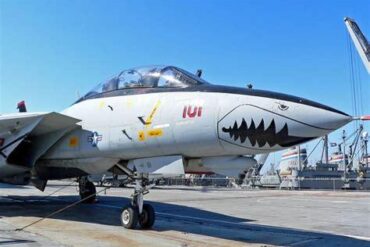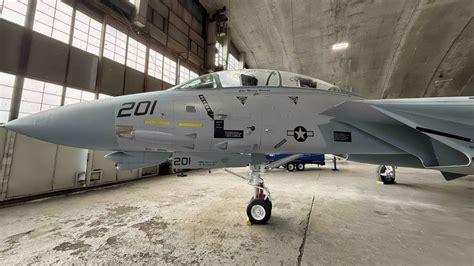
The idea once sounded impossible: a flying American F-14 Tomcat returning to the skies nearly two decades after the US Navy retired the legendary fighter. Yet in a stunning reversal of long-standing Pentagon policy, Congress has now opened the door for exactly that outcome. A bipartisan proposal nicknamed the “Maverick Act” could ultimately allow one retired Tomcat to become airworthy again, potentially bringing one of the most iconic carrier fighters in aviation history back to life.
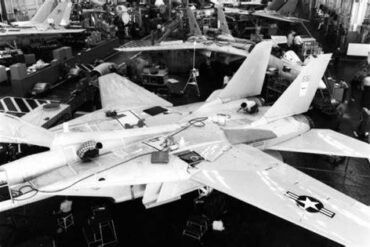
For years, the United States treated the F-14 differently from every other retired combat aircraft in its inventory. Instead of preserving large numbers for museums or future restorations, the government aggressively dismantled and destroyed them. Wings were cut apart. Critical structural components were shredded. Avionics were removed and scrapped. Entire aircraft were deliberately rendered unusable.
The reason had little to do with the aircraft itself and everything to do with Iran.
When the US Navy retired the Tomcat in 2006, Iran remained the world’s only active F-14 operator. Washington feared spare parts from retired American aircraft could somehow reach Tehran through black-market channels. For nearly 20 years, that concern shaped every policy decision involving the Tomcat. Restoration projects were effectively impossible. Civilian ownership was unthinkable. Even museums faced restrictions.
Now, however, the political climate surrounding the aircraft appears to be changing dramatically. Recent regional conflicts reportedly devastated Iran’s remaining Tomcat fleet, reducing the strategic sensitivity surrounding the aircraft and allowing lawmakers to prioritize preservation rather than destruction. For aviation enthusiasts, naval historians, and warbird collectors, the implications are enormous.
The Maverick Act does not merely preserve three retired Tomcats for static display. Buried inside the legislative language is a line authorizing spare parts support that could help make one F-14D flyable again. That single sentence transformed what could have been a routine museum transfer into one of the biggest aviation stories in years.
The possibility of seeing a Tomcat roar across an American airshow again suddenly no longer feels like fantasy.
The F-14 Tomcat Became The Face Of American Carrier Air Power
When Grumman developed the F-14 Tomcat during the Cold War, the aircraft represented one of the most advanced naval fighters ever created. Entering operational service in 1974, the Tomcat was designed primarily as a long-range fleet defense interceptor capable of protecting US aircraft carriers from Soviet bombers and anti-ship missile attacks.
Everything about the aircraft reflected that mission.
The F-14 combined enormous radar reach, heavy missile armament, twin engines, variable-sweep wings, and exceptional high-speed performance into a single platform capable of engaging threats far from the carrier group. At the heart of the aircraft sat the powerful AWG-9 radar system, paired with the AIM-54 Phoenix missile, a weapon capable of striking targets at unprecedented ranges.
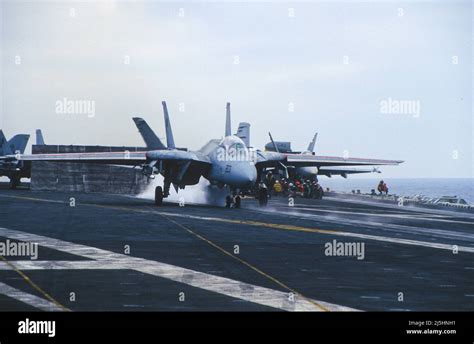
During the Cold War, the Tomcat’s mission profile centered on destroying Soviet bombers before they could launch cruise missiles against the fleet. American carriers depended heavily on the aircraft’s reach and interception capability. Few fighters in history projected the same psychological effect as a pair of Tomcats launching from a carrier deck armed with Phoenix missiles.
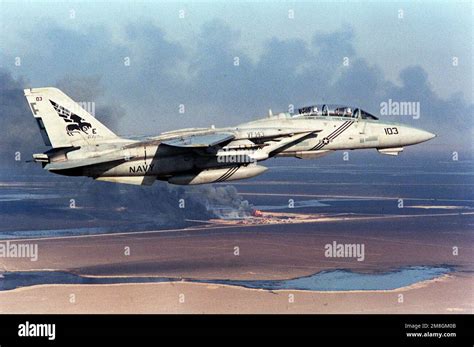
The aircraft’s variable-geometry wings became one of its defining visual features. At low speeds, the wings extended outward for lift and carrier handling. At high speeds, they swept backward automatically for supersonic performance. The design gave the Tomcat remarkable flexibility across different flight regimes while also creating one of the most recognizable silhouettes in military aviation.
The fighter eventually evolved far beyond its original interceptor role. By the 1990s, the Tomcat had transformed into a capable multirole combat aircraft. Upgrades including the LANTIRN targeting pod allowed crews to conduct precision strike missions over Iraq, the Balkans, and Afghanistan.
The F-14D represented the peak of that evolution. Equipped with General Electric F110 engines, upgraded avionics, improved radar systems, and digital enhancements, the final Tomcat variant corrected many of the reliability problems associated with earlier models. Pilots often described the F-14D as an entirely different aircraft compared with the original F-14A.
Despite its legendary reputation, the Tomcat became increasingly difficult and expensive to maintain. Carrier operations imposed enormous stress on the airframes, and the aircraft’s complexity required extensive maintenance hours for every hour flown. Aging electronics, hydraulic systems, and swing-wing mechanisms created additional logistical burdens.
At the same time, the Navy was rapidly transitioning toward the Boeing F/A-18E/F Super Hornet.
The Super Hornet lacked some of the Tomcat’s raw speed and long-range interception capability, but it offered far lower operating costs, easier maintenance, modern digital systems, and simplified logistics. Standardizing the carrier fleet around the F/A-18 platform became increasingly attractive from both operational and budgetary perspectives.
By the early 2000s, the Tomcat’s fate was effectively sealed.
The final operational deployment occurred in 2006, and on September 22 of that year, the F-14 officially left US Navy service after 32 years of operations spanning the Cold War and the opening years of the Global War on Terror.
For many naval aviators, it marked the end of an era.
Why The United States Destroyed Retired F-14 Tomcats Instead Of Preserving Them
Most retired American military aircraft eventually follow a predictable path. Some become museum exhibits. Others enter long-term storage. A select few transition into civilian ownership for restoration or airshow operations.
The F-14 followed none of those paths.
Instead, the US government launched one of the most aggressive aircraft demilitarization campaigns ever applied to an American fighter jet. Hundreds of retired Tomcats were dismantled, shredded, or deliberately damaged beyond recovery.
The driving factor was Iran.
Before the 1979 Iranian Revolution, the Shah of Iran purchased 79 F-14 Tomcats from the United States. Iran became the aircraft’s only export customer and received the fighter as part of Washington’s broader Cold War strategy in the Middle East.
When relations collapsed after the revolution, Iran suddenly found itself isolated from American military support. Spare parts, technical assistance, and formal maintenance networks disappeared almost overnight.
Yet the Iranian Air Force somehow managed to keep portions of the fleet operational for decades.
Through reverse engineering, black-market procurement, cannibalization, and locally developed modifications, Iran sustained the world’s only surviving operational Tomcat force long after the aircraft vanished from American service.
That reality deeply influenced US policy.
Washington feared retired US Navy Tomcats could become a source of spare parts for Tehran. Even minor components held potential value because Iran’s aging fleet depended heavily on improvised maintenance solutions.
Concerns intensified in 2007 after reports surfaced alleging that retired F-14 parts had entered illicit trafficking channels. In response, the Pentagon dramatically tightened controls surrounding retired Tomcats.
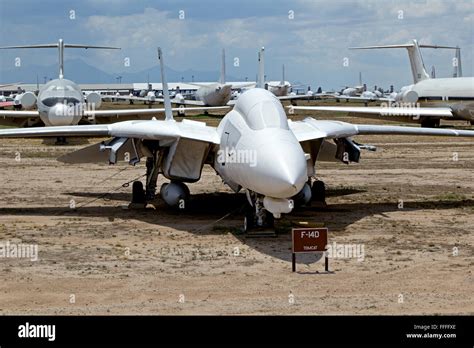
Aircraft stored at Davis-Monthan Air Force Base in Arizona underwent extensive destruction procedures. Critical systems including radar assemblies, avionics packages, hydraulic components, and structural elements were removed or destroyed outright.
Wing boxes, among the aircraft’s most important structural assemblies, often received deliberate cuts intended to make future restoration impossible.
The campaign became so comprehensive that many aviation historians assumed the possibility of a flying American Tomcat had permanently disappeared.
Unlike aircraft such as the F-4 Phantom, MiG-21, F-86 Sabre, or F-104 Starfighter, the F-14 never entered widespread civilian preservation channels. No civilian-operated examples survived in flyable condition anywhere in the world.
That isolation only enhanced the aircraft’s mystique.
For nearly two decades, the Tomcat existed primarily through museum displays, archival footage, and popular culture. Films like Top Gun and later Top Gun: Maverick ensured the fighter remained deeply embedded in public consciousness even after its retirement.
Ironically, the aircraft’s cultural legacy grew stronger while the real machines disappeared.
Iran’s Aging “Persian Cats” Changed The Strategic Conversation
The geopolitical environment surrounding the Tomcat began shifting significantly after recent military developments involving Iran.
For years, defense analysts estimated that only a small portion of Iran’s F-14 fleet remained fully operational at any given time. Nevertheless, the aircraft retained major symbolic value inside the country. Iranian media regularly showcased Tomcats during military exercises and public demonstrations, portraying them as evidence of domestic resilience despite decades of sanctions.
The aircraft also continued serving practical roles in air defense and long-range surveillance.
Although severely aged, the F-14’s radar systems still offered valuable regional monitoring capability. Iranian engineers reportedly adapted local weapons and avionics modifications to keep portions of the fleet relevant.
Then came the 2026 Iran Crisis.
According to multiple emerging reports, Israeli and American precision strikes targeted Iranian military infrastructure, including facilities associated with the country’s remaining F-14 fleet. While official numbers remain unclear, analysts increasingly believe the surviving Tomcat inventory suffered devastating losses.
Some aircraft may have been destroyed directly on the ground. Others likely became unflyable because of infrastructure damage, fuel shortages, maintenance collapse, or loss of spare components.
The strategic equation surrounding the Tomcat changed almost overnight.
For decades, American policymakers viewed retired F-14 parts primarily through the lens of preventing Iranian access. Suddenly, that concern appeared less urgent than before. Congressional discussions regarding the Maverick Act reflected this subtle but important shift in tone.
Rather than focusing exclusively on containment and destruction, lawmakers began discussing preservation, historical value, and public heritage.
That would have been almost unimaginable only a few years earlier.
The broader cultural environment also helped drive momentum behind the proposal. Interest in Cold War military aviation has surged dramatically in recent years, particularly among younger audiences exposed to aviation history through documentaries, YouTube channels, simulation gaming, and blockbuster films.
The massive commercial success of Top Gun: Maverick reignited fascination with the Tomcat despite the production relying largely on CGI rather than real aircraft.
Suddenly, a new generation wanted to see the real thing fly again.
The Maverick Act Quietly Opened The Door For A Flying Tomcat
At first glance, the Maverick Act appears relatively simple. The legislation authorizes the transfer of three retired F-14 Tomcats from government storage to the US Space & Rocket Center in Huntsville, Alabama.
But the real significance lies inside the wording.
The bill identifies three specific aircraft by Bureau Number: 164341, 164602, and 159437. More importantly, it authorizes the Secretary of the Navy to provide excess spare parts that could help make one F-14D “flyable or able to complete a static display.”
That phrase instantly electrified the aviation community.
Congress was no longer discussing simple museum preservation. Lawmakers were openly acknowledging the possibility of restoring a Tomcat to operational condition.
The proposal places restoration responsibility on the US Space & Rocket Center Commission and any nonprofit organizations partnering with the effort. The Navy itself would not operate the aircraft or directly fund flight restoration.
That model mirrors how other complex warbird projects function today.
Organizations such as the Collings Foundation and Starfighters International have demonstrated that even highly sophisticated Cold War aircraft can return to flight through combinations of private funding, volunteer expertise, and specialized maintenance networks.
The legislation also specifically references participation in public displays, commemorative events, and airshows. Those references strongly imply lawmakers envision the aircraft operating publicly rather than remaining hidden inside a static museum exhibit.
If restoration succeeds, the Tomcat would instantly become one of the most valuable and recognizable flying warbirds on Earth.
No other Cold War fighter carries quite the same blend of cinematic fame, naval heritage, and technological mystique.
The emotional response alone would likely be enormous.
Generations of aviation fans grew up associating the F-14 with American naval dominance. Its aggressive stance, variable-sweep wings, thunderous afterburners, and carrier-launch imagery created an identity few military aircraft ever achieved.
Even people with little aviation knowledge instantly recognize the Tomcat.
That kind of cultural visibility matters enormously for preservation funding.
Unlike obscure historic aircraft projects that struggle for public attention, a flying F-14 would likely attract global media coverage, sponsorships, donor campaigns, merchandise sales, and massive airshow attendance.
The aircraft practically markets itself.
The Three Selected Tomcats Carry Extraordinary Historical Value
The three Tomcats named in the legislation were not selected randomly.
Each aircraft possesses unique operational or historical significance, increasing both public interest and preservation value.
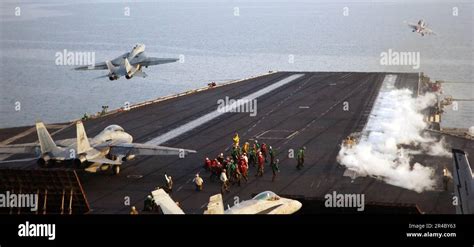
BuNo 164341 may be the most symbolically important. Aviation records indicate the aircraft performed the final operational catapult launch of an F-14 in US Navy service aboard USS Theodore Roosevelt during July 2006.
That alone makes it a centerpiece of Tomcat history.
The aircraft also survived a dramatic in-flight incident in 2002 when a Radar Intercept Officer accidentally ejected during a familiarization flight near NAS Fallon. Despite severe aerodynamic disruption caused by the missing canopy, the pilot successfully recovered and landed the aircraft.
Stories like that contribute heavily to warbird mythology.
BuNo 164602 also served with VF-213 “Black Lions,” one of the Navy’s final operational Tomcat squadrons. As a later-production F-14D, the aircraft potentially offers structural and maintenance advantages compared with older variants.
The F-14D incorporated numerous improvements including enhanced avionics, stronger systems integration, upgraded engines, and reliability modifications.
That matters enormously for any potential restoration effort.
The third aircraft, BuNo 159437, carries direct combat significance tied to the famous 1989 Gulf of Sidra incident. During that confrontation, US Navy F-14 crews shot down two Libyan MiG-23 fighters over the Mediterranean after escalating tensions.
Aircraft connected to real combat history often receive elevated preservation priority because they represent tangible links to major geopolitical events.
All three Tomcats reportedly remain stored at the Aerospace Maintenance and Regeneration Group, better known as AMARG, at Davis-Monthan Air Force Base in Arizona.
Their survival is remarkable by itself.
Many Tomcats were destroyed during the post-retirement demilitarization campaign. Aviation historians believe these particular airframes survived partly because of their historical significance and relatively intact condition.
Storage condition could become critical if restoration proceeds.
Aircraft preserved under favorable AMARG procedures sometimes retain recoverable structural integrity even after years in desert storage. Dry Arizona conditions help minimize corrosion compared with more humid environments.
Still, the condition of each Tomcat remains uncertain until detailed inspections occur.
Restoring A Tomcat Will Be One Of The Hardest Warbird Projects Ever Attempted
The excitement surrounding the Maverick Act does not eliminate the enormous technical challenges ahead.
Restoring an F-14 Tomcat would rank among the most ambitious warbird efforts ever attempted in the United States.
The aircraft was extraordinarily complex even during active military service. Maintaining operational Tomcats required vast Navy logistics networks, specialized technicians, dedicated supply chains, and continuous engineering support.
None of that infrastructure exists today.
The biggest challenge involves spare parts.
Because the government intentionally destroyed many retired Tomcat components, restoration teams may need to reproduce parts from scratch using modern manufacturing methods. CNC machining, advanced scanning, and additive manufacturing technologies could potentially recreate unavailable components, but certification and structural validation would be immensely demanding.
The swing-wing mechanism alone presents extraordinary engineering complexity.
Unlike fixed-wing fighters, the Tomcat’s variable-geometry system imposed massive structural loads throughout different flight regimes. Maintaining safe operation would require meticulous inspection of pivot assemblies, hydraulic systems, and wing-box structures.
Any structural damage caused during demilitarization could complicate restoration dramatically.
The aircraft’s engines also pose major hurdles. Earlier F-14A variants used Pratt & Whitney TF30 engines notorious for compressor stalls and maintenance difficulties. Fortunately, the selected F-14Ds use General Electric F110 engines, which offered significantly improved reliability and performance.
Even so, supporting afterburning turbofan engines without military backing remains an immense undertaking.
The restoration team would likely require partnerships involving retired Navy maintainers, aerospace engineers, FAA-certified specialists, and potentially former Grumman personnel familiar with Tomcat systems.
FAA certification may become one of the largest obstacles of all.
No civilian-operated Tomcat currently exists anywhere in the world. Every operational procedure, inspection standard, maintenance schedule, and flight safety process would require careful regulatory review before public demonstration approval.
The aircraft’s size and performance characteristics add additional complexity. The F-14 was never designed for civilian operational environments. Carrier-based naval fighters endure unique stresses and operate under highly specialized military procedures.
Insurance costs alone could become staggering.
Yet history shows seemingly impossible restoration projects occasionally succeed.
The British Avro Vulcan returned to flight decades after retirement. The Collings Foundation restored and operated an F-4 Phantom. Multiple MiG fighters once considered inaccessible eventually returned to airshow circuits through determined private efforts.
Ambitious aviation communities tend to accomplish remarkable things when passion and funding align.
And few aircraft inspire passion quite like the Tomcat.
A Flying F-14 Would Become The Biggest Airshow Attraction In America
If even one Tomcat returns to flight, the impact on the aviation world would be immediate and enormous.
Modern airshows already feature advanced fighters like the F-22 Raptor and F-35 Lightning II, but historic jets often generate stronger emotional reactions than contemporary aircraft. Audiences connect deeply with machines tied to historical eras, cultural memories, and cinematic imagery.
The Tomcat occupies a unique position in that landscape.
Its combination of naval heritage, Cold War identity, combat history, and Hollywood fame gives it unmatched public recognition. The sound alone would become a major attraction. Twin afterburning engines combined with the aircraft’s aggressive silhouette create a sensory experience few modern fighters replicate.
Airshow attendance would likely surge wherever the aircraft appeared.
A flying Tomcat would also serve educational and historical purposes beyond entertainment. Younger generations raised in the digital era rarely experience living Cold War aviation history firsthand. Seeing an operational F-14 perform in person would provide a direct connection to the technological and strategic realities that shaped late twentieth-century naval warfare.
Even taxi demonstrations would draw enormous crowds.
Realistically, full restoration could require many years. The most probable early outcome involves static preservation followed by gradual technical evaluation. Taxi-capable operation might emerge before any actual flight attempts.
But the mere fact that Congress is discussing flight restoration at all represents a stunning policy transformation.
For nearly 20 years, official American strategy focused on eliminating the Tomcat from operational existence. Now lawmakers are publicly discussing heritage flights, restoration partnerships, and airshow appearances.
The F-14’s story has entered an entirely new chapter.
Whether or not a Tomcat ultimately flies again, the Maverick Act already changed aviation history by shifting the aircraft’s future from destruction toward preservation. That shift alone reflects how dramatically the Tomcat’s symbolic meaning has evolved since its retirement in 2006.
Once viewed primarily as a security risk because of Iran, the aircraft is increasingly being treated as what many aviation enthusiasts believed it always was: one of the greatest carrier fighters ever built and one of the most iconic aircraft in American military history.