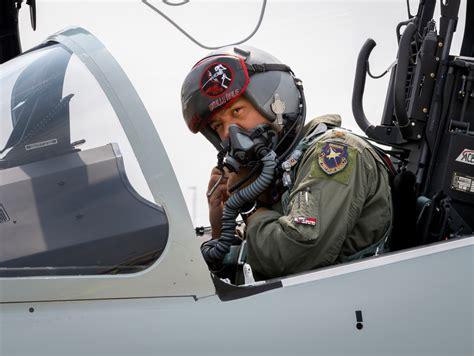
The United States Air Force has fielded some of the most legendary combat aircraft ever built. While modern fighters such as the F-22 Raptor and F-35 Lightning II dominate today’s battlespace with stealth, sensors, and networked warfare capabilities, many veteran aviators argue that aviation reached a different kind of golden age decades ago. Those earlier aircraft demanded extraordinary skill, rewarded pilot instinct, and delivered raw performance that modern digital systems often mask.
For countless pilots, some of America’s greatest warbirds have disappeared long before their appeal faded. Many retired aircraft combined breathtaking speed, unmistakable personality, and flying characteristics that forged deep emotional connections with their crews. Even decades after retirement, these jets continue to inspire admiration across military aviation circles.
The following seven retired US Air Force aircraft remain among the most beloved machines ever to wear Air Force markings.
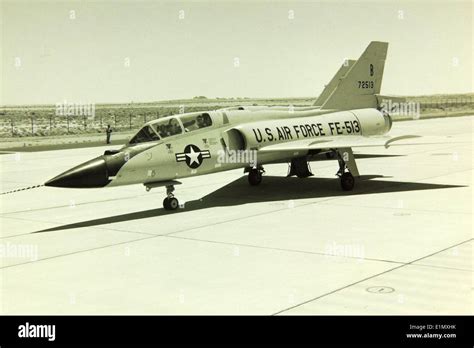
Convair F-106 Delta Dart: The Mach 2 Guardian of North America
During the height of the Cold War, the United States required an aircraft capable of intercepting Soviet bombers approaching North American airspace at a moment’s notice. The answer arrived in the form of the Convair F-106 Delta Dart, an interceptor that would become synonymous with homeland defense for nearly three decades.
Introduced in 1959, the Delta Dart represented the culmination of America’s early supersonic interceptor development. Featuring a sleek tailless delta-wing configuration and powered by a single Pratt & Whitney J75 afterburning turbojet, the aircraft could exceed Mach 2.3, making it one of the fastest interceptors of its era.
Unlike many contemporary fighters, the F-106 was designed specifically for one mission: destroying enemy bombers before they could reach American cities. The aircraft integrated seamlessly with the revolutionary Semi-Automatic Ground Environment (SAGE) air defense network, allowing ground controllers to guide interceptors toward incoming threats through sophisticated datalink systems.
For Air Force and Air National Guard pilots assigned to quick-reaction alert duties, the Delta Dart inspired tremendous confidence. The aircraft possessed remarkable high-altitude performance, excellent supersonic handling, and an elegant aerodynamic design that many aviators still regard as one of the most beautiful ever created.
After decades standing watch along America’s northern frontiers, the final F-106s left service in the late 1980s. Many surviving examples became QF-106 target drones, bringing an end to one of the Air Force’s most distinguished interceptor careers.
Republic F-105 Thunderchief: The Legendary “Thud” of Vietnam
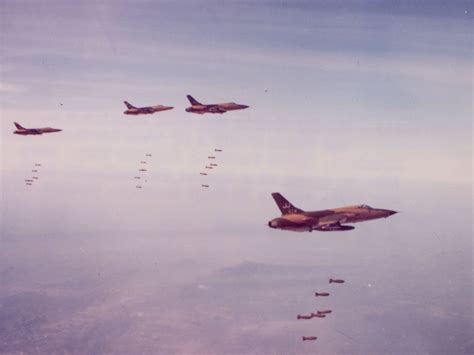
Few aircraft developed as fiercely loyal a pilot following as the Republic F-105 Thunderchief. Nicknamed the “Thud,” this massive single-seat fighter-bomber became one of the defining aircraft of the Vietnam War.
Initially conceived as a supersonic nuclear strike platform, the Thunderchief evolved into the backbone of America’s conventional bombing campaign over North Vietnam. At over 64 feet long and weighing significantly more than many contemporary fighters, the F-105 was enormous by fighter standards. Yet despite its size, it could exceed Mach 2 and deliver extraordinary performance at low altitude.
Pilots routinely described the aircraft as a “flying tank.” The Thunderchief’s rugged construction enabled it to absorb tremendous battle damage and still bring crews home. This durability proved essential during repeated strikes against some of the most heavily defended targets on Earth.
The aircraft carried up to 12,000 pounds of external ordnance, allowing it to conduct devastating strike missions deep inside hostile territory. More importantly, the F-105 pioneered the hazardous Wild Weasel mission, in which specially equipped crews deliberately hunted enemy surface-to-air missile sites.
Those missions demanded exceptional courage. Wild Weasel crews intentionally exposed themselves to enemy radar and missile batteries to protect larger strike packages. Their unofficial motto—”First In, Last Out”—perfectly captured the danger involved.
Although more than half of all Thunderchiefs produced were eventually lost during combat operations or accidents, the aircraft’s combination of speed, strength, and sheer combat effectiveness earned enduring respect from those who flew it.
Lockheed F-104 Starfighter: The Ultimate Pilot’s Airplane
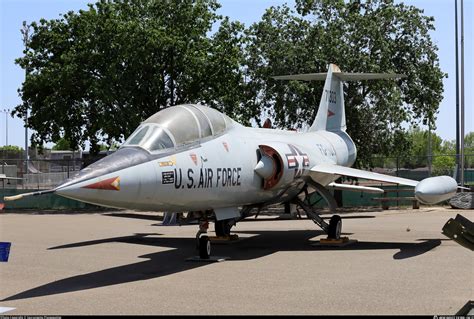
Designed by legendary engineer Kelly Johnson and developed at Lockheed’s famed Skunk Works, the F-104 Starfighter remains one of the most distinctive fighters ever constructed.
With its needle-like fuselage, razor-thin wings, and immense General Electric J79 engine, the Starfighter looked less like a traditional airplane and more like a missile fitted with a cockpit. In fact, many pilots affectionately referred to it as “the manned missile.”
The aircraft achieved numerous milestones. It became the first operational American fighter capable of sustained Mach 2 flight and simultaneously established world speed and altitude records. Entering USAF service in 1958, the Starfighter delivered astonishing climb performance and unmatched acceleration.
However, the F-104 demanded respect. Its tiny wings created extremely high landing speeds and unforgiving low-speed handling characteristics. Mistakes in the cockpit could prove fatal, contributing to the aircraft’s controversial reputation.
Yet those very qualities helped create its enduring mystique. Unlike modern fly-by-wire fighters that automatically prevent pilots from exceeding flight limits, the Starfighter offered a completely analog experience. Every maneuver required precise pilot input, constant concentration, and genuine stick-and-rudder skill.
Many aviators who experienced the aircraft describe flying the F-104 as one of the purest forms of military aviation ever achieved. Even today, surviving civilian-operated Starfighters continue attracting former military pilots eager to recapture that visceral flying sensation.
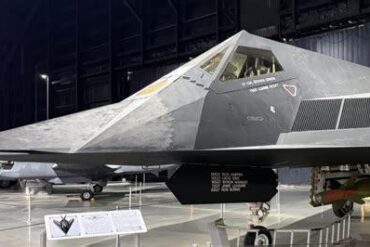
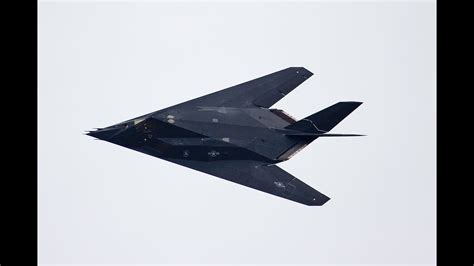
Lockheed F-117 Nighthawk: The Aircraft That Changed Air Warfare Forever
The Lockheed F-117 Nighthawk fundamentally altered modern aerial combat. Long before stealth became standard across advanced military aircraft, the F-117 demonstrated that invisibility could be more powerful than speed or maneuverability.
Its angular, faceted appearance seemed almost alien when publicly revealed in 1988. Yet those unusual shapes were deliberate. Limited computing power available during the 1970s forced engineers to rely on flat surfaces that could scatter radar energy away from enemy sensors.
Operating secretly from Nevada’s Tonopah Test Range beginning in 1983, the Nighthawk remained hidden from public knowledge for years. Pilots selected for the classified program entered one of aviation’s most exclusive communities.
Combat validated the aircraft’s revolutionary design. During Operation Desert Storm in 1991, F-117s penetrated heavily defended Iraqi airspace and struck strategic targets in Baghdad with extraordinary precision. Despite flying only a small percentage of coalition sorties, Nighthawks destroyed a disproportionate share of high-value targets.
Only one F-117 was ever lost in combat, shot down over Serbia in 1999. Even that incident highlighted the aircraft’s exceptional survivability, considering the thousands of combat missions flown in dense air defense environments.
Official retirement arrived in 2008, although limited examples continue supporting specialized training missions. For many aviators, flying the world’s first operational stealth fighter remains one of military aviation’s most coveted achievements.
General Dynamics F-111 Aardvark: The Supersonic Terrain-Hugging Strike Master
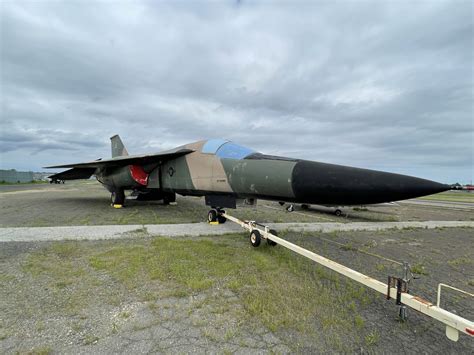
The General Dynamics F-111 Aardvark embodied technological ambition on a grand scale. Conceived as a joint Air Force and Navy project, the aircraft ultimately became one of the most capable strike platforms ever fielded by the USAF.
Its defining feature was its variable-geometry swing wings. Pilots could adjust wing sweep in flight, optimizing performance for takeoff, cruising, low-level penetration, or high-speed dash missions. Combined with powerful Pratt & Whitney TF30 engines, the aircraft could reach approximately Mach 2.5, placing it among the fastest combat aircraft in American history.
The Aardvark excelled at low-level penetration. Advanced terrain-following radar enabled crews to fly automatically at high speed only hundreds of feet above the ground, minimizing enemy radar detection. This capability revolutionized deep-strike tactics during the Cold War.
Although early deployments during Vietnam exposed developmental shortcomings, subsequent improvements transformed the F-111 into an exceptionally effective combat aircraft. The type later conducted long-range strikes against Libya during Operation El Dorado Canyon and devastated Iraqi armored formations during the Gulf War.
Airshow spectators particularly remembered the aircraft’s dramatic “dump and burn” demonstration, during which fuel released from the tail ignited in the afterburner exhaust, creating spectacular fireballs.
The Air Force retired its final F-111s in 1998, but Australia’s Royal Australian Air Force continued flying the aircraft until 2010. Even today, former crews speak passionately about the Aardvark’s unmatched blend of speed, payload, and long-range strike capability.
Lockheed SR-71 Blackbird: The Fastest Crewed Airplane Ever Built
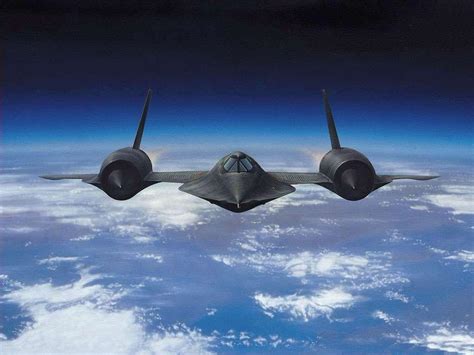
No discussion of retired Air Force legends can overlook the Lockheed SR-71 Blackbird. Although technically a strategic reconnaissance aircraft rather than a fighter, it remains the aircraft virtually every pilot dreams of flying.
Designed by Kelly Johnson and Lockheed Skunk Works, the SR-71 remains the fastest crewed air-breathing aircraft ever built. Capable of sustained flight at speeds exceeding Mach 3.2 and altitudes above 85,000 feet, the Blackbird operated in a performance envelope unlike any other airplane before or since.
Engineering challenges were immense. More than 85 percent of the aircraft consisted of titanium to withstand extreme aerodynamic heating. During high-speed flight, skin temperatures exceeded 500 degrees Fahrenheit, causing significant thermal expansion across the airframe.
Its Pratt & Whitney J58 engines represented masterpieces of propulsion engineering. At extreme speeds, much of the engine’s thrust effectively came from ramjet-like airflow management rather than traditional turbojet operation.
The SR-71’s survivability relied almost entirely on speed and altitude. When threatened by enemy missiles, crews typically accelerated rather than maneuvering defensively. No Blackbird was ever lost to hostile action.
Pilots fortunate enough to fly the SR-71 joined one of aviation’s most exclusive fraternities. Unsurprisingly, many aviators still regard Blackbird qualification as the ultimate career achievement.
McDonnell Douglas F-4 Phantom II: The Icon That Defined an Era
Few military aircraft have influenced global air power as profoundly as the McDonnell Douglas F-4 Phantom II. Originally developed for the US Navy, the Phantom became the quintessential American combat aircraft of the Vietnam era and one of history’s most successful multirole fighters.
The F-4 combined extraordinary speed, tremendous payload capacity, and remarkable versatility. Powered by twin General Electric J79 engines, it could exceed Mach 2.2 while carrying extensive air-to-air and air-to-ground weapon loads.
Early versions famously lacked an internal cannon, reflecting the belief that guided missiles had rendered guns obsolete. Combat experience over Vietnam quickly exposed flaws in that assumption, helping inspire significant tactical reforms and contributing directly to the establishment of the Navy’s legendary Top Gun school.
Despite early challenges, the Phantom matured into an extraordinarily capable combat system. During Vietnam, F-4 crews achieved more than 100 aerial victories while simultaneously conducting bombing, close air support, suppression of enemy defenses, and reconnaissance missions.
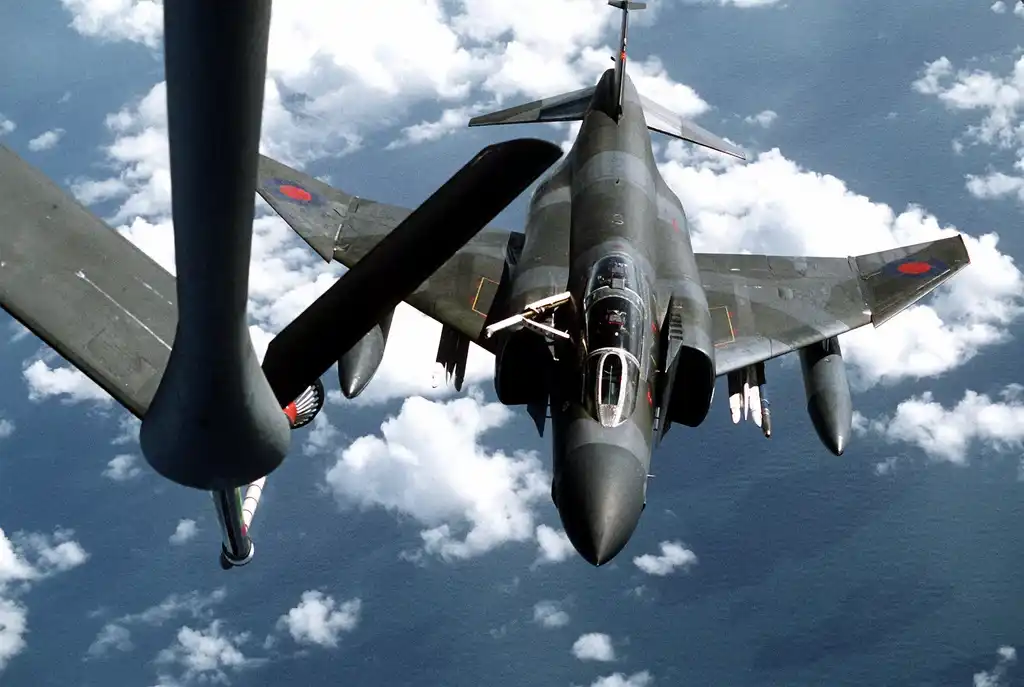
Pilots loved the Phantom for its raw power. The aircraft became famous for the saying, “Speed is life.” With enormous thrust and impressive acceleration, crews could often survive dangerous situations simply by adding power and leaving the threat behind.
Even after USAF retirement, numerous allied air forces continued operating upgraded Phantom variants well into the twenty-first century. The aircraft’s longevity underscores its exceptional design and explains why so many pilots still wish the Phantom remained on active flight lines.
Why These Retired Fighters Continue Captivating Pilots
Modern combat aircraft unquestionably surpass their predecessors in stealth, situational awareness, and sensor integration. Nevertheless, aircraft such as the F-106, F-105, F-104, F-117, F-111, SR-71, and F-4 possess qualities that transcend performance statistics.
They demanded mastery rather than simply managing systems. They rewarded instinct, courage, and hands-on flying skill. Most importantly, they possessed personalities—distinct characteristics that forged unforgettable bonds between machine and pilot.
Long after retirement, these legendary aircraft continue to symbolize an era when speed, audacity, and pilot skill stood at the very center of air combat. Their legacy ensures they will remain cherished icons of American military aviation for generations to come.