The history of American military aviation is filled with technological breakthroughs, ambitious modernization programs, and difficult choices. However, one of the most debated decisions in defense planning is retiring a proven combat aircraft before its replacement has reached full operational capability. These transitions are often made for understandable reasons, including budget constraints, changing threats, maintenance costs, and the desire to move toward next-generation technology.
Yet, replacing a combat aircraft is rarely as simple as swapping one airframe for another. A new fighter or specialized aircraft may exist on paper, but software development, weapons integration, pilot training, logistics, and operational testing can take years longer than expected. During that transition period, military planners must accept temporary capability gaps.
The United States has experienced several moments when aircraft were retired while their successors were still developing. Some gaps were manageable. Others created significant concerns among military officials and defense analysts.
The following five aircraft represent some of the most notable examples where America moved forward with retirement decisions before replacement platforms were fully ready for the missions they were expected to perform.
Lockheed Martin F-16CJ Wild Weasel: Retiring the Radar Hunter Before Full F-35 SEAD Capability
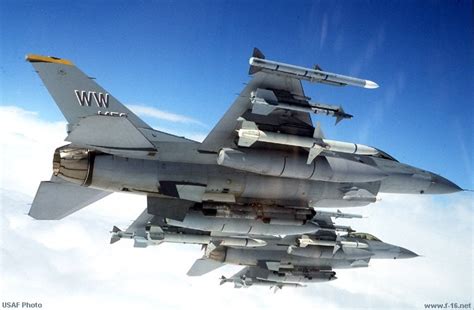
The F-16CJ Fighting Falcon Block 50/52 represented one of the most specialized versions of the legendary F-16 family. Unlike standard multirole fighters, the F-16CJ was designed for one of the most dangerous missions in modern air warfare: Suppression of Enemy Air Defenses (SEAD).
Known as the Wild Weasel, the aircraft’s mission was to hunt and destroy enemy surface-to-air missile systems. These missions required pilots to fly directly toward hostile radar emissions, identify threats, and launch anti-radiation missiles before enemy defenses could engage friendly aircraft.
The Wild Weasel tradition began during the Vietnam War, when specially modified aircraft were tasked with attacking North Vietnamese surface-to-air missile sites. The F-4G Phantom II later became the dedicated platform for this role, and the F-16CJ inherited that mission after the Phantom’s retirement in 1996.
The F-16CJ carried the AN/ASQ-213 HARM Targeting System (HTS) pod, allowing pilots to locate and track enemy radar systems. Combined with the AGM-88 HARM missile, the aircraft could rapidly attack air defense networks and open corridors for strike aircraft.
Capable of reaching speeds above Mach 2, the F-16CJ combined speed, maneuverability, and specialized electronic warfare equipment. It was not simply a fighter carrying a missile. It was a purpose-built weapon system designed around defeating one of the most dangerous threats in contested airspace.
The aircraft served with important frontline units, including the 35th Fighter Wing at Misawa Air Base in Japan and the 52nd Fighter Wing at Spangdahlem Air Base in Germany. These locations placed Wild Weasel aircraft close to potential conflict zones involving major military powers.
The planned replacement for the F-16CJ mission is the Lockheed Martin F-35A Lightning II. On paper, the F-35A represents a significant technological leap. Its stealth design, advanced sensors, electronic warfare systems, and networked battlefield capabilities give it advantages the older F-16 cannot match.
However, the transition has been complicated. The F-35’s SEAD capability is based on a different philosophy. Instead of relying primarily on speed and direct radar attacks, it uses stealth, electronic intelligence, and advanced weapons such as the AGM-88G AARGM-ER.
The challenge has been proving that the F-35A can perform the same rapid-response Wild Weasel mission under real combat conditions. Developing and validating software capabilities, particularly through the F-35 Block 4 upgrade program, has taken longer than originally expected.
The retirement of dedicated F-16CJ Wild Weasel capabilities represents a quieter capability gap compared with other aircraft retirements. However, the importance of SEAD cannot be underestimated. Modern air campaigns depend heavily on neutralizing enemy air defenses before large-scale operations can succeed.
The F-35A will eventually provide a more advanced solution, but the transition demonstrates how replacing a specialized combat aircraft involves much more than delivering a new airplane.
Grumman F-14D Tomcat: The Carrier Interceptor America Never Truly Replaced
Few aircraft have achieved the legendary status of the Grumman F-14 Tomcat. Introduced in the 1970s, the twin-engine carrier fighter became one of the most recognizable symbols of American naval aviation.
The Navy retired the final F-14 on September 22, 2006, ending more than three decades of service. The decision was controversial because the Tomcat possessed a unique capability that no current carrier aircraft fully replicates.
The F-14D represented the ultimate development of the Tomcat family. Powered by General Electric F110 engines, it could reach approximately Mach 2.34, making it one of the fastest carrier aircraft ever operated by the United States.
Its greatest advantage was its long-range interception capability. The aircraft’s AN/AWG-9 radar could track multiple targets simultaneously, while the enormous AIM-54 Phoenix missile allowed it to engage threats at distances exceeding 100 miles.
The Tomcat was designed during the Cold War specifically to defend aircraft carriers from Soviet long-range bombers carrying anti-ship missiles. It was a flying shield for the carrier battle group.
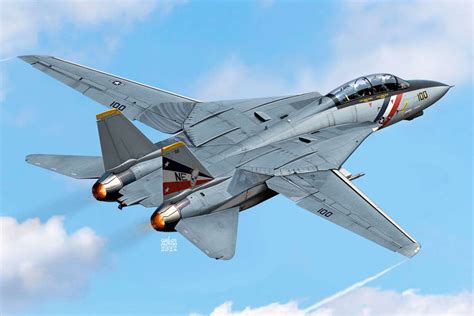
The aircraft chosen to replace the Tomcat was the Boeing F/A-18E/F Super Hornet. The Super Hornet brought many advantages, including lower operating costs, improved reliability, and excellent multirole flexibility.
However, it was not a direct replacement.
The Super Hornet was slower, with a maximum speed around Mach 1.8, and lacked the Tomcat’s dedicated long-range fleet defense mission. Instead, the Navy shifted toward a more flexible carrier air wing built around multirole fighters.
The eventual fifth-generation replacement, the F-35C Lightning II, took even longer to mature. The aircraft achieved Initial Operational Capability in 2019, more than a decade after the F-14 disappeared from Navy service.
The retirement decision also became irreversible because most retired Tomcats were destroyed to prevent Iran from acquiring spare parts. Iran had purchased F-14As before the 1979 revolution, and concerns remained that retired American aircraft could support its fleet.
Today, as competition grows in the Pacific region, some analysts argue that the Navy lacks a carrier-based aircraft with the same long-range interception focus. The threats the F-14 was designed to counter, including long-range bombers and anti-ship missile carriers, have returned as major strategic concerns.
The Tomcat retirement remains one of the clearest examples of a capability being removed before a true equivalent existed.
Northrop Grumman EA-6B Prowler: The Electronic Warfare Aircraft Without a Marine Replacement
The EA-6B Prowler was never a glamorous aircraft. It was not designed to dominate airshows or capture public attention. Instead, it operated in one of the most technically demanding areas of modern warfare: electronic attack.
For nearly five decades, the Prowler served as America’s primary dedicated electronic warfare aircraft. Entering service in 1971, it became essential for disrupting enemy radar systems, communications networks, and air defense operations.
The aircraft carried a crew of four: one pilot and three Electronic Countermeasures Officers (ECMOs). These specialists managed complex electronic warfare systems designed to protect strike packages entering hostile airspace.
The Prowler could carry multiple AN/ALQ-99 jamming pods, allowing it to suppress enemy radar across large areas. Although it was relatively slow, reaching approximately Mach 0.99, its value came from the invisible battle taking place inside the electromagnetic spectrum.
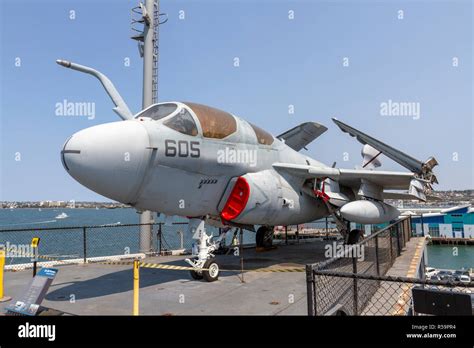
The Navy replaced the Prowler with the Boeing EA-18G Growler, a highly capable electronic attack aircraft based on the F/A-18F Super Hornet.
The Growler improved many aspects of electronic warfare. It was faster, more modern, and integrated with newer digital systems. However, there was one major problem: the Marine Corps did not receive a replacement.
When the final Marine Prowler squadron retired in 2019, the Corps lost its organic fixed-wing electronic warfare capability.
The Marine Corps solution was based around the F-35B Lightning II and joint operations with Navy Growlers. The F-35B includes advanced electronic warfare systems, but its primary role is self-protection and battlefield awareness rather than large-scale offensive jamming.
The distinction is significant. A Prowler could support an entire strike package. An F-35B primarily protects itself while contributing information to the larger network.
This created a gap between what the Marine Corps traditionally valued — independent expeditionary operations — and the assumption that Navy support would always be available.
The Prowler retirement demonstrates that replacing a specialized aircraft requires replacing not only technology but also the operational concept built around it.
Lockheed Martin F-22 Raptor Block 20: The Combat Aircraft That Never Became Fully Combat Capable
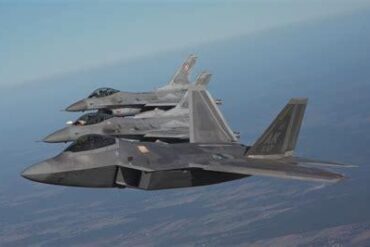
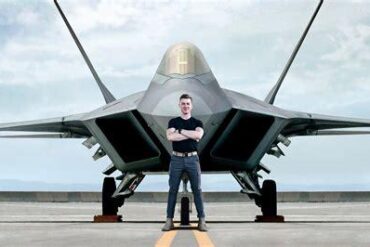
The F-22 Raptor remains one of the most advanced fighter aircraft ever produced. Designed for air superiority, it combines stealth, supercruise capability, advanced sensors, and unmatched maneuverability.
However, not every F-22 was created equal.
Among the Raptor fleet were 33 Block 20 aircraft that lacked the full combat capabilities of later Block 30/35 models. These aircraft were delivered primarily for training purposes and did not receive the same weapons integration and avionics upgrades required for frontline missions.
Although they were technically F-22s, they were not equivalent to operational combat Raptors.
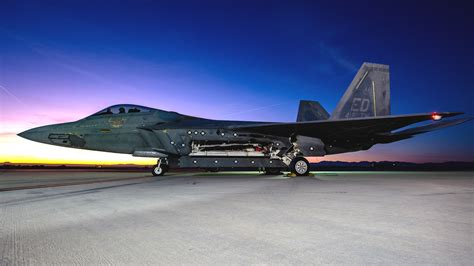
The problem became more serious because the United States built far fewer Raptors than originally planned. The Air Force initially expected hundreds of aircraft, but procurement ended at only 187 total F-22s.
As global competition increased, especially with China’s expanding air force, the limited size of the F-22 fleet became a strategic concern.
The Block 20 aircraft are gradually being removed from service as newer Raptors absorb more training responsibilities. Their replacement is expected to come from the Boeing F-47, the next-generation air superiority fighter developed under the Next Generation Air Dominance program.
However, the F-47 is not expected to become operational until the early 2030s.
This creates a difficult situation. The United States is reducing part of its already limited air superiority fleet before the next generation arrives.
The F-22 remains extremely capable, but age, modernization challenges, and limited numbers mean the Air Force must carefully manage the transition.
McDonnell Douglas AV-8B Harrier II: Retired Before the F-35B Reached Full Potential
The AV-8B Harrier II was one of the most unique combat aircraft ever operated by the United States Marine Corps.
Its ability to take off and land vertically allowed Marines to operate from small airfields, forward bases, and amphibious assault ships. The Harrier provided close air support in environments where traditional fighters could not easily operate.
The aircraft retired after decades of service, with the final Marine Harrier operations ending in 2026.
During its career, the Harrier built an impressive combat record. During Operation Desert Storm, AV-8Bs flew thousands of combat sorties while operating from forward locations close to the battlefield.
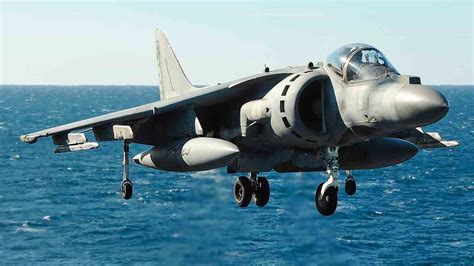
The replacement was the Lockheed Martin F-35B Lightning II, a dramatically more advanced aircraft.
The F-35B offers stealth, advanced sensors, supersonic speed, and networked battlefield capabilities. Its ability to share information with other aircraft, ships, and ground forces represents a completely different approach to air combat.
However, the aircraft’s advanced capabilities depend heavily on software maturity.
The F-35B’s full potential relies on upgrades such as Technology Refresh 3 (TR-3) and future software improvements. Delays in these systems have slowed the aircraft’s ability to deliver the complete capability originally promised.
This created a difficult transition. The Marine Corps retired an aircraft known for operational flexibility before the replacement had fully demonstrated the same expeditionary advantages.
The Harrier was simple, rugged, and designed around Marine Corps requirements. The F-35B is more powerful and connected, but its complexity introduces new challenges.
Why Fighter Jet Retirements Create Capability Gaps
The retirement of military aircraft is rarely a simple decision between old and new technology. Older aircraft may lack modern sensors or stealth, but they often provide proven capabilities that have been refined through decades of operational experience.
The United States has repeatedly accepted temporary gaps because military leaders believe the long-term advantages of modernization outweigh short-term risks.
However, these examples reveal an important lesson: a replacement aircraft is not truly ready when it first enters service. It is ready when its software, weapons, training systems, maintenance structure, and operational concepts can fully replace the aircraft it replaces.
The F-35 family, F-47 program, and other next-generation systems promise enormous improvements. But history shows that transitioning too quickly can leave important missions temporarily uncovered.
From the F-14 Tomcat’s long-range interception role to the EA-6B Prowler’s electronic warfare mission, these aircraft remind us that combat aviation is built around more than airframes. It is built around capabilities — and those capabilities must survive the difficult years between generations.