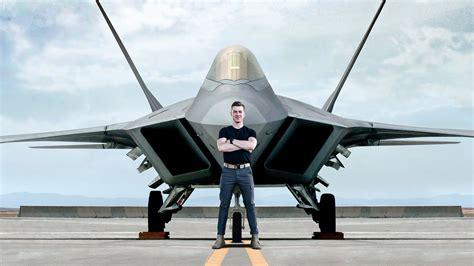
The story of the F-22 Raptor begins not in the 21st century, but amid the geopolitical tensions of the Cold War. During the early 1980s, faced with the Soviet Union’s overwhelming aerial force, the U.S. Defense Resources Board identified a critical need: a fifth-generation fighter capable of establishing and maintaining air superiority in contested airspace. Thus commenced one of the most ambitious military aviation projects in U.S. history.
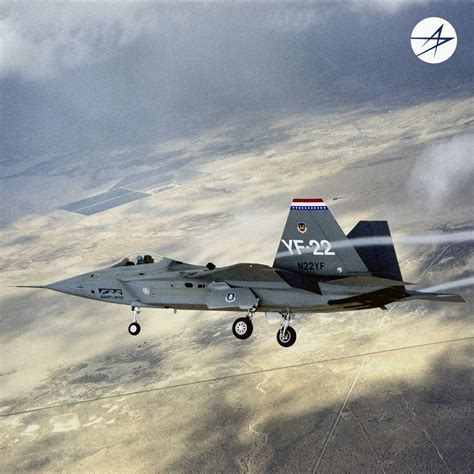
From the outset, the competition to create this advanced fighter was fierce. Aerospace giants vied for the lucrative contract, but it was ultimately a consortium comprising Lockheed Martin, Boeing, and General Dynamics that secured the project. This winning alliance, guided by lead engineer Vinny Devino, embarked on a rigorous six-year design and development phase that would push the boundaries of aerospace engineering. The prototype — the YF-22 — underwent over 44,000 hours of wind tunnel testing and 13,000 material tests, before evolving into the fully realized F-22 Raptor.
Lockheed Martin: Architect of Stealth and Performance
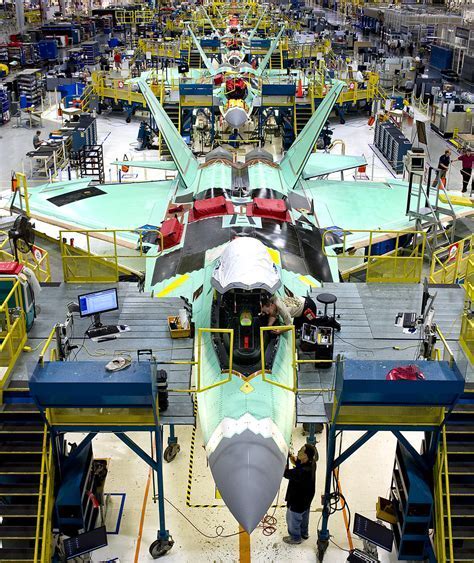
At the heart of the Raptor’s design and assembly stood Lockheed Martin, a company synonymous with cutting-edge stealth technology. The corporation’s facilities in Marietta, Georgia, served as the final assembly and testing grounds for the fighter jet. Yet, the production footprint stretched far beyond Georgia. Additional Lockheed Martin plants in Palmdale, California, Meridian, Mississippi, and Fort Worth, Texas all contributed crucial components to the project.
Lockheed Martin’s responsibilities centered on the airframe’s stealth geometry, radar-absorbing materials, and integrated avionics systems. These technological breakthroughs allowed the F-22 to evade detection by even the most sophisticated enemy radar systems, providing a tactical advantage unmatched by earlier fighter designs. Furthermore, Lockheed oversaw the jet’s complex structural assembly, ensuring that the precision-built airframe met the demanding standards of the U.S. Air Force (USAF).
Boeing: Crafting the Wings and Digital Backbone
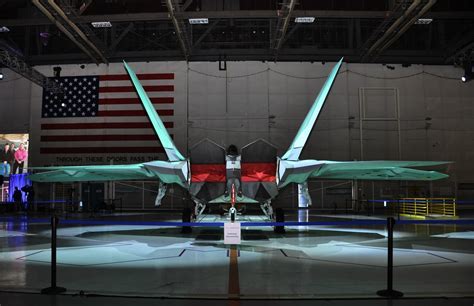
While Lockheed focused on stealth and frame construction, Boeing played a pivotal role in shaping the Raptor’s aerodynamics and avionics. From its Development Center in Seattle, Washington, Boeing manufactured the aircraft’s distinctive aft fuselage and titanium composite wings, which span 44.5 feet and grant the F-22 superior agility and lift characteristics.
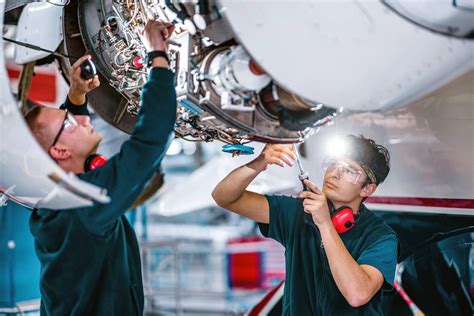
Boeing’s contributions extended beyond structural components. The company also developed and integrated key avionics systems, auxiliary electronics, and the critical pilot and maintenance training platforms that support the Raptor’s operational readiness. These systems formed the backbone of the F-22’s advanced sensor suite, enhancing the pilot’s situational awareness and enabling the fighter’s legendary “first-kill” capability.
Pratt & Whitney: Powering Supersonic Dominance
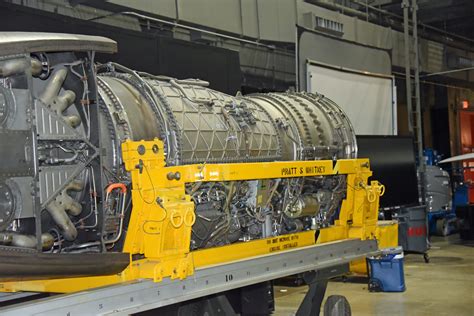
No less significant was the role of Pratt & Whitney, whose engineering excellence produced the F119-PW-100 turbofan engines powering the F-22. Developed in Hartford and Middletown, Connecticut, these engines generate a combined 70,000 pounds of thrust. The inclusion of afterburners and two-dimensional thrust vectoring nozzles further distinguished the F119 engines from contemporaries, enabling the Raptor to supercruise — sustain supersonic speeds without afterburner use — a revolutionary capability for a stealth fighter.
This propulsion system allows the F-22 to achieve speeds beyond Mach 2, translating to over 1,500 miles per hour, and delivers operational ranges up to 1,850 miles. In 2025, Pratt & Whitney secured a $1.5 billion contract to upgrade these engines, reaffirming the F-22’s strategic value within the USAF’s future plans.
A Truly National Effort: 1,000 Suppliers Across the U.S.
While Lockheed Martin, Boeing, and Pratt & Whitney spearheaded development, the construction of the F-22 Raptor became a nationwide industrial endeavor, engaging over 1,000 suppliers across 42 U.S. states. Critical subsystems, electronics, and components flowed from companies large and small, highlighting the complex interdependence of American defense manufacturing.
These partnerships ensured not only redundancy and quality control but also fostered economic growth across multiple regions. This decentralization became vital in maintaining production continuity and flexibility, especially given the sensitive nature of stealth technologies and proprietary military hardware.
Operational Readiness and Technological Evolution
The F-22 Raptor’s journey from prototype to frontline asset spanned decades. Though the fighter achieved operational capability in 2005, initial production delays and strategic debates slowed its deployment. The USAF ultimately inducted 187 Raptors during the early 2000s, with the final unit delivered in 2012 following the program’s premature termination due to escalating costs and shifting defense priorities.
However, far from obsolescence, the Raptor’s technological journey continued. Its 2026 upgrade package, budgeted at $90 million, underscores the Pentagon’s commitment to maintaining the fighter’s edge. This includes:
- Enhanced radar and electronic warfare capabilities
- Upgraded infrared defensive systems
- Stealth material advancements for greater radar evasion
- Improved pilot interface and cybersecurity infrastructure
These continuous improvements solidify the F-22’s reputation as a premier air superiority fighter, capable of confronting emerging threats even amidst the arrival of the sixth-generation F-47 stealth fighter.
The Legacy of the F-22 Raptor
More than just a technological marvel, the F-22 Raptor represents the embodiment of American aerospace ingenuity. From Vinny Devino’s early conceptual leadership to the collective efforts of Lockheed Martin, Boeing, and Pratt & Whitney, the Raptor reflects decades of collaboration and innovation.
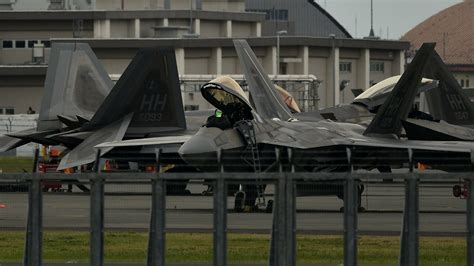
In today’s increasingly contested skies, where adversaries develop hypersonic weapons and advanced counterstealth technologies, the F-22 remains indispensable to U.S. strategic air dominance. As Pentagon investments continue, the Raptor’s role is not that of a relic, but a continuously evolving guardian of American airspace.
Conclusion: The Enduring Power of America’s Stealth Titan
In answering who designed the F-22 Raptor and where it was built, the answer encompasses not just companies but an entire nation. Lockheed Martin, Boeing, and Pratt & Whitney, supported by a web of over a thousand suppliers, orchestrated the creation of the world’s first operational fifth-generation stealth fighter. Born out of Cold War urgency yet adapted for 21st-century battlespaces, the F-22 Raptor continues to embody American air superiority — a testament to enduring design and perpetual innovation.