The McDonnell Douglas F-4 Phantom II occupies a singular position in modern military aviation, not merely as a successful fighter aircraft but as a defining technological and cultural artifact of the Cold War era. When we ask how many F-4 Phantoms were built, we are not posing a simple numerical question; we are opening the door to a far-reaching story of industrial scale, geopolitical urgency, and relentless innovation. The Phantom’s production run reflects the strategic anxieties of its time and the extraordinary confidence placed in a single airframe to fulfill an unprecedented range of missions.
From its earliest conception, the F-4 Phantom II was designed to be more than a conventional fighter. It emerged at a moment when air combat doctrine was shifting toward speed, altitude, and missile-centric engagements, and it was shaped by the belief that future wars would be decided beyond visual range. That assumption would later be challenged in combat, but the aircraft’s adaptability ensured its longevity. What followed was a manufacturing effort unmatched by any other supersonic fighter produced in the United States.
By the time the final example left the production line, the F-4 Phantom II had become the most mass-produced supersonic fighter jet in American history, a distinction that still stands. Understanding how that number was reached, and why it mattered, requires a detailed examination of the Phantom’s variants, operators, and global footprint.
The definitive production total of the F-4 Phantom II stands at 5,195 aircraft, a figure that encapsulates decades of continuous manufacturing across multiple countries and configurations. This number alone signals the immense trust placed in the Phantom as a cornerstone of Western airpower during one of the most volatile periods of the twentieth century.
The Exact Number: How Many F-4 Phantoms Were Built in Total
The final and universally accepted answer to the question of how many F-4 Phantoms were built is 5,195 units. This total includes every production variant manufactured from the aircraft’s introduction in the late 1950s until the final example rolled off the line in Japan. No other American supersonic fighter, before or since, has reached this level of output.
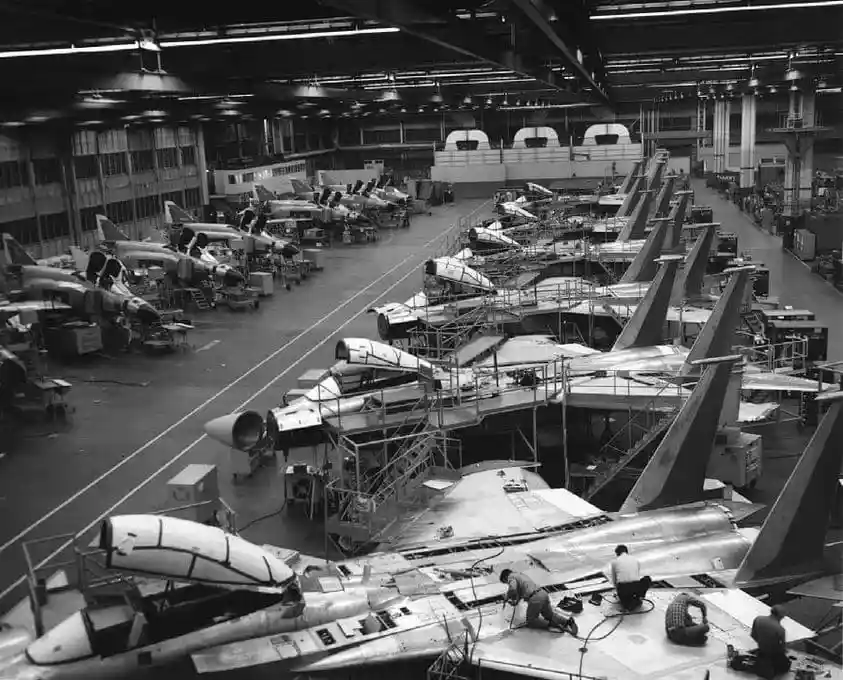
The majority of these aircraft were produced in the United States by McDonnell Douglas at its St. Louis, Missouri facility, which became synonymous with Phantom production. However, the total also includes aircraft assembled overseas under license, most notably in Japan. The last Phantom built was an F-4EJ, completed by Mitsubishi Heavy Industries, marking both the end of the production run and the closing chapter of one of the longest-lived fighter programs in history.
This extraordinary number was not the result of a single massive order, but rather a steady accumulation of contracts driven by evolving mission requirements, export demand, and the aircraft’s proven ability to absorb upgrades. Each Phantom delivered represented not just an airframe, but a modular weapons system capable of evolving alongside advances in radar, missiles, and electronic warfare.
Why the F-4 Phantom II Achieved Unprecedented Production Scale
The Phantom’s production scale was a direct consequence of its multi-role versatility and its adoption by multiple branches of the U.S. military. Originally developed for the United States Navy as a fleet defense interceptor, the F-4 quickly proved adaptable enough to satisfy the very different operational philosophies of the U.S. Air Force and the U.S. Marine Corps. This cross-service acceptance alone guaranteed a production run far larger than most contemporaries.
Beyond domestic use, the Phantom became a cornerstone of American military exports. Allies seeking a proven, high-performance fighter capable of countering Soviet designs found the F-4 to be an attractive solution. Its ability to perform air superiority, ground attack, reconnaissance, and suppression of enemy air defenses made it a cost-effective choice for nations facing diverse threats.
Equally important was the Phantom’s structural robustness. The airframe was deliberately over-engineered, allowing it to accept heavier payloads, more powerful sensors, and evolving avionics without compromising safety. This meant that instead of being replaced outright, the Phantom could be continuously modernized, extending its relevance and justifying continued production.
A Variant-Driven Production Strategy
The figure of 5,195 F-4 Phantoms is best understood by examining how production was distributed across numerous variants. Rather than relying on a single definitive model, McDonnell Douglas pursued a strategy of incremental specialization. Each new variant addressed a specific operational need, ensuring sustained demand even as earlier versions aged.
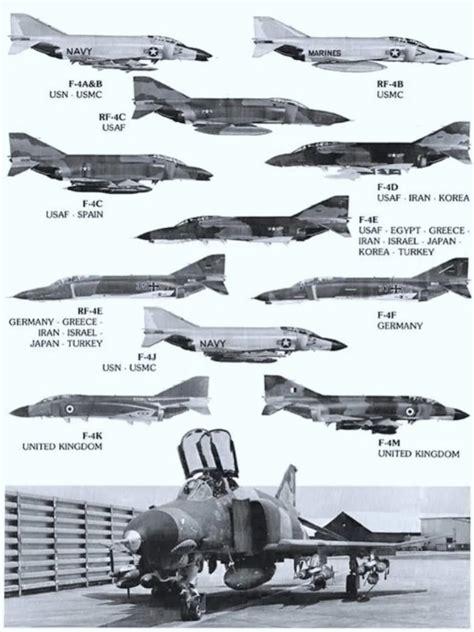
Early variants such as the F-4A and F-4B laid the foundation, emphasizing speed, altitude, and missile-based interception. As combat experience in Vietnam revealed shortcomings in missile reliability and close-range maneuverability, subsequent variants evolved rapidly. The absence of an internal gun in early models, once considered a forward-thinking design choice, became a liability in dogfighting scenarios.
This led to the introduction of the F-4E, the most produced Phantom variant with 1,370 aircraft built. Its integrated M61A1 Vulcan cannon marked a philosophical shift back toward close-in combat capability, while later aerodynamic refinements dramatically improved handling. The F-4E alone accounts for more than a quarter of all Phantoms ever manufactured.
Specialized reconnaissance variants such as the RF-4C and RF-4E further expanded production numbers. These aircraft sacrificed armament entirely in favor of advanced camera systems and sensors, underscoring the Phantom’s adaptability as a surveillance platform.
The Naval Phantom and the Demands of Carrier Aviation
Carrier operations impose some of the most punishing requirements on any aircraft, and the F-4 Phantom II was engineered to meet them. The F-4B, the first Phantom produced in large numbers, was designed specifically for U.S. Navy service. Its thin wings, folding mechanisms, and robust landing gear allowed it to operate safely from aircraft carriers, while its powerful radar made it an ideal fleet defense interceptor.
The Navy and Marine Corps together accounted for hundreds of Phantoms, using them in roles that extended far beyond air superiority. Marine squadrons deployed the aircraft for close air support, often operating from land bases under austere conditions. The Phantom’s ability to absorb damage and still return home became legendary among aircrews.
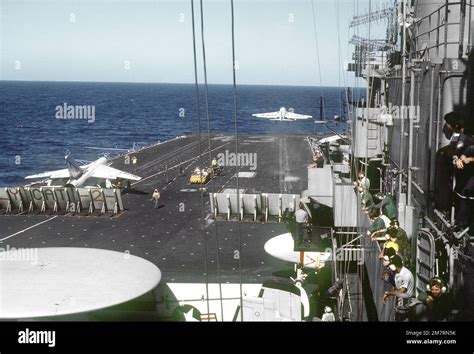
Naval Phantoms were also notable for retaining features from an earlier era of carrier aviation, such as the catapult bridle system. These distinctive launch mechanisms visually linked the Phantom to the transitional period between propeller-driven aircraft and modern jet operations at sea.
The U.S. Air Force and the Phantom’s Largest Operator Base
Although the Phantom originated with the Navy, it was the U.S. Air Force that ultimately operated the largest number of F-4s. The Air Force’s adoption of the Phantom transformed it into a true multi-role workhorse, capable of both air-to-air combat and precision strike missions.
The F-4D became the Air Force’s primary Vietnam-era variant, featuring enhanced avionics and navigation systems. However, it was the F-4E that truly defined Air Force Phantom operations. Of the 1,370 F-4Es produced, 993 were delivered to the USAF, making it the backbone of American tactical airpower well into the 1980s.
The Air Force also pioneered some of the Phantom’s most specialized roles. The F-4G Wild Weasel, developed from the F-4E airframe, was dedicated to the suppression of enemy air defenses. By replacing the internal gun with advanced radar homing and warning systems, the F-4G became one of the most feared aircraft in modern electronic warfare, deliberately drawing enemy missile fire in order to destroy surface-to-air missile sites.
International Production and Licensed Manufacturing
One of the most significant contributors to the Phantom’s total production count was its international manufacturing footprint. While most F-4s were built in the United States, Japan became the only foreign nation to produce the aircraft domestically. Mitsubishi Heavy Industries assembled 138 of the 140 F-4EJ variants for the Japan Air Self-Defense Force.
These Japanese-built Phantoms were initially optimized for air defense, lacking ground-attack and aerial refueling capabilities. Over time, many were upgraded to the F-4EJ Kai standard, incorporating modern radar systems and heads-up displays. The final Japanese Phantoms remained in service until 2021, underscoring the durability of the design.
Elsewhere, the Phantom was adapted rather than built locally. The United Kingdom modified its aircraft with Rolls-Royce Spey engines, creating the F-4K and F-4M variants. Although these engines provided significantly more thrust, the required structural changes slightly reduced top-end performance, illustrating the delicate balance between power and aerodynamics.
The Phantom’s Combat Legacy and Production Justification
The sheer number of F-4 Phantoms built cannot be separated from their extensive combat history. The aircraft saw action in Vietnam, the Middle East, and numerous regional conflicts, serving with distinction even when early results were mixed. In Vietnam, the Phantom’s initial lack of a gun and reliance on early missile technology exposed doctrinal flaws, but rapid upgrades and tactical adjustments restored confidence in the platform.
Perhaps nowhere was the Phantom’s combat effectiveness more dramatically demonstrated than in Israeli service. Israeli F-4s, known as Kurnass, achieved extraordinary air-to-air success, amassing 116.5 confirmed kills. These results reinforced the Phantom’s reputation and justified continued investment and upgrades long after newer aircraft entered service.
The ability of the Phantom to transition from frontline fighter to reconnaissance platform, electronic warfare asset, and even unmanned target drone further extended its operational relevance. Many retired U.S. Phantoms were converted into QF-4 drones, serving as live-fire targets and continuing to contribute to weapons development long after their piloted careers ended.
The End of Production and the Phantom’s Enduring Presence
The conclusion of F-4 Phantom production marked the end of an era, but not the end of the aircraft’s story. When the final F-4EJ was completed in Japan, it symbolized the culmination of a design philosophy rooted in flexibility and brute performance. By then, the Phantom had been eclipsed in frontline roles by aircraft like the F-15, F-16, and F/A-18, yet none matched its production scale.
Even after official retirement from U.S. service in 1997, the Phantom continued to fly with foreign air forces. Greece, Turkey, and Iran have all operated the aircraft into the twenty-first century, with Turkey’s upgraded “2020 Terminator” variants representing some of the most advanced Phantoms ever fielded.
The eventual retirement of these remaining fleets will close the final operational chapter of the F-4 Phantom II. Yet the answer to how many F-4 Phantoms were built will remain a benchmark against which all future fighter production programs are measured. The number 5,195 is not merely a statistic; it is a testament to an aircraft that defined its age and reshaped expectations of what a combat aircraft could be.