The Boeing B-52 Stratofortress is one of those rare machines that outgrows its original job description. Conceived in the shadow of the early Cold War, it was meant to be a high-altitude nuclear delivery system. What it became instead was a flying constant—an aircraft that adapted so well to shifting strategy, technology, and politics that it outlived not just its rivals, but entire generations of bombers. To understand how many B-52s were built is to understand the industrial ambition, strategic urgency, and engineering confidence of the United States at mid-century.
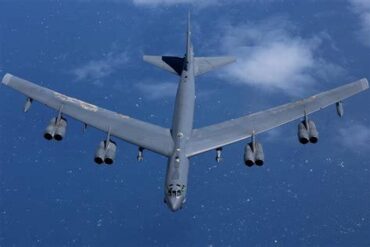
Few aircraft have carried so much symbolic weight. The B-52’s unmistakable profile—long swept wings, eight engines slung in pairs, and a fuselage that seems to stretch forever—has appeared over Vietnam, Iraq, Afghanistan, the Arctic, and the Pacific. It has served as deterrent, strike platform, testbed, and diplomatic signal. Behind that visibility sits a surprisingly finite production run, one that reveals how deliberately the program was managed.
Production numbers matter because they reflect intent. Building a bomber of this size and complexity was never about flooding the skies. Each airframe represented a massive investment in materials, manpower, and strategic doctrine. When the final tally is examined carefully, the B-52 story becomes less about sheer quantity and more about longevity through design discipline.
The question seems simple on its surface, yet the answer carries decades of aerospace history within it. Exactly 744 B-52 Stratofortresses were built, a number that includes the earliest experimental aircraft and every operational variant that followed. That figure, confirmed by official US Air Force records, marks the end of a production effort that ran just over a decade but shaped global airpower for generations.
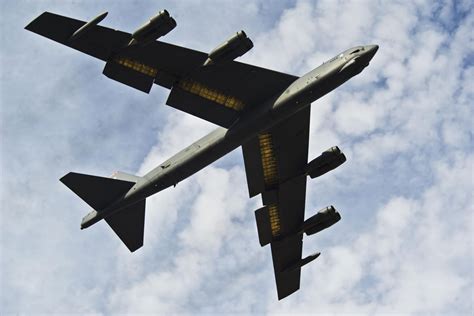
The origins of that total trace back to a period of intense experimentation. Before a single production bomber rolled out, Boeing constructed two prototype aircraft, designated XB-52. These early machines were not combat-ready bombers but flying laboratories, created to validate aerodynamic theories, structural concepts, and the feasibility of sustained intercontinental jet flight. Their existence alone underscores how radical the B-52 was when it first appeared.
The road to full production was not perfectly smooth. Early testing revealed weaknesses in systems and structures, including a notable ground accident caused by a pneumatic failure that damaged one prototype. Yet the fundamental design proved sound. When the YB-52, the second test aircraft, took to the air in April 1952 under the hands of legendary test pilot Alvin “Tex” Johnston, it confirmed that Boeing had something extraordinary. The bomber could fly fast, far, and high while carrying payloads that dwarfed anything in service at the time.
Once the US Air Force committed fully, production moved quickly. The initial order alone called for 282 aircraft, an enormous figure for such a complex machine. This was not a boutique program. More than 5,000 subcontractors across the United States contributed components, from structural assemblies to avionics and landing gear. Nearly half of the aircraft’s parts were sourced externally, making the B-52 as much an industrial ecosystem as a single airplane.
The Exact Number: How Many B-52 Stratofortresses Were Built
The definitive answer is clear and precise. A total of 744 B-52 Stratofortresses were built, from the first prototype to the final operational aircraft. The last bomber, a B-52H, was delivered in October 1962, bringing production to a close just as the aircraft was proving its long-term value.
This number includes:
- 2 XB-52 prototypes, used exclusively for testing and validation
- 742 production aircraft, spanning multiple variants from B-52A through B-52H
What makes this figure remarkable is not its size, but its restraint. In an era when some military aircraft were produced in the thousands, the B-52 program remained tightly controlled. The Air Force did not chase endless expansion. Instead, it focused on refining and upgrading a core fleet that could evolve as threats changed.
The earliest production model, the B-52A, was built in limited numbers and served primarily as a transitional design. Almost immediately, the Air Force moved to the B-52B, which became the first variant to enter active service. From there, a steady progression of improvements followed, each variant incorporating lessons learned from testing, operations, and advancing technology.
Variants from B-52C through B-52F focused on incremental improvements in range, performance, and systems reliability. The later B-52G and B-52H models represented more substantial evolutions, with structural changes, increased fuel capacity, and, in the case of the H model, entirely new engines.
Where and How the B-52 Was Manufactured
Boeing’s production strategy was as ambitious as the aircraft itself. Early prototypes and initial production runs were assembled at Boeing’s Seattle facility, where the company’s engineering expertise was deeply rooted. As production volumes increased, responsibility shifted increasingly to Wichita, Kansas, which became the primary site for large-scale manufacturing of later variants.
This dual-site approach allowed Boeing to maintain quality while accelerating output. The sheer size of the aircraft required specialized tooling, vast factory floors, and a workforce trained to handle structures of unprecedented scale. Each bomber represented tens of thousands of labor hours, and the logistics of coordinating suppliers nationwide were staggering.
At peak production in the late 1950s, the B-52 program stood as one of the largest aerospace manufacturing efforts in the world. It was a visible demonstration of American industrial capacity, blending private-sector innovation with military urgency.
Why Production Stopped at 744 Aircraft
Production ended not because the B-52 failed, but because it succeeded too well. By the early 1960s, the Air Force had enough aircraft to meet strategic requirements, and advances in missile technology began to reshape nuclear deterrence doctrine. Intercontinental ballistic missiles reduced reliance on manned bombers for certain missions, easing pressure to expand the fleet further.
At the same time, the B-52 proved unusually adaptable. Rather than replacing it outright, the Air Force found it more cost-effective to modernize existing airframes. Strong structural margins allowed the aircraft to absorb new avionics, weapons systems, and engines without compromising safety or performance.
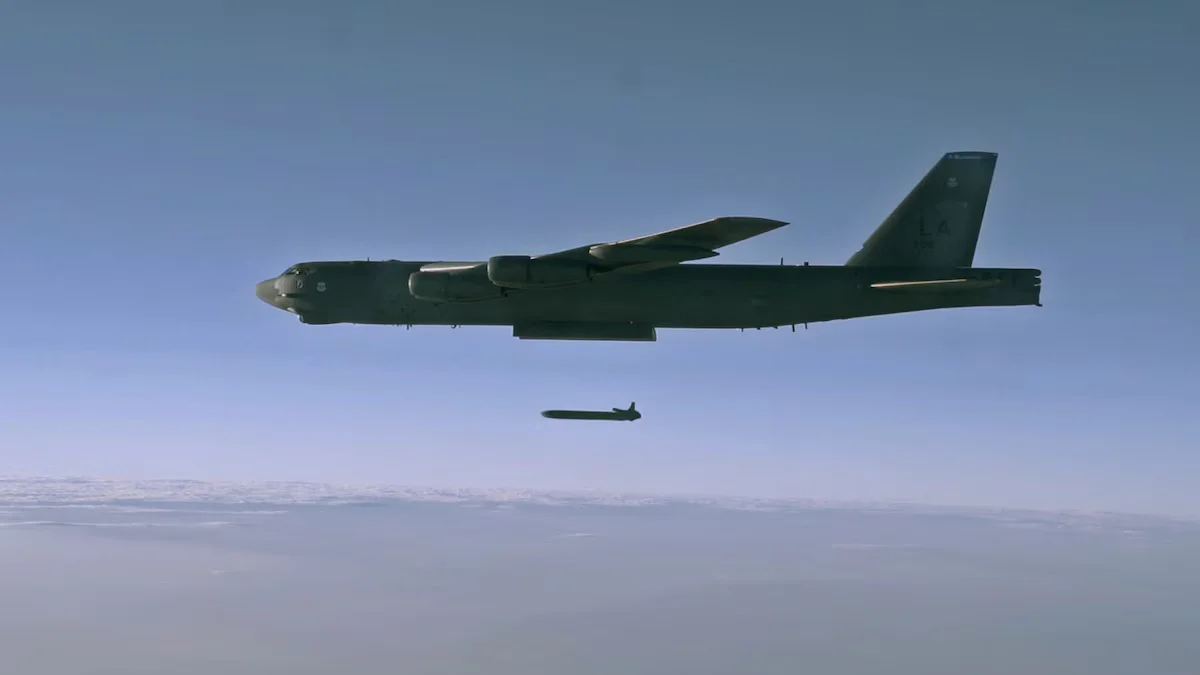
This adaptability made the decision to cap production at 744 not just logical, but visionary. Instead of chasing newer designs prematurely, the Air Force invested in upgrades that extended the bomber’s relevance. As a result, aircraft built in the early 1960s remain operational today, a feat unmatched by any other bomber fleet.
The B-52H: The Variant That Endured
Of all the B-52 variants, the B-52H stands apart. It was the final production model and the most capable of the series. Delivered beginning in May 1961, the H variant introduced Pratt & Whitney TF33 turbofan engines, replacing the earlier turbojets. This change improved fuel efficiency, reduced smoke, and extended range—critical improvements for long-duration missions.
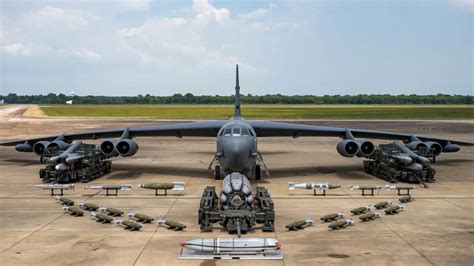
The B-52H could carry up to 20 air-launched cruise missiles, transforming it from a gravity-bomb platform into a standoff strike aircraft. This shift allowed it to remain relevant even as air defenses became more sophisticated.
Official specifications highlight just how formidable the aircraft remains:
- Maximum takeoff weight approaching half a million pounds
- Payload capacity of 70,000 pounds
- Intercontinental range exceeding 8,800 miles
- Service ceiling of 50,000 feet
These numbers are not historical footnotes. They define an aircraft still capable of global reach.
Longevity Through Modernization
The fact that only 744 B-52s were built makes their continued service even more impressive. Over the decades, the fleet has undergone continuous modernization. Programs like CONECT introduced digital communications, while the 1760 Internal Weapons Bay Upgrade expanded compatibility with modern precision weapons.
Today, the Air Force is investing billions in re-engining the fleet with Rolls-Royce F130 engines, a move expected to boost fuel efficiency by roughly 30 percent while reducing maintenance demands. These upgrades are not cosmetic. They are structural commitments to keeping the aircraft viable well into the 2030s and beyond.
Each modernization cycle reinforces the wisdom of the original production decision. The B-52 was built with enough structural margin and design flexibility to absorb change, something few aircraft can claim.
What the Production Number Really Means
When viewed in isolation, 744 aircraft might not seem extraordinary. In context, it is profound. Each B-52 was designed to last decades, not years. The program prioritized durability, upgrade potential, and mission flexibility over sheer numbers. That philosophy paid off spectacularly.
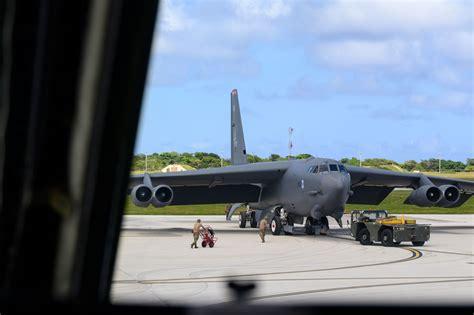
Today, B-52Hs remain based at Minot Air Force Base and Barksdale Air Force Base, continuing to provide strategic deterrence and conventional strike capability. Aircraft built when slide rules were still common now fly missions coordinated by digital networks and satellite guidance.
The production total is frozen in history, but the aircraft’s story is not. Studies already point toward a future B-52J configuration, with updated radars, avionics, and possibly reduced crew requirements. If those plans mature as expected, bombers built in the early 1960s could still be flying close to a century later.
A Finite Number, an Infinite Legacy
In the end, 744 B-52 Stratofortresses were built, including the two experimental prototypes that paved the way. That number captures an era when engineering confidence met strategic necessity, producing an aircraft so well conceived that replacement became optional rather than urgent.
The B-52 is not just a survivor. It is a benchmark. Its production history reflects a deliberate balance between ambition and restraint, proving that building fewer aircraft—when they are built right—can yield far greater returns. Long after its contemporaries have faded into museums, the Stratofortress continues to fly, carrying with it the enduring logic of its original design.
Few machines in aviation history can claim such a record. Fewer still can trace it back to a production run that ended more than sixty years ago, yet remains unfinished in spirit.