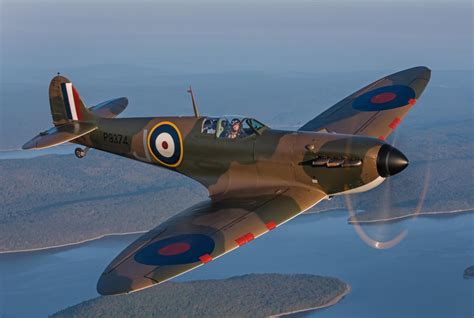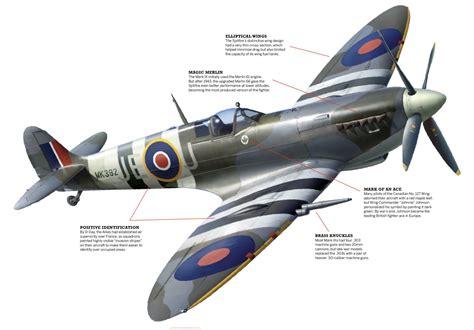
The Supermarine Spitfire is one of the most iconic and celebrated aircraft in history, renowned for its pivotal role in World War II, particularly during the Battle of Britain. With its sleek design, exceptional agility, and relentless performance, it became a symbol of resilience and victory. This article delves deep into the production of this legendary fighter aircraft, offering a detailed account of how many Spitfires were built, the factories involved, the variants produced, and the aircraft’s lasting legacy.
The Spitfire’s Inception: The Birth of a Legend
The Supermarine Spitfire was designed by the brilliant aeronautical engineer, R. J. Mitchell, in 1934, as a response to the Royal Air Force’s need for a modern fighter aircraft. By 1936, the first prototype was unveiled at the RAF Display at Hendon, and after rigorous testing, the Spitfire entered operational service with the RAF in August 1938.
At the onset of World War II, the Spitfire was already in service with the RAF, and by the summer of 1940, it became a crucial player in the Battle of Britain. Alongside its counterpart, the Hawker Hurricane, the Spitfire defended British skies against the relentless attacks of the German Luftwaffe. The Spitfire’s incredible performance and superior agility made it the most formidable British fighter of the war.
Spitfire Production During World War II
The production of the Supermarine Spitfire spanned from the late 1930s to the early 1950s. During its service life, the aircraft underwent numerous modifications and upgrades, evolving from the Mk I to the Mk 24. By the end of World War II, the Spitfire had firmly established itself as one of the most significant and mass-produced aircraft in history. According to the Imperial War Museum, a staggering 20,351 land-based Spitfires were built between 1937 and 1947.
This figure only includes the land-based variants; when considering the naval version, the Supermarine Seafire, the total number of Spitfires produced rises to 22,977. The Seafire was designed to operate from aircraft carriers and shared many features with the Spitfire, including the iconic elliptical wing and powerful Rolls-Royce Merlin engine.
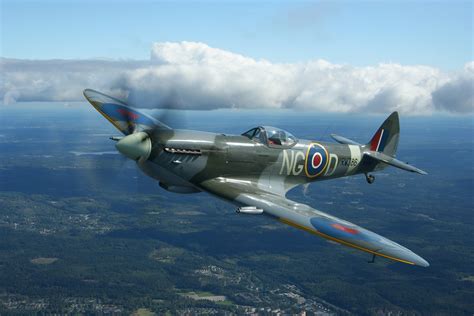
The production ramped up significantly during the war years, with factories across the United Kingdom working tirelessly to meet the demands of the RAF. The largest single production facility was the Castle Bromwich Aircraft Factory, which was responsible for manufacturing a substantial portion of the Spitfire fleet. This factory alone built over 12,000 Spitfires, including notable variants such as the Mk V and Mk IX.
Breakdown of Spitfire Production Numbers
While the total production of Spitfires is impressive, understanding the specific breakdown of different variants is equally important. The Supermarine Spitfire underwent numerous changes and upgrades during its production run, and various models were produced to meet specific operational needs.
- Supermarine Spitfire Mk I: 1,566 units produced
- Supermarine Spitfire Mk II: 920 units produced
- Supermarine Spitfire Mk V: 6,479 units produced
- Supermarine Spitfire Mk IX: 5,665 units produced
- Supermarine Spitfire Mk VIII: 1,658 units produced
- Supermarine Spitfire Mk XIV: 957 units produced
- Supermarine Spitfire Mk XVI: 1,054 units produced
Among these, the Mk V and Mk IX were the most widely produced, with the Mk V being particularly significant during the middle years of the war. The Mk V was known for its versatility and was used extensively by RAF squadrons. The Mk IX, on the other hand, was introduced later in the war and featured several upgrades, including improved engines and better armament.
The Spitfire’s design was constantly evolving to keep up with the changing nature of aerial combat. As the war progressed, the aircraft’s engine power was increased, and its armament was upgraded to meet the demands of fighting more advanced enemy aircraft.
Naval Variants: The Seafire
While the Spitfire was primarily designed for land-based operations, the Royal Navy recognized the aircraft’s potential for carrier-based operations. The result was the Supermarine Seafire, a naval variant of the Spitfire. The Seafire featured several modifications to make it suitable for operations from aircraft carriers, including reinforced landing gear and the addition of a tailhook for carrier landings.
A total of 2,626 Seafires were built, and they played an important role in the Royal Navy’s operations during World War II. The Seafire was used in key campaigns, including the destruction of the German battleship Tirpitz and the Allied invasion of Normandy. Seafires also saw action in the Pacific theater, supporting operations against the Japanese military.
Spitfires Operated by the Soviet Union and the US
While the Supermarine Spitfire was predominantly operated by British forces, it was also used by several other nations, including the Soviet Union and the United States. The Soviet Union, in particular, was a major recipient of British lend-lease aid, which included around 1,200 Spitfires. These aircraft played a crucial role in the Eastern Front, where they were used to combat German forces.
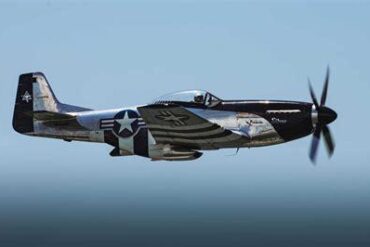
The United States, too, operated a number of Spitfires during the war. While the US Army Air Forces primarily relied on American-built aircraft such as the P-51 Mustang, the Spitfire was still used in limited numbers, particularly in the early years of the war. Approximately 600 Spitfires served in the US Army Air Forces and the US Navy, with the aircraft seeing combat in both the European and Pacific theaters.
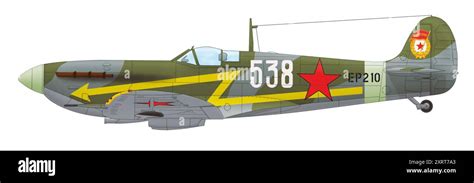
The versatility of the Spitfire was one of the reasons it was so widely adopted by other nations. Its superior performance and adaptability made it an attractive option for many air forces, particularly those operating in regions where the Luftwaffe posed a significant threat.
Post-War Use and Legacy
After World War II, the Supermarine Spitfire continued to serve in various roles, both within the UK and abroad. Many Spitfires were sold to other countries or kept in reserve by the RAF. The aircraft was even used by the RAF in Malaysia as late as 1951, in what would be its final operational sortie.
The post-war period also saw the rise of civilian interest in the Spitfire. With hundreds of surplus aircraft available, many were sold to private owners, and Spitfires became a common sight at airshows and air races. Some were even converted for use as commercial aircraft or aerobatic display planes.
Today, the Spitfire remains one of the most iconic aircraft in history. It is still celebrated in museums, airshows, and documentaries, and many Spitfires have been painstakingly restored to their former glory. The Spitfire’s legacy endures as a symbol of the courage, determination, and skill of the pilots who flew it during the darkest days of World War II.
The Spitfire’s Place in History
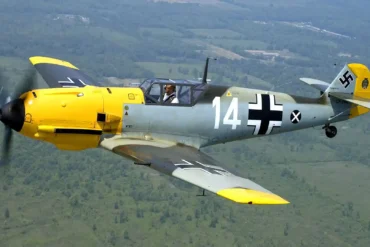
The Supermarine Spitfire remains the seventh-most-produced aircraft in history, with a total of 22,977 units built. While this is a significant number, it is worth noting that the Spitfire is not the most produced fighter aircraft of all time. That distinction belongs to the German Messerschmitt Bf 109, which was produced in larger numbers during the war. However, the Spitfire’s impact on the outcome of World War II and its enduring popularity among aviation enthusiasts cannot be overstated.
The Spitfire’s unique design, legendary performance, and historical significance have cemented its place as one of the most beloved and revered aircraft in the world. It continues to inspire generations of aviation enthusiasts, historians, and pilots alike, ensuring that its legacy will live on for many years to come.
Conclusion
The Supermarine Spitfire is a testament to British ingenuity, resilience, and the spirit of wartime innovation. With a total of 22,977 units produced, including both land-based Spitfires and naval Seafires, the Spitfire played a pivotal role in securing Allied victory in World War II. The aircraft’s enduring legacy, both as a symbol of military excellence and a beloved historical artifact, ensures that the Spitfire will always be remembered as one of the most iconic fighters ever built.