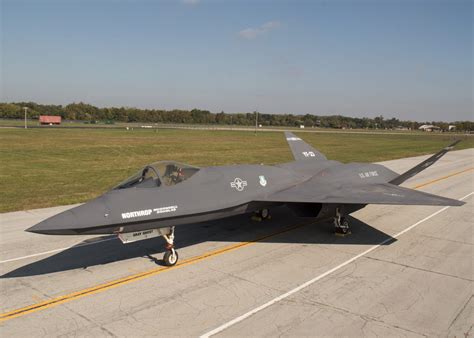
The history of aviation is usually written by the aircraft that entered combat, dominated headlines, or transformed commercial travel. Names like the F-14 Tomcat, Concorde, SR-71 Blackbird, and B-52 Stratofortress became symbols of technological triumph because they survived the brutal gauntlet of politics, engineering, and military procurement. Yet behind every legendary aircraft lies an entire graveyard of abandoned ideas that were often just as revolutionary.
Some of the most fascinating aircraft ever designed never made it beyond prototypes, wind tunnel testing, or limited flight trials. These forgotten machines were born from moments of strategic panic, technological optimism, and fierce competition between aerospace giants. In many cases, they introduced concepts that would later become standard decades after their cancellation. Others were simply too ambitious for the era that produced them.
The Cold War accelerated this cycle dramatically. Governments poured billions into experimental aviation concepts that promised stealth, nuclear propulsion, supersonic travel, or radical new combat capabilities. Some programs collapsed under impossible technical demands. Others became victims of changing military doctrine or spiraling budgets. A few were simply outmaneuvered by rival aircraft during procurement battles.
By examining these obscure and abandoned aircraft programs, a clearer picture emerges of how aviation truly evolved—not through smooth progress, but through repeated experimentation, failure, and reinvention.
McDonnell XF-85 Goblin: The Parasite Fighter That Tried To Live Inside A Bomber
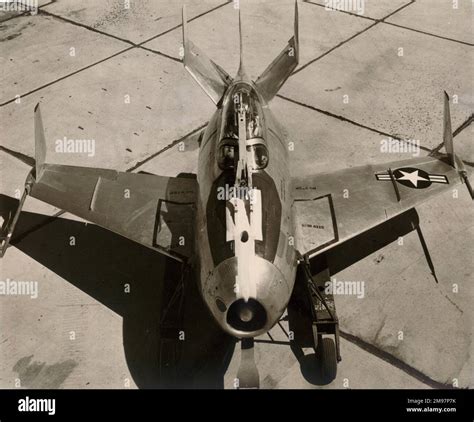
The McDonnell XF-85 Goblin remains one of the strangest fighter aircraft concepts ever seriously tested by the United States Air Force. Developed in the late 1940s, the tiny jet fighter was designed around a strategic problem that deeply worried American military planners: escort range. Early jet fighters lacked the endurance required to accompany massive intercontinental bombers on nuclear strike missions into Soviet territory.
Rather than extending fighter range conventionally, engineers pursued a radically different solution. The XF-85 would be carried inside the bomb bay of a Convair B-36 Peacemaker and launched midair when enemy interceptors appeared. After completing its mission, the miniature fighter would reconnect to a trapeze recovery system and return to the bomber.
In theory, the idea sounded brilliant. In practice, it bordered on chaotic. Turbulence beneath the B-36 created violent airflow that made docking extraordinarily difficult. Pilots attempting to reconnect with the trapeze found themselves fighting unstable air currents while flying a compact jet with extremely sensitive handling characteristics.
Test flights repeatedly demonstrated how dangerous the process could become. Several docking attempts failed completely, forcing emergency belly landings. Despite proving the concept was technically achievable, the operational realities were simply too hazardous for routine combat use.
Only two Goblin prototypes were constructed before the Air Force terminated the project in 1949. Ironically, the rapid advancement of aerial refueling technology solved the escort problem far more effectively than parasite fighters ever could.
Today, the XF-85 survives as a reminder that some aviation concepts fail not because they are impossible, but because reality makes them impractical.
Boeing Quiet Bird: The Secret Stealth Aircraft That Arrived Too Early
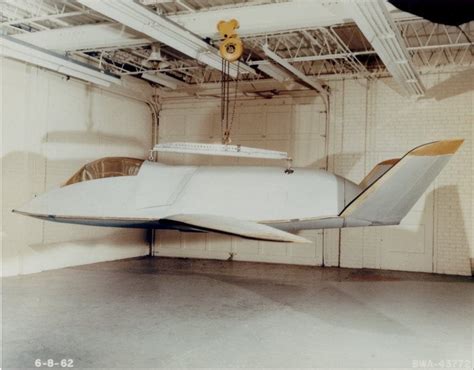
Long before the F-117 Nighthawk shocked the world during the Gulf War, Boeing quietly explored the foundations of stealth aviation through a largely forgotten project known as the Quiet Bird.
Developed during the early 1960s, the program focused on reducing radar visibility through unconventional aircraft shaping and specialized materials. Engineers studied how radar waves reflected off surfaces and experimented with coatings designed to minimize detection. These ideas would later become essential to stealth aircraft development, but at the time they were viewed as highly experimental and poorly understood.
The Quiet Bird itself never progressed into a full operational aircraft. Boeing built and tested a half-scale model at its Wichita facility, gathering valuable data on radar cross-section reduction. The program reportedly produced several important stealth-related patents that influenced later generations of military aviation.
What makes the Quiet Bird especially fascinating is how close it came to disappearing entirely from history. Much of the project documentation was allegedly destroyed, and the aircraft remained obscure for decades outside specialist aerospace circles.
Military leadership during the early 1960s did not yet fully appreciate the strategic importance of stealth. Air combat doctrine still prioritized speed, altitude, and missile technology over invisibility. As a result, the Quiet Bird was shelved before its concepts could mature into operational hardware.
Yet the program quietly planted seeds that would later reshape aerial warfare. Without projects like Quiet Bird, stealth aviation may have emerged much later than it did.
North American YF-107 Ultra Sabre: The Mach 2 Fighter Overshadowed By Politics
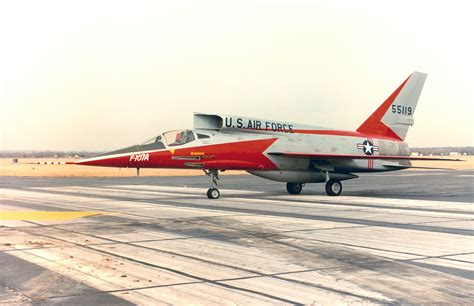
The North American YF-107 looked like an aircraft from the future when it first flew in 1956. Built as a successor to the F-100 Super Sabre, the YF-107 introduced several radical design choices that immediately distinguished it from contemporary fighters.
Its most recognizable feature was the dorsal air intake mounted above the cockpit, a configuration chosen to free up space beneath the fuselage for weapons carriage and aerodynamic refinement. The aircraft also featured an internal weapons bay intended for nuclear strike missions, reflecting Cold War priorities surrounding tactical nuclear delivery.
Performance was exceptional for the era. The YF-107 exceeded Mach 2 during testing and earned praise for its handling and stability. Many test pilots considered it one of the most capable fighters never to reach production.
Despite those achievements, the aircraft became trapped in the brutal politics of military procurement. The Republic F-105 Thunderchief ultimately secured the Air Force contract instead. While the YF-107 was technologically impressive, the F-105 aligned more closely with strategic planning and production considerations already favored by the Air Force.
Only three prototypes were built before the program ended in 1957.
The YF-107’s fate demonstrated an uncomfortable truth about aerospace development: superior performance alone rarely guarantees survival. Timing, bureaucracy, contractor relationships, and military doctrine often matter just as much as engineering brilliance.
Convair X-6: America’s Nuclear-Powered Aircraft Nightmare
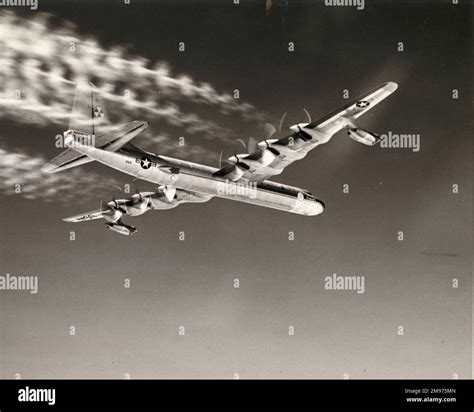
Few aviation concepts captured Cold War ambition more dramatically than the Convair X-6 nuclear aircraft program. At its core was an almost science-fiction-like vision: a bomber powered by a nuclear reactor capable of remaining airborne for days or even weeks without refueling.
During the late 1940s and 1950s, military planners feared that future wars could require constant airborne nuclear deterrence. A nuclear-powered aircraft promised unprecedented endurance and strategic flexibility. Engineers believed atomic propulsion could eliminate traditional fuel limitations entirely.
The challenges, however, quickly became overwhelming.
Radiation shielding alone created massive engineering problems. Protecting the crew from lethal exposure required heavy shielding that dramatically increased aircraft weight. Every solution introduced new complications involving performance, safety, and structural design.
The danger of crashes created even greater concern. A conventional bomber accident was catastrophic enough. A crashed aircraft carrying an active nuclear reactor threatened radioactive contamination on an unprecedented scale.
Convair modified a B-36 bomber into a flying nuclear testbed to study these issues, but the program never advanced into a fully operational nuclear-powered aircraft. By 1961, intercontinental ballistic missiles had already begun changing strategic warfare, reducing the need for long-endurance nuclear bombers.
The X-6 program consumed enormous resources before its cancellation, yet it provided invaluable data about reactor shielding, aircraft systems, and nuclear propulsion research. It also exposed the hard limits of applying atomic technology to aviation.
Some ideas are abandoned because they fail. Others are abandoned because humanity realizes the risks outweigh the rewards.
Grumman XF10F-1 Jaguar: The Swing-Wing Pioneer That Couldn’t Survive Its Era
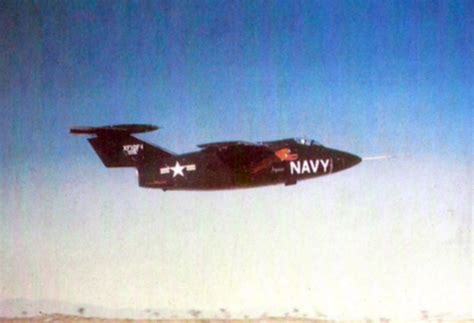
The Grumman XF10F-1 Jaguar occupies an unusual place in aviation history because its failure directly contributed to future success. Designed during the early 1950s, the aircraft experimented with variable-sweep wing technology years before it became mainstream.
Swing-wing designs offered a compelling advantage. Wings could extend outward for low-speed takeoffs and carrier landings, then sweep backward for high-speed flight. In theory, this allowed a single aircraft to excel across multiple flight regimes.
Unfortunately, early 1950s technology struggled to support such complexity reliably.
The Jaguar suffered from weak engines, mechanical difficulties, and shifting Navy requirements that constantly altered the project’s direction. Although the aircraft completed test flights after its 1952 debut, persistent reliability issues undermined confidence in the program.
By 1953, the Navy canceled the Jaguar entirely.
Yet the program’s influence extended far beyond its short lifespan. Lessons learned from the XF10F-1 later informed the development of iconic swing-wing aircraft including the F-111 Aardvark and the F-14 Tomcat.
The Jaguar effectively became a sacrificial stepping stone—an aircraft that failed so future aircraft could succeed.
Republic XF-12 Rainbow: The Fastest Piston Aircraft Nobody Remembered
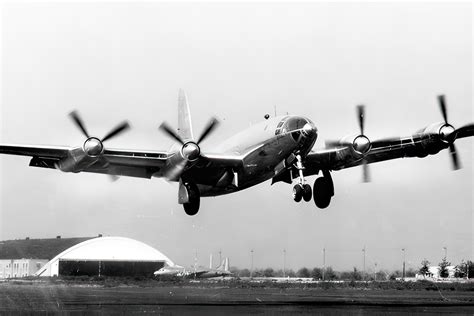
The Republic XF-12 Rainbow arrived at precisely the wrong moment in aviation history.
As a piston-powered reconnaissance aircraft, it represented the absolute pinnacle of propeller-driven performance. The sleek four-engine aircraft could reach approximately 460 miles per hour and operate at altitudes approaching 40,000 feet. Those numbers were astonishing for a piston aircraft during the 1940s.
The Rainbow was designed primarily for long-range photographic reconnaissance missions, but Republic also envisioned a luxurious commercial airliner variant capable of rapid transcontinental travel.
Technically, the aircraft was a masterpiece. Economically, it was doomed.
Jet propulsion was rapidly transforming aviation by the late 1940s. Even though the XF-12 achieved extraordinary performance, military planners increasingly viewed piston aircraft as transitional technology nearing obsolescence. The Air Force eventually abandoned procurement plans in favor of adapting existing bombers until jet reconnaissance platforms became operational.
Without military orders, Republic could not justify continued development costs.
Only two prototypes were completed. One crashed tragically during testing, while the other ended its life as a weapons target.
The XF-12 Rainbow became one of aviation history’s greatest examples of perfect timing gone wrong. It was arguably the finest piston-powered reconnaissance aircraft ever built, yet it emerged just as the jet age erased the category entirely.
Northrop YA-9: The Attack Aircraft That Lost To The A-10 Warthog
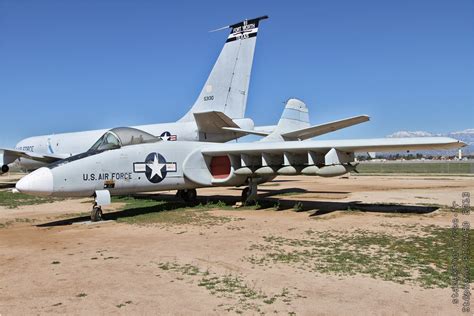
The Northrop YA-9 rarely receives attention today because its competitor became one of the most beloved military aircraft ever produced: the A-10 Thunderbolt II.
During the early 1970s, the Air Force launched the A-X competition to develop a dedicated close air support aircraft optimized for battlefield survivability and anti-armor operations. Northrop responded with the YA-9, a rugged twin-engine attack aircraft emphasizing maneuverability, durability, and heavy weapons capacity.
Test pilots praised the aircraft’s flying characteristics during evaluation flights. The YA-9 proved stable, effective, and highly capable within its intended mission profile.
Its problem was not inadequacy. Its problem was timing against an opponent that perfectly matched Air Force priorities.
Fairchild Republic’s A-10 offered superior cannon integration, exceptional battlefield survivability, and simpler production logistics. The aircraft’s GAU-8 Avenger rotary cannon became central to its identity and combat philosophy.
In January 1973, the Air Force selected the A-10 instead.
The YA-9 disappeared almost immediately from public awareness, overshadowed by the extraordinary operational success of the Warthog. Yet aviation historians continue to recognize it as a serious and capable aircraft that simply lost one of the fiercest procurement competitions of the Cold War.
A-12 Avenger II: The Stealth Disaster That Burned Billions
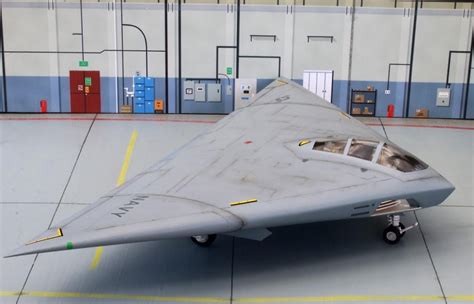
The A-12 Avenger II was supposed to revolutionize naval aviation. Instead, it became one of the Pentagon’s most infamous procurement disasters.
Developed jointly by McDonnell Douglas and General Dynamics during the late 1980s, the A-12 aimed to replace the aging A-6 Intruder with a carrier-based stealth attack aircraft. Its futuristic flying-wing design emphasized radar evasion while maintaining heavy strike capability from aircraft carriers.
The technological ambitions were enormous.
Carrier operations already placed intense structural demands on naval aircraft. Combining those demands with advanced stealth shaping and materials pushed the limits of aerospace engineering at the time. As development progressed, the aircraft gained excessive weight, technical complications multiplied, and projected costs exploded.
By 1991, the program had consumed roughly $5 billion without producing a viable operational aircraft.
Defense Secretary Dick Cheney canceled the project, triggering years of bitter legal disputes between contractors and the federal government. The cancellation sent shockwaves through the defense industry because of the scale of financial losses involved.
Despite its collapse, the A-12 influenced later stealth aviation research and reinforced critical lessons about balancing ambition with realistic engineering constraints.
Its failure also revealed how stealth technology during the late Cold War remained extraordinarily difficult and expensive to implement effectively.
Lockheed L-2000: America’s Lost Concorde Rival
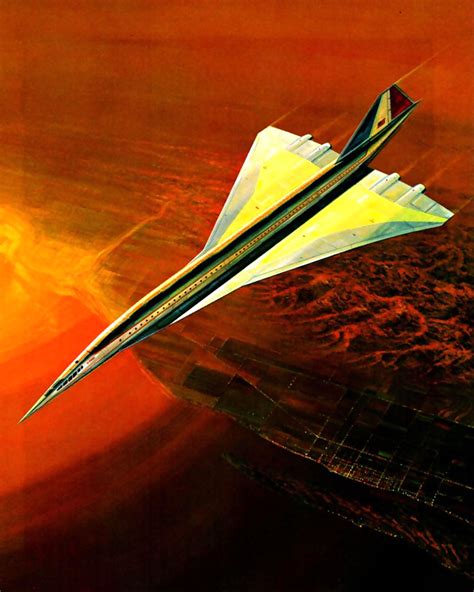
The dream of supersonic passenger travel once captivated governments and aerospace companies around the world. While the Concorde ultimately became the most famous result of that ambition, America nearly produced its own supersonic airliner through the Lockheed L-2000 program.
Unlike Boeing’s more radical SST proposal, Lockheed pursued a comparatively conservative design philosophy emphasizing practicality and achievable engineering. Many industry observers believed the L-2000 represented the more realistic path toward operational supersonic transport.
Nevertheless, the Federal Aviation Administration selected Boeing’s design instead, hoping for a more technologically ambitious aircraft.
That decision ultimately doomed both projects.
Boeing’s SST concept encountered escalating technical difficulties, rising development costs, and mounting public opposition over sonic booms and environmental concerns. Political support gradually collapsed, and Congress canceled federal funding for the entire American supersonic transport initiative in 1971.
The L-2000 never advanced beyond mockups and design studies.
In hindsight, some analysts argue Lockheed’s approach may have stood a better chance of operational success. But by the early 1970s, economic realities and environmental debates had already turned against large-scale supersonic passenger travel.
The L-2000 became another casualty of an industry chasing the future faster than society was prepared to accept it.
Northrop YF-23: The Stealth Fighter Many Experts Still Prefer
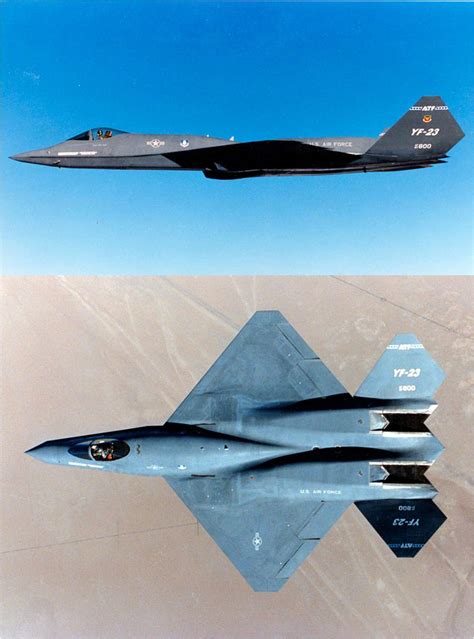
Among canceled military aircraft, few inspire as much fascination as the Northrop YF-23.
Developed for the Air Force Advanced Tactical Fighter competition, the YF-23 competed directly against Lockheed’s YF-22 during the late 1980s and early 1990s. Both aircraft represented extraordinary leaps in stealth, avionics, and air combat capability, but the YF-23 possessed an especially futuristic appearance that still looks advanced decades later.
Its diamond-shaped wings, sleek fuselage, and V-tail configuration minimized radar and infrared signatures with remarkable effectiveness. The aircraft also demonstrated impressive supercruise capability, sustaining supersonic flight without afterburners.
Many aviation enthusiasts and some defense analysts continue debating whether the YF-23 may have been the superior overall design.
Ultimately, however, the Air Force selected the YF-22, which evolved into the F-22 Raptor. Decision-makers reportedly favored the YF-22’s agility and perceived development maturity, particularly regarding dogfighting performance.
Only two YF-23 prototypes were ever built.
Even in cancellation, the aircraft achieved legendary status. Its appearance remains so futuristic that it continues to influence science fiction aesthetics and conceptual aircraft art decades after its demise.
The YF-23 embodies one of the most intriguing realities of aerospace history: sometimes an aircraft can lose the competition yet still win admiration from future generations.